Diving in Guadeloupe is unlike any other French Caribbean destination: across a single butterfly-shaped archipelago, you can drive in under an hour from a sheltered bay perfect for a first dive to drop-offs and wrecks reserved for advanced divers. After several years putting travellers in the water from our rentals between Sainte-Anne and Deshaies, I’ve learned one simple thing: the right spot is the one that matches both your certification level and the state of the sea on the right coast. Here’s how to choose, in practical terms, without wasting a single outing.
Understand the two coasts before you book
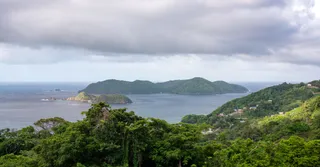
The archipelago reads like a butterfly. The Basse-Terre wing (volcanic, dominated by the Soufrière at 1,467 m and the national park) plunges into an almost always calm sea on its leeward coast, around Bouillante and the Cousteau Reserve. The Grande-Terre wing (limestone, turquoise beaches, beach-resort life) is more exposed to the trade-wind swell on its Atlantic side.
This geography determines everything:
- West coast of Basse-Terre (Malendure, Pigeon Islets): flat water, steady visibility, weak currents. This is the coast for beginners and training.
- South Grande-Terre and the passes (Gosier, Sainte-Anne, Saint-François): more varied sites, sometimes windy, requiring experience.
- Petite-Terre and the open sea: reserved for days with manageable seas, often as a full-day outing.
The dry season, from December to April, offers the best conditions: less swell, optimal visibility, water at 26-28 °C. That’s the period I recommend for stacking up certification levels.
Beginner level: the first dive and Level 1 at Malendure
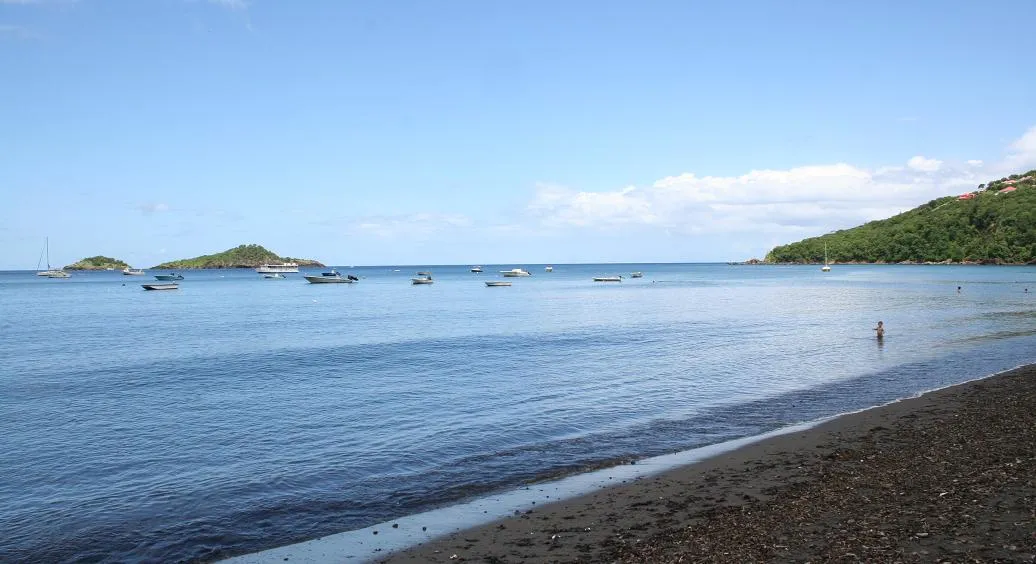
If you’ve never put your head underwater, head for the Cousteau Reserve, off Bouillante, about 1h15 by road from Pôle Caraïbes airport. It’s the cradle of local diving, ranked among the most beautiful sites in the world by Commander Cousteau himself.
Why it’s the ideal spot to start
- Sheltered sea, gentle depths (6 to 12 m) around the Pigeon Islets.
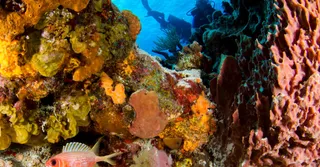
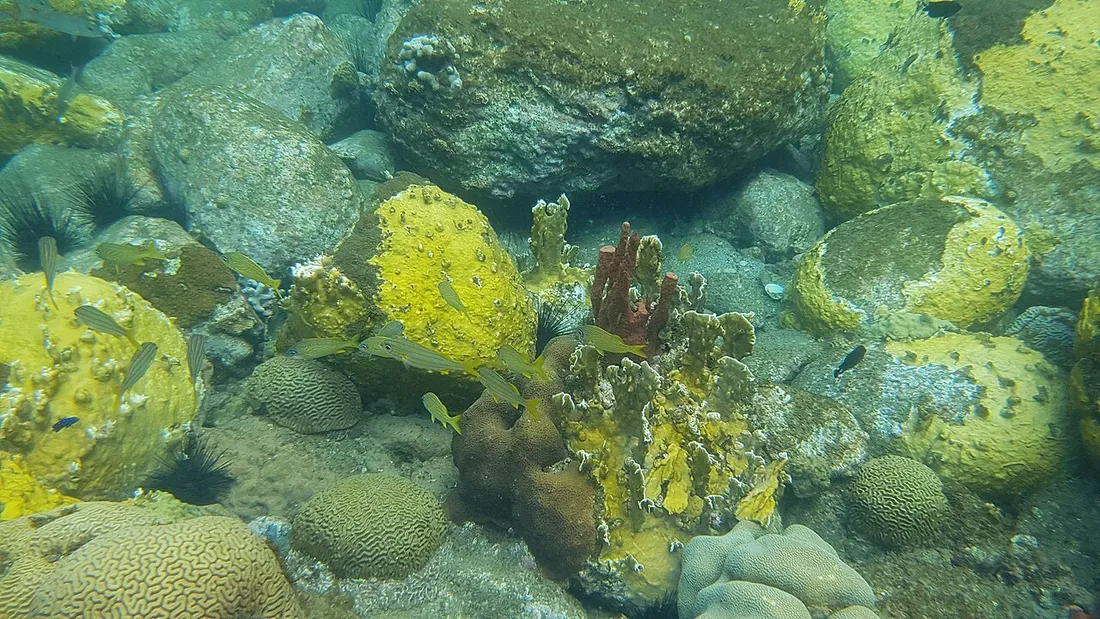
- Dense, visible marine life right from the surface: parrotfish, turtles, sea fans, spiny lobsters.
- Snorkelling is possible for companions who don’t dive.
Realistic budget and logistics
- First dive (1 individually supervised dive): roughly €60 to €75.
- Pack of 3 first dives/explorations: often €160 to €200.
- Open Water / Level 1 training: budget €350 to €450 over 3 to 4 days, certification included.
Choose a dive club affiliated with the FFESSM or a PADI/SSI centre depending on the certification you’re after: go for the PADI Open Water if you plan to dive internationally, the FFESSM Level 1 if you’ll stay within the French-speaking sphere. Book the morning session: the sea is flatter and the light is better.
Intermediate level (Level 1/2, Open Water): exploring beyond the reserve
Once you’ve earned your first certification, the archipelago opens up. With a Level 1 or Advanced Open Water, you gain access to supervised explorations down to 20 m, and Level 2 allows you autonomy at 20 m, then supervised diving down to 40 m.
The sites to aim for
- Pointe Barracuda and the Pigeon Islets drop-off: a colourful wall descending into the blue, ideal for working on buoyancy.
- Le Sec Pâté, off Basse-Terre: a spectacular underwater mountain, reserved for experienced divers and calm-sea days (full-day outing, early start).
- The Gosier and Sainte-Anne sites on Grande-Terre: coral heads, turtle seagrass beds, moderate depths, but to be scheduled outside windy spells.
Expect €45 to €60 per exploration dive with tank and weights, with discounts on a card of 6 or 10 dives (often around €40 per dive). Remember to travel with your dive logbook and your certification card: no serious club will let you go down on an exploration without proof of level.
Advanced and technical level: the wrecks of Grande-Terre
This is where Guadeloupe surprises seasoned divers. The southern coast of Grande-Terre and the passes towards Petite-Terre harbour wrecks and deep sites that require a Level 3, a PADI Rescue/Deep, or even Tek training for the most committed.
What awaits high-level certifications
- Submerged wrecks and reliefs beyond 35-40 m, to be dived autonomously or under technical supervision depending on your privileges.
- Nitrox diving recommended to extend bottom time: have your qualification validated before departure or take it locally (1 day, around €150).
- Petite-Terre: a protected nature reserve, rays, reef lemon sharks, to be dived only when the sea is manageable. The outing often includes the crossing and a lunch break ashore.
For these outings, the weather window is decisive. In the dry season, watch the swell forecast: a sustained trade wind closes the Atlantic side of Grande-Terre overnight. A good club will cancel and reschedule — that’s a mark of professionalism, not a flaw.
How to choose your club based on your level
Not all centres are equal, and the right choice depends on your goal:
- Just starting out? Favour a club in the Bouillante / Malendure area, with small groups and an instructor dedicated to your first dive.
- Training for a certification? Check the affiliation (FFESSM, PADI, SSI), the availability of a real theory session and the student/instructor ratio.
- Experienced? Ask which deep sites and wrecks are on the programme, the availability of Nitrox and the weather cancellation policy.
Questions to ask systematically before booking:
- Is the gear (regulator, BCD, wetsuit) included or extra?
- What is the cancellation deadline and the policy if the sea is closed?
- Do deep outings leave in the morning (calmer sea)?
Organising from your accommodation: the real time-saver
Logistics make all the difference. Diving at Malendure in the morning and then enjoying the Grande Anse de Deshaies in the afternoon means being lodged on the right side of the butterfly. Conversely, targeting the Grande-Terre wrecks from Saint-François saves 1h30 of daily driving.
This is precisely where a well-placed stay changes everything. At Hostel Toucan, we place our travellers as close as possible to their diving programme — leeward coast for beginners, south Grande-Terre for the experienced — and we share our personally tested club contacts. Booking is free of platform fees, cancellation is free up to 7 days before arrival (handy when the diving weather firms up late), and our WhatsApp support answers 7 days a week to line up your time slots, your car rental and your transfers.
To prepare your whole stay, check out our complete guide to Guadeloupe, browse our rentals in Guadeloupe ideally located for diving, and if you own a property on the archipelago, discover our concierge service for owners.
The level-by-level recap
- Beginner (first dive, Level 1/Open Water): Cousteau Reserve, Malendure, Bouillante. Calm sea, €60-75 for the first dive.
- Intermediate (Level 1/2, AOW): Pigeon Islets drop-offs, Sec Pâté in calm seas, Gosier sites. €45-60 per exploration.
- Advanced / technical (Level 3, Deep, Tek, Nitrox): Grande-Terre wrecks and passes, Petite-Terre in manageable seas. Book in the morning, watch the swell.
Whatever your certification, the golden rule stays the same: match the spot to the coast and the sea of the day. Do that, and diving in Guadeloupe will offer you some of the most beautiful immersions in the Caribbean.
FAQ
When is the best time to dive in Guadeloupe?
The dry season, from December to April, is ideal: the swell is weaker, visibility is optimal and the water hovers between 26 and 28 °C. It’s also the best window for deep outings and trips to Petite-Terre, which depend on a manageable sea. In any season, favour morning outings, which are calmer.
Do you need a certification to dive at the Cousteau Reserve?
No. The Cousteau Reserve, off Bouillante, is perfect for a first dive with no experience at all: the dive is individually supervised by an instructor, at shallow depth. If you’re already certified, present your card and logbook to access the explorations and the Pigeon Islets drop-offs.
What budget should you plan for diving in Guadeloupe?
Budget around €60 to €75 for a first dive, €45 to €60 per exploration dive (discounted on a card of 6 or 10), €350 to €450 for a Level 1 or Open Water course over 3 to 4 days, and around €150 for the Nitrox qualification. Always check whether the gear is included.
Are the Grande-Terre wrecks accessible to beginners?
No. The wrecks and deep sites of the southern coast of Grande-Terre often go beyond 35-40 m and require a Level 3, a Deep certification or technical training, ideally with a Nitrox qualification. They can only be dived in a manageable sea. Beginners stay on the sheltered coast of Basse-Terre.