
You have just been told about your overseas posting, and one question keeps coming back: French Guiana or the French West Indies, what should you really expect? Whether you are a transferred civil servant, a seconded employee, a member of the military, hospital staff or a private-sector manager, you are leaving mainland France for a territory that, despite the tricolour flag and the euro, often feels far more like a genuine change of world than a simple move from one region to another. French Guiana, Martinique and Guadeloupe are three French départements that differ enormously from each other: climate, geography, housing market, economic fabric, everyday atmosphere. This article offers an honest, concrete comparison to help you anticipate your arrival, avoid unpleasant surprises and organise your first weeks on the ground. The figures given here are indicative and vary considerably depending on the municipality, the season and your own situation: treat them as orders of magnitude, not as set in stone.
Three territories, three realities
Before comparing, you need to understand that “the Atlantic overseas territories” covers quite distinct worlds.
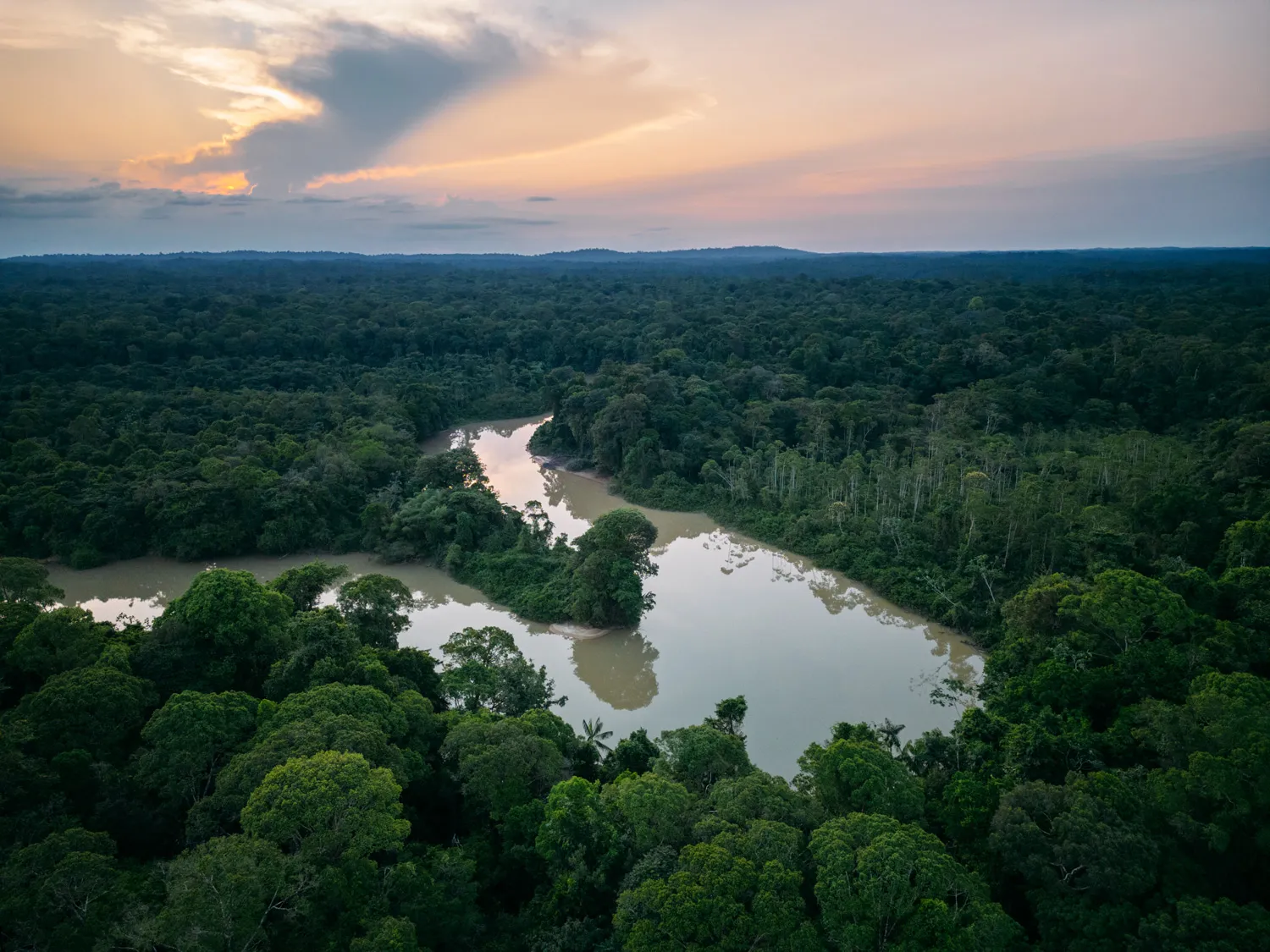
French Guiana is a vast South American territory (the largest French département), more than 90% covered by Amazonian rainforest. People mainly come for Cayenne, Kourou (the space centre), Rémire-Montjoly or Saint-Laurent-du-Maroni. It is a young territory with strong population growth, driven by the public sector, the space industry, healthcare and construction. The change of scenery is total: constant humid heat, nature everywhere, intense multiculturalism (Creoles, Bushinengués, Amerindians, Brazilian, Haitian, Chinese and Hmong communities).
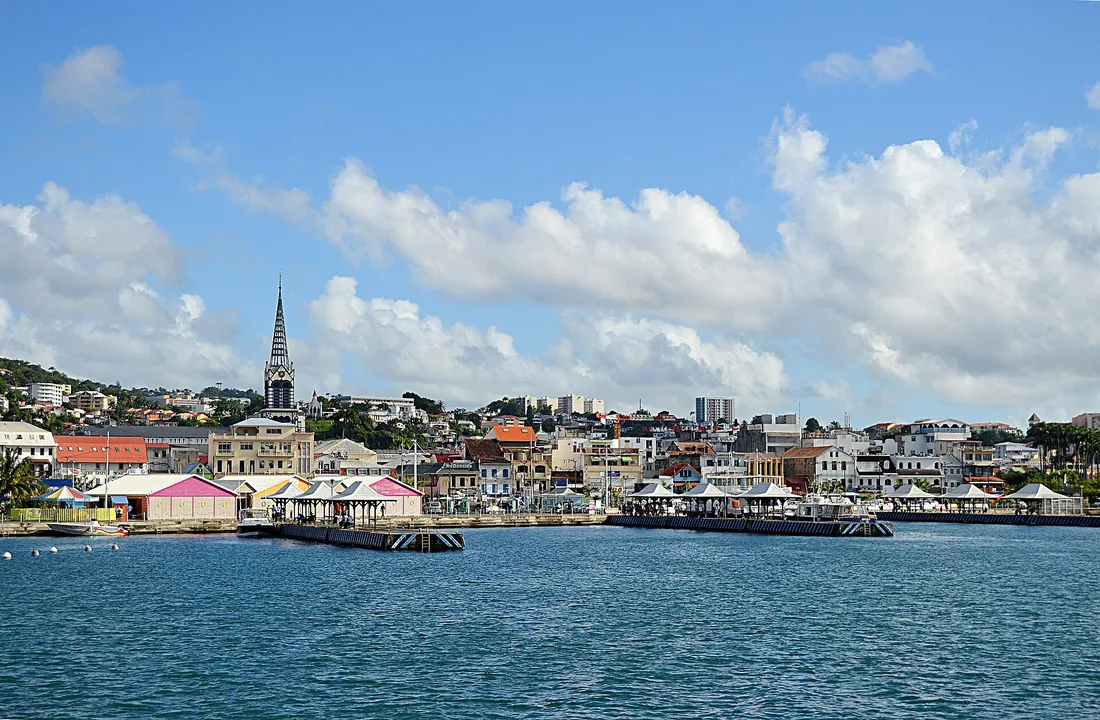
Martinique is a volcanic, mountainous island, more “urban” and structured around Fort-de-France, Le Lamentin and the central belt. Its economy rests on services, tourism, public administration, healthcare and agriculture (bananas, sugar cane, rum). Daily life there is often perceived as more “mainland” in the way it is organised, with dense infrastructure.
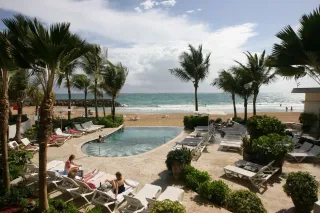
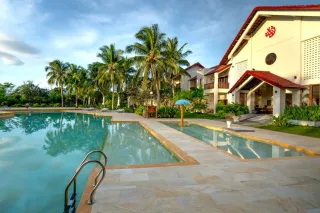
Guadeloupe is a butterfly-shaped archipelago (drier, more touristy Grande-Terre and greener, mountainous Basse-Terre), plus Les Saintes, Marie-Galante and La Désirade. Pointe-à-Pitre and the business zone of Les Abymes / Baie-Mahault concentrate most jobs. The atmosphere blends seaside living, lush nature and a strong cultural identity.
What really changes compared with mainland France
- Island life (West Indies) or continental isolation (French Guiana): anything imported costs more.
- The tropical climate imposes a different rhythm and different equipment (ventilation, mosquitoes, humidity).
- Administrative and logistical timelines are often longer.
- Social ties and Creole culture shape everyday life to a large extent.
Housing: the crux of the matter
Finding somewhere to live is the first challenge of a posting. The overseas rental market is tight in employment areas, with limited supply and strong demand, especially for good-quality, well-located properties.
Where to look, territory by territory
- French Guiana: newcomers often target Cayenne (Montabo, Baduel and central neighbourhoods), Rémire-Montjoly (residential and sought-after, close to the beaches) and Matoury (near the airport). Kourou attracts profiles linked to the space centre. Saint-Laurent-du-Maroni is another hub, to the west.
- Martinique: demand is concentrated in the centre (Fort-de-France, Schoelcher, Le Lamentin, Ducos, Le François). The southern municipalities (Les Trois-Îlets, Sainte-Anne, Le Diamant) are more seaside-oriented but further from the job centres.
- Guadeloupe: Le Gosier, Les Abymes, Baie-Mahault (the Jarry business hub) and Petit-Bourg are popular for their proximity to work; Sainte-Anne and Saint-François for the lifestyle.
Budget benchmarks (for guidance only)
Rents vary enormously depending on condition, location and whether there is a pool or a view. As a rough guide only, a decent one- or two-bedroom flat in a sought-after area often falls in a range that can run from several hundred to more than a thousand euros per month, with peaks for villas. Requests for guarantees (guarantor, deposit, supporting documents) are standard.
One crucial point: never sign a lease remotely without having seen the property, either in person or via a serious video viewing. Rental scams do exist, and they specifically target people on postings who are in a hurry to secure housing before they arrive.
The temporary accommodation solution
The golden rule for anyone on a posting: arrive, settle in for a few weeks, then choose your permanent home with full knowledge of the facts. Temporary furnished accommodation (a few weeks to a few months) allows you to:
- visit neighbourhoods at different times of day (noise, traffic, atmosphere);
- meet landlords and agencies in person;
- avoid rushing into a lease you will regret.
That is exactly the kind of solution we offer through our rentals: furnished, fully equipped, move-in-ready accommodation designed for a stress-free arrival.
Cost of living and purchasing power
The overseas cost of living is structurally higher than in mainland France on many items, because of the distance, imports and local taxation (the octroi de mer).
What costs more
- Food, especially imported goods and mainland brands. Local produce (tropical fruit and vegetables, fish) is more affordable if you adapt your shopping basket.
- Household appliances, electronics, cars and anything that crosses the ocean.
- Some services and energy.
What offsets it (partly)
- The salary uplift for civil servants (the uplift coefficient varies by territory) improves purchasing power. The terms differ between the West Indies and French Guiana: check with your administration.
- The climate cuts certain costs (no heating, a simplified wardrobe).
- Part of the local food supply and outdoor leisure (beach, hiking) costs very little.
Tip: redo your budget forecast before you leave, factoring in any salary uplift, the higher food costs and the car budget (all but essential everywhere).
Jobs, work and your partner
Your posting settles your own professional situation, but your partner’s is often the real issue.
- The job market is narrower than in mainland France, with a historically high unemployment rate across all three territories.
- The sectors that are hiring: healthcare, education, public administration, construction, tourism (West Indies), space industry and services (French Guiana).
- Remote work for a mainland employer is a serious option, provided you plan for the time difference (generally several hours from mainland France, depending on the season).
Anticipate this question early: a partner with no job prospects can undermine the whole family project.