“It’s sunny all year round, right?” That’s the line I hear most often when travelers ask me when to visit Martinique. The honest answer, after years of welcoming guests on the island, is more nuanced: yes, it’s warm all twelve months of the year, but Martinique’s climate has two very distinct faces, and the month you choose changes your trip, your budget, and even the beach where you’ll lay your towel. Here’s a month-by-month calendar, based on real experience, not a brochure.
Martinique’s two seasons (and why they matter)
Martinique, a French overseas department and region (DROM) of around 360,000 inhabitants, lives to the rhythm of two tropical seasons. The air temperature stays between 26 and 32 °C all year, and the sea never drops below 26 °C. What really changes is the rain and the humidity.
- The “carême” (dry season): from December to April. This is the best season in Martinique in the classic sense of the term. Clear skies, refreshing trade winds, brief and rare showers. It’s the high tourist season.
- The “hivernage” (wet season): from June to November. Heavier heat, daily showers that are often short, and above all the hurricane season (peaking in August-September).
- The shoulder seasons: May and November are pivotal, often underrated months that offer an excellent compromise between decent weather and reasonable prices.
A practical reminder: the time difference is -5 h in winter and -6 h in summer relative to Paris, the currency is the euro, the languages are French and Creole, and the dialing code is +596. Aimé Césaire airport is in Le Lamentin, 15-20 minutes from Fort-de-France, the main town.
North Atlantic vs. South Caribbean: the real rainfall map
Here’s what the guides often forget, yet it’s decisive: Martinique doesn’t have one climate, but several microclimates. Mount Pelée and the Pitons du Carbet, in the north, catch the clouds rolling in from the Atlantic. As a result:
- The North Atlantic (Saint-Pierre, Le Carbet, La Trinité, Tartane) gets up to 4,000 to 5,000 mm of rain per year on the heights: lush vegetation, but frequent showers.
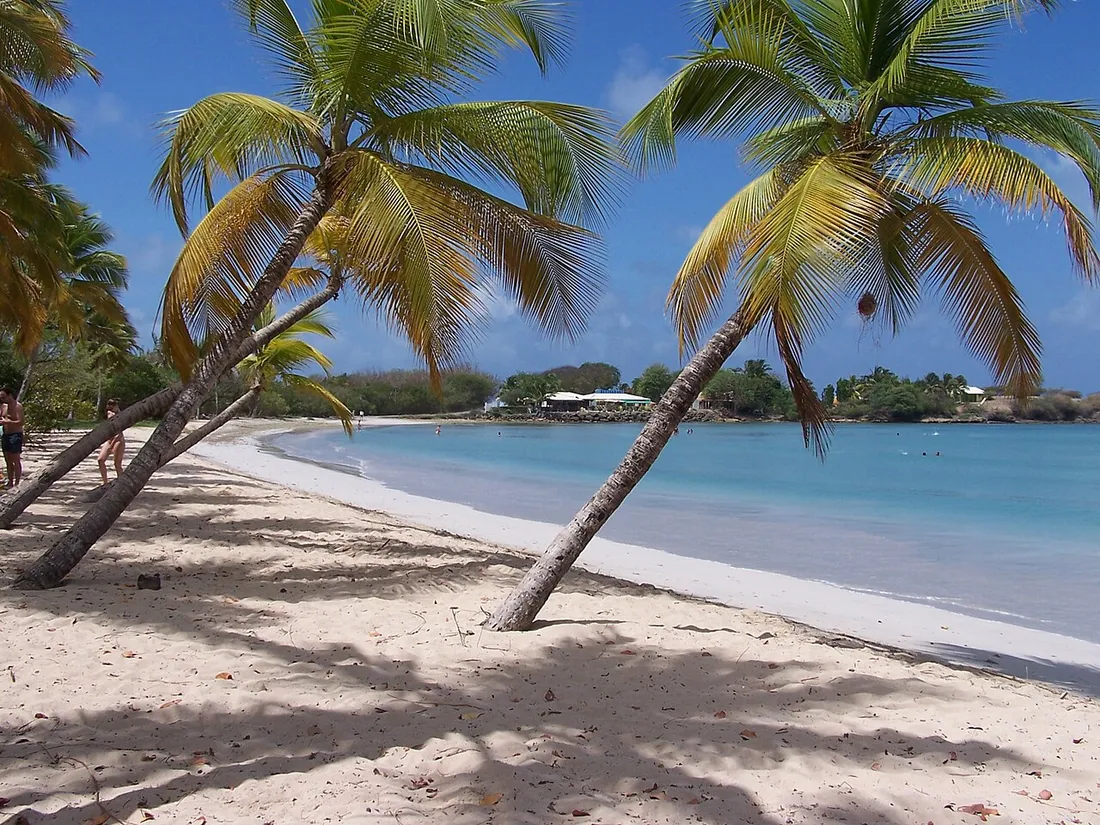
- The South Caribbean (Sainte-Anne, Le Diamant, Les Trois-Îlets, Le Marin) is noticeably drier, with 1,200 to 1,600 mm per year, and concentrates the postcard beaches.
In practical terms: even at the height of the wet season, a downpour can hit the Caravelle peninsula while the sky stays blue at Les Salines in Sainte-Anne. The Martinique climate, month by month, must therefore always be read with this geographical nuance: for a beach holiday in the wet season, you should choose the South without hesitation.
Martinique’s climate month by month
Here’s my on-the-ground calendar, with indicative rainfall figures for the South (the most relevant for most travelers).
December to April: the heart of the dry season
- December: the dry season sets in. About 110-130 mm of rain, bright days. The end of the month is in high demand (holidays), so book early.
- January: one of the best months. 60-80 mm, pleasant trade winds, low humidity, and a sea that’s often calm on the Caribbean side.
- February: dry and sunny (50-70 mm). It’s also the month of carnival, a cultural highlight not to be missed (February-March). Crowds and prices at their peak.
- March: the driest month of the year (40-60 mm). Ideal for hiking Mount Pelée or the Trace des Caps without rain.
- April: still very dry early in the month, with the heat rising. An excellent window, especially outside the school holidays.
This is the ideal period for the southern beaches (Les Salines, Anse Dufour, Anse Noire with its volcanic sand, Grande Anse), the Rum Route (Clément, Depaz, Saint-James, La Mauny, Trois-Rivières distilleries, AOC agricultural rum) and the Balata Garden, without fear of showers.
May and June: the clever shoulder season
- May: my favorite month for value for money. The dry season is ending, the showers stay spaced out (100-130 mm). Prices drop, sites are quiet, the sea is warm and nature is still green.
- June: the start of the wet season. The rains intensify (150-180 mm) but often fall in late afternoon, in short bursts. Hurricane risk is still low.
July to November: the wet season and hurricane season
- July: hot and humid, but enlivened by the Tour des Yoles Rondes, a major sailing event. Summer-holiday crowds.
- August: the rainiest along with September (200-250 mm on the South side). Peak of the hurricane season. Heavy but lively.
- September: statistically the riskiest month for tropical waves and hurricanes, but also the calmest and cheapest.
- October: still wet (180-220 mm), even though the second half of the month often dries out. A good bet for flexible travelers.
- November: a transitional shoulder season. The rain eases, crowds stay low. A smart window before the December rush.
Carnival, crowds and budget: the price-vs-season trade-off
Choosing when to go isn’t just a weather question: it’s also a price-vs-crowds calculation.
- High season (mid-December to mid-April, plus July-August): dry season and summer holidays. Demand peaks around the festive season, carnival (February-March) and Easter (the matoutou de crabe tradition). Rentals can show 30 to 50% more than in low season, and the best addresses go 4 to 6 months in advance.
- Low season (September-October): more unpredictable weather, but rock-bottom prices and the island to yourself. A rental that goes for €1,200 a week in February often drops to €750-850 in September.
- Shoulder seasons (May, November): the sweet spot. Still very decent weather, uncrowded sites, gentle prices. If your schedule allows, this is where I’ll send you.
On the airfare side in Martinique’s dry season: a Paris-Fort-de-France flight ranges between €450 and €600 round trip outside the school holidays, but climbs to €800-1,000 during the February or end-of-year breaks. Shifting by a week can sometimes change everything.
Should you be afraid of hurricanes?
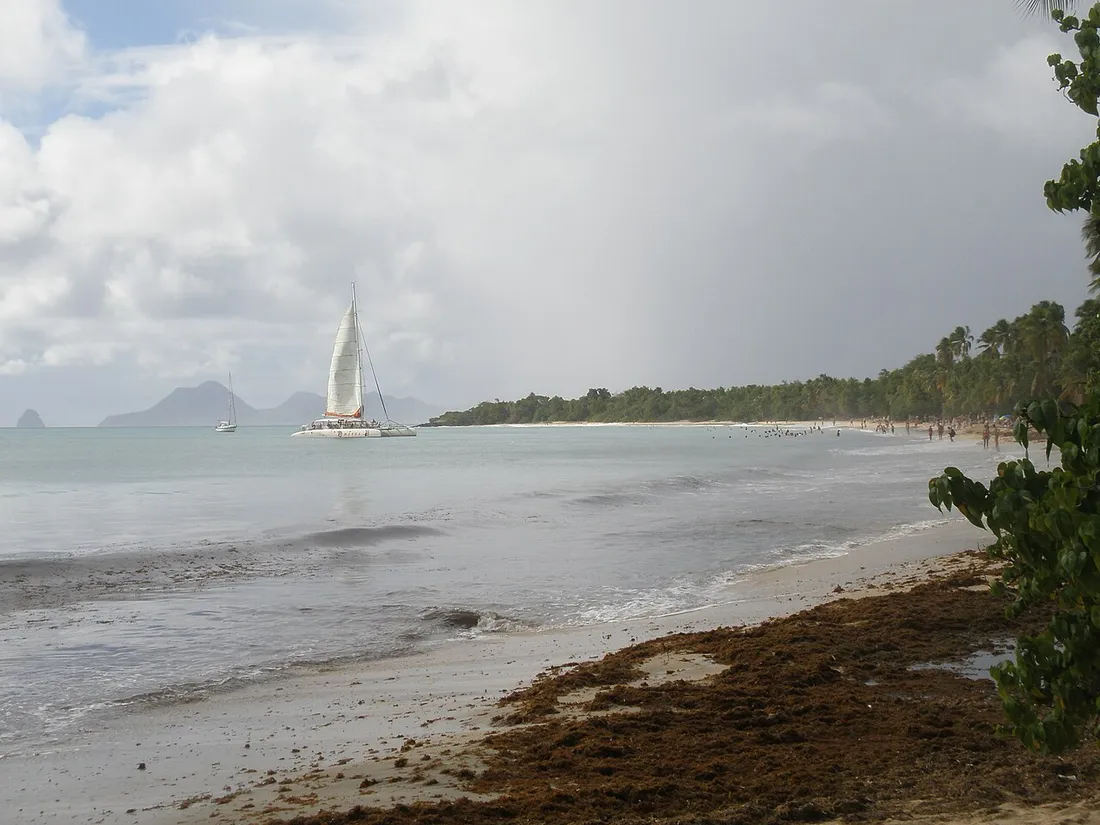
Let’s be factual: the hurricane season runs from June to November, but a hurricane directly hitting Martinique remains rare from one year to the next. The real risk lies mainly with tropical waves (heavy rain over one or two days). If you travel in August-September, take out cancellation insurance covering weather-related events and keep a little margin in your itinerary. It’s also the greenest season, perfect for waterfalls and rivers.
When to go according to your traveler profile
To sum up my local advice, here are the windows I recommend:
- Guaranteed beaches and lazing around: February to April (South Caribbean), blue skies almost assured.
- Small budget and peace and quiet: September to November, accepting a few showers.
- Best weather-price compromise: May and November, no hesitation.
- Atmosphere and culture: February-March for carnival, July-August for the yoles.
- Hiking (Pelée, Pitons, Caravelle, the UNESCO-listed ruins of Saint-Pierre): March-April, dry trails and good visibility.
Whatever the season, a car is strongly recommended to reach at your own pace the southern beaches, the Rum Route, Diamond Rock or Les Trois-Îlets (land of Joséphine de Beauharnais).
Booking your stay at the right time with Hostel Toucan
Choosing the right window is good; securing the right accommodation is better. At Hostel Toucan, a concierge service and specialist in vacation rentals across the French overseas territories (DROM), we tailor your stay to the season, the weather in your chosen town and your budget. Booking is done directly, with no platform fees, with free cancellation up to 7 days before arrival: ideal if you’re targeting the wet season and want flexibility in the face of weather uncertainties. And our 7-day WhatsApp support answers your questions before and during the trip, from tide times to the best beach depending on the day’s wind.
To prepare your trip, browse our complete guide to Martinique, explore our rentals in Martinique town by town, and if you own a property on the island, see how we support owners all year round, in both high and low season.
FAQ
What is the best month to visit Martinique?
If you’re looking for bright sun and a calm sea, March is the driest and most reliable month, followed by February and April. For the best value for money, aim for May or November: the weather stays very decent on the South Caribbean side, with prices and crowds far gentler than in the heart of the dry season.
Can you go to Martinique during the rainy season?
Yes, absolutely. The wet season (June to November) doesn’t mean it rains nonstop: the showers are often brief and fall at the end of the day, especially in the South. You’ll enjoy a lush green island, full waterfalls and lower prices. Just avoid betting everything on the rainier North Atlantic coast, and plan for cancellation insurance in August-September.
What’s the climate difference between the North and South of Martinique?
The North Atlantic (Saint-Pierre, Le Carbet, Tartane) is much wetter and greener, with up to 4,000-5,000 mm of rain per year on the heights. The South Caribbean (Sainte-Anne, Le Diamant, Les Trois-Îlets) is noticeably drier, around 1,200-1,600 mm, and concentrates the most beautiful sunny beaches. For a beach holiday, especially in the wet season, the South is the way to go.
Should you book your accommodation well in advance?
For the dry season, carnival (February-March), Easter or the end-of-year holidays, yes: the best rentals go 4 to 6 months in advance and prices climb. In low season (September-October) or the shoulder seasons, you keep much more flexibility. With Hostel Toucan, free cancellation up to 7 days before arrival lets you book early without locking yourself in.