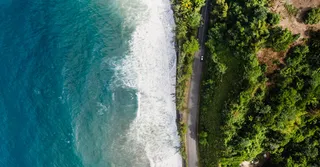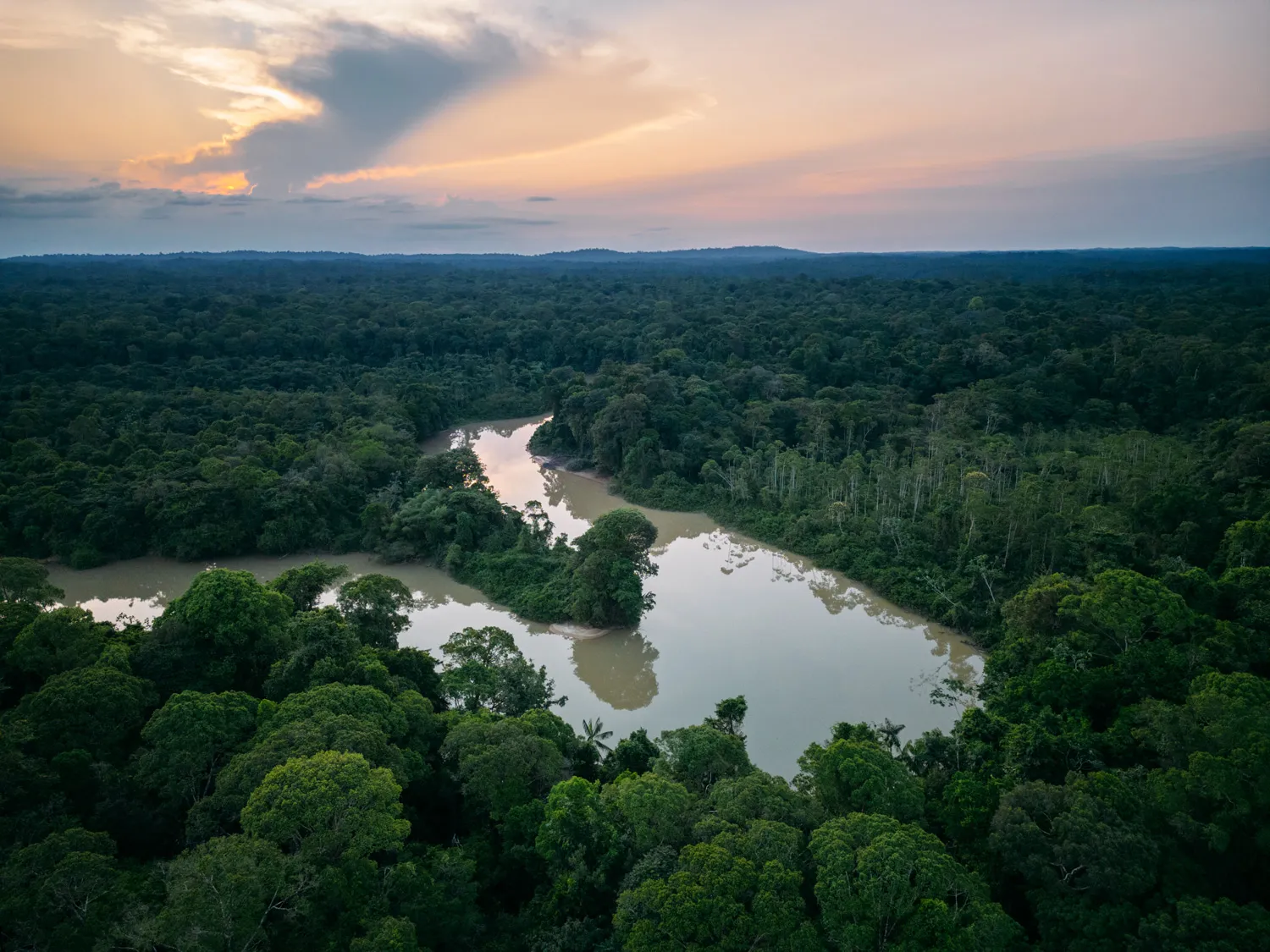
When you ask the people of Cayenne which beach is their favourite, one name always comes up: les Salines. Located in the town of Rémire-Montjoly, about fifteen minutes from the centre of Cayenne, Salines Montjoly beach is arguably the finest ribbon of sand on the Guianese coast. Coconut palms leaning over the ocean, pale sand, discreet yet fascinating wildlife: this is where Guianese families come to spend their Sundays. But to make the most of it, you need to understand two things many visitors discover too late: the rhythm of the tides and the animal life teeming beneath your feet. Here is everything a resident would love to tell you before your first swim.
Where Salines beach is and why it is so popular
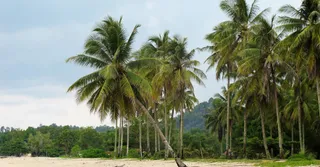
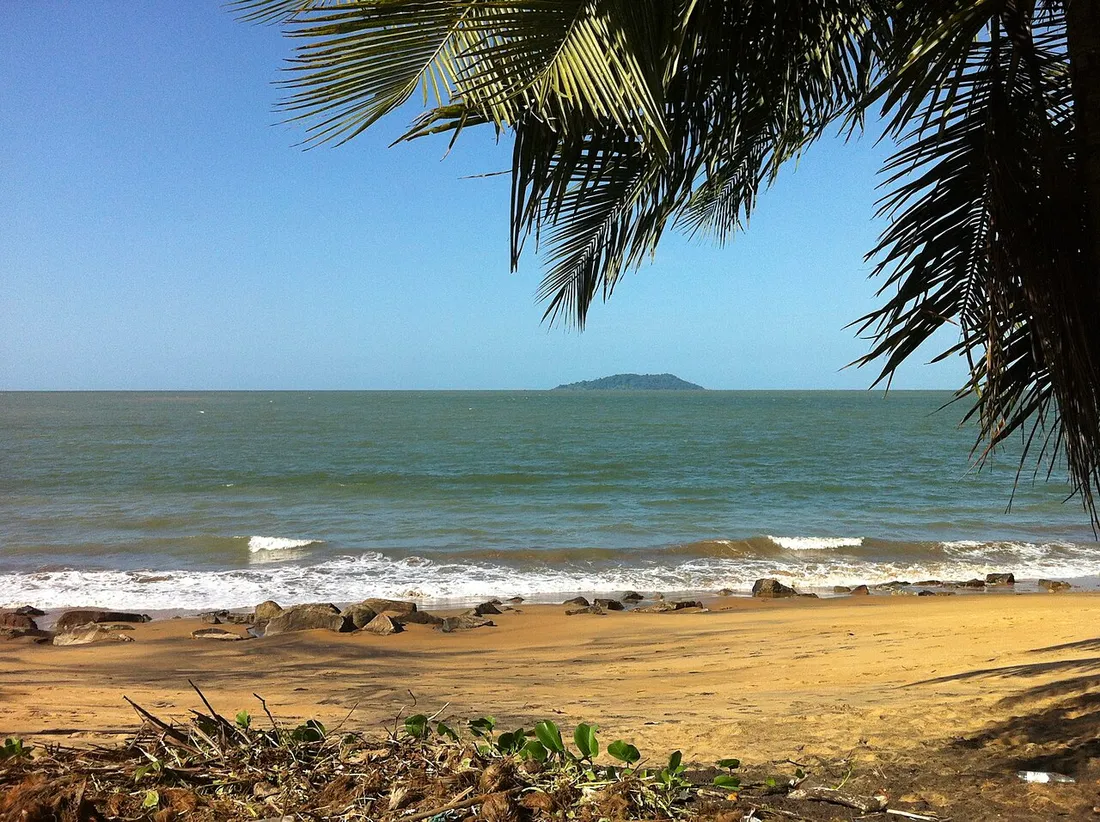
Salines beach lies at the south-eastern tip of Rémire-Montjoly, at the foot of the Rorota trail and the Mahury mountain. It is a long beach, lined with a coconut grove and dense coastal vegetation that provides natural shade, a rare and precious thing under the equatorial sun. It’s the same stretch of coast you look out on from Villa Mahury, with its direct access to the beach, at the foot of the mountain it is named after.
From the centre of Cayenne, allow roughly 12 to 15 km and 20 minutes by car. In French Guiana, a car is essential: there is no convenient public transport network to reach these beaches, and a vehicle remains the best way to explore the department. Parking is free along the road that runs alongside the beach.
Why do locals love it?
- The sand here is paler and finer than on other Guianese beaches, which are often marked by sediment from the Amazon.
- The coconut grove creates the atmosphere of a tropical postcard.
- The vibe is family-friendly and convivial, especially at weekends.
- You will find a few carbets and shaded areas for picnicking.
A useful reminder: the water along the Guianese coast is naturally ochre to brownish, due to the alluvium of the Amazon River carried by the Guiana Current. This is not pollution; it is the geographical signature of the region. You come to les Salines for the setting, the walk and the atmosphere more than for turquoise water.
Understanding the tides: the key to a successful day
This is THE point no one should overlook. The Guianese coast experiences a large tidal range, with variations that can exceed 2 metres between low and high tide. At les Salines, this radically changes the face of the beach in just a few hours.
High tide or low tide: which to choose?
- At high tide, the water rises close to the coconut grove, the strip of sand shrinks, and swimming becomes more accessible and pleasant. This is the ideal time to cool off.
- At low tide, the ocean sometimes retreats several dozen metres, revealing a vast foreshore of sand and mudflats. This is the perfect moment to walk, watch the wildlife and gather shells, but swimming becomes uninteresting.
My local tip: check the tide schedule the day before (many free apps give the times for Cayenne or Dégrad-des-Cannes, both very close). Aim to arrive 2 hours before high tide: you enjoy the beach as it emerges, then the rising water for a swim.
Safety and swimming
Les Salines is not a permanently supervised beach. A few common-sense rules apply:
- Watch children at all times, especially when the tide rises quickly.
- Beware of currents when the tide is going out.
- Avoid wandering too far onto the foreshore at low tide: the sea sometimes comes back faster than you think.
- Bring water, a hat and sunscreen: we are practically on the equator.
Crabs, palms and wildlife: a mini-ecosystem to observe
The great richness of les Salines is its discreet wildlife. Take the time to observe, especially at low tide, and you will discover a genuine little world.
Crabs, stars of the foreshore
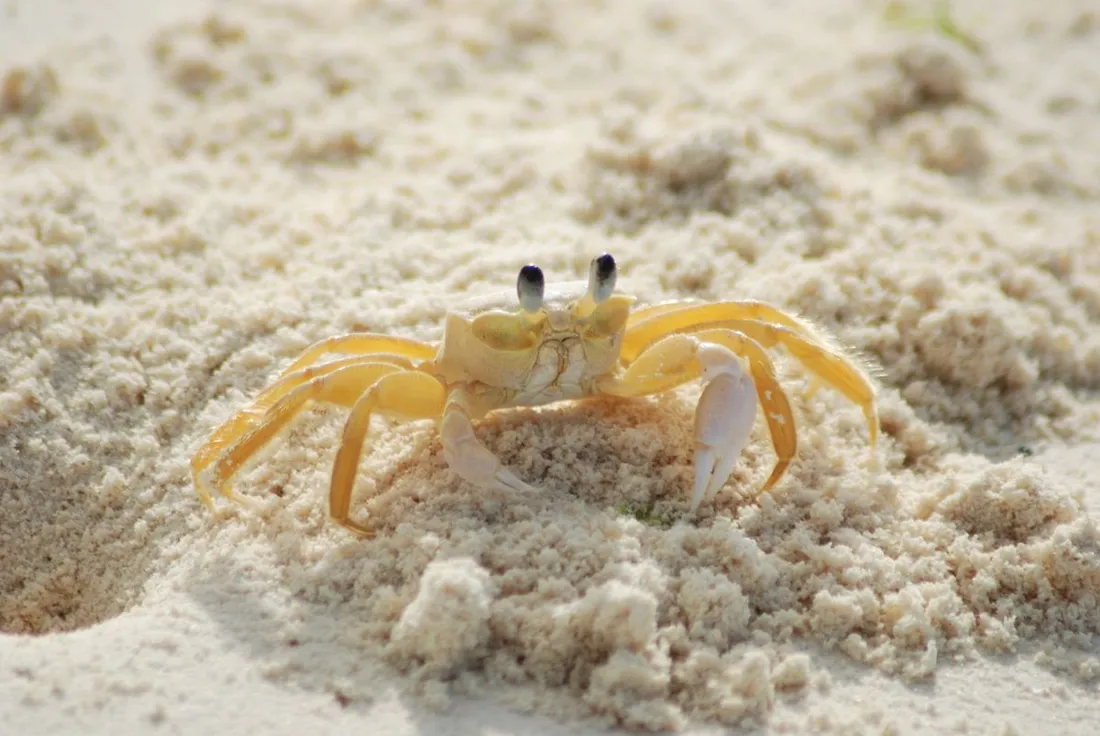
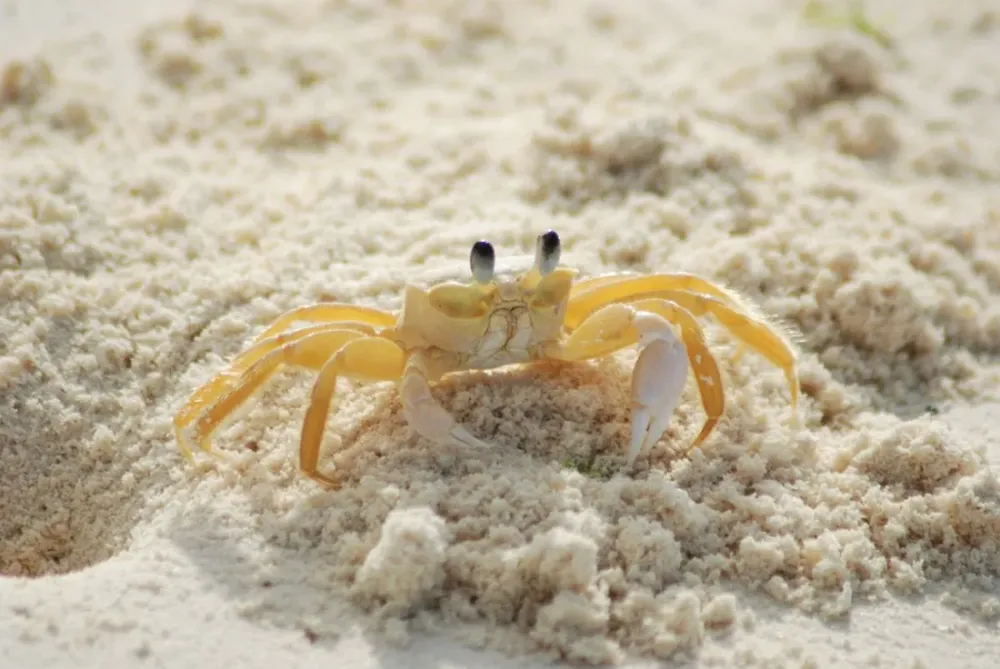
At low tide, the sand becomes covered with tiny pellets: these are the filtration waste of fiddler crabs (the males have an enormous colourful claw that they wave about). Approach gently and you will see dozens of crabs vanish into their burrows as you pass. You will also come across very fast ghost crabs, perfectly camouflaged in the pale sand.
A few rules of respect:
- We watch; we do not capture.
- We do not trample the burrows.
- We keep our distance so as not to stress the animals.
Palms and the coconut grove
The coconut palms lining the beach are its very charm, but be careful: never settle directly under a ripe coconut. Choose an open space to spread your towel. The coastal vegetation (sea grapes by the shore, mangroves in the background) is also home to many birds.
Birds and other residents
Look up: frigatebirds, herons, egrets and shorebirds frequent the foreshore. At dusk, the atmosphere becomes magical. And if you come for nature, know that the beaches of Montjoly and the surrounding area also host, in season, the nesting of sea turtles. To witness the exceptional spectacle of leatherback turtles, however, the reference remains Awala-Yalimapo, in the west of the department.
When to visit les Salines
French Guiana has a dry season from July to late November, the ideal period for the beaches: less rain, clearer skies, more welcoming sand. The rest of the year, tropical showers are frequent but often brief.
For the atmosphere:
- On weekdays, in the morning: quiet, ideal for walking and watching the wildlife.
- At the weekend: a Guianese family vibe, picnics and conviviality.
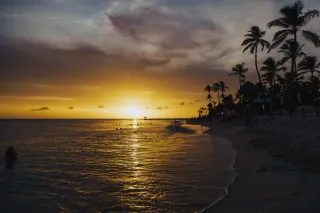
- At the end of the day: soft light and sunsets over the coconut grove.
A practical reminder for visitors coming from mainland France: the time difference is -5h in winter and -6h in summer compared with Paris, and the yellow fever vaccine is mandatory to stay in French Guiana. On site, you pay in euros and the telephone dialling code is +594.