“We booked a dream week and the beach below smelled of rotten eggs.” This message from a traveler who ran into a massive landing has become the first point we raise with our guests. Sargassum in Martinique is neither a permanent disaster nor a trivial detail: it consists of brown algae that drift in from the Atlantic and wash up on certain coasts at certain times of year. The good news, after years of organizing stays on the island, is that the phenomenon is largely predictable — provided you know where to look and when to come. With a few simple geographic reference points and two or three forecasting tools, you’ll avoid the algae in the vast majority of cases. Here is the map and the calendar we wish someone had given us.
Where sargassum comes from (and why it changes everything)
Sargassum does not grow around Martinique. It originates in a vast floating mass in the tropical Atlantic, the “great sargassum belt,” between West Africa and Brazil. Driven by the easterly trade winds, these rafts of algae cross the ocean and arrive from the east. That is the key to everything: in Martinique, sargassum first strikes the side that faces the Atlantic.
In practical terms, remember three things:
- It is natural algae, not chemical pollution. Fresh and floating at sea, it is harmless.
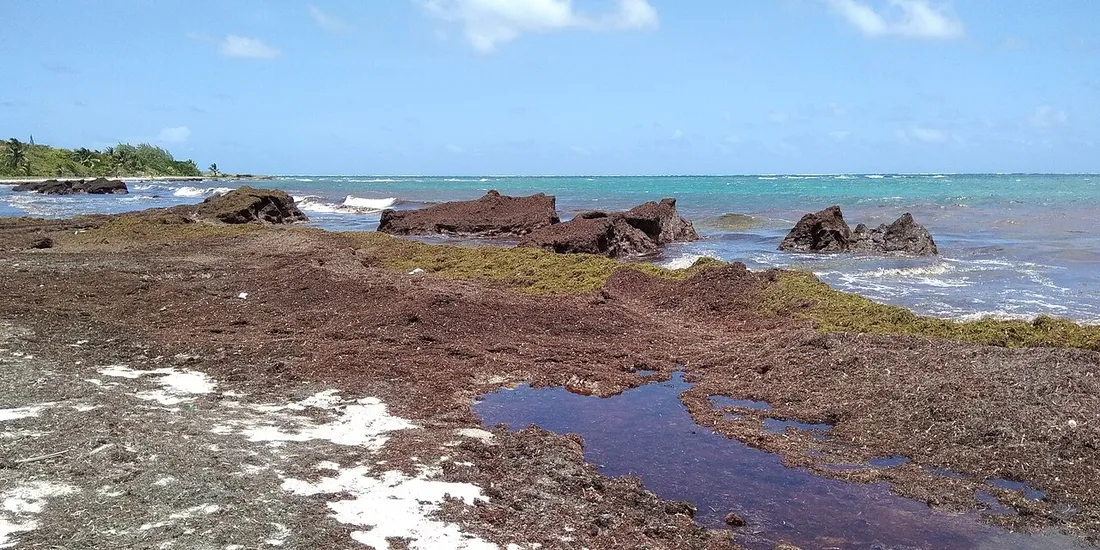
- The problem arises on land: as it rots on the sand, it releases hydrogen sulfide (the rotten-egg smell) and ammonia. It is this decay, not the fresh algae, that creates the nuisance.
- The arrival depends on the wind of the moment, so it varies from one week to the next — hence the value of the forecasting tools below.
For context: Martinique is a French overseas department (DROM) of about 360,000 inhabitants, capital Fort-de-France, euro currency, -5 h in winter and -6 h in summer relative to Paris, dialing code +596. The island is barely 70 km long, and yet its two coasts experience sargassum very differently.
Atlantic coast versus Caribbean coast: the sargassum map
If you remember only one sentence: sargassum arrives from the Atlantic; the Caribbean side is overwhelmingly spared. Same logic as for swell and currents — this is your main decision-making lever.
The Atlantic side (east): the exposed zone
This is where the landings concentrate, sometimes spectacularly. The Atlantic coast and the enclosed bays that trap the algae are the most affected:
- Le François and Le Robert: superb white sandbanks, but very exposed during major landings.
- Le Vauclin, Le Marin (head of the bay) and certain coves of Cap Chevalier.
- La Trinité / Tartane and the Caravelle peninsula, on the windward side.
- The far south Atlantic: Cap Macré and the Baie des Anglais toward Sainte-Anne.
These towns are not to be avoided all year round — outside a landing, the water there is sublime. But if you stay on the Atlantic side during sargassum season, plan a fallback on the Caribbean side for the day.
The Caribbean side (west and southwest): the refuge
Sheltered from the swells coming from the east, the Caribbean coast rarely receives sargassum, and in far smaller quantities. These are my reliable anti-sargassum choices:
- Les Anses-d’Arlet: Grande Anse, Petite Anse, Anse Dufour and Anse Noire (black sand).
- Les Trois-Îlets: Anse Mitan, Anse à l’Âne; Le Diamant on the sheltered side.
- Sainte-Anne on the Caribbean side: the Grande Anse des Salines is almost always clear, as is Pointe Marin.
- Saint-Pierre and Le Carbet on the northern Caribbean coast, with black volcanic sand.
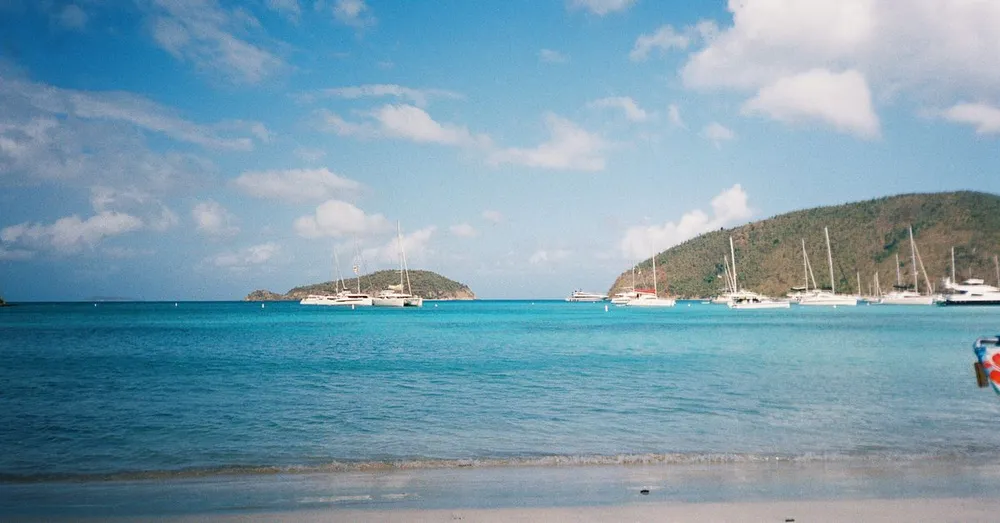
That is why we advise our “beach first” travelers to base themselves on the Caribbean side: you swim with no nasty surprises, and you visit the Atlantic on a day excursion.
When the sargassum comes: the month-by-month calendar
The question “which beaches to avoid” is inseparable from the when. There is a seasonality, even if every year has its surprises. Here is the rhythm we observe — to be taken as a trend, not a guarantee.
- December to March: the calmest period for landings — and it is also the Lenten dry season (carême), the best window to visit. Massive landings are rare.
- April to May: the build-up begins, with the first rafts visible on the Atlantic.
- June to October: the statistical peak. Big landings are most likely on the Atlantic side, with some very heavy weeks and others nearly clean depending on the wind.
- November: a gradual lull and a return to a more forgiving situation.
The overlap is valuable: the low tourist season (summer–autumn) coincides with the sargassum peak on the Atlantic side, while the high dry season (December–April) is the quietest. Coming in summer is not a reason to give up, but a reason to choose your coast carefully and to check the forecast the day before.
A wind logic to understand
Beyond the calendar, what triggers a landing within 24 to 72 h is the direction of the trade winds. A sustained easterly wind pushes the rafts toward the Atlantic; a wind that swings to the south can spare a bay that is usually affected. Two beaches just 5 km apart, on the same side, can thus show opposite situations on the same morning.
The sargassum forecasting tools to know
This is where the difference between enduring and anticipating plays out. Several resources allow real sargassum forecasting in the Caribbean, and we check them reflexively before our arrivals.
- The landing forecast bulletins for Martinique: they estimate, a few days out, the risk of a landing by coastal sector. This is the foundation.
- Community reporting apps: residents and visitors note the state of beaches in real time, photo included. Ideal for confirming the evening before.
- Beach webcams and local social-media groups: nothing beats a same-day image.
- Your hosts on site: often the most reliable channel, as they know the state of the sector day by day.
Our morning reflex in season: a glance at the bulletin, another at a Caribbean webcam, and the choice of beach is made in two minutes.
Smell, health and closed beaches: what you really need to know
Why so much attention to this sargassum algae? Because on land, as it decomposes, it poses two concrete problems.
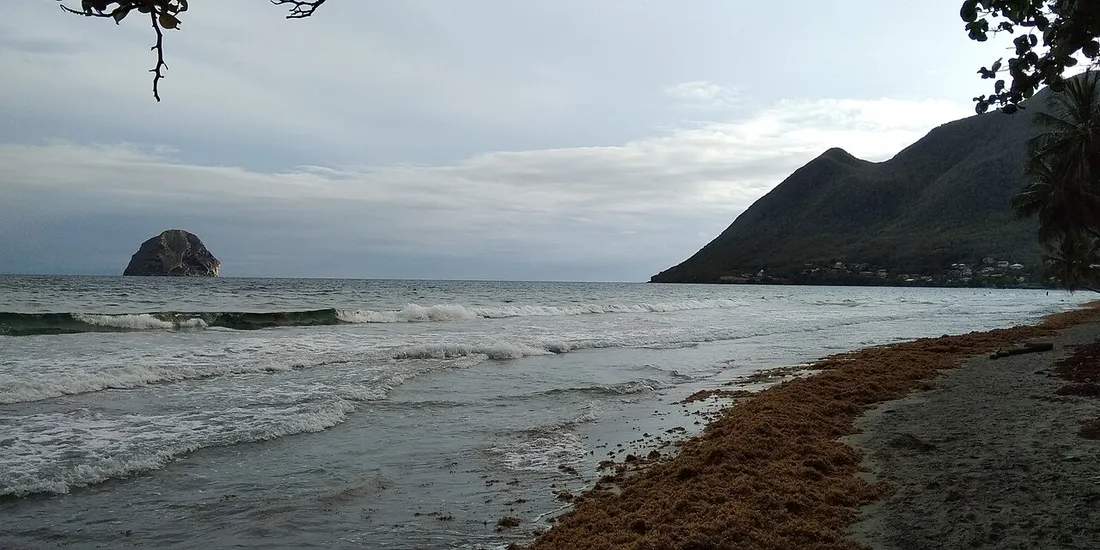
- The smell: hydrogen sulfide smells of rotten eggs. Unpleasant in a poorly ventilated enclosed bay, but usually bearable in the open air.
- Health: on a massive, old landing, the fumes can bother sensitive people (headaches, irritation of the eyes, nose or throat, nausea). The most exposed people — pregnant women, infants, the elderly, asthmatics or people with heart conditions — should be more cautious. The authorities then advise against lingering or swimming, and some beaches may be temporarily closed during the cleanup.
A few simple rules: do not settle in or swim on a beach covered with decomposing piles, keep away from the stranded heaps (especially in hot, windless weather), and if you stay near an exposed Atlantic zone, air out during the day when the wind disperses the gases. The good news: on a freshly cleaned or spared beach, there is none of this. The tourist towns organize regular cleanups, often at dawn with a tractor, and swimming resumes normally.
How to build a “sargassum-free” stay: my field advice
Here is the method we apply so that sargassum never spoils a holiday.
- Choose your base on the Caribbean side if the beach is the priority: Anses-d’Arlet, Trois-Îlets, Diamant, Sainte-Anne on the Caribbean side. The odds are in your favor seven days a week.
- Keep the Atlantic for excursions: the white sandbanks of Le François, Caravelle and Cap Chevalier are best visited on a day trip, checking the forecast the day before.
- Favor the dry season (December to April) if you can: ideal weather and a lower landing risk.
- Check the day before, not the week before: a bulletin and a webcam are enough to reroute a day.
- Have two or three backup beaches on different coasts, so you can switch without stress.
A car is a real asset here — and strongly recommended in Martinique anyway: it lets you go from an affected cove to a clean beach in fifteen to twenty minutes (allow 30 to 50 minutes of driving between the two coasts). Also think about filling your days with non-beach must-sees, entirely safe from sargassum: Mount Pelée and the UNESCO-listed ruins of Saint-Pierre, the Balata Garden, the Rum Route (Clément, Depaz, Saint-James, La Mauny and Trois-Rivières distilleries and their AOC agricultural rum), or the village of Trois-Îlets and the story of Joséphine de Beauharnais. Our complete guide to Martinique gathers the essentials.
Book with peace of mind with Hostel Toucan
Anticipating sargassum is exactly the kind of detail where a local concierge makes the difference. At Hostel Toucan, we know the real state of the beaches in each sector and steer our travelers to the right cove, day after day. Our properties in Martinique rentals are booked directly, with no platform fees, with free cancellation up to 7 days before arrival and WhatsApp assistance 7 days a week to tell you, that very morning, where to swim. You write “does the local beach smell of algae?” and we reply with a plan B.
Are you an owner of a property on the coast? Informing travelers and tracking seafront landings are part of what we manage day to day: discover our support for owners.
FAQ
Which Martinique beaches are most affected by sargassum?
Mainly the Atlantic coast (east) and the enclosed bays that trap the algae: Le François, Le Robert, Le Vauclin, the head of the Marin bay, the Caravelle peninsula and the Cap Macré area. The Caribbean coast (Anses-d’Arlet, Trois-Îlets, Diamant, Salines in Sainte-Anne) is overwhelmingly spared.
When is there the most sargassum in Martinique?
The peak generally falls from June to October, in the heart of the wet season. The December–March period, which corresponds to the Lenten dry season (carême) and the high tourist season, is the calmest for landings. April–May and November are shoulder seasons with moderate risk.
Are the Salines in Sainte-Anne affected by sargassum?
The Grande Anse des Salines opens onto the Caribbean side and stays almost always clear, unlike the neighboring Atlantic beaches such as the Baie des Anglais or Cap Macré. It is one of the island’s safe bets, even in season.
How can I forecast the arrival of sargassum during my stay?
Cross-check several sources: the landing forecast bulletins for Martinique, the community reporting apps, the beach webcams and local groups. The simplest option is to ask your hosts on site, who know the state of the coast day by day — at Hostel Toucan, we reply live on WhatsApp.
Is sargassum dangerous to health?
Fresh and floating at sea, no. The risk comes from its decomposition on land, which releases hydrogen sulfide: a rotten-egg smell and, at high concentration, irritation of the eyes and airways. Pregnant women, infants, the elderly and asthmatics should be cautious. On a massive, old landing, it is better not to linger or swim, and some beaches may be temporarily closed during the cleanup. On a clean or spared beach, there is no risk.
What is the best time to avoid sargassum in Martinique?
The dry season, Lent (Carême), from December to April, statistically sees fewer massive landings than summer. It is also the best time to visit the island, with carnival in February–March. Sargassum peaks tend to occur from June to October (sometimes as early as March), but remain unpredictable depending on the currents: always check the forecast the day before your beach day.