“Can you really do Martinique without renting a car?” That question comes up almost as often as the one about the weather. The honest answer, after years of living here and advising our guests, is: yes, but not for everyone, and not for every kind of trip. Public transport in Martinique does exist, and it has even modernised, but it was designed for commuters heading to work, not for tourists wanting to string together the beaches of the South and the distilleries of the North. Let’s take an honest tour.
Public transport in Martinique: what to really expect
The first thing to grasp: there is no single, easy-to-read network like a metro. You piece together several options, most of them centred on Fort-de-France, the island’s main town:
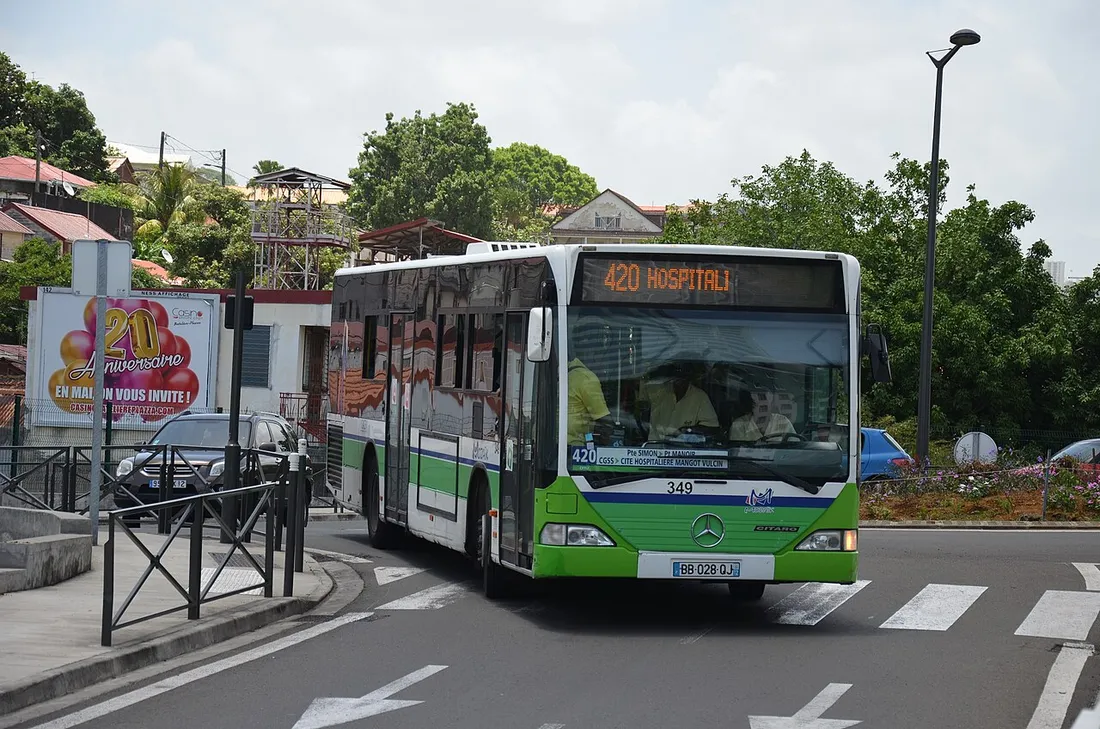
- The Mozaïk network: the buses of the central conurbation (Fort-de-France, Le Lamentin, Schoelcher, Saint-Joseph), with regular lines.
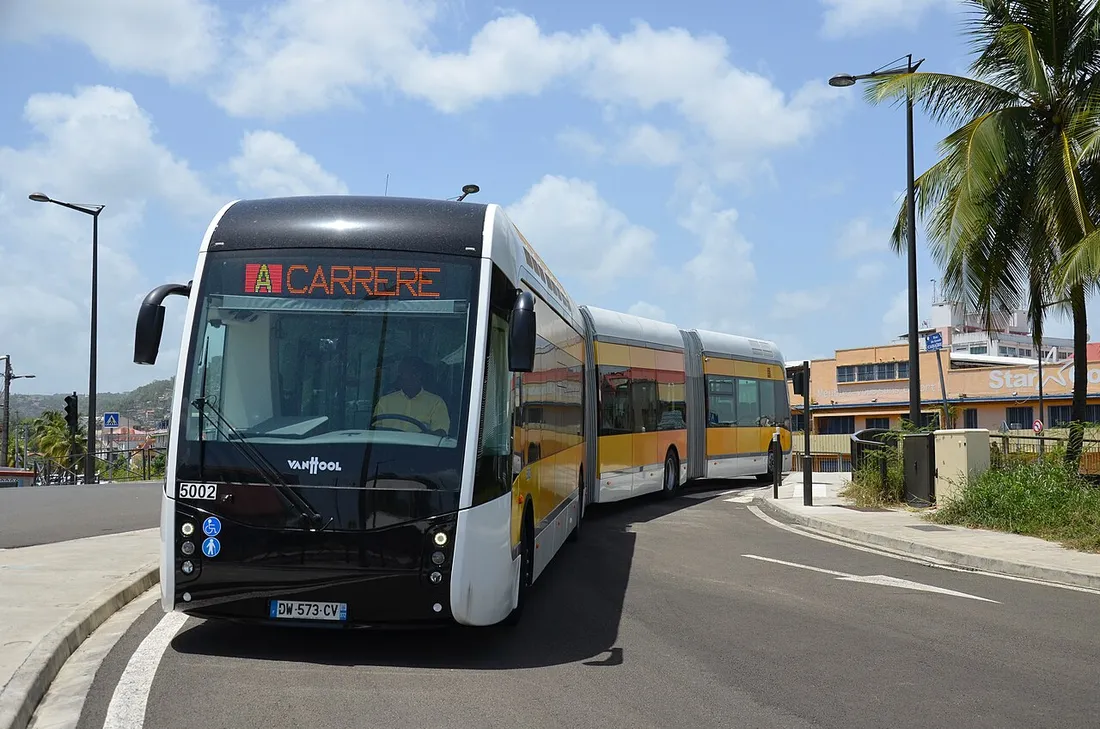
- The TCSP: a high-level bus service running on its own dedicated lane, the backbone of the conurbation.
- The taxicos: shared minibus taxis that link the towns to the centre, with no fixed timetable.
- The ferry shuttles: boats that cross the bay of Fort-de-France, often faster than the road.
The bottom line: these options are reliable on the busy corridors, but more hit-or-miss as soon as you move away from them. Expect to pay anywhere from a few euros to 8–10 € for the longer journeys, on an island that uses the euro just like the rest of France.
The TCSP, the backbone: how to use Martinique’s TCSP bus
If you’re staying in the conurbation, the Martinique TCSP bus is a game changer. The Transport Collectif en Site Propre (dedicated-lane public transport) runs on a reserved lane between Le Lamentin and Fort-de-France, which lets it skip the traffic jams that plague rush hour every day.
What you need to know before hopping on:
- Fast and predictable journeys: the dedicated lane is its great strength, so you arrive on time even when the road is gridlocked.
- Frequent service during the day, ideal for reaching the city centre without hunting for parking.
- Connections with the Mozaïk lines to reach the neighbourhoods.
- Reasonable fare, around 1.50 to 2 € per ticket, with day passes available.
The TCSP is perfect for an urban stay: Fort-de-France on foot, the covered market, Fort Saint-Louis, the Schœlcher library, then back home stress-free. On the other hand, it won’t take you to Les Salines, Saint-Pierre, or along the Rum Route. That’s where the limits begin.
The taxicos, the local soul of getting around
The taxico (pronounced “taxi-co”) is a Martinican institution. These are shared minibuses that leave the bus station in Fort-de-France for the towns: Sainte-Anne, Le Marin, Le François, La Trinité, Saint-Pierre, Les Trois-Îlets…
Here’s how it actually works, because nobody ever explains it:
- No fixed timetable: a taxico leaves when it’s full. At off-peak times, the wait can be long.
- Early morning and late afternoon, the pace follows the commute. In the afternoon and at weekends, service drops off sharply, and on Sundays it is almost non-existent.
- Very affordable fares: often 2 to 8 € depending on the distance, the cheapest way to get around.
- Authentic atmosphere: you travel with the locals, a genuine slice of Creole life.
The taxico in Martinique is brilliant for reaching a town from the centre. But for the return trip, especially after a day at the beach, check the time of the last departure: being stuck in Sainte-Anne late in the afternoon with no vehicle is a guaranteed headache.
The ferry shuttles: the underrated good plan
This is my favourite solution, and by far the most pleasant. The ferry shuttles link Fort-de-France to the southern shore of the bay: Pointe du Bout, Anse Mitan and Anse-à-l’Âne, on the Les Trois-Îlets side.
Why I recommend them every time:
- Faster than the road: about twenty minutes, versus 45 minutes to over an hour by car when the bay is jammed.
- Reasonable fare: around 7 to 8 € one way, with return tickets and books of tickets available.
- Decent frequency during the day, from early morning to early evening, with departures more spread out in the evening.
- Stunning view of Fort-de-France and Fort Saint-Louis, a mini panoramic tour included.
If you’re staying in Les Trois-Îlets, an ideal base for a first trip, you can visit the main town, do the market and head back by boat without ever touching a steering wheel. Line details and timetables in our complete guide to Martinique.
Living Martinique without a car: which travellers can pull it off?
Let’s be concrete. Living Martinique without a car for the length of a stay is doable for some travellers, unworkable for others. Here’s my reading after dozens of real cases.
Going car-free works if:
- You’re doing a city break in Fort-de-France: market, museums, heritage, restaurants, all by TCSP and on foot.
- You’re staying in Les Trois-Îlets and combine ferry shuttle, beaches within walking distance and organised excursions that pick you up.
- You stay based in a single seaside town, in full relaxation mode, and book your outings as guided packages (white-sand sandbars, dolphins, distilleries by tourist shuttle).
- You travel light, without young children, and an occasional taxi doesn’t bother you.
Going car-free falls short if:
- You want to string together the beaches of the South: Les Salines in Sainte-Anne, Anse Dufour, Anse Noire with its volcanic sand, Grande Anse. None of them is properly served by bus.
- You dream of the Rum Route on your own (Clément, Depaz, Saint-James, La Mauny, Trois-Rivières), Mount Pelée, the Balata Garden or the Caravelle peninsula at Tartane.
- You’re planning end-of-day returns from a distant town: the evening and Sunday service is too thin.
- You’re travelling as a family with car seats, a cooler and towels: the logistics on public transport quickly become discouraging.
My local verdict: for a relaxing stay on a well-chosen base, yes. To discover the island in all its diversity, a car is still strongly recommended, at least on a few key days. Many of our guests adopt the hybrid approach: shuttles and walking day to day, a car rental for 2–3 days for the bigger road trips.
Filling the gaps: taxis, ride-hailing and bikes
To plug the holes in public transport in Martinique, a few backup solutions:
- Regular taxis: handy but expensive over long distances (an airport-to-South ride can top 50–60 €) and scarce in the evening.
- Ride-hailing (VTC): a real but limited presence, mostly concentrated in the conurbation.
- Organised excursions: the most effective workaround, with many activities including a transfer from your accommodation.
Aimé Césaire airport, in Le Lamentin (15–20 minutes from the centre), remains poorly connected in the evening: plan a transfer or a taxi for arrival and departure.
Booking in the right place to cut down on travel
The real secret to enjoying Martinique without depending on a car is choosing your base. A rental within walking distance of a beach and a ferry pier transforms the experience.
That’s exactly the point of booking with Hostel Toucan, a concierge service and specialist in holiday rentals across the French overseas territories. Booking is done directly, with no platform fees: no commission inflating the bill. Cancellation is free up to 7 days before arrival, reassuring if your transport plans change. And our WhatsApp support 7 days a week advises you on the best logistics for your accommodation: which shuttle to take, what time the last taxico leaves, which town to choose to go without a car.
To prepare your stay: explore our complete guide to Martinique, compare our rentals in Martinique by their proximity to transport and beaches, and if you own a property on the island, find out how we support owners in showcasing their location to travellers.
FAQ
Can you visit Martinique without a car?
Yes, but for a certain type of trip. If you stay based in the Fort-de-France conurbation or in Les Trois-Îlets and combine TCSP, ferry shuttles, walking and organised excursions, it’s entirely doable. On the other hand, to string together the beaches of the South (Les Salines, Anse Dufour), the Rum Route or Mount Pelée on your own, a car is still strongly recommended, at least for a few days.
What is the TCSP in Martinique?
The TCSP (Transport Collectif en Site Propre) is a high-level bus service running on a reserved lane between Le Lamentin and Fort-de-France. Its great strength is avoiding the conurbation’s traffic jams, common at rush hour. With a ticket around 1.50 to 2 €, it’s the most efficient way to get around the centre without hunting for parking.
How do the taxicos work in Martinique?
Taxicos are shared minibus taxis that link the towns to the Fort-de-France bus station. They leave when full, with no fixed timetable, and cost very little (often 2 to 8 € depending on the distance). They run mainly early in the morning and late in the afternoon; service drops off sharply in the evening and at weekends. Always check the time of the last departure for your return.
How do you reach Les Trois-Îlets from Fort-de-France without a car?
The ferry shuttle is the best option: it crosses the bay in about twenty minutes towards Pointe du Bout, Anse Mitan and Anse-à-l’Âne, for around 7 to 8 € one way. It’s faster and more pleasant than the road, which is often jammed. Regular departures during the day, more spread out in the evening: check the timetable for the last boat.