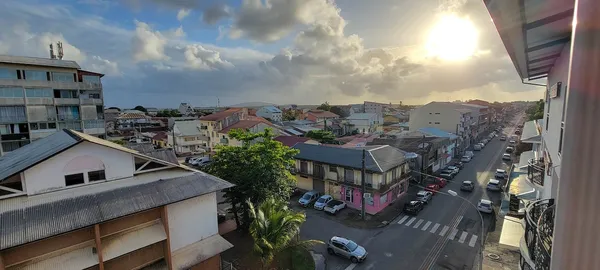

You’ve probably already heard it: in French Guiana, a car is essential. That’s true 80% of the time. But what do you do without a license, on a tight budget, or solo for a few days? After several years living in Cayenne, I can confirm it: public transport in French Guiana does exist, it works, but it follows its own set of rules. Shared taxicos, city buses, intercity lines to Kourou and Saint-Laurent-du-Maroni: here’s the real lay of the land, with no sugar-coating.
Public Transport in French Guiana: What Really Exists
First thing to understand: French Guiana is a territory the size of Portugal for around 290,000 inhabitants, nearly all of them concentrated along the coastal strip. The transport network follows this logic: it adequately serves the coastal axis Cayenne–Kourou–Saint-Laurent-du-Maroni along the RN1, and the rest much more poorly.
Agglo’Bus: The Urban Network of the Cayenne Area
The Cayenne metropolitan area (Cayenne, Remire-Montjoly, Matoury, and as far as Macouria) is covered by an urban bus network managed by the community of municipalities. In practice:
- A single ticket costs around €1.10, with multi-ride cards and monthly passes available (about €30 per month);
- Around a dozen lines converge on downtown Cayenne, a few minutes’ walk from Place des Palmistes and the market;
- Decent frequencies on weekdays (a bus every 20 to 40 minutes depending on the line), very reduced service on Saturdays and almost none on Sundays;
- The last departure is often between 6:30 and 7:00 p.m.: no buses in the evening.
For Cayenne’s market, the old Creole center or the beaches of Remire-Montjoly (25 to 35 minutes by bus from downtown), it’s enough.
The Intercity Lines Along the RN1 and RN2
The intercity transport network of the Territorial Authority of French Guiana connects the coastal towns. The lines useful to travelers:
- Cayenne–Kourou: about 60 km, 1 hour to 1 hour 15, €3 to €5 a ticket;
- Cayenne–Saint-Laurent-du-Maroni: about 250 km, 3 h 30 to 4 h, expect €15 to €25 depending on the operator;
- Cayenne–Régina/Saint-Georges via the RN2: less frequent departures, check the day before;
- Secondary services to Roura, Montsinéry or Sinnamary, often timed around school hours.
My advice as a resident: never rely on schedules found online without confirmation. Call the bus station or ask your host the day before departure. Morning departures (between 5 and 7 a.m.) are the most reliable; an afternoon return can fall through if the vehicle is full or cancelled.

The Taxico: French Guiana’s Shared-Ride Institution
You can’t talk about mobility in French Guiana without mentioning the taxico. This shared taxi — usually an 8- or 9-seat minibus — is the true backbone of transport here, far ahead of the bus.
How a Taxico Works, in Practice
The principle is simple but disconcerting the first time:
- The taxico leaves when it’s full, not at a set time. Early in the morning it fills up quickly (15–30 minutes’ wait); in the middle of the day, you can wait more than an hour;
- You catch it at gathering points known to locals: in Cayenne, around the market and the bus station; in Saint-Laurent, near the market and the landing dock;
- You pay the driver in cash, at the end of the trip;
- It can drop you off on request along the route — a real plus compared to the bus.
Common Taxico Fares and Routes
Prices are stable and known to everyone, which avoids any nasty surprises:
- Cayenne–Kourou: around €10 per person;
- Cayenne–Saint-Laurent-du-Maroni: €25 to €30, about 3 h 30 on the road;
- Kourou–Sinnamary: €5 to €7;
- Short trips within the Cayenne area: €2 to €3.
For comparison, a car rental runs €35–55 per day plus fuel. For a solo traveler focusing on the coastal axis, the taxico is unbeatable. With three or four people, renting makes sense again — we break down this calculation in our complete guide to French Guiana.
Cayenne–Kourou Bus: Reaching the Space Center Without a Car
This is the question I’m asked most. Good news: Kourou is the easiest destination to reach without a car. An intercity bus or a taxico drops you downtown in a little over an hour from Cayenne.
Once there:
- The tour of the Guiana Space Centre is free (advance booking required), but the site is several kilometers from downtown Kourou: plan for a local taxi (€10–15) or ask your accommodation to arrange the transfer;
- The boarding dock for the Salvation Islands (Îles du Salut) is reachable on foot or by a short taxi ride from the center; the catamaran crossing costs around €45 to €55 round trip for a day excursion;
- To watch an Ariane 6 or Vega launch, stay overnight: nighttime returns to Cayenne are impossible by public transport.
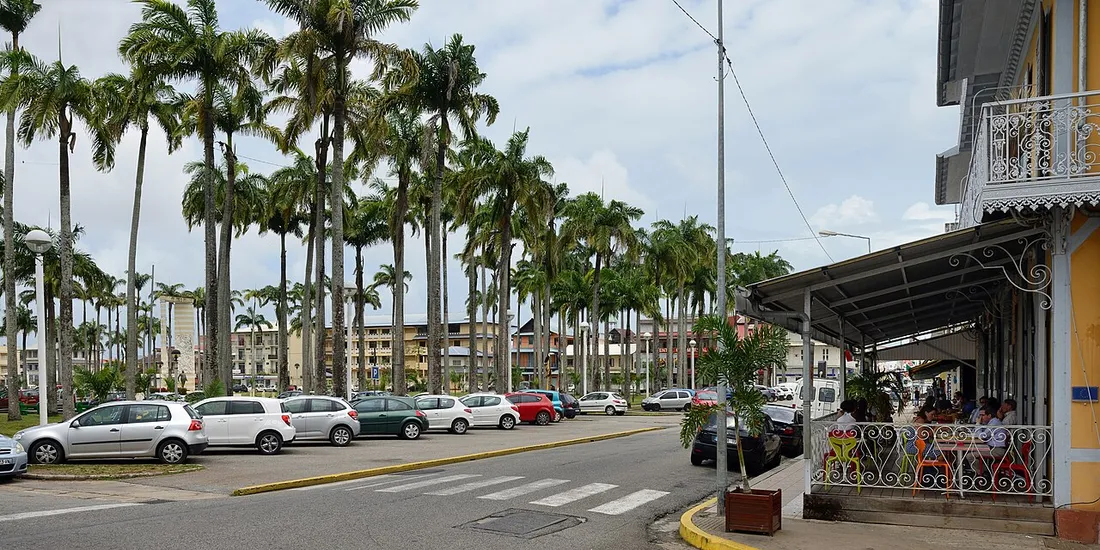
The Real Limits of Getting Around Without Your Own Vehicle
Let’s be honest, this is the blind spot of overly optimistic travel accounts.
What You’ll Do Just Fine Without a Car
- Cayenne, its market, the old center, Place des Palmistes;
- The beaches of Remire-Montjoly by city bus;
- Kourou, the CSG and the Salvation Islands;
- Saint-Laurent-du-Maroni and the Camp de la Transportation (the penal colony tour is done on foot from the center);
- A trip up the Maroni by pirogue from Saint-Laurent, with a local operator.
What Will Stay Out of Reach
- The Kaw marshes: no regular service beyond Roura; the solution is an organized excursion with transfer included (€80 to €120 for the nighttime caiman outing from Cayenne);
- Cacao, the Hmong village, especially for the Sunday market: a few informal shuttles exist, but nothing guaranteed;
- Awala-Yalimapo and the nesting of leatherback turtles: accessible only with a vehicle or via an excursion from Saint-Laurent;
- The Nouragues reserve and the interior in general: access by pirogue or air-taxi, organized by providers;
- Félix-Éboué airport (Matoury) at night: no bus serves late flights, a taxi to Cayenne costs €25 to €35 by day and more after 7 p.m. Plan for this budget item from the moment you land.
Local ride-sharing via Facebook groups and a few private-hire drivers on the Cayenne area round out the toolkit, with no guaranteed reliability for a critical schedule.
Without a Car, Your Accommodation’s Location Is Everything
Without a vehicle, the golden rule is simple: sleep where things happen. A lodging out on the edge in Matoury or Macouria condemns you to complicated journeys; a base in downtown Cayenne, near the Montjoly beaches or in the heart of Kourou completely changes the stay.
That’s exactly what we offer at Hostel Toucan: well-located rentals in French Guiana, selected also for their accessibility on foot or by transport. By booking direct, you avoid platform fees, you benefit from free cancellation up to 7 days before arrival, and above all from WhatsApp support 7 days a week — invaluable when you need to confirm a taxico schedule, arrange an airport transfer or book an excursion to Kaw. And if you own a well-located property along the coastal axis, this car-free clientele is precisely the one looking for your place: talk it over with our team dedicated to owners.
One last reminder: the yellow fever vaccine is mandatory, and the dry season (mid-July to mid-November) remains the period when tracks and schedules are most reliable.
FAQ
Can you visit French Guiana without a car?
Yes, provided you limit your itinerary to the coastal axis Cayenne–Kourou–Saint-Laurent-du-Maroni, well served by taxicos and intercity buses. For nature sites (Kaw, Cacao, Awala-Yalimapo, Nouragues), go through organized excursions with transfer included from Cayenne or Saint-Laurent.
How much does a taxico cost between Cayenne and Kourou?
Expect around €10 per person for 60 km and a little over an hour of travel. The taxico leaves when it’s full: show up early in the morning near the Cayenne market to minimize the wait. Payment is made in cash to the driver.
Is there a bus between Félix-Éboué airport and Cayenne?
Bus service to the airport is very limited and nonexistent for evening flights. Plan for a taxi (€25 to €35 by day to Cayenne, more expensive at night) or a transfer arranged by your accommodation. At Hostel Toucan, our WhatsApp support can help you set it up before you land.
Does public transport run on weekends in French Guiana?
Very little. Cayenne’s urban network slows to a crawl on Saturdays and barely runs on Sundays; taxicos still operate on Saturday mornings but become scarce afterward. If you need to travel on a Sunday, arrange your trip as early as Friday.