Solo Travel in French Guiana: Planning, Safety & Meeting People
Published on September 25, 2025 · by Ismael Samuel
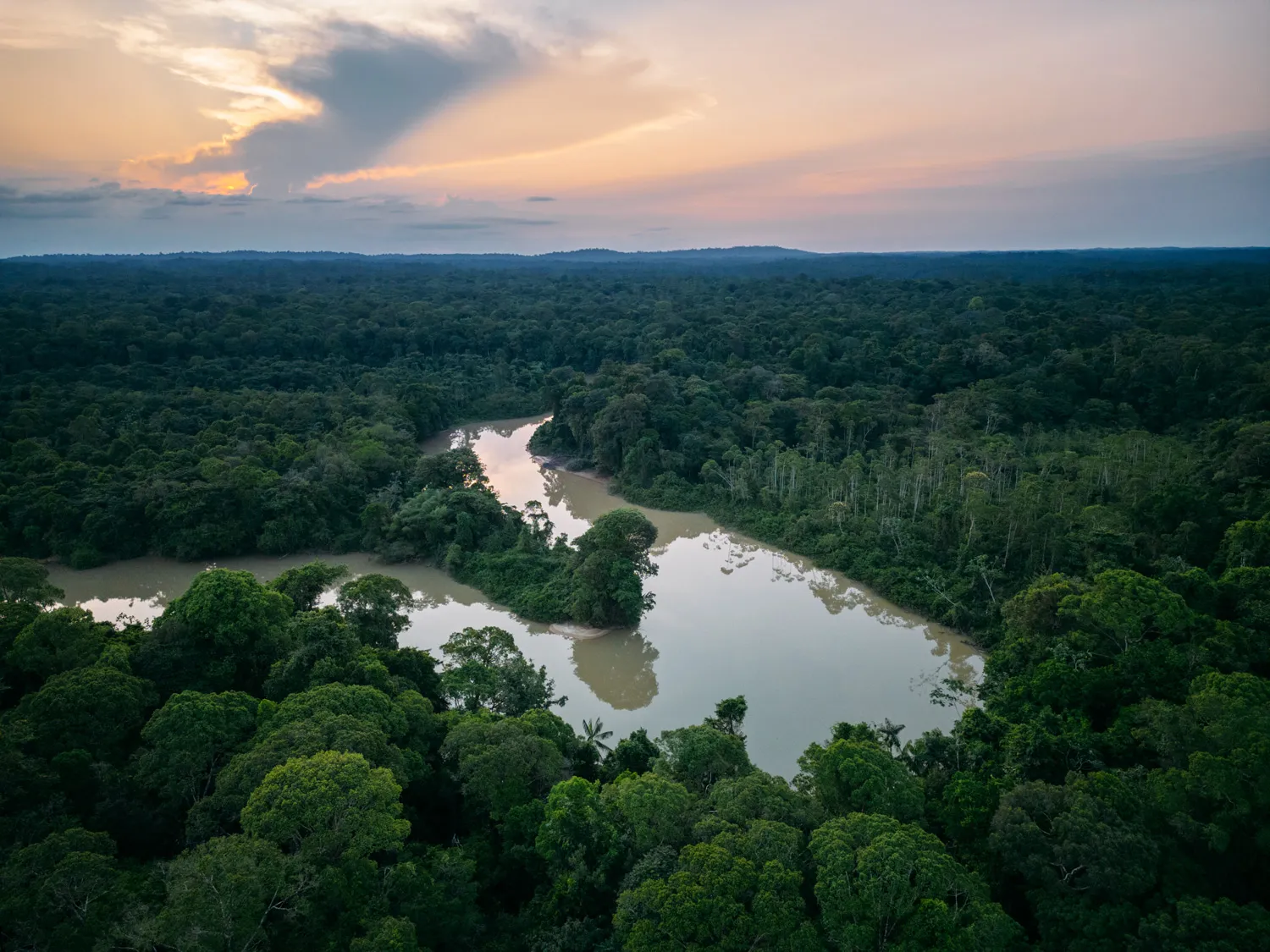
Heading off alone to the far side of the Atlantic, to an Amazonian territory where forest covers 96% of the land? The idea is often intimidating. Yet as a resident who has lived here for several years, I can say it with confidence: a solo trip in French Guiana is not only doable, it’s one of the richest ways to discover this unique French department. No mandatory organised group, no imposed tour operator: with a little method, you move at your own pace between river, savannah and coast.
Here’s everything I wish someone had told me before my first solo journey here.
Why French Guiana is well suited to solo travel
French Guiana is a French overseas region: you pay in euros, you speak French (alongside Creole, Bushinenge and Amerindian languages), and the administrative, medical and banking systems are the same as in mainland France. In practice, for a lone traveller, that changes everything:
No visa, no currency to change, a French SIM card that works (country code +594).
A reliable healthcare network with hospitals in Cayenne and Saint-Laurent-du-Maroni.
Reassuring legal security: you stay within national territory.
The time difference is gentle: -5h in winter, -6h in summer compared with Paris. You arrive at Félix-Éboué airport in Matoury without any administrative culture shock, but with a total change of scenery when it comes to nature and people.
The only real “organised group” you’ll need is the occasional excursion (Îles du Salut, Kaw marshes, dugout canoe on the Maroni). Everything else can be planned independently.
The dry season, from July to late November, is by far the most pleasant: passable tracks, clear skies for watching an Ariane 6 or Vega launch, and accessible hiking trails. It’s also the ideal window for the Îles du Salut and the Nouragues reserve.
A realistic budget for solo travel
Travelling alone costs a bit more per bed than as a pair, but stays manageable:
Paris–Cayenne flight: 600 to 900 € return depending on the season.
Accommodation: 50 to 90 €/night for a comfortable studio or room in Cayenne, Rémire-Montjoly or Matoury.
Car rental: 35 to 55 €/day, the heaviest line item when solo (impossible to share).
Meals: 8 to 15 € for a good Creole dish at a market or snack bar, 25-35 € at a restaurant.
Excursions: Îles du Salut by catamaran around 70-90 €, a night outing to Kaw roughly 60-80 €.
Budget 1,200 to 1,800 € for a full 10 days, flight included, by optimising the car.
Getting around without a group: the car is king
Let’s be clear: a car is essential. Public transport between towns is virtually non-existent, and the distances are real.
A few reference points from Cayenne:
Cayenne → Kourou (Space Centre): ~60 km, 1h.
Cayenne → Saint-Laurent-du-Maroni: ~250 km, 3h on the RN1.
Cayenne → Cacao (Hmong community): ~75 km, 1h30.
Cayenne → Kaw marshes (Roura): ~80 km to the boat landing.
Mobility tips for the solo traveller
Book your vehicle in advance: the fleet is limited in high season.
Fill up whenever you can heading inland: stations become scarce.
Avoid driving at night on unlit roads (wildlife crossing, two-wheelers without lights).
Download your maps offline: 4G disappears as soon as you leave the coast.
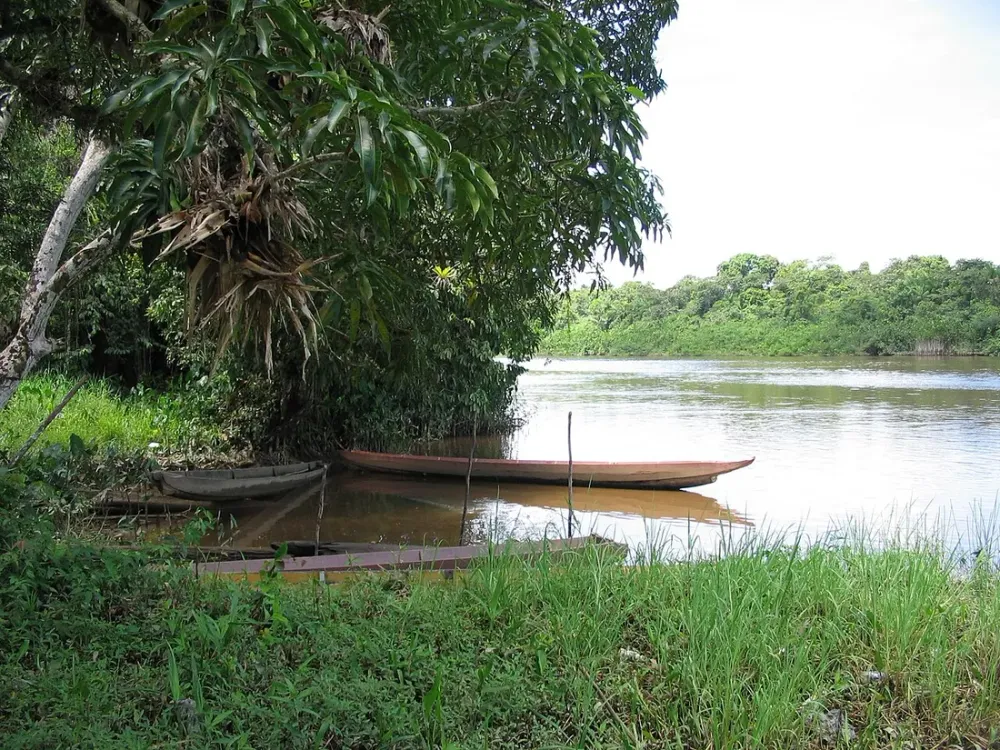
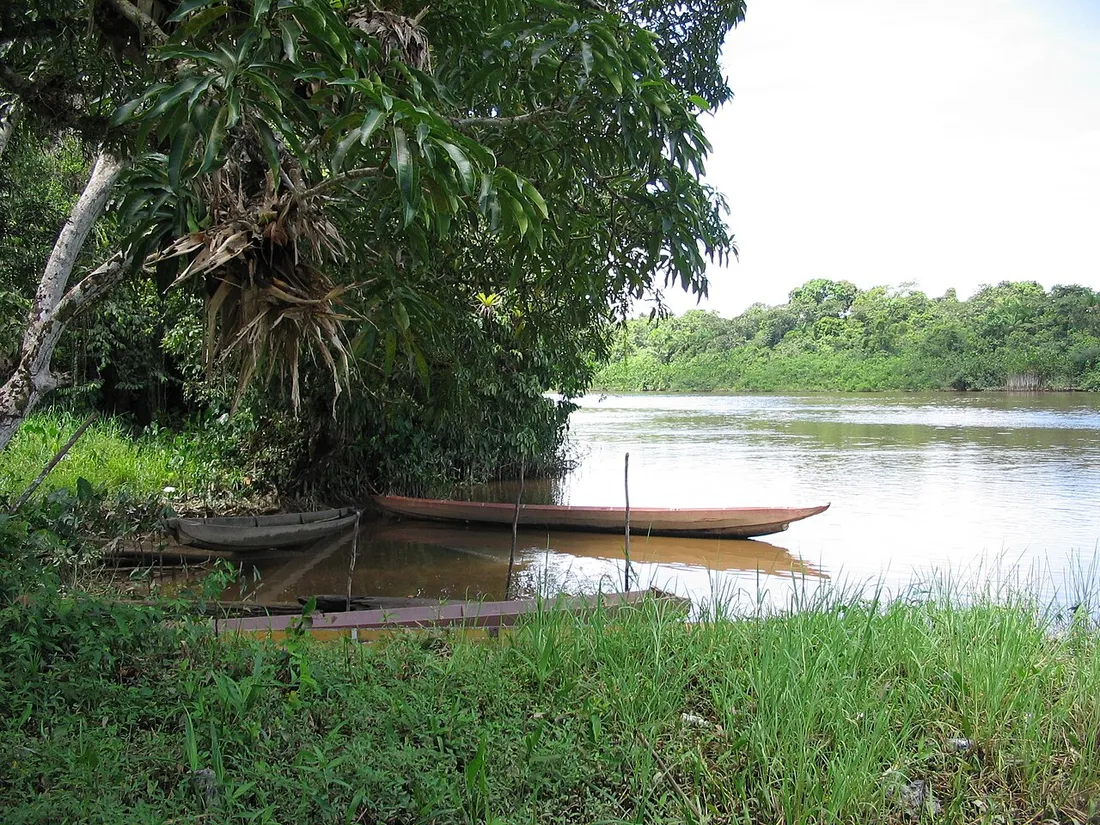
For river destinations such as the Maroni by dugout canoe or the leatherback turtles of Awala-Yalimapo (April-July), you leave the car and set off with a canoe pilot or local guide. That’s where solo becomes collective, just for a day.
Safety: the reality, without drama
French Guiana is neither a danger zone nor a rule-free paradise. When solo, apply the common sense of a savvy traveller:
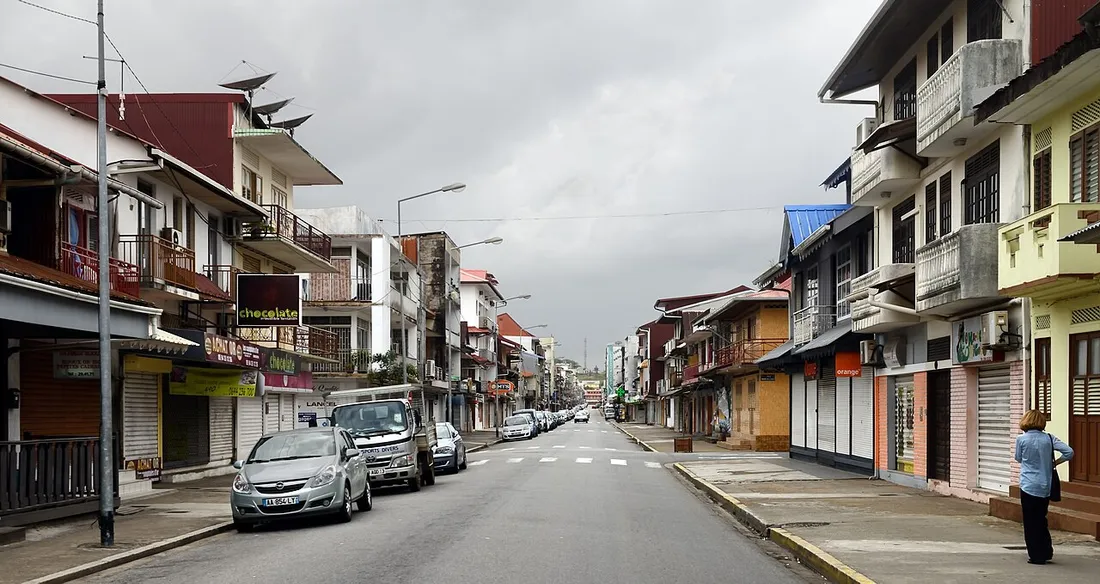
Central Cayenne: pleasant by day (place des Palmistes, the market), but avoid certain isolated neighbourhoods at night. Park in well-lit areas.
Never leave anything visible in the car, ever.
Yellow fever vaccine required to enter the territory: get it at least 10 days before departure.
Mosquito repellent essential (residual malaria inland, dengue on the coast). Long sleeves in the evening.
Tell someone your itinerary before a forest or river outing.
Honestly, most solo travellers have a worry-free stay. The main risk remains the road, not crime.
Days 1-3 — Cayenne and the Île de Cayenne: the market, place des Palmistes, the beaches of Rémire-Montjoly, the Rorota trail.
Day 4 — Kourou: free tour of the Guiana Space Centre (booking recommended), and if luck is on your side, a launch.
Day 5 — Îles du Salut: a day by boat, penal colony history, swimming.
Days 6-7 — Saint-Laurent-du-Maroni: the Camp de la Transportation, border-town atmosphere, dugout canoe departure on the Maroni.
Day 8 — Kaw or Cacao: caimans and birds in the marshes, or Hmong culture and the Sunday market in Cacao.
Adjust to your tastes: the Nouragues reserve requires specific planning with an accredited operator.
Meeting other travellers (and locals)
It’s the question that comes up most: do you really travel alone when going solo in French Guiana? No, if you know where to base yourself.
The best places to meet people
Human-scale accommodation rather than big impersonal hotels: you naturally cross paths with other travellers over a coffee.
The Cayenne market (Wednesday, Friday, Saturday morning): awara broth, Chinese soup, spontaneous exchanges.
Shared excursions (Îles du Salut, Kaw): you set off alone, you come back with contacts.
Cacao on Sunday: the Hmong market draws visitors and residents alike, perfect for chatting.
Local hiking associations and water-sports clubs, open to passing visitors.
My resident’s tip: well-chosen accommodation is your best social headquarters. That’s where good tips are found, and sometimes travel companions for an excursion.
Travelling light on logistics with Hostel Toucan
Handling booking, check-in and the unexpected on your own can quickly weigh you down. At Hostel Toucan, a concierge and holiday-rental service in French Guiana, we make solo travel simpler:
Direct booking with no platform fees — you pay the fair price.
Free cancellation up to 7 days before arrival, ideal when you’re aligning your dates with an Ariane launch.
WhatsApp assistance 7 days a week: a reliable canoe pilot, a safety question, a last-minute itinerary? We answer.
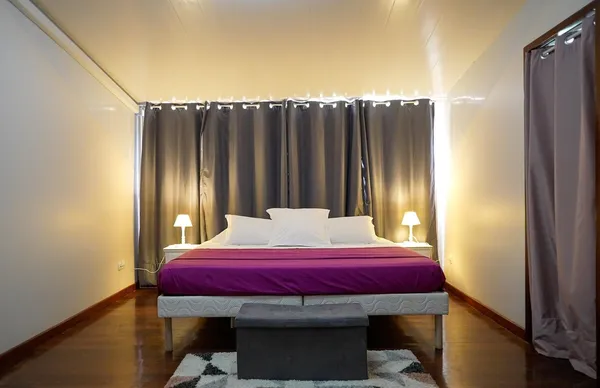
Our properties in Cayenne, Rémire-Montjoly, Matoury, Kourou and Macouria are designed as ideal bases for exploring on your own.
A solo trip in French Guiana isn’t a test of extreme self-reliance: it’s the freedom to chart your own course between forest, river and stars, with a very real safety net. Book your first night, and the rest will follow.
FAQ
Is it dangerous to travel alone in French Guiana?
No, no more than anywhere else with common sense. Cayenne is pleasant to visit by day; avoid isolated neighbourhoods at night and leave nothing visible in the car. The main real risk is on the road, not crime. The yellow fever vaccine is required and mosquito protection is essential.
Can you visit French Guiana without a car when solo?
It’s very difficult. Public transport between towns is virtually non-existent and the distances are real (250 km Cayenne–Saint-Laurent). Rental, between 35 and 55 €/day, remains essential for getting around. For the river or the islands, you leave the car and set off with a local guide or canoe pilot.
What is the best time for a solo trip to French Guiana?
The dry season, from July to late November. The tracks are passable, the skies clear for watching an Ariane 6 or Vega launch, and the trails and islands accessible. It’s also the ideal window for the Îles du Salut and the Nouragues reserve.
How do you meet other travellers in French Guiana when going alone?
Favour human-scale accommodation, the Cayenne market, shared excursions (Îles du Salut, Kaw marshes) and the Hmong market in Cacao on Sundays. You set off alone on an outing and often come back with contacts and travel companions.
Nous utilisons des cookies de mesure d'audience et de publicité pour améliorer votre expérience
et nos campagnes. Vous pouvez accepter ou refuser. Voir notre
politique de confidentialité.