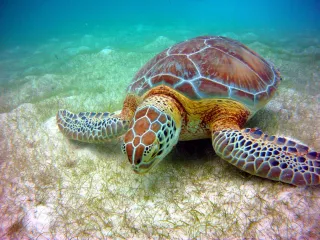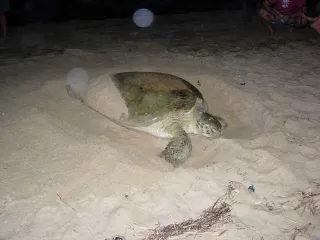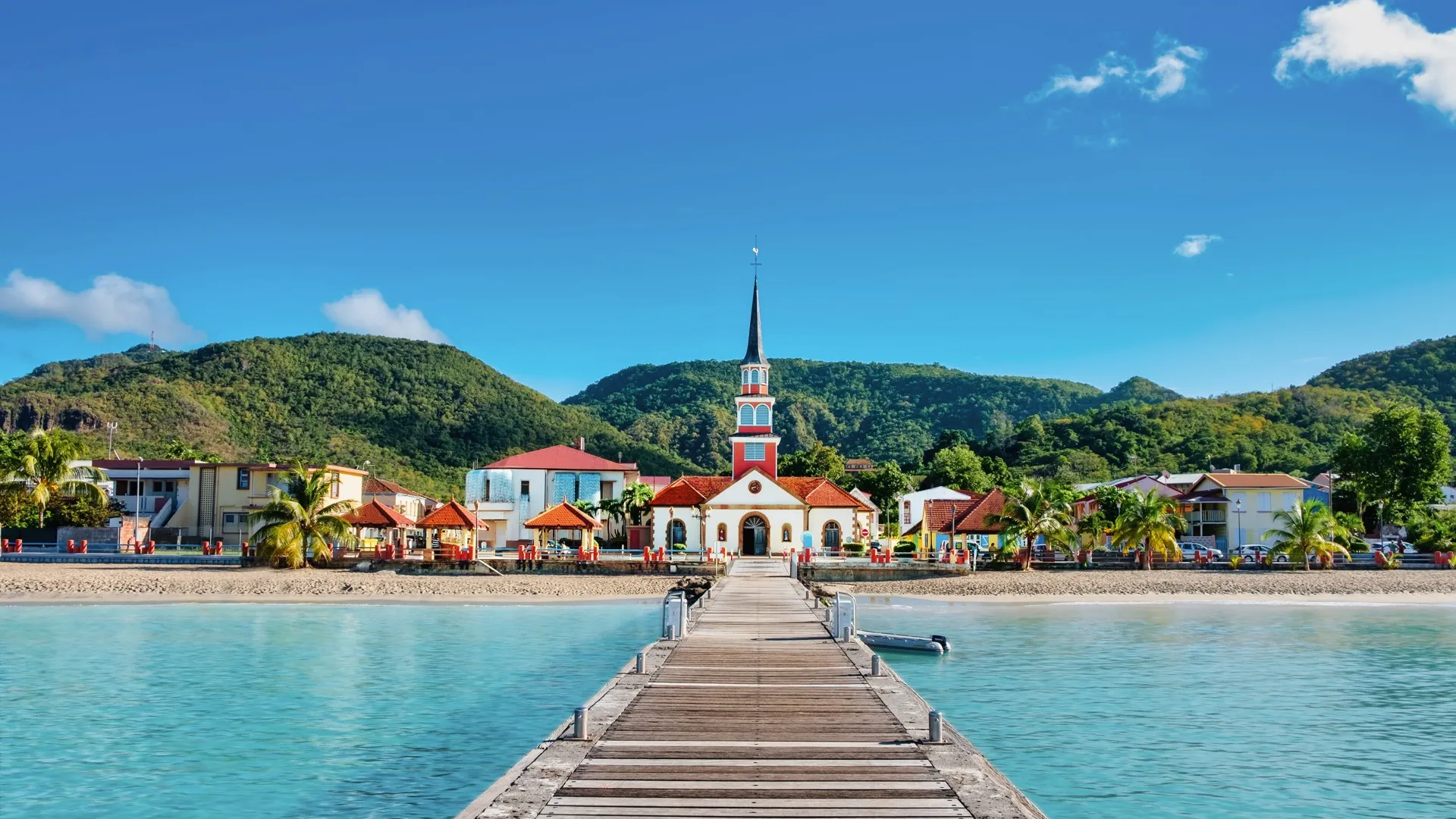
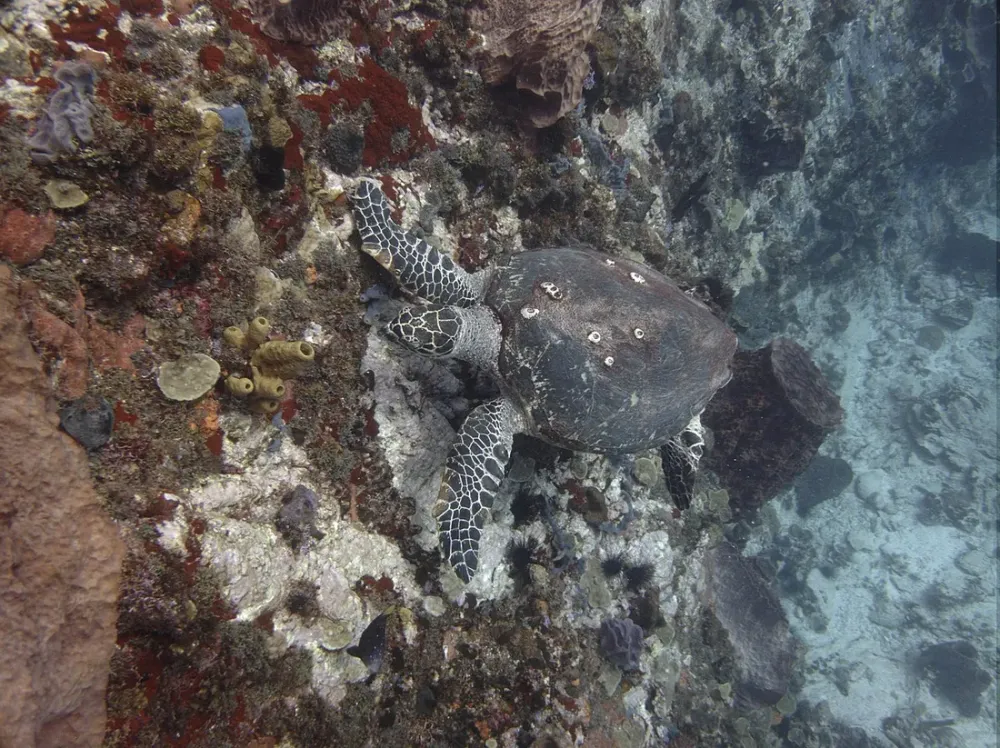
Watching a green turtle calmly grazing on seagrass beds just a few metres from a golden-sand beach, then crossing over ten minutes later onto a cove of black volcanic sand: that is the experience offered by two neighbouring coves in Les Anses-d’Arlet, on the Caribbean south coast of Martinique. Swimming with turtles in Martinique is one of the great memories our travellers take home, and Anse Dufour and Anse Noire are the best spots for it: accessible, free and no boat required. You just need to know the right times, the parking situation (very limited) and, above all, the right distance to keep so as not to disturb these protected animals.
As a resident of the island who regularly takes our guests there, I share here the practical pointers to make your outing stress-free and respectful of the site.
Two neighbouring coves, two atmospheres
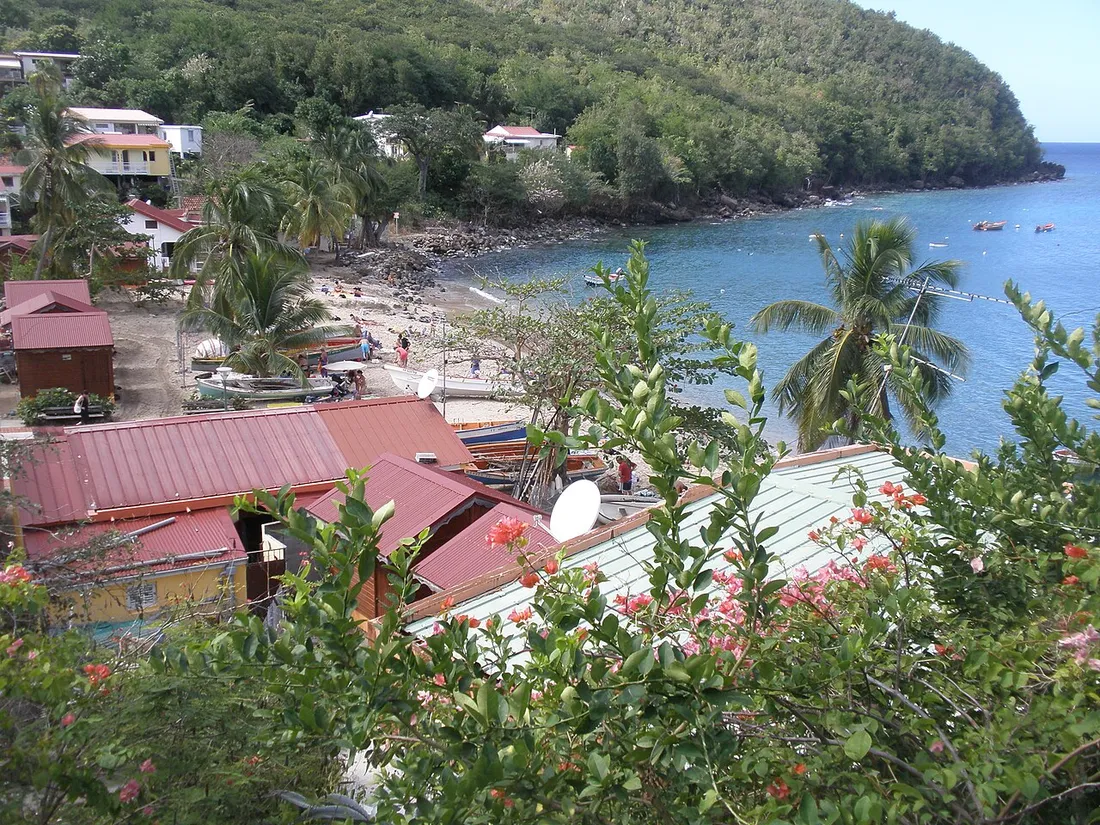
Anse Dufour and Anse Noire lie side by side, in the commune of Les Anses-d’Arlet, about a 30-minute drive from Les Trois-Îlets and 45 minutes from Fort-de-France. A single car park serves both beaches: they are separated only by a small headland that you can cross on foot in a few minutes.
Anse Dufour: golden sand and turtle seagrass beds
This is the turtle beach par excellence. The sand is light, the water shallow, and seagrass beds grow about thirty metres from the shore, to the right as you face the sea. Green turtles come to graze there at any time of day, but especially early in the morning. You can also spot small rock fish along the two rocky points that enclose the cove.
Anse Noire: the contrast of volcanic sand
A few steps away, Anse Noire surprises with its grey-black sand of volcanic origin, a remnant of the geological activity that also shaped Montagne Pelée further north. The water is deeper and cooler here, lined with coconut palms. You’ll come across boxfish, sea urchins, sometimes a passing turtle, and it’s an excellent spot to observe the marine life clinging to the rocks. A wooden pontoon makes getting into the water easy.
How to approach: watch without touching
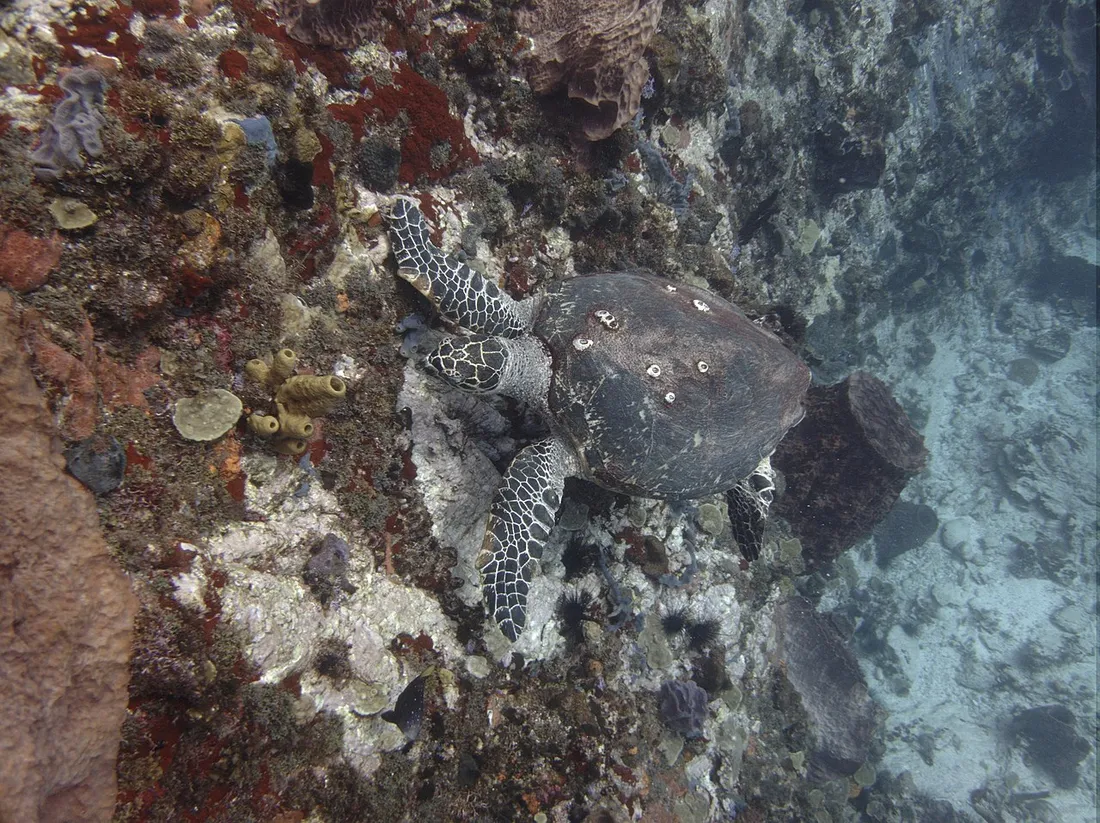
Sea turtles are fully protected species in France. Touching, feeding, chasing or blocking their path is forbidden and punishable by a fine. Beyond the law, a stressed turtle surfaces to breathe too often, wastes its energy and eventually deserts the site. Here are the rules we consistently share with our travellers:
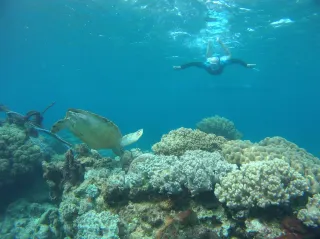
- Keep at least 3 to 5 metres away. Never deliberately close the gap; let the turtle come to you if it wishes.
- Never cut off its path to the surface. A turtle must be able to come up to breathe freely; position yourself to the side, never above or in front.
- No flash, no intrusive selfie sticks. Film while staying still, and fin slowly.
- Stay at the surface, don’t free-dive towards it. A direct descent is perceived as a threat.
- No contact, even light. The protective mucus on their shell and skin is damaged by touch.
- No chemical sunscreen before swimming. Choose a mineral protection or a UV-protective rash guard to preserve the seagrass beds.
A good approach means staying almost motionless, breathing calmly through your snorkel and letting the animal get used to your presence. That’s often how you get the most beautiful moments, when a turtle comes up to breathe a metre away from you, of its own accord.
What gear to bring
No tanks or club needed: snorkelling is done independently from the shore.
- Mask and snorkel (essential), comfortable fins.
- Water shoes are useful at Anse Noire because of the pebbles and sea urchins.
- A UV-protective rash guard rather than sunscreen.
- A buoy or board for children and less confident swimmers.
If you don’t have your own gear, several rental shops in Les Trois-Îlets and Les Anses-d’Arlet offer mask-snorkel-fin kits for around 8 to 12 € a day.
Timing: why coming early changes everything
The best window for swimming with turtles in Martinique is between 7am and 9:30am. At that time the water is clearer (the sand hasn’t yet been stirred up by bathers), the crowds are thin and the turtles are actively feeding in the seagrass beds.
By midday the site fills up, the water becomes cloudy and the animals, disturbed, grow more elusive. Late afternoon, after 4pm, becomes calm again, but the underwater light fades.
As for the season, the dry period, known as Carême, from December to April, offers the best visibility and a generally flat sea. It is also the high tourist season, which is why arriving early matters. During Carnival (February-March), weekends are particularly busy.
Parking: the real challenge of the day
This is the point many underestimate. The Anse Dufour / Anse Noire car park is small and fills up very quickly, often as early as 9am in high season. The access road is narrow and steep, and unauthorised parking on the verges is regularly fined, or even towed.
Our local tips:
- Arrive before 8:30am to find a spot without circling.
- Avoid weekends and public holidays if you can: prefer a Tuesday or Wednesday morning.
- Don’t park on the prohibited sections: checks do happen, and keeping the way clear for emergency services is essential on this narrow road.
- If the car park is full, it’s better to leave and come back in late afternoon rather than improvise a risky parking spot.
A rental car remains strongly recommended in Martinique: no convenient bus line serves these coves, and a taxi from Les Trois-Îlets is expensive for a round trip with waiting time.