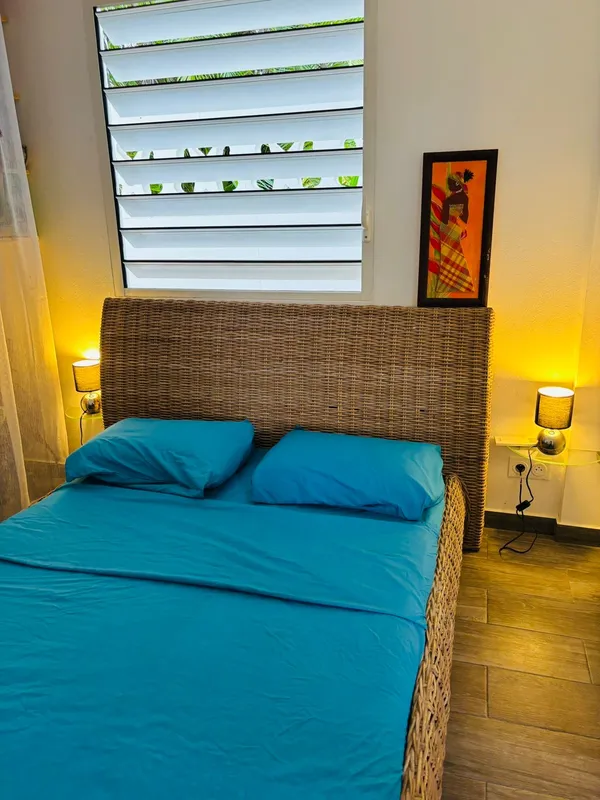

Arranging accommodation for a team on assignment, a group of trainees or participants in a training course in French Guiana raises very concrete questions that have nothing to do with a holiday trip. It is no longer just about finding a comfortable bed: you need an invoice in the company’s name, supporting documents that will pass the finance department’s review, payment by bank transfer, VAT correctly stated and, often, terms suited to a long stay (several weeks, sometimes several months). This is precisely where para-hotel accommodation differs from a simple peer-to-peer holiday rental.
French Guiana’s professional landscape is distinctive: government bodies, space-sector operators around Kourou, construction firms, scientific missions, training organisations, visiting healthcare professionals and consultants travelling to Cayenne. All of them need accommodation that is reliable, well located and above all administratively watertight. This article sets out how to structure “tailored” group or training accommodation in French Guiana, what you should require from your provider, and the practical benchmarks for framing your request.
Why business accommodation is not a holiday stay
The difference comes down to accounting first and foremost. An employee or a director travelling for work incurs expenses on behalf of their company. For those expenses to be deductible and reimbursed without friction, you need compliant supporting documents: an invoice with the company’s name and address, the SIREN/SIRET number, a mention of VAT where applicable, and an itemised breakdown of the services.
A standard peer-to-peer rental generally provides none of this. At best you get a receipt in an individual’s name, which complicates the expense claim and may be rejected by a strict accounting department. Para-hotel accommodation, on the other hand, operates as a professional business: it issues a genuine invoice, accepts bank transfers, and can supply the documents a procurement department expects.
The specific needs of a group or a training course
- Keeping participants together in one place or in nearby properties, to simplify logistics and build cohesion.
- Centralised invoicing: a single invoice for the whole group rather than a pile of individual receipts.
- Flexibility on dates: extensions, staggered arrivals, early departures depending on how the assignment unfolds.
- Work-ready facilities: a good internet connection, space to set up a laptop, sometimes a shared room for meetings.
- A single point of contact able to handle the unexpected (delayed flight, change in headcount, extended worksite).

The invoice in the company’s name: the non-negotiable point
For a business stay, the invoice is the key document. As a general guide, it must include the following standard details:
- Your company’s registered name and address (the entity making the payment).
- The SIRET number and, where applicable, the intra-Community VAT number.
- The invoice date and number.
- A precise description of the service (accommodation, number of nights, period covered).
- The amount excluding tax, the VAT rate and amount, then the total including tax.
When the invoice is issued in the company’s name, the employee’s expense claim is simplified: they do not necessarily have to pay out of pocket, and the accounting department can allocate the expense directly to the right cost centre. That is a genuine time-saver for administrative teams, and it reduces the risk of rejection at month-end.
Compliant expense claims: what usually causes problems
Many expense-claim rejections stem from an incomplete document: a handwritten receipt, missing VAT, an individual’s name instead of the company’s, or a vague description. By framing the accommodation with a para-hotel provider from the outset, you avoid this back-and-forth. Remember to send your company’s exact billing details in advance so they appear correctly on the document.
Bank transfer payment and VAT: the framework companies expect
Companies and public bodies favour bank transfers: they leave a clear accounting trail, do not tie up an employee’s personal card and fit into expense approval workflows. A professional provider supplies bank details, accepts payment on receipt of invoice or on agreed terms, and can work with an internal purchase order.
As for VAT, para-hotel accommodation falls under a different regime from bare rental. When the para-hotel services are bundled together (linen supply, cleaning, reception, provision of equipment), the activity may be subject to VAT, which allows the client company, where entitled, to reclaim the tax. The precise rules depend on your situation: check with your accounting department or your chartered accountant to confirm deductibility in your case. A good provider will, at the very least, state the VAT clearly on the invoice.
Purchase orders and framework agreements
For a training organisation or a public body, a verbal agreement alone is not enough. Plan for a written quote, a purchase order on your side, and possibly a framework agreement if the relationship is set to last. These documents protect both parties and smooth out payments.
Long stays: framing a booking of several weeks or months
Assignments in French Guiana often run over long periods: a construction project, a launch campaign, a scientific mission in the rainforest, a training course spread over time, a temporary posting lasting several weeks. Over these durations, the pricing logic changes.
As a general guide, the longer the stay, the more the nightly rate tends to fall compared with a short holiday break. The ranges depend heavily on the season: the dry season and major events (around a launch from the Space Centre, for instance) push up demand and prices, while the low season leaves more room for negotiation. Do not treat any figure as guaranteed: ask for a dated quote matching your actual dates.
What can be negotiated on a long stay
- A sliding-scale rate based on the number of nights or weeks.
- Cleaning: frequency (weekly, end of stay) and scope.
- Linen: supply and replacement.
- Utilities (water, electricity, air conditioning, internet): included or recharged.
- Cancellation or amendment flexibility should the assignment change.
Checklist before confirming a long-stay booking
- Invoice issued in the company’s exact name, with SIRET and VAT
- Bank transfer accepted, bank details and payment terms provided
- Written, dated quote covering the entire period
- Internet connection verified (enough bandwidth for remote working)
- Cleaning and linen arrangements specified
- Terms for extensions and headcount changes clarified
- Single point of contact identified for the duration of the stay
- Location compatible with the team’s daily commutes