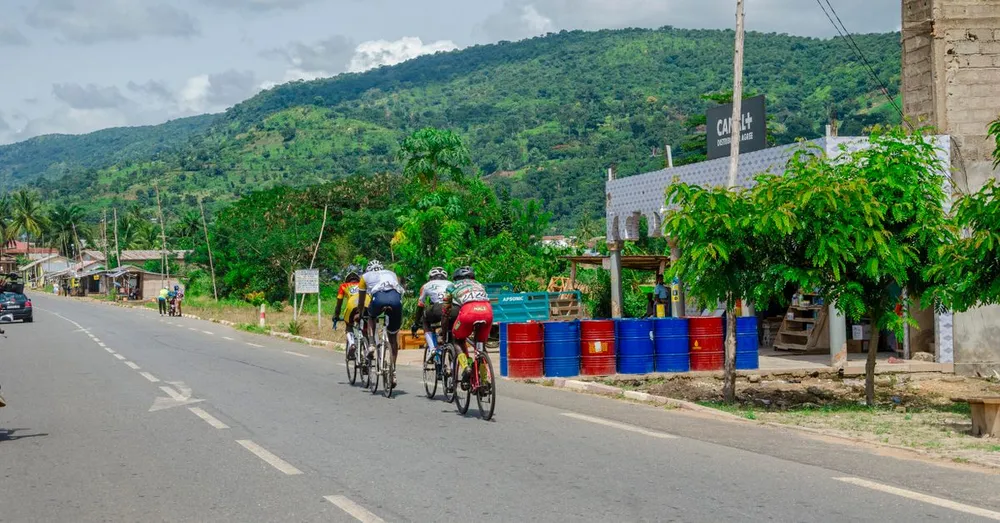
In August, while mainland France dozes through the heatwave, the archipelago buzzes to the rhythm of derailleurs. The Tour Cycliste International de la Guadeloupe is our own Tour de France: ten days of racing, a loop linking Grande-Terre and Basse-Terre, and entire villages packed along the roadside from dawn. Every year, enthusiasts coming from mainland France ask me how to plan their stay to follow the race as closely as possible without getting stuck in traffic jams. The answer comes down to one word: mobility. Thinking through your Tour de Guadeloupe accommodation properly means accepting that you’ll move with the peloton rather than staying anchored to a single beach. Here, as a local who has followed the caravan for years, is how to organise this logistics town by town.
Understanding the Tour Cycliste before booking
The Tour is traditionally run during the first two weeks of August, right in the heart of the rainy season. It’s a stage race, around ten in general, that crisscrosses the whole butterfly shape: one day you climb the slopes of Basse-Terre, the next you ride flat along the limestone beaches of Grande-Terre, and some days string together two half-stages, including a time trial.
What to keep in mind before blocking out cycling in Guadeloupe in August on your calendar:
- The route changes every year. The host towns rotate, even though a few strongholds come back often. Wait for the official publication of the course, usually in spring, before locking in your nights.
- The start and finish aren’t in the same town. A stage can set off from Saint-Francois and end in Basse-Terre. Following the race therefore means moving around, or choosing a central base.
- The atmosphere is popular and free. Unlike many events, you watch the cycling race stages in August without a ticket: you just need to be in the right place, at the right time, on the roadside.
To locate all these towns and understand the geography of the two wings of the archipelago, our complete guide to Guadeloupe lays down the essential markers before you map out your itinerary.
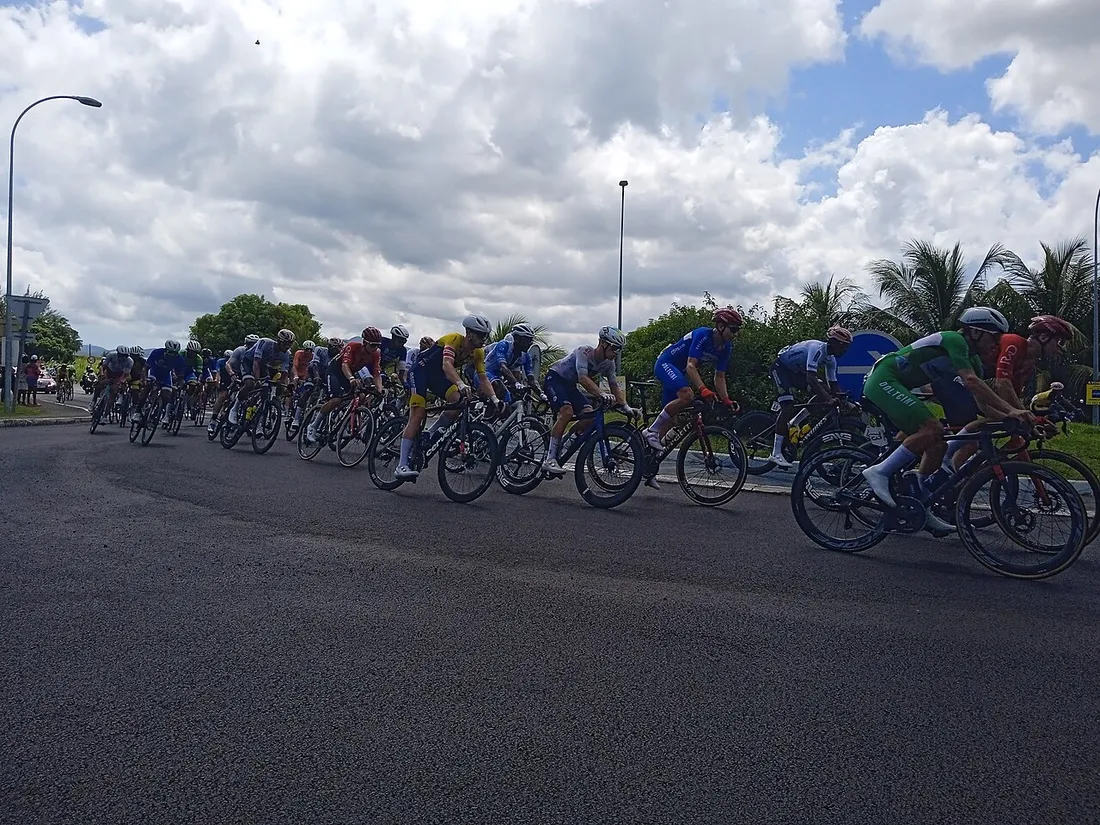
Two accommodation strategies for following the race
The whole challenge of a good Tour de Guadeloupe accommodation boils down to one question: should you have a fixed base camp or migrate with the peloton? I’ve tried both. Here’s my honest take.
The single base camp: comfort and simplicity
You set down your bags in a single rental for the ten days and radiate out by car to the stages worth seeing. It’s the most restful formula: you unpack once, you have your kitchen and your bearings. The right spot is the centre of the butterfly: aim for a place around Pointe-a-Pitre, Le Gosier or Baie-Mahault. From this road hub, you’re less than 30 minutes from the Grande-Terre stages and 45 minutes to 1 hour from the south of Basse-Terre. The downside: on days with a distant stage, you add up the round-trip drive and the traffic jams at the finish.
The nomadic rental: living the race from the inside
The other approach, my favourite for true fans, consists of stringing together two or three short rentals according to how the course is laid out. You sleep the night before in the departure town, you watch the peloton take off in the morning, then you move up to a following host town: you match the rhythm of the Tour like the caravan does. This Guadeloupe host towns formula takes a little organisation, but it eliminates the long nighttime returns and places you at the heart of the celebration every day. Two conditions for it to work: bookings with flexible cancellation, and a local host able to guide you in real time.
Following the stages town by town
Depending on the edition, the Tour passes through a string of towns that come back regularly. Here’s how I divide up the follow geographically, and the type of accommodation to aim for in each sector.
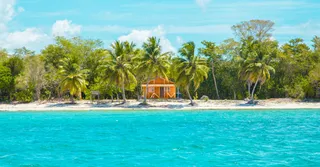
- Seaside Grande-Terre (Sainte-Anne, Saint-Francois, Le Moule): the flat stages here run along the turquoise beaches. You easily lodge in a seafront studio, watch the finish in early afternoon, then head off for a swim at Caravelle beach or towards Pointe des Chateaux. Ideal for combining the race with lazing around.
- Pointe-a-Pitre and the urban area (Les Abymes, Baie-Mahault): the economic hub often hosts nervy finishes and a time trial. Practical urban accommodation, close to Pole Caraibes airport and the main roads.
- Leeward Basse-Terre (Bouillante, Deshaies, Pointe-Noire): the mountain stages and the Route de la Traversee offer the finest sporting spectacle, in a tropical forest setting. You sleep in a quiet place, and the next morning you dive at the Cousteau Reserve in Malendure.
- Southern Basse-Terre (Basse-Terre, Capesterre, Trois-Rivieres): the finishes at the foot of La Soufriere are epic. It’s also the ideal base for a getaway to Les Saintes from the Trois-Rivieres pier on a rest day.
My local tip: don’t chase every stage. Pick five or six well-placed ones, including a mountain stage in Basse-Terre and a time trial, and keep the other days to discover the archipelago. Guadeloupe’s road network is compact, but on stage days, the course routes close several hours before the riders pass through.
Budget: how much to plan for in August
Good news for your wallet: August corresponds to the rainy season, the low tourist season. Accommodation rates are noticeably gentler than in the height of the February dry season, even though the atmosphere is at its peak thanks to the Tour. Here are realistic ranges observed across the archipelago:
- Studio or one-bedroom for 2 people: 50 to 85 euros a night in August, depending on the town and proximity to the sea.
- House or villa for 4 to 6 people: 110 to 220 euros a night, often without a binding minimum stay outside the most sought-after areas.
- Deposit: generally 250 to 600 euros depending on the property, returned after the check-out inspection.
- Tourist tax: from a few tens of cents to 2-3 euros per person per night, depending on the rental’s rating.
On the side budget, plan for a rental car (around 35 to 55 euros a day in August, air conditioning essential): it’s the key to following the host towns. Also count on roadside refuelling, where the lolos and stands offer bokit (4 to 6 euros) and fresh cane juice. A rental with a kitchen remains the ally of a cycling stay: you prepare your snacks, have breakfast early before a stage start, and keep your budget for the essentials.
To compare the properties available in the right towns, browse our rentals in Guadeloupe: filtering by sector helps you build your nomadic itinerary.
Making the most of a stage at the roadside
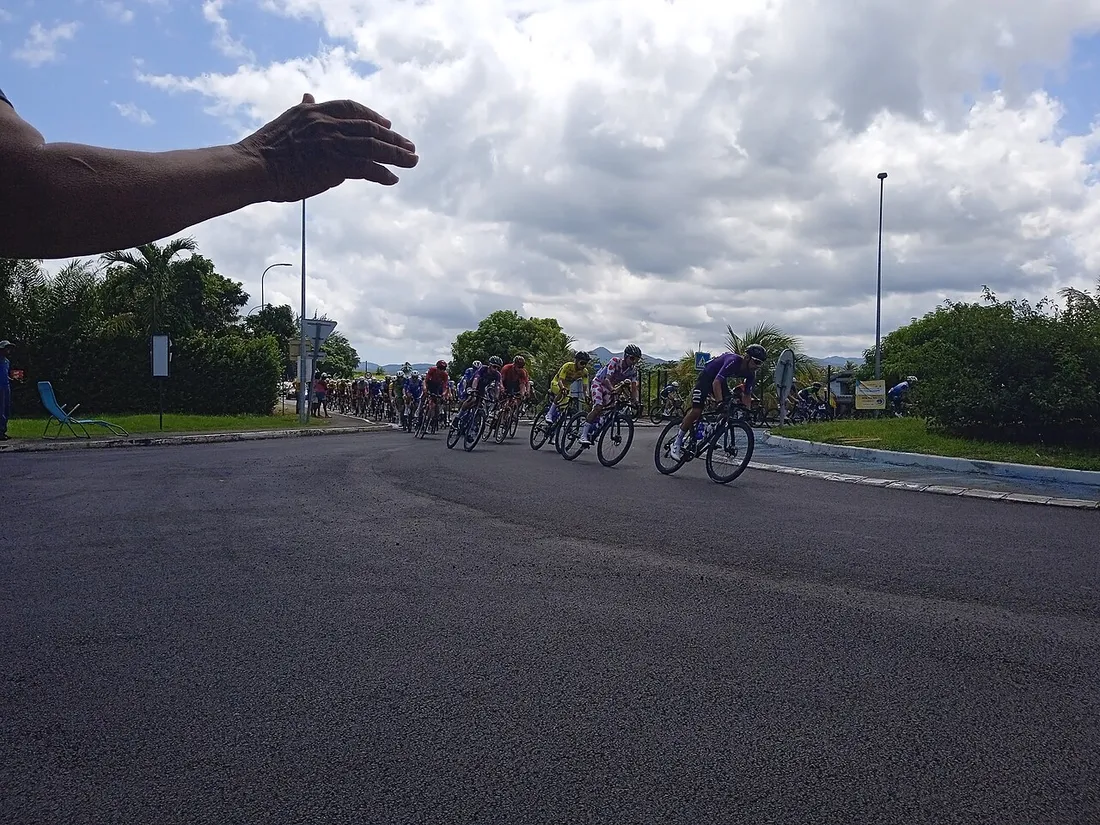
Watching a stage of the Tour is an art that locals have mastered. A few on-the-ground reflexes so you don’t miss a thing:
- Arrive early at the finish line. The crowd gathers several hours ahead, especially in the narrow villages of Basse-Terre. A good spot can’t be improvised.
- Spot the publicity caravan that precedes the riders: it’s a celebration in its own right, very popular with children.
- Hydrate and cover up. In August, the sun beats down hard and a tropical downpour can fall all at once. Cap, water, and a light windbreaker in the bag.
- Park far from the course. The town-centre streets close before the passage. Leave the car on the outskirts in the morning and finish on foot.
- Respect the riders and the marshals. You cheer, you don’t spill onto the road: safety comes first, especially on the volcano’s fast descents.
For the quiet days between two interesting stages, the archipelago lends itself to everything: snorkelling at the Cousteau Reserve, swimming at the Carbet waterfalls, or lazing on Grande Anse in Deshaies. The Tour is a guiding thread, not a prison.
Why book with Hostel Toucan
We live here and we follow the race every August, from the limestone coast of Grande-Terre to the climbs of Basse-Terre. Our knowledge of the terrain makes the difference when it comes to sticking to the course. By booking directly with us, you benefit from:
- Direct booking with no platform fees: you pay a fair price, with no added commission, which matters when you string together several short rentals.
- Free cancellation up to 7 days before arrival: precious when the official course isn’t yet published and your dates still need adjusting.
- WhatsApp support 7 days a week: peloton passage times, closed street, where to park, where to best see the finish? We answer fast, locally, throughout the race.
Do you own a property in a town often crossed by the Tour and are interested in summer demand? Discover our support on the owners page.
Following the Tour Cycliste de la Guadeloupe from a rental means treating yourself to the best of the archipelago: the sporting thrill of a hard-fought finish at the foot of La Soufriere, the fervour of the villages in August, and the freedom to move with the peloton from a turquoise beach to a tropical forest road. Well organised, your cycling in Guadeloupe in August becomes the finest of guiding threads for a stay off the beaten track.
FAQ
When does the Tour Cycliste de la Guadeloupe take place?
The Tour Cycliste International de la Guadeloupe is traditionally run during the first two weeks of August, in the heart of the low tourist season. It’s a stage race, around ten in general, that loops the archipelago between Grande-Terre and Basse-Terre. The route and host towns change every year: wait for the official publication of the course, in principle in spring, before locking in your accommodation nights.
Do you need a fixed rental or several rentals to follow the stages?
Both work. A single base camp around Pointe-a-Pitre, Le Gosier or Baie-Mahault is the most restful: you radiate out by car to your chosen stages. The nomadic formula, with two or three short rentals matched to the departure and finish towns, places you at the heart of the race every day and spares you the long nighttime returns. For this second option, favour bookings with flexible cancellation.
How much does accommodation cost during the Tour in August?
August being the rainy season, rates are gentler than in high season. Count on around 50 to 85 euros a night for a studio or one-bedroom, and 110 to 220 euros for a house for 4 to 6 people, often without a binding minimum stay. Add the deposit (250 to 600 euros) and the tourist tax. Also plan for a rental car, around 35 to 55 euros a day, essential for following the host towns.
Do you need a car to follow the Tour Cycliste?
Yes, in the vast majority of cases. The stages link different towns each day and public transport doesn’t keep up with the pace of the race. A rental car lets you reach the host towns and get to the best vantage points. Remember to park on the outskirts in the morning, since the course routes close several hours before the riders pass through, then finish the trip on foot.