There are two Martiniques: the postcard one, with the beaches of Les Salines and a ti-punch at sunset, and the one that, every late July, holds its breath for eight days. That second Martinique is the one of the Tour des Yoles Rondes. As a resident here and a sea enthusiast, I can tell you that no other event brings the island together quite like it. For the 2026 Tour des Yoles, expect entire villages emptied onto the seafront, blaring horns, conch shells and dozens of boats following the race out at sea. If you’re visiting during this period, it’s worth knowing: this isn’t a minor detail in your trip, it’s THE event. Here’s how to read the schedule of the stages, understand the finish-line towns, and above all organise smart accommodation so you can follow the fleet without driving back and forth every day.
The round yole, living heritage listed by UNESCO
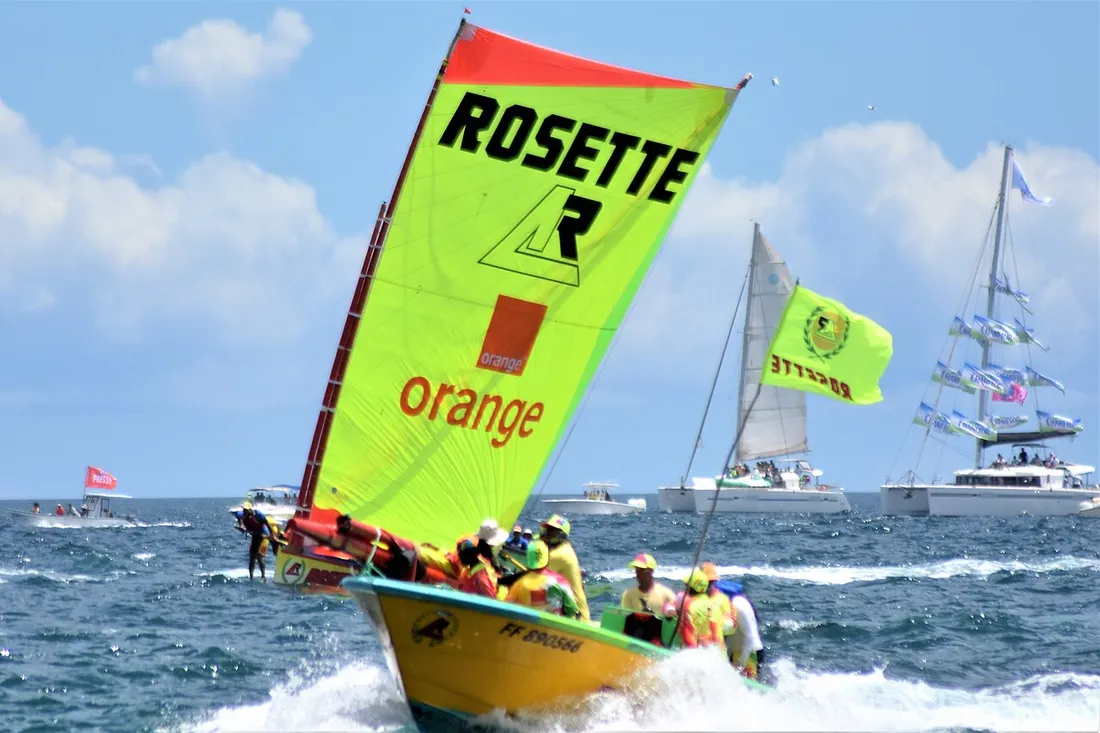
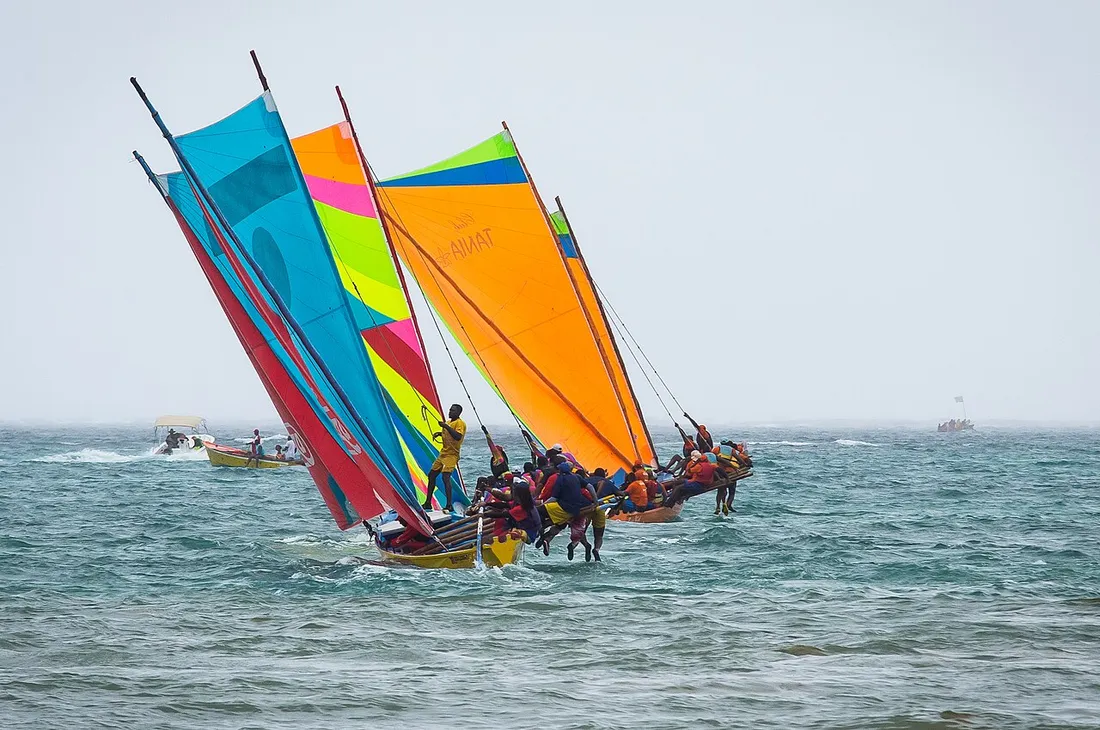
Before the Tour, let’s talk about the boat. The Martinique round yole is no ordinary sailing craft. Descended from fishing gommiers, it’s a round-bottomed vessel with no keel and no centreboard, kept upright only by the skill of its crew. Around ten men hang from long poles — the bois de dressage — leaning out over the water to counter the wind’s pressure in the two square sails. It’s physical, spectacular and deeply rooted in local culture. Since 2020, the round yole has in fact been inscribed on UNESCO’s list of intangible cultural heritage, a rare honour for an island sport.
A few useful pointers, since you’re in a French overseas department here (capital Fort-de-France, around 360,000 inhabitants): you pay in euros, people speak French and Creole, the time difference is -6h in summer compared with Paris, and the dialling code is +596. Aimé Césaire airport sits in Le Lamentin, central and handy for reaching the Atlantic coast where most of the race plays out.
When does the 2026 Tour des Yoles take place?
The Tour is traditionally raced in late July to early August, over roughly eight days, prologue included. For 2026, count on the last week of July through the very first days of August: a grand loop hugging mainly the Atlantic seaboard, bay after bay, with one or two forays over to the Caribbean side. The final official dates are published in spring by the organisers; I’d advise confirming them before locking in your flights.
Worth knowing: this period falls right in the hurricane season (June to November) and the rainy season. Nothing alarming — the stages run despite a few squalls — but it’s not the Carême (December to April), the island’s reigning dry season. Pack a light rain jacket, plenty of water and sunscreen: down by the sea, the sun beats hard between two showers.
The stages of the Tour: finish-line towns to know
The format barely changes from one edition to the next: a prologue kicks off the festivities, then seven stages link the coastal towns. Here are the stages of the Tour des Yoles and the finish-line villages to watch for in 2026, bearing in mind the exact order varies according to the official route:
- Le Robert — the epicentre. Its vast bay dotted with islets is a natural amphitheatre for the race, and the town very often hosts a start or a finish. Electric atmosphere.
- Le François — another hotspot of the Robert-François yoles, with its white sandbanks and Joséphine’s Bathtub as a backdrop. The finishes here are spectacular.
- Le Vauclin — windy south-eastern point, land of sailors and fishermen, frequently on the programme.
- Le Marin — large sheltered southern bay, often a transition stage towards the Caribbean.
- Les Trois-Îlets — the foray over to the Caribbean side, facing the bay of Fort-de-France. A more touristy setting, easily reached from the seaside South.
- Sainte-Anne / Le Diamant — the Grand Sud happily hosts a stage, between Diamond Rock and the beaches at the tip of the island.
- La Trinité / Sainte-Marie — the North Atlantic, swelly and demanding, for one or two more challenging stages.
Every finish is a celebration: music, smoking lolos, follower boats heading back to port, and the crowd cheering on its crew. Spot the stage in the town where you’re staying — that’ll be your best vantage point.
How to follow the race on the ground
To experience the Tour, there are two schools of thought. From land: set up on a point or a pontoon at the finish, arrive early (two to three hours ahead), park far away and walk the rest — parking is the event’s real headache. From the sea: operators offer spots on follower boats, generally between €60 and €120 a day depending on the package and whether a meal is included. It’s the ultimate experience, right in the heart of the fleet, but it must be booked several weeks ahead.
On the overall budget side, plan on the spot for: a dish at a seaside lolo €8 to €15, a car rental €35 to €55 a day (essential here — a car is strongly recommended for getting between the towns), plus enough to buy drinks and a straw hat from the street vendors. The Atlantic towns are fairly close to one another: Le Robert to Le François is about twenty minutes; Le François to Le Vauclin, around 25 minutes.
The accommodation strategy: one base, not a daily move
Here’s the classic mistake I see every year: wanting to stay as close as possible to each stage. Bad idea. You’d spend your trip packing and unpacking. The right strategy for following the 2026 Tour des Yoles comes down to a single sentence: one central base on the Atlantic, and radiate out from there.
- Ideal base: Le Robert or Le François. You’re at the heart of the action, less than 30 minutes from most of the finishes. By far the most restful choice.
- Southern alternative: Le Marin or Sainte-Anne. More beaches and restaurants for the off days, at the cost of slightly longer drives to the North Atlantic.
- Compromise: Le Vauclin. Between the two, breezy and quiet.
Booking early is crucial: during Tour week, the rentals in the stage towns go fast and prices climb, much like at carnival. Plan three to four months ahead.
This is where a well-thought-out booking makes the difference. At Hostel Toucan, we offer accommodation in these Atlantic towns through direct booking, with no platform fees, and free cancellation up to 7 days before arrival — invaluable when you’re pinning your dates to a sports calendar that’s still provisional. And our 7-day WhatsApp support helps you choose the base nearest the stages you care about. To plan the rest of your trip, take a look at our complete guide to Martinique and our rentals in Martinique on the Atlantic coast. Do you own a property in a stage town? Find out how we manage it on our owners page: yoles week is a peak in demand you won’t want to miss.
FAQ
When does the 2026 Tour des Yoles take place?
The Tour is raced in late July to early August, over roughly eight days (prologue plus seven stages). The exact 2026 dates are published in spring by the organisers: confirm them before buying your flights, as it falls in peak event season.
Which towns host the stages?
Mainly towns on the Atlantic coast: Le Robert and Le François at the forefront, but also Le Vauclin, Le Marin, La Trinité, Sainte-Marie, and a foray over to the Caribbean side at Trois-Îlets, sometimes Sainte-Anne or Le Diamant. The order varies according to the official route for the year.
Where to stay to follow the Tour without driving back and forth every day?
Choose a single central base on the Atlantic, ideally Le Robert or Le François: you’ll be less than 30 minutes from most of the finishes. Book 3 to 4 months ahead, as the well-placed rentals go fast during this week.
Can you watch the race from a boat?
Yes. Operators offer spots on follower boats, generally between €60 and €120 a day depending on the package. It’s the most immersive experience, in the middle of the fleet, but it must be booked several weeks ahead as places are limited.