Heading to Martinique with a baby always comes down to the same very practical questions: is the water really safe for a little one? How long can a child cope in a car under the heat? What should you plan for health, and which place should you stay in? As an island resident used to helping families who arrive with a stroller and a car seat, here is an honest guide for a stress-free stay: current-free beaches, drives to keep manageable, your baby’s health in the tropics and the real criteria for a suitable rental.
A reassuring tropical destination for children
First relief: Martinique is a French overseas department (DROM). People speak French (and Creole), you pay in euros, the medical standards are the same as in mainland France, and you’ll find nappies, baby formula and baby food jars in every supermarket in Fort-de-France or Les Trois-Îlets. No paperwork for a baby travelling with their parents, and no mandatory vaccines.
The island also reassures by its size: about 70 km from north to south, which keeps long drives to a minimum. The time difference of -5h in winter and -6h in summer compared with Paris works in your favour: young children settle into an “early to bed, early to rise” rhythm, perfectly in sync with the cool morning hours, ideal for the beach. Also worth noting: the main town is Fort-de-France, with nearly 360,000 inhabitants, dialling code +596.
The best time for a trip to Martinique with a child remains the dry season, the Carême, from December to April: calmer sea on the Caribbean side, clear skies and bearable heat. If possible, avoid the heart of the cyclone season (August–October), and keep in mind that the February–March carnival, magnificent but loud and late at night, isn’t always suited to little ones.
Current-free beaches: stress-free swimming for the little ones
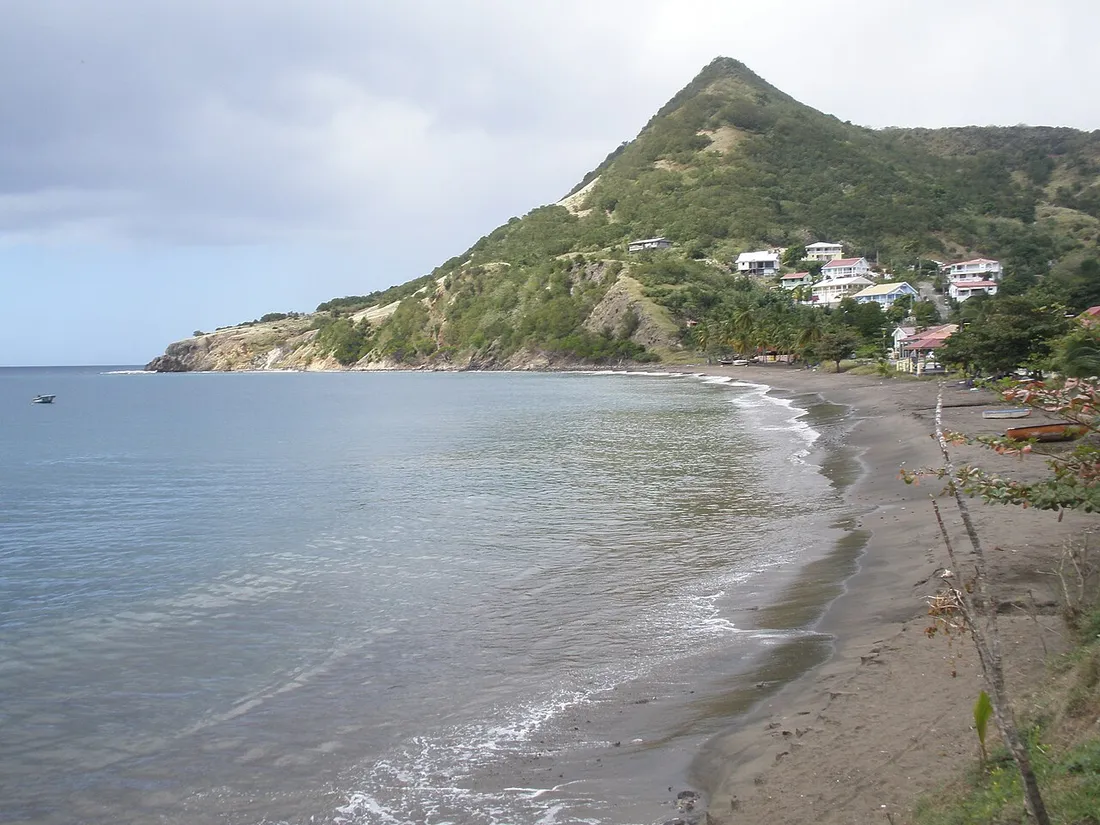
For a baby, the number one criterion is calm, warm, shallow water with no current. The golden rule: favour the Caribbean side (south and west), far more peaceful than the often choppy Atlantic coast. Here are my safe bets for calm beaches for children in Martinique.
- Pointe Marin (Sainte-Anne): my first choice with a baby. Smooth water that stays calf-deep for dozens of metres, shade from the casuarina trees, showers, toilets, a playground and restaurants within walking distance. You can move from a swim to a bottle to a nap without moving the car. Arrive before 9:30 a.m. for the shade.
- Anse Michel and Cap Chevalier (Sainte-Anne): on the Atlantic side but protected by a reef, it offers a very shallow turquoise lagoon where you can stand far from shore. The crossing to the îlet Chevalier is fun for older children. Pack water shoes for the coral and a good beach umbrella.
- Anse Mitan and Anse à l’Âne (Les Trois-Îlets): very calm water and soft sand in the bay of Fort-de-France. A big plus: the ferry links Les Trois-Îlets to Fort-de-France in about twenty minutes, a mini boat trip that children love, with zero traffic jams.
- Grande Anse des Salines (Sainte-Anne): the island’s picture-postcard beach, with a very gentle slope and turquoise water. Ideal with children if you arrive early (before 9 a.m.), as shade and parking are quickly fought over, especially on Sundays.
Conversely, avoid letting little ones swim on the exposed Atlantic coast (Tartane on the ocean side, the Caravelle peninsula facing the open sea): superb for a walk, but the swell and currents there are powerful. Also check the day’s sargassum situation on that coast.
Keeping drives manageable: the car, yes, but wisely
A car is almost essential with children: a car seat is mandatory and public transport doesn’t serve the beaches. Budget around €35 to €60 a day for a family rental, to be booked ahead in high season. Distances stay modest, but the heat and the Fort-de-France traffic jams can ruin a poorly planned drive.
A few travel times from Aimé Césaire airport (Le Lamentin):
- Airport → Les Trois-Îlets: 30 to 40 minutes.
- Airport → Sainte-Anne / Pointe Marin: 45 minutes to 1 hour.
- Airport → Le Diamant: about 40 minutes.
- Sainte-Anne → Saint-Pierre (south to north): 1h15 to 1h30, the longest drive on the island.
My tips for easy drives with a baby:
- Drive during the cool hours, before 9 a.m. or in late afternoon, never at midday.
- Avoid Fort-de-France at rush hour (7–9 a.m. and 4–6:30 p.m.): the traffic jams are real.
- Favour a base in the south (Sainte-Anne, Le Marin, Les Trois-Îlets, Le Diamant): most family beaches there are less than 30 minutes away, which saves you from hitting the road every day.
- Save the north (Saint-Pierre, Jardin de Balata, Montagne Pelée) for the occasional outing, not for a base with an infant.
Your baby’s health in the tropics: the real reflexes
Martinique poses no major health risk for a child, but the climate calls for a few simple reflexes.
Sun and heat
The sun beats down hard from 9 a.m., even under a hazy sky. No direct exposure before 6 months: strict shade, a beach umbrella and a UV-protection tent. Mineral SPF 50+ cream every two hours, a wide-brimmed hat and a UV rash guard for everyone. Extra hydration (few water points on the wilder beaches) and an afternoon nap in the shade to avoid heatstroke.
Mosquitoes and water
Dengue circulates in waves in the West Indies. Protect your baby with a mosquito net over the bed and the stroller, light covering clothes at dusk and a repellent suited to their age (ask for advice at the pharmacy). Tap water is drinkable in most towns; if in doubt, bottled water remains a safe option for bottles.
Minor scrapes and emergencies
The health network is French: doctors, on-call pharmacies, and the CHU de Martinique in Fort-de-France for paediatric emergencies. Bring the health record book, the Carte Vitale and a tropical kit (saline solution, paediatric paracetamol, sting relief, rehydration). As sea urchins are common near the rocks, water shoes save a lot of tears.