In Martinique, Easter is far more than a Sunday with the family: it kicks off a long weekend when the whole island heads for the sea. Tents pitched on the sand, transistor radios blasting biguine, pots simmering from early morning… and at the centre of it all, one dish: the crab matoutou. This land-crab stew over fragrant rice is to Martinique what turkey is to Christmas elsewhere. After several Easters spent on the southern beaches, here is everything you need to understand about this living tradition, and how to enjoy it without a misstep. If you’re looking to taste crab matoutou at Easter in Martinique, you’re in the right place.
Crab matoutou, the totem dish of Easter
Matoutou (also written matété depending on the town and the family) is a Creole dish based on land crab, rice, spices and chilli. The crab is first cleaned, blanched, then slowly simmered in a sauce flavoured with bay rum leaves (bois d’Inde), country onion, garlic and roucou, before being bound with rice cooked in the cooking juices. The result is hearty, spicy, and traditionally eaten by hand at a large communal table.
An Amerindian root turned Creole
The word itself betrays the island’s history. Matoutou comes from Tukusipan/Arawak-Carib: originally it referred to a wooden rack on which the Amerindians laid out their food. The dish is one of the rare direct culinary witnesses of the Amerindian heritage, reclaimed over the centuries by Creole cuisine. That is what makes it far more than a simple recipe: a piece of collective memory.
Why land crab, and why at Easter
Being a Lenten dish, matoutou is eaten after the long abstinence that precedes Easter. Land crab, abundant and accessible, was the meat of modest families: people hunted it themselves, for free, in the mangroves and the hills. Serving crab at Easter meant celebrating the end of privation without going broke. The tradition took root so deeply that it still shapes the entire Martinican Easter weekend today, then plays out again at Pentecost.
The calendar: hunting the land crab
It’s impossible to talk about Martinican culinary tradition around Easter without mentioning the crab hunt, a ritual in its own right that fills the weeks leading up to the holidays.
When and how the crabs are hunted
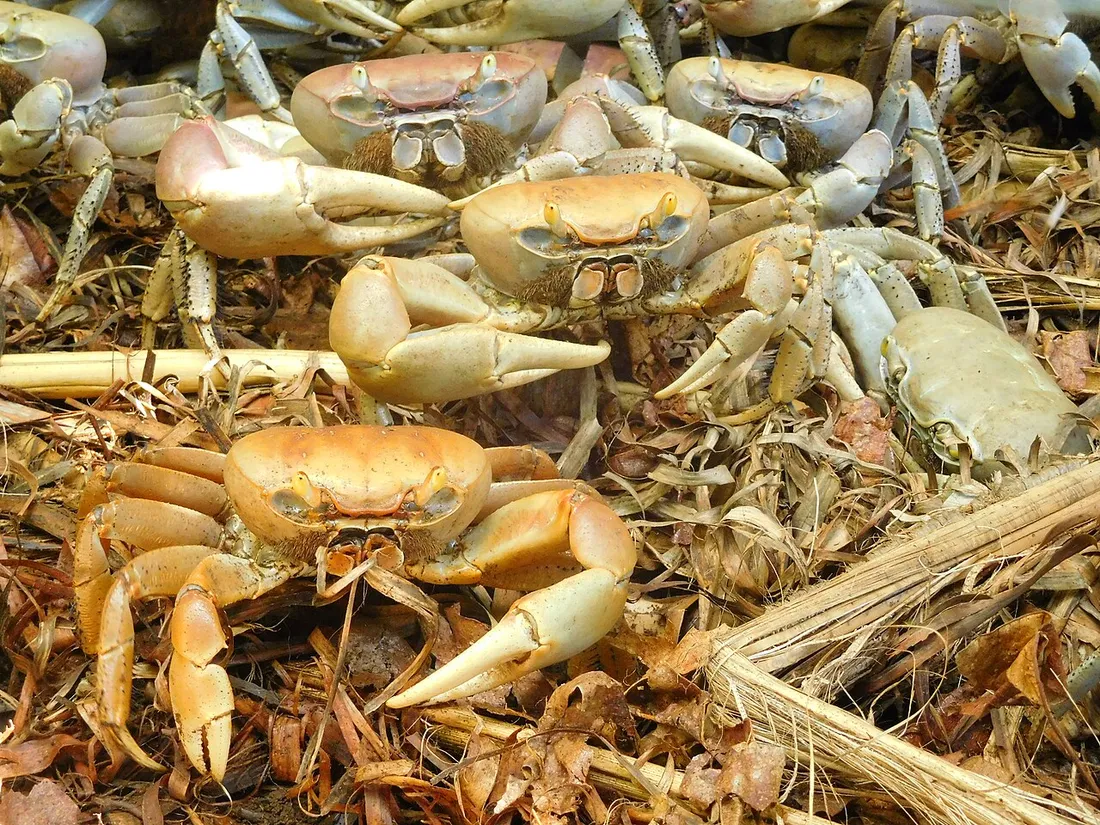
The land crab (Cardisoma guanhumi, the “white crab”, and the Gecarcinus, the red-and-purple “tourlourou”) comes out mainly after the first rains and during the spring tides. Hunters set z’attrapes (handmade traps of bamboo or bottles) along the holes, in the wetlands and the mangrove edges. In the weeks before Easter, it’s a flurry of activity: the live crabs are “purged” for several days in barrels, fed chilli, corn and leaves, to cleanse their flesh.
Buying your crabs rather than hunting them
Not everyone hunts. At the markets and roadsides of the South and Centre, live crabs are sold in tied bundles in the days before the holidays. A few price benchmarks observed over recent years:
- Live land crabs: €6 to €12 each depending on size and the year’s scarcity (prices soar when the season is dry).
- Ready-made matoutou, sold in a tray by a caterer or a lolo: €18 to €28 for a generous portion.
- Frozen or imported crabs: a cheaper alternative out of season, but purists swear only by fresh local land crab.
An important regulatory point: hunting the land crab is governed by prefectural decree (seasons, quotas, protected zones). As a visitor, it’s better to buy from registered fishers and hunters than to try your own luck.
The Easter outing on the southern beaches
The heart of the tradition isn’t only the dish: it’s the Easter camping. From Good Friday to Easter Monday, thousands of families set up tents by the water for several days.
Where to soak up the atmosphere
The Caribbean-coast and southern-tip beaches hold most of the buzz:
- Sainte-Anne: Pointe Marin beach and above all Grande Anse des Salines fill with encampments. A family vibe, music, games of dominoes and shared matoutou.
- Le Marin and the bay: jetty, bars and restaurants packed to the rafters, passing sailors.
- Le Diamant, Sainte-Luce, the Anses-d’Arlet: more scattered camps but just as convivial.
- On the Atlantic side, Cap Chevalier and Cap Macré draw those after a wilder setting.
Tasting matoutou when you’re just passing through
No tent or family on site? You can absolutely still enjoy the dish:
- At the lolos (beachside hut-restaurants), which put matoutou on the menu around Easter and Pentecost.
- From Creole caterers and the pop-up stands set up near the beaches over the Easter weekend.
- By booking ahead at a Creole restaurant in the South: many offer a special Easter menu, but tables go fast.
Our on-the-ground tip: order the day before or early in the morning. Matoutou is made in large batches and runs out during the day. To spot other specialities worth tasting on site, take a look at our complete guide to Martinique.
Easter in Martinique: what it changes for your stay
The Easter weekend is one of the year’s peaks of local turnout, on a par with carnival (February-March) or the Tour des Yoles (late July-early August). And it’s felt directly in how you plan a stay.
Crowds, traffic and accommodation
- The southern roads (towards Sainte-Anne and Les Salines) are gridlocked from Good Friday morning. Leave early or shift your timings.
- Parking at Les Salines becomes a headache: aim for before 9am or come in the mid-afternoon.
- On the accommodation side, seaside rental demand explodes. Southern holiday rentals (Sainte-Anne, Le Marin, Sainte-Luce, Les Trois-Îlets) are often booked 2 to 4 months ahead, and rates climb.
- Think about renting a car (reckon €35-55/day) well in advance: the agencies at Aimé Césaire airport (Le Lamentin) are besieged during this period.
When Easter falls, and the weather
Easter being a movable feast, it lands between late March and late April. Good news: that falls in the heart of the dry season (the Carême), the best time to visit Martinique, with bright sun, a warm sea and little rain. Pentecost, seven weeks later (late May-early June), replays the same matoutou tradition but at the start of the shoulder season, often a little quieter. To set your travel window, our article on the seasons details all of this in the guide to Martinique.
Where to stay to live the tradition up close
To enjoy the Easter outing fully without enduring the jams and the scramble for parking, the smart move is to stay as close as possible to the southern beaches. A rental in Sainte-Anne, Le Marin, Sainte-Luce or Les Trois-Îlets lets you reach the sand on foot or in minutes, and cook your own crabs if the urge strikes.
At Hostel Toucan, we offer holiday rentals in Martinique hand-picked on the ground, ideally placed for the Easter season. By booking direct, you enjoy:
- A booking with no platform fees: you pay the fair price, with no intermediary commission;
- Free cancellation up to 7 days before arrival;
- WhatsApp support 7 days a week, in French and Creole, to point you to the best matoutou lolos or book your crabs in time.
Since demand soars months before Easter, book early. And if you own a property on the island, our concierge service for owners manages this peak rental season for you, from cleaning to welcoming guests.
Good Friday and its crab matoutou is Martinique at its most generous and most alive: an ancestral dish, a beach in full celebration, and the Creole art of taking your time. Lay your towel on the sand, hold out your plate, and let yourself be carried along. Bon manjé, é bon Pak!
FAQ
What is crab matoutou and when is it eaten in Martinique?
Crab matoutou (or matété) is a stew of land crabs simmered with rice, spices and chilli. It’s the emblematic dish of Easter in Martinique, traditionally enjoyed from Good Friday to Easter Monday, then again at Pentecost, most often at a large communal table on the southern beaches.
Where can you taste crab matoutou as a tourist?
If you have no family camping on site, you’ll find matoutou in the beachside lolos of the South (Sainte-Anne, Le Marin, Le Diamant), at Creole caterers and the pop-up stands of the Easter weekend. Remember to order the day before or early in the morning: the dish is made in large batches and runs out fast. Reckon €18 to €28 for a tray portion.
Why do people eat crab at Easter in Martinique?
It’s a legacy of Lent: after the abstinence, land crab, abundant and hunted for free in the mangroves, offered a festive meat affordable to modest families. The word “matoutou” actually comes from Amerindian languages, which makes this dish one of the rare direct witnesses of the Carib heritage in Creole cuisine.
Should you book your accommodation well in advance for Easter?
Yes. The Easter weekend is one of the year’s peaks of local turnout and demand for seaside rentals explodes. In the South (Sainte-Anne, Le Marin, Sainte-Luce, Les Trois-Îlets), book ideally 2 to 4 months ahead, along with your rental car. Falling in the heart of the dry season, Easter is also one of the finest times to visit the island.