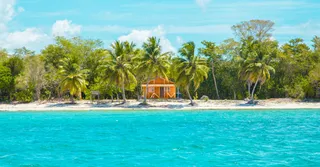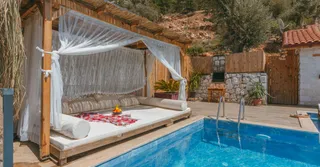
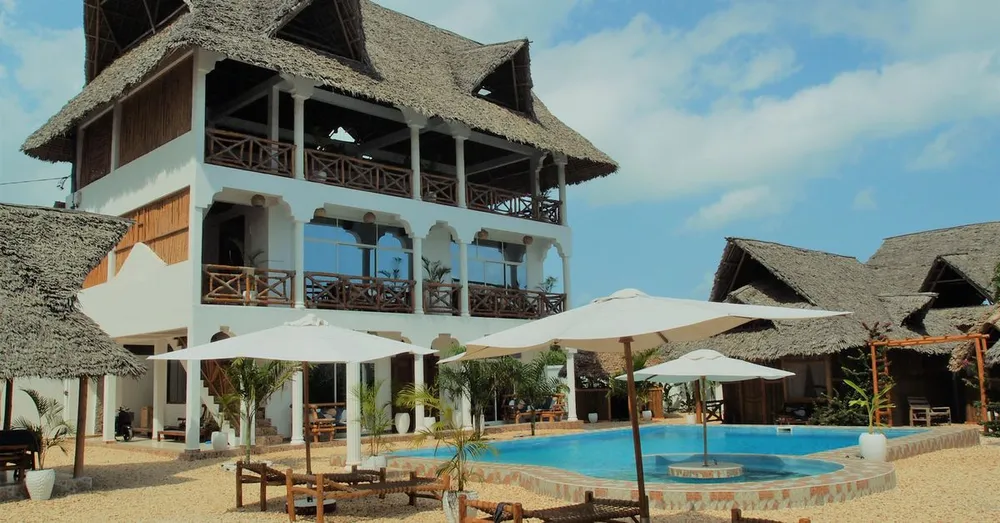
Buying a villa a ten-minute walk from La Caravelle or Grande Anse, renting it to holidaymakers and covering a good chunk of the mortgage: on paper, the project is appealing. But between LMNP status, town-hall registration and the tourist tax to collect, renting a beachfront villa in Guadeloupe comes with very specific taxation and obligations, with a few particularities unique to France’s overseas departments. Based on the ground here, we work alongside owners in Sainte-Anne, Saint-François and Deshaies: here is what you need to know before renting, backed by real figures.
Why a beachfront villa rents (very) well in Guadeloupe
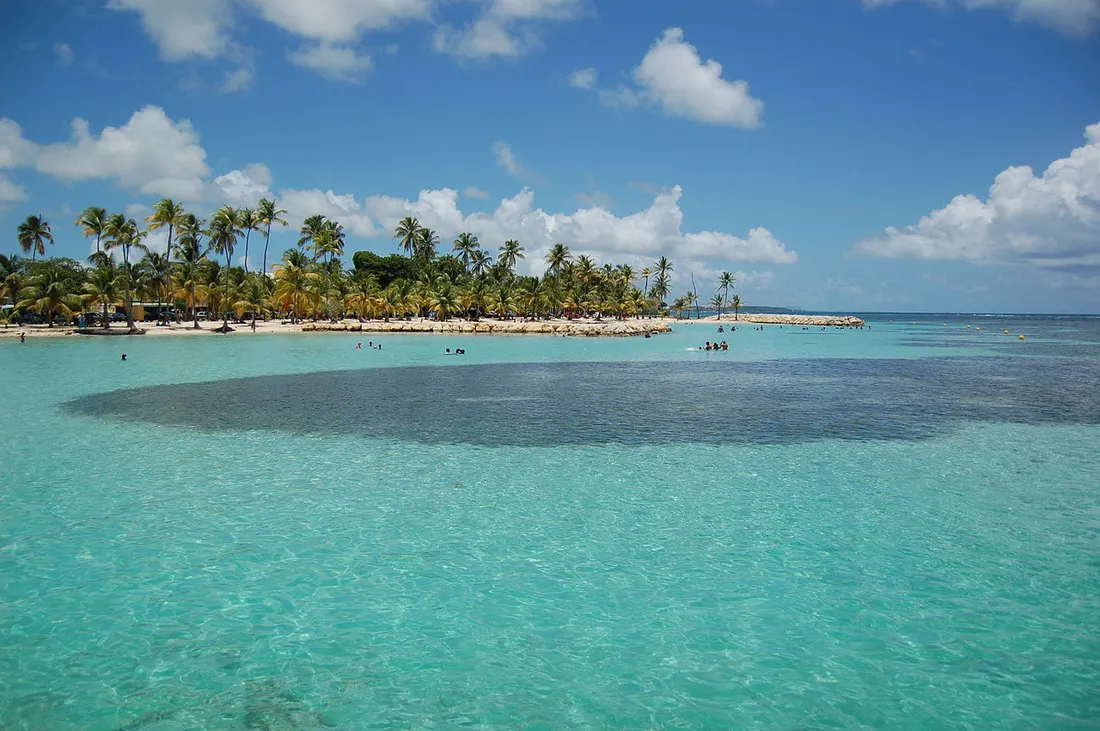
Guadeloupe draws travellers all year round, with a clear peak in the dry season, from December to April. The butterfly-shaped archipelago offers two distinct markets: Grande-Terre (Sainte-Anne, Saint-François, Le Gosier), with its turquoise lagoon beaches 30 to 40 minutes from Pôle Caraïbes airport, is the most in-demand area for villas with a pool; Basse-Terre (Deshaies, Bouillante), between Soufrière, the Carbet Falls and the Cousteau Reserve at Malendure, attracts a nature-loving clientele on longer stays.
A few ballpark figures observed on the ground in 2026:
- Purchase price of a 3-bedroom villa with a pool in Sainte-Anne or Saint-François: €450,000 to €750,000 depending on the distance to the beach and the sea view.
- Nightly rate in high season: €250 to €400 a night for a villa sleeping 6 with a pool, versus €150 to €220 in the off-season (June to November).
- Annual occupancy rate for a well-managed and well-photographed villa: 65 to 75%, i.e. 240 to 270 nights sold.
A villa less than 800 m from a well-known beach rents on average 20 to 30% higher than an equivalent property a 10-minute drive away: beach proximity is travellers’ top search filter, as shown in our complete guide to Guadeloupe.
LMNP status in Guadeloupe: how your rental income is taxed
Good news: Guadeloupe is a French department. The Non-Professional Furnished Rental (LMNP) status applies there exactly as it does in mainland France, with a few advantages specific to the overseas territories. You qualify as an LMNP as long as your furnished rental income stays below €23,000 per year or below your household’s other earned income.
Micro-BIC: simplicity, with a real bonus if you classify your villa
The micro-BIC regime applies a flat-rate allowance to your income, with no accounting required:
- Unclassified tourist furnished rental: 30% allowance, capped at €15,000 of annual income.
- Classified tourist furnished rental (the famous stars): 50% allowance, up to €77,700 of income.
For a beachfront villa earning €45,000 a year, the difference is huge: the unclassified property is automatically pushed onto the actual-expense regime (cap exceeded), whereas the classified one stays on micro-BIC and is taxed on only €22,500. Classification costs around €150 to €250 (a visit from an accredited body), is valid for 5 years and pays for itself in the very first year.
On top of this comes the overseas advantage: taxpayers domiciled in Guadeloupe benefit from the 30% income-tax reduction (capped at €2,450), which lowers the final tax on your rental income accordingly.
Actual-expense regime: the depreciation that wipes out the tax
Under the actual-expense regime, you deduct all your costs (loan interest, insurance, property management, pool maintenance, property tax) and you depreciate the building and the furniture. On a villa worth €600,000 excluding land, annual depreciation often reaches €18,000 to €22,000: the rental income is frequently tax-neutral for 10 to 15 years. The actual-expense regime requires a chartered accountant (€1,000 to €1,500/year in Guadeloupe); above €30,000 of annual income, it is almost always the right choice.
In both cases, register your activity on the INPI single window to obtain a SIRET number, which is essential for declaring your income.
Registering your tourist furnished rental at the town hall: the step too many owners skip
Before the first booking, the law requires you to register the villa at the town hall of the commune where it is located. In Guadeloupe, the process varies by commune:
- Simple declaration (Cerfa form no. 14004) in most communes: Deshaies, Bouillante and Le Moule in particular.
- Declaration with registration in the communes that have activated the online service: you then receive a 13-character registration number, mandatory on all your listings (Airbnb, Booking, direct website). This is the case in several tourist communes of Grande-Terre, and the registration number’s general roll-out is scheduled by the law of 19 November 2024 for all communes by the end of 2026.
Specific points to watch:
- If the villa is your primary residence, the rental is capped at 120 days per year (90 days if the commune has voted to lower the threshold).
- If it is part of a co-ownership (common in the residences of Le Gosier or Saint-François marina), check that the rules do not prohibit short-term rentals.
- Failure to register exposes you to a fine of up to €5,000, and €10,000 if you lack a registration number where one is required.
We detail the procedure commune by commune in our owners support service, declaration file included.
The tourist tax in Guadeloupe: who collects it, how much, and how to remit it
The tourist tax is owed by your travellers, not by you: your role is to collect it and then remit it to the local authority. In Guadeloupe, it is managed by the agglomeration communities (the Riviera du Levant for Sainte-Anne, Saint-François, Le Gosier and La Désirade, for example), each setting its own rates by resolution.
Ballpark figures applied across the archipelago in 2026:
- 3-star classified rental: roughly €0.90 to €1.50 per night per adult.
- 4–5-star classified rental: €1.50 to €2.30 per night per adult.
- Unclassified rental: proportional taxation of 1 to 5% of the nightly price per person, capped at the authority’s highest rate. For a villa at €300 a night, this quickly weighs more heavily than a classified rate — one more argument for classification.
Minors are exempt. In practice, the platforms (Airbnb, Booking) collect and remit automatically; on direct bookings, it is up to you to charge the tax, keep a register of nights and remit it according to your agglomeration’s schedule (two to four deadlines per year). At Hostel Toucan, this collection is part of standard management: our owners receive a summary for each deadline, ready to declare.
Our field feedback: what really drives a beach villa’s profitability
After several seasons managing villas between Sainte-Anne and Deshaies, three findings keep coming back:
- Classification changes everything: doubled micro-BIC allowance, gentler flat-rate tourist tax, better visibility.
- Tropical upkeep is a budget item in its own right: salt, humidity, garden, pool. Budget €4,000 to €6,000/year, fully deductible under the actual-expense regime.
- Direct booking increases the margin: 15 to 18% in platform commissions saved, to be shared between the traveller’s price and the net income.
This is the model we offer: travellers book our villas directly through our Guadeloupe rentals catalogue, with no platform fees, free cancellation up to 7 days before arrival and 7-day WhatsApp support. On the owner’s side, you delegate guest reception, cleaning, maintenance, tourist tax and the calendar. Tell us about your project via our owners page: we will give you an honest income estimate, based on comparable villas in your commune.
FAQ
Does LMNP status work the same way in Guadeloupe as in mainland France?
Yes. Guadeloupe is an overseas department: LMNP, micro-BIC and the actual-expense regime apply identically. Two extra benefits: the 30% tax reduction for overseas-territory residents and certain overseas investment schemes for new builds.
Do I need a registration number to rent my villa in Sainte-Anne or Saint-François?
It depends on the communal resolution: some tourist communes of Grande-Terre already require the 13-character number, while others are content with the Cerfa 14004 form. The law of 19 November 2024 extends registration to all communes by the end of 2026, so plan ahead: the declaration is free and takes a few days.
Who pays the tourist tax, the owner or the traveller?
The traveller. The owner (or their property manager) collects it and then remits it to the agglomeration community. On Airbnb and Booking, collection is automatic; on direct bookings, it is up to you to charge and declare it — Hostel Toucan handles this for managed properties.
What net income can you expect from a 3-bedroom beachfront villa?
For a villa with a pool near a Grande-Terre beach, rented at €250 to €400 a night in high season with 65 to 75% occupancy, gross income often reaches €40,000 to €60,000 per year. After costs and tropical upkeep, and thanks to depreciation under the actual-expense regime, the after-tax net income remains very attractive.