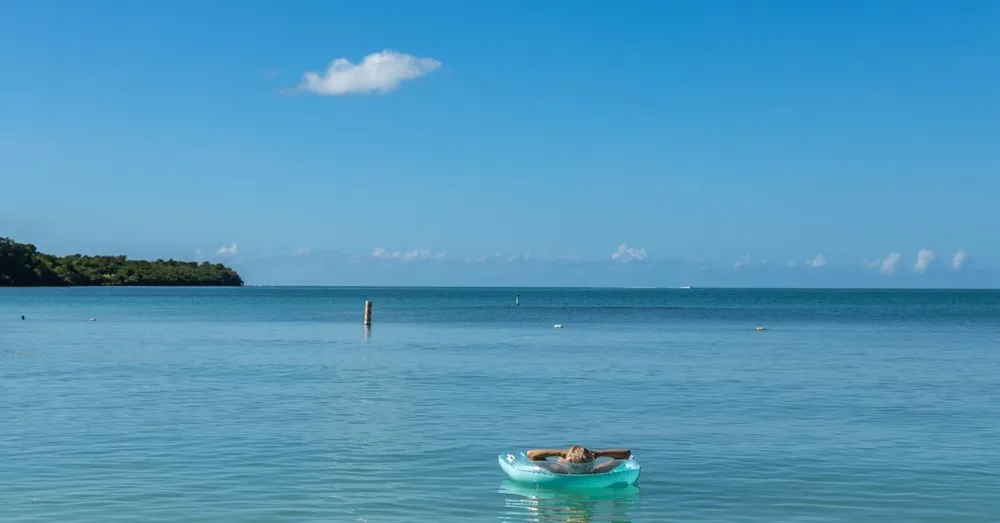
People often ask me, at the agency, where to start a stay in Martinique. My answer sometimes surprises them: before heading off to the beaches of the South or to Mount Pelée, set aside a morning to explore Fort-de-France on foot. Within less than two square kilometres, the island’s capital packs in a listed library that came straight from the World’s Fair, an iron cathedral, a still-active military fort and an emblematic park at the heart of the Caribbean’s memory debates. It’s the best possible introduction to Martinique, this French overseas department (DROM) of around 360,000 inhabitants, where you pay in euros and switch seamlessly from French to Creole.
Here is the route I recommend to my travellers, tested and refined over the years, with the distances, the timings and the little things the guidebooks forget to mention.
Why explore the city centre on foot
Fort-de-France is not a city built for cars. The streets of the historic centre are narrow, often one-way, and parking is a real challenge. On foot, however, everything essential connects in a loop of 2.5 to 3 km, that is, a relaxed half-day with breaks included.
A few practical pointers before you set off:
- When to come: favour the dry season, Lent, from December to April. Mornings are the most pleasant; aim for 8am-11am to avoid the worst of the heat.
- Parking: leave the car at the Malecon car park, by the sea, or in the paid car parks near La Savane (around 1 to 2 € per hour).
- What to wear: comfortable closed shoes, water, a hat and sunscreen. The tropical sun beats down even in winter.
- Safety: the city centre is lively during the day and on weekdays; stay alert on Sundays, when some shops close and the streets empty out.
A handy reminder: Martinique runs 5 hours behind Paris in winter and 6 hours in summer. Keep that in mind for your calls.
Stop 1: the Schoelcher Library, a jewel of iron and colour
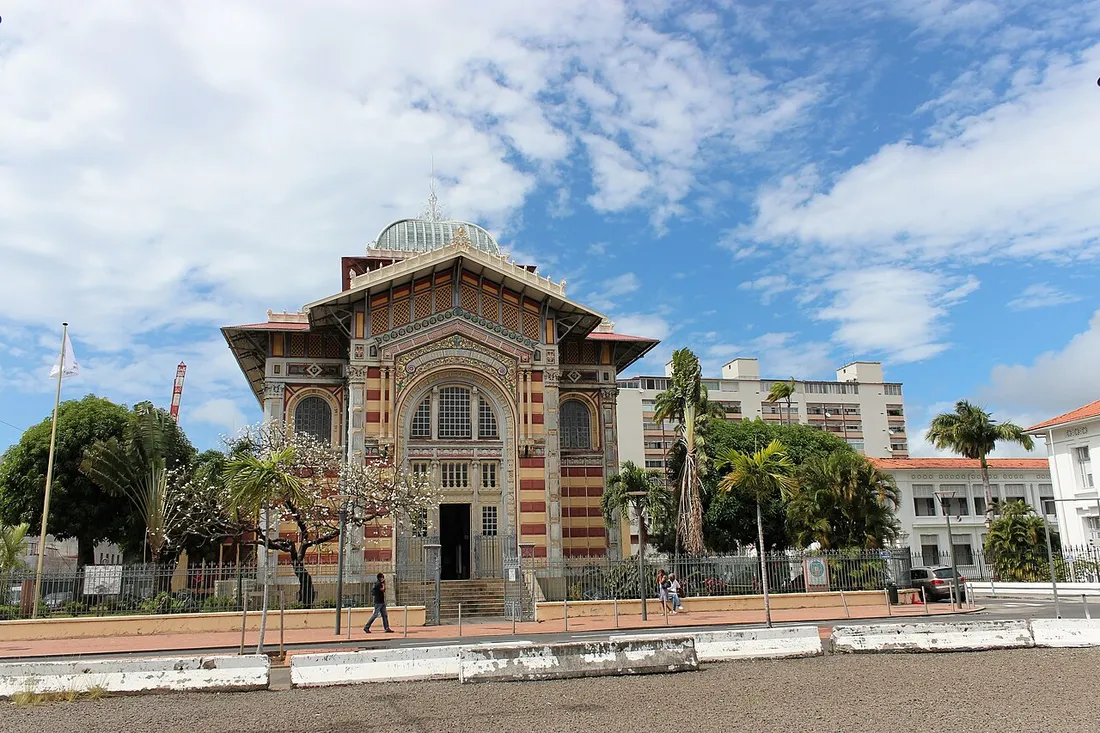
Start with the most photographed monument in the capital. The Schoelcher Library, on the corner of Rue de la Liberté and Rue Perrinon, is a marvel of metal architecture designed by Henri Picq. Unveiled at the Paris World’s Fair in 1889, it was dismantled, shipped by boat, then reassembled in Fort-de-France in 1893.
Its name honours Victor Schoelcher, a driving force behind the 1848 abolition of slavery, who donated his personal library to Martinique. The polychrome façade, the Byzantine dome and the mosaics are worth the visit on their own.
Good to know
- Admission is free; you can admire the great reading room during opening hours (generally Tuesday to Saturday).
- Allow 15 to 20 minutes on site, plus a few minutes for photos from the pavement opposite, where you can capture the entire façade.
- The building is a listed Historic Monument: no flash, and respect the quiet of the readers.
Stop 2: Saint-Louis Cathedral, the city’s “iron lady”
Five minutes’ walk away, on Rue Schoelcher, stands Saint-Louis Cathedral. Rebuilt in 1895 after a series of earthquakes, fires and cyclones that had destroyed the previous buildings, it adopts a neo-Byzantine metal structure designed to withstand earthquakes.
Its spire rises more than 50 metres and serves as a landmark throughout the centre. Inside, the light filtered through the stained-glass windows and the organ are worth a pause. Admission is free; appropriate dress is required.
It’s also a chance to observe local life: on the forecourt and in the surrounding streets, vendors offer tropical fruit, accras and sugarcane juice. Try a homemade coconut sorbet (around 2 to 3 €) if you come across a street vendor: it’s an institution.
Stop 3: La Savane park and its debated statues
Now head for the city’s green lung, La Savane park, a vast tree-lined esplanade of five hectares fringed by royal palms. This is where the heart of Fort-de-France beats: joggers at daybreak, families at the weekend, ice-cream sellers and pétanque courts.
La Savane is home to several statues that recount the island’s turbulent history:
- The statue of Pierre Belain d’Esnambuc, the first French colonist to land in 1635, still standing and still much discussed.
- The site of the former statue of Empress Joséphine, born in Les Trois-Îlets. Beheaded then daubed with red paint by activists over the decades, it was finally pulled down in 2020. Its empty pedestal remains a powerful symbol of Martinique’s memory debates, linked in particular to the role attributed to Joséphine in the 1802 reinstatement of slavery.
I always advise taking the time to observe these traces: they say a great deal about a society questioning its colonial past. At the far end of La Savane, don’t miss the vegetable market and Pointe Simon, the modern business district facing the sea.
Stop 4: Fort Saint-Louis, a still-active military citadel
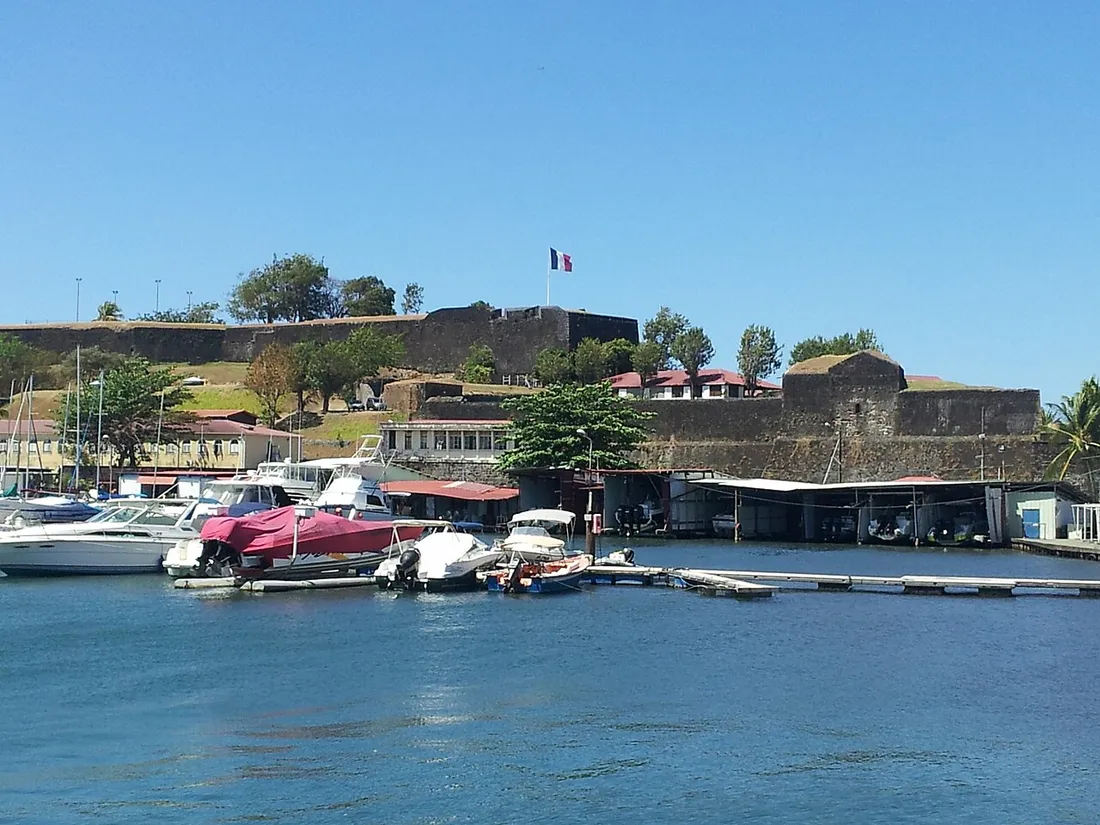
To finish in style, follow the bay to Fort Saint-Louis, a fortified peninsula overlooking the Baie des Flamands. Built from the 17th century to protect the harbour, it is one of the few Caribbean forts still occupied by the French Navy: it is an active military base.
Visiting the fort
- Access is by guided tour only (departures from the La Savane entrance), for reasons of military security.
- Allow around 8 to 10 € for adult admission and a visit of 1 hour to 1h15.
- Remember to bring ID: you are entering a military zone.
- Hours vary according to the base’s activity; check ahead and come early.
The visit offers superb panoramas over the bay, the yole boats and the city, plus a deep dive into the strategic history of the Caribbean. The iguanas that colonise the ramparts are an unexpected bonus.
My recommended route at a glance
| Stop | Place | Duration | Cost |
|---|---|---|---|
| 1 | Schoelcher Library | 20 min | Free |
| 2 | Saint-Louis Cathedral | 20 min | Free |
| 3 | La Savane park | 40 min | Free |
| 4 | Fort Saint-Louis | 1h | ~8-10 € |
Total loop: about 2.5 to 3 km, that is 3 to 4 hours with breaks. Ideal in the morning, followed by a Creole lunch on a terrace (chicken colombo, accras, ti-punch without moderation, with moderation).
Extending your exploration beyond the centre
Once you’ve covered the city, all of Martinique opens up to you. A car is strongly recommended: the island is 80 km long, and the North is winding. Within an hour’s drive, you reach:
- the beaches of the South: Les Salines in Sainte-Anne, Anse Dufour, the black-sand Anse Noire, or Grande Anse;
- Mount Pelée and the ruins of Saint-Pierre, now UNESCO-listed;
- the Rhum Trail and its distilleries (Clément, Depaz, Saint-James, La Mauny, Trois-Rivières), the cradle of AOC agricultural rum;
- the Balata Garden, the Caravelle peninsula (Tartane, a surf spot) and Les Trois-Îlets.
To organise all this with peace of mind, our complete guide to Martinique details seasons, itineraries and good addresses.
Where to stay for easy day trips
Fort-de-France and its bay make an ideal central base for exploring both the North and the South. At Hostel Toucan, we offer holiday rentals in Martinique selected for their location and comfort, with:
- direct booking with no platform fees;
- free cancellation up to 7 days before arrival;
- WhatsApp assistance 7 days a week, in French as well as Creole, for your on-site questions.
Do you own a property on the island and want to make the most of it without the stress of management? Discover our concierge service for owners. Book direct and prepare your Fort-de-France getaway with a clear mind.
FAQ
How long does it take to visit Fort-de-France on foot?
Allow 3 to 4 hours for the complete loop linking the Schoelcher Library, Saint-Louis Cathedral, La Savane park and Fort Saint-Louis, over about 2.5 to 3 km. In the morning, it’s ideal to avoid the heat and enjoy local life.
Can Fort Saint-Louis be visited freely?
No. Fort Saint-Louis is a still-active French Navy base. It can only be visited on a guided tour, lasting about 1 hour, costing around 8 to 10 € and requiring ID. Hours vary according to military activity, so it’s best to check beforehand.
What is the best time to visit Fort-de-France?
The dry season, or Lent, from December to April, offers the most pleasant climate. Favour the mornings (8am-11am) for the cool. February-March is carnival time, a festive experience in its own right, but the centre is then very busy.
Why did the statue of Joséphine disappear from La Savane?
The statue of Empress Joséphine, born in Les Trois-Îlets, long crystallised memory debates in Martinique because of the role attributed to her in the 1802 reinstatement of slavery. Beheaded and then vandalised several times, it was pulled down in 2020. Its empty pedestal remains a place of memory.