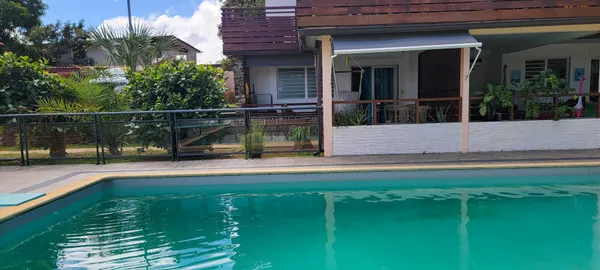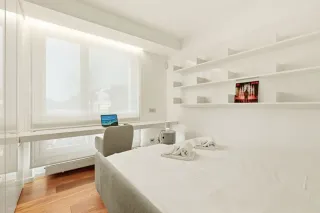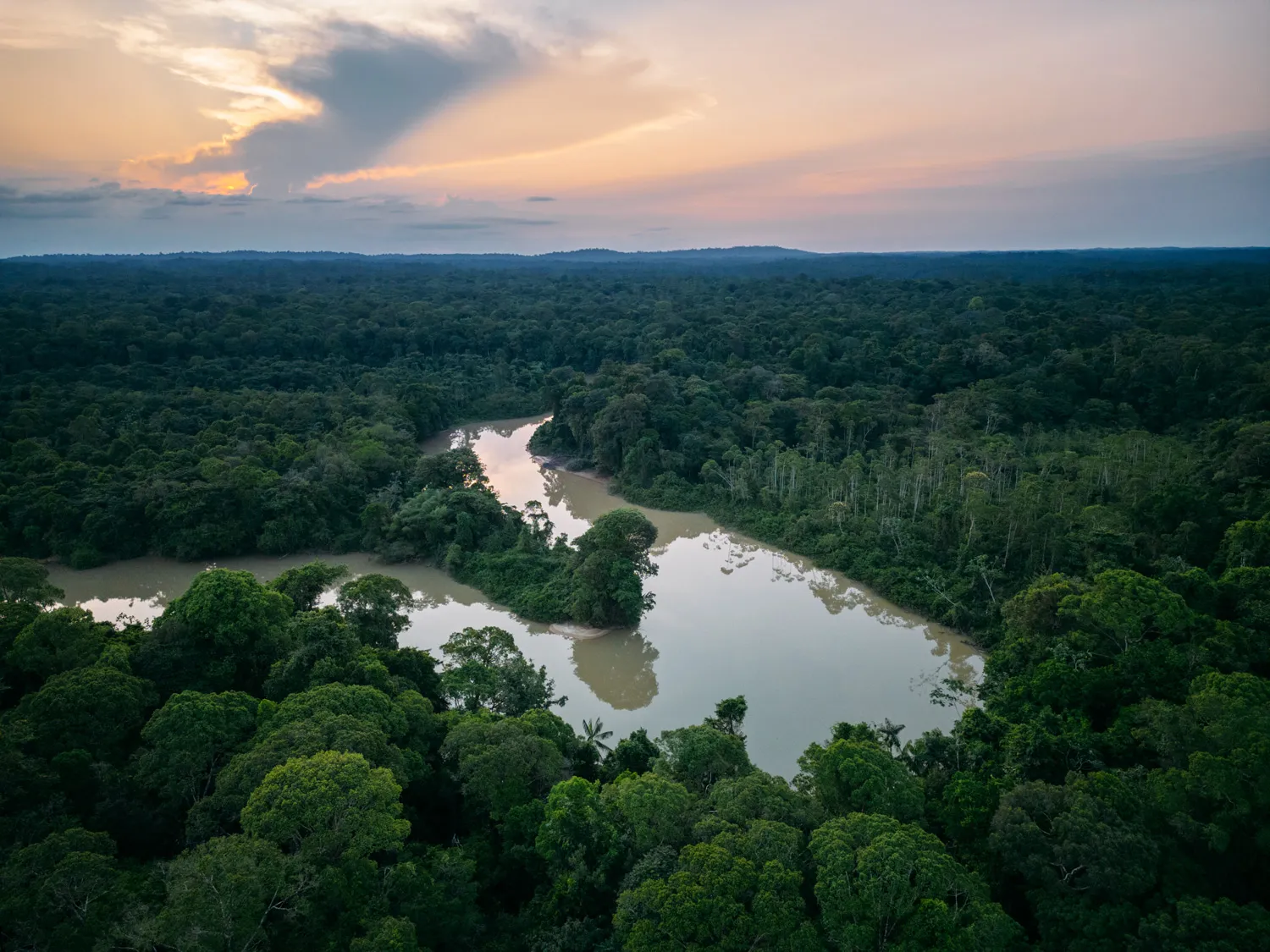

You are preparing a business trip to Cayenne: an assignment lasting a few nights, a worksite running several weeks, or a long-term move for a post in French Guiana. Finding accommodation in the departmental capital raises practical questions that a leisure traveller never has to face: where should you drop your bags to stay close to the government offices and to Matoury airport? How do you obtain an invoice in your company’s name for the expense report? Can you pay by bank transfer rather than with a personal card? This article reviews business accommodation in Cayenne district by district, with a focus on what a para-hotel offer changes compared with a traditional hotel or a peer-to-peer holiday rental.
Understanding the context: Cayenne and its urban area
Cayenne is the most populous municipality in French Guiana and the administrative heart of the territory. But when people talk about a “business trip to Cayenne”, they really mean the wider urban area, which brings together Cayenne, Rémire-Montjoly and Matoury. These three municipalities form a continuous whole where the prefecture, the state services, company headquarters, business parks and Félix-Éboué airport are concentrated.
A few useful landmarks for a business trip:
- Cayenne–Félix-Éboué airport is located in Matoury, around twenty minutes from central Cayenne depending on traffic.
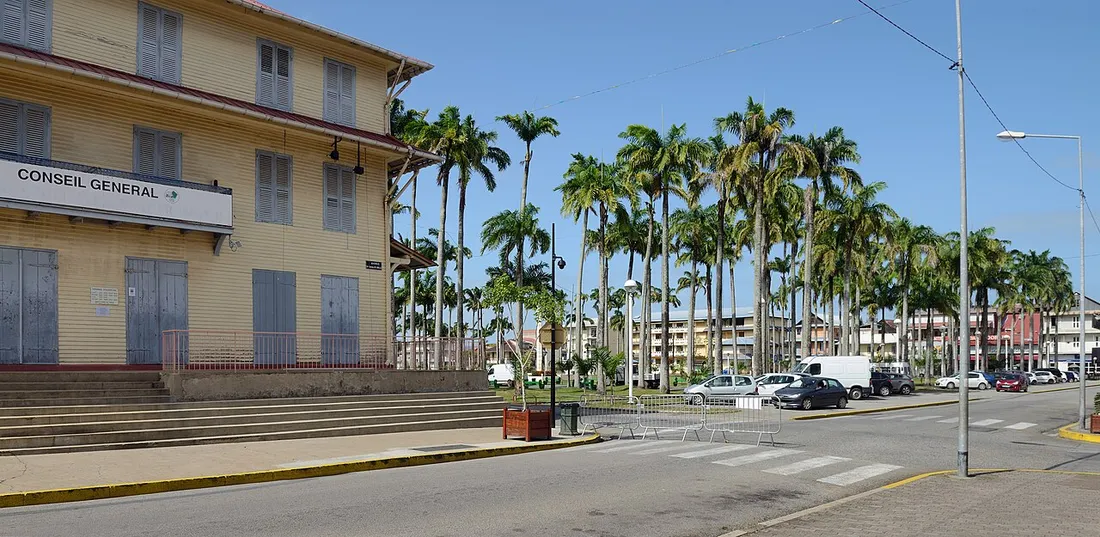
- The administrative centre (prefecture, Collectivité territoriale, government offices) is concentrated within Cayenne itself, around the place des Palmistes and the historic centre.
- The business and commercial parks (Collège de Balata, Californie) stretch along the national roads towards Matoury.
- Kourou, home to the Guiana Space Centre, is around 60 km to the west: many business trips combine Cayenne and Kourou.
Rush-hour traffic on the RN1 and RN2 national roads can be heavy. Your choice of district therefore has a real impact on your daily travel time.
Cayenne’s districts for a business trip
Central Cayenne: close to the government offices
The historic centre of Cayenne, around the place des Palmistes, the market and the shopping streets, remains the logical choice if your meetings are concentrated in the administrative bodies and city-centre offices. Many services and restaurants are within walking distance. On the other hand, parking can be tricky during the day and the supply of modern accommodation is more limited there.
Nearby residential districts such as Montabo or Bourda offer an appealing compromise: quiet, while still just a few minutes’ drive from the centre.
Rémire-Montjoly: the residential compromise
Rémire-Montjoly is popular for its residential setting, its beaches (Montjoly, Gosselin) and its relative peace and quiet. For a business stay of several weeks, it is often a good balance: more spacious accommodation, a calm environment after a day’s work, and reasonable access to both central Cayenne and the airport. It is an area well suited to long stays where you want a genuine home rather than a hotel room.
Matoury: close to the airport
If your assignment involves frequent flights (to Paris, the French Caribbean, or internally to other sites), staying in Matoury, near Félix-Éboué airport, saves valuable time. The area is also well placed for reaching the business parks along the RN2 and for taking the road to Kourou.
Hotel, holiday rental or para-hotel: which to choose?
For a business trip, three main formats exist. They are not equivalent, depending on the length of your stay and your accounting constraints.
- The hotel: straightforward, with a reception desk and services, it issues a business invoice without difficulty. For a long stay, however, the cost per night remains high and space is lacking (kitchen, desk, laundry room).
- The peer-to-peer holiday rental: often cheaper and more spacious, but the question of an invoice in the company’s name and payment by bank transfer comes up frequently. Many private hosts cannot issue a compliant invoice with VAT.
- Para-hotel accommodation: this is the hybrid format that combines the space and comfort of a whole home with the guarantees of a professional provider — an invoice in the company’s name, payment by bank transfer and associated services.
What para-hotel accommodation changes for your expense report
The para-hotel regime refers to a furnished rental accompanied by services (welcome, cleaning, linen supply, etc.) offered by a professional provider. For a business traveller and their accounts department, that changes several practical things:
- Invoice in the company’s name: the document is issued directly in the company’s name, with its details and its SIRET number, which simplifies the expense report and the bookkeeping.
- Invoicing with VAT: unlike an unfurnished rental between private individuals, a para-hotel service can be subject to VAT, shown separately on the invoice (recovery rules depend on your situation; check with your accountant).
- Payment by bank transfer: the option to pay by bank transfer from the company account, without going through the employee’s personal card.
- Long stays: terms suited to stays of several weeks or months, with tapered rates to be discussed according to the duration.
Invoice, VAT and expense report: the accounting side
This is often the sticking point on a trip to French Guiana. The employee books at the last minute, pays with their own card, then discovers they cannot obtain a compliant receipt for the expense report. Planning ahead saves a lot of back-and-forth with the accounts department.
What a business invoice is expected to show
An invoice that can be used in an expense report generally includes:
- The name and address of your company (the client, not the employee).
- The SIRET number of the client company when requested.
- The details and identification number of the provider (SIRET, and where applicable a VAT number).
- The breakdown of the service: stay dates, number of nights, accommodation concerned.
- The amount excluding VAT, the VAT and the total including VAT when the service is subject to VAT.
A checklist before booking
Before confirming your booking for a business stay in Cayenne, run through these points:
- Can the invoice be issued in the company’s name (and not the employee’s)?
- Is payment by bank transfer from the company account accepted?
- Is VAT shown separately on the invoice if the service is subject to it?
- Can the provider supply a quote in advance for approval by the purchasing department?
- Are tapered terms available for a long stay?
- Does the accommodation have a reliable internet connection and a workspace?
- Are the cancellation terms compatible with an assignment schedule that may change?
One point to watch on VAT: recovering VAT on accommodation for directors and employees follows specific and frequently restrictive rules. An invoice with VAT gives you the supporting document; actual deductibility, however, is a matter for your accountant’s analysis.