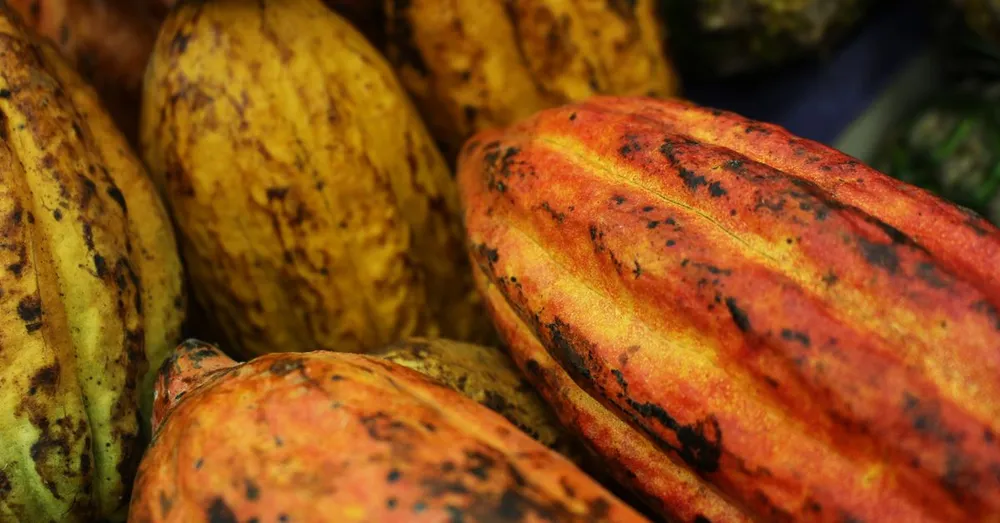
When people think of French Guiana, they picture the Ariane rocket, dugout canoe trips up the Maroni River, or the leatherback turtles of Awala-Yalimapo. Rarely a bar of chocolate. And yet, this French overseas department (DROM) hides a little-known agricultural story: that of a once-thriving coffee and cocoa trade, almost erased, that a handful of artisans are bringing back to life today. Based for several years between Cayenne and Roura, we have followed this delicious awakening up close. Here is what you need to know before coming to taste, in person, a 100% Amazonian chocolate.
A coffee and cocoa trade born in colonial times
Hard to imagine today, but in the 18th and 19th centuries, coffee and cocoa were among the main agricultural products of the Guianese colony. On the low coastal lands and along the rivers, plantations grew cacao and coffee trees in the shade of the canopy, in an ideal equatorial climate: constant heat, high humidity and soils rich in organic matter.
The golden age, then oblivion
For a long time French Guiana exported its coffee and cocoa to mainland France. But several factors hastened the decline:
- Competition from the large South American and African plantations, far vaster and more mechanized.
- The abolition of slavery in 1848, which upended an agricultural model relying on forced labor.
- The gold rush of the late 19th century, which drew labor and capital away from farming.
- Isolation and the lack of infrastructure, which made exporting costly.
Little by little, the cacao groves were abandoned. The forest reclaimed its rights, covering the old plots. But it did not erase everything: scattered through the undergrowth, cacao trees gone wild again kept bearing fruit, generation after generation.
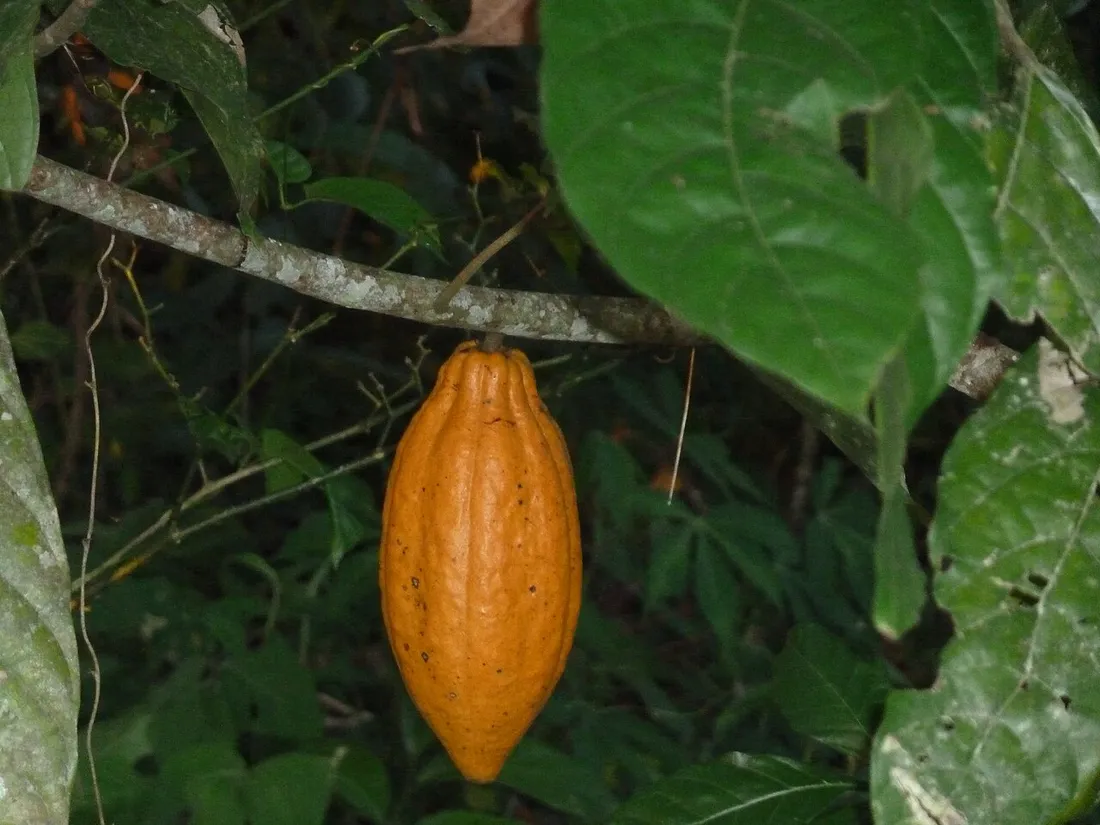
Wild cocoa, the hidden treasure of the Amazon rainforest
This is the whole appeal of the cocoa of French Guiana: part of the raw material is not planted, it is harvested in the forest. These “feral” cacao trees, descendants of the colonial plantations crossed with wild Amazonian varieties, yield pods with rare aromatic profiles.
Why this cocoa is so special
- Exceptional genetic diversity: the Amazon is the original cradle of the cacao tree (Theobroma cacao). French Guiana sits at the heart of this zone of origin.
- Complex aromas: fruity, floral, sometimes tangy notes, very different from standardized industrial cocoa.
- Grown under natural shade, without deforestation, respectful of the ecosystem.
- Confidential production, which makes it a rare product sought after by niche chocolate makers.
Harvesting in the forest remains physical work: you have to walk, spot the trees, split the pods, and extract the beans wrapped in their white pulp. Nothing industrial here. Everything is artisanal, on a human scale.
The artisans reviving Guianese chocolate
The revival does not come from a big corporation, but from local initiatives: small growers, passionate processors, farming associations. Their ambition: to produce a “bean-to-bar” chocolate that is entirely Guianese, from bean to bar.
Complete know-how, on site
The whole process takes place within the territory:
- Harvesting the pods (forest or small cultivated plots around Roura, Cacao or Macouria).
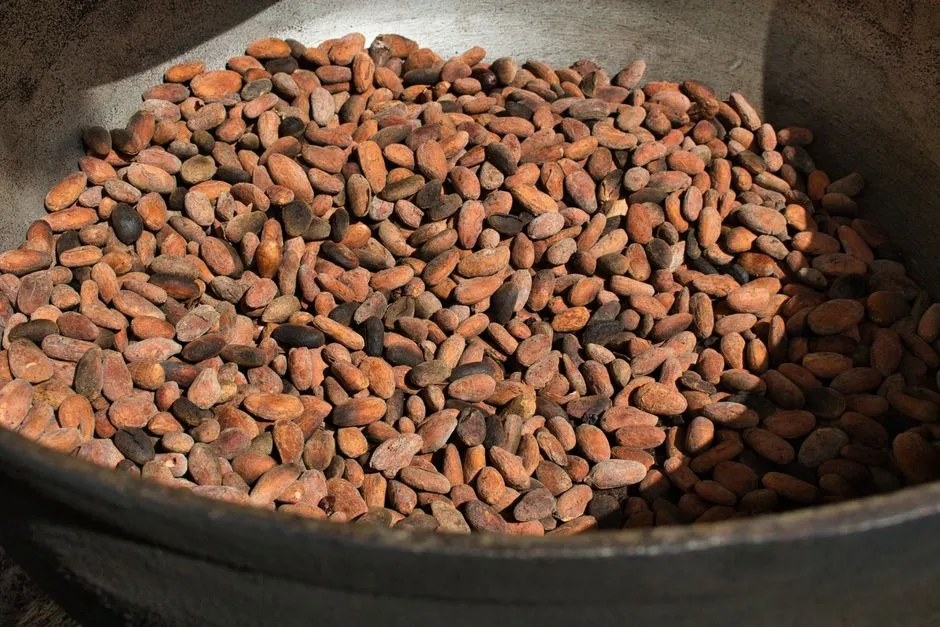
- Fermenting the beans for several days, a key stage to develop the aromas.
- Sun-drying, under the tropical climate.
- Roasting, grinding and conching in an artisan workshop.
- Molding into bars, often in small batches.
The result: intense dark chocolates, sometimes flavored with local tastes (chili, forest fruits, Guianese coffee), sold in markets and in a few shops in Cayenne and Kourou.
The village of Cacao, a symbolic stop
As fate would have it, there is a place in French Guiana named Cacao, within the commune of Roura, about 75 km from Cayenne (1h15 to 1h30 by road). Founded by the Hmong community in the 1970s, it is best known for its Sunday morning market, its soups, its fritters and its handicrafts. It is an ideal stop to understand Guianese subsistence farming and, sometimes, to come across local cocoa products.
Tasting and discovering Guianese cocoa: our recommended itinerary
Here is how to weave this delicious discovery into a stay, drawn from our years of experience on the ground.
Where to find the real local cocoa
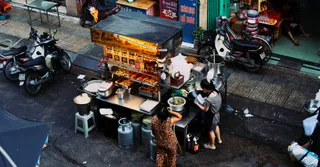
- The Cayenne market (Wednesday, Friday, Saturday mornings): spices, fruit, and sometimes artisan chocolate. Expect 6 to 12 € for a quality bar.
- The Cacao market (Sunday morning, in Roura): a unique atmosphere, Hmong and farm produce.
- The small producer shops around Macouria and Matoury, to spot as you go.
- Local agricultural fairs and festivals, where artisans showcase their creations.
An insider tip: always ask for the exact origin. “Real” Guianese cocoa remains rare; some products sold as local are actually processed from imported beans.
The best time to come
The dry season, from mid-July to mid-November, is ideal for getting around, walking in the forest and enjoying the markets without the mud of the rainy season. Keep in mind that French Guiana is 5 hours behind Paris in winter and 6 hours behind in summer.
A few practical pointers
- Airport: Félix-Éboué, in Matoury, about 15 km from Cayenne.
- A car is essential: the cocoa sites (Roura, Cacao, Macouria) are not served by public transport.
- Yellow fever vaccine required to enter the territory.
- Currency: euro. Dialing code: +594. Languages: French, Creole, Bushinenge and Amerindian languages.
A journey between forest, space and flavors
The beauty of a stay in French Guiana is being able to follow a tasting of Amazonian chocolate with a free visit to the Guiana Space Centre in Kourou (Ariane 6 and Vega launches), an excursion to the Salvation Islands, a dawn outing into the Kaw marshes, or a trip up the Maroni by dugout canoe from Saint-Laurent-du-Maroni and its Camp de la Transportation. Cocoa then becomes a delicious thread linking colonial history, biodiversity and artisan craftsmanship.
Allow at least 8 to 10 days to combine the coast (Cayenne, Rémire-Montjoly, Kourou) with forays into the interior. Distances are deceptive: Cayenne to Saint-Laurent is about 250 km and 3h30 of driving.
Plan your stay with Hostel Toucan
Discovering Guianese cocoa means taking your time. And for that, it is better to have a comfortable home base, well located between Cayenne, Rémire-Montjoly and Matoury. At Hostel Toucan, we offer seasonal rentals with direct booking and no platform fees, with free cancellation up to 7 days before arrival and WhatsApp assistance 7 days a week to point you toward the right markets, the right artisans and the best outings depending on the season.
To go further, check out our complete guide to French Guiana, explore our rentals in French Guiana and, if you own a property in the territory, discover our concierge services for owners. The Amazonian chocolate is waiting for you: all that’s left is to come and bite into it on the spot.
FAQ
Does cocoa from French Guiana really exist?
Yes. French Guiana is home to cacao trees from former colonial plantations, today often gone wild again in the forest. A few local artisans are reviving an artisanal production of 100% Guianese chocolate, bean-to-bar, around Roura, Cacao and Macouria.
Where can you buy artisan chocolate in French Guiana?
The Cayenne market (Wednesday, Friday and Saturday mornings) and the Sunday market in Cacao (Roura) are the best starting points. You can also find bars from small producers around Macouria and Matoury. Expect 6 to 12 € for a quality bar.
What is the best time to visit French Guiana?
The dry season, from mid-July to mid-November, is ideal: passable roads, lively markets and perfect conditions for walking in the forest or harvesting cocoa. Remember the yellow fever vaccine, which is mandatory.
How do you get around to discover the cocoa sites?
A car is essential. The communes linked to cocoa (Roura, Cacao, Macouria) are not served by public transport. From Félix-Éboué airport in Matoury, allow about 1h15 to 1h30 of driving to reach the village of Cacao.