People often ask me what the “best” time of year is to come to Martinique. As a resident, my answer is always the same: it all depends on what you want to experience. The island never truly sleeps, and knowing what to do in Martinique each month changes everything. This month-by-month Martinique events calendar is designed as a compass: it ties each period to its must-see gatherings, from February’s Carnival to December’s Chanté Nwèl, by way of the Yole Race and All Saints’ Day. This year-round guide to Martinique also gives you concrete cues on seasonality in Martinique and on prices, because here, choosing your dates means choosing your budget.
A few markers before we run through the year. Martinique is a French overseas department (capital Fort-de-France, around 360,000 inhabitants): euros, French and Creole, dialling code +596, a time difference of -5h in winter and -6h in summer with Paris, landing at Aimé Césaire Airport in Le Lamentin. The dry season (the Lent period, or Carême, from December to April) offers the best weather and concentrates the biggest events; the wet season (June to November) is more humid and overlaps with the hurricane season. A rental car (€35 to €55 per day) remains strongly recommended all year round.
January to March: Carnival, the highlight of the year
The start of the year is the absolute peak, both in festive intensity and in visitor numbers.
- January opens the dance. From mid-January, the pre-Carnival vidés (street parades) liven up Sunday afternoons: full-scale rehearsals, less crowded, perfect for soaking up the atmosphere. It’s also an ideal dry-season month for the southern beaches and hiking.
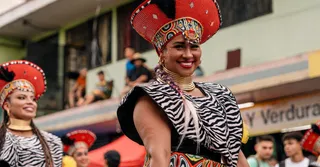
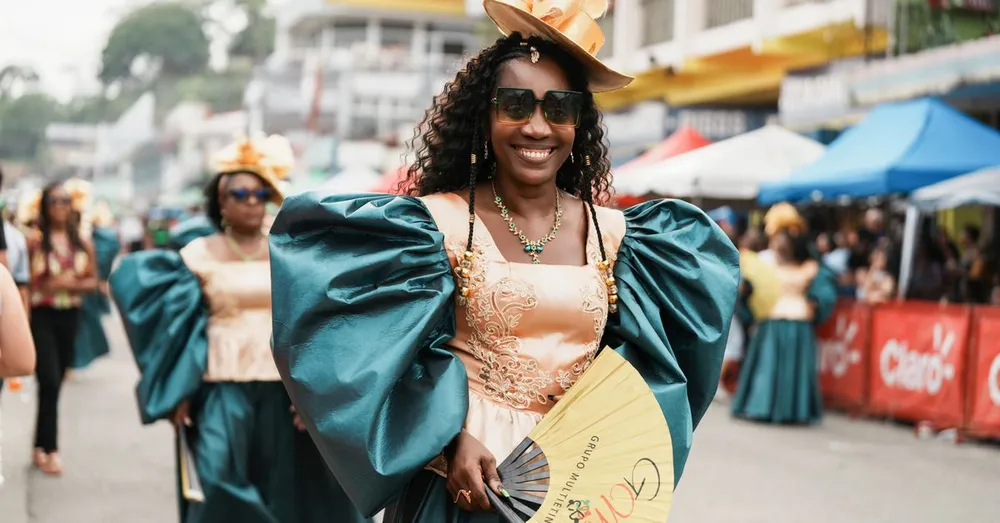
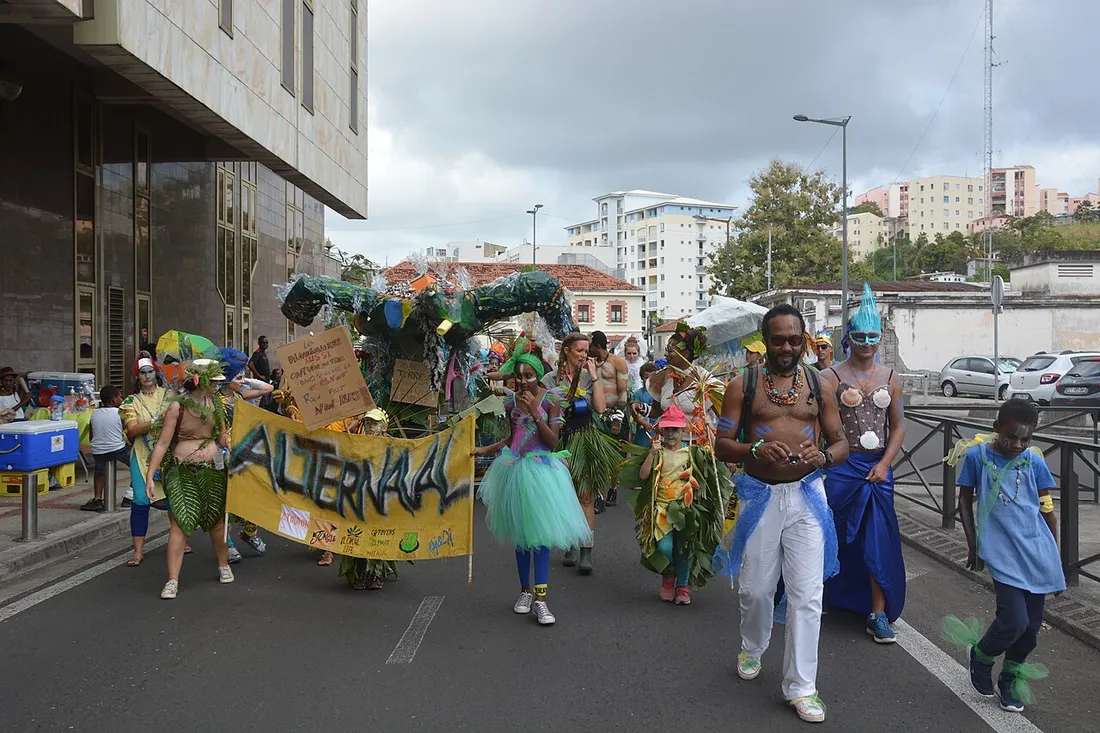
- February–March: Carnival, the event not to be missed under any circumstances. Five days of revelry, from Fat Sunday to Ash Wednesday, with Vaval, the red devils of Mardi Gras and the final cremation. The date depends on the Easter calendar and changes every year. All the details on dates and routes are in our dedicated guide to the Fort-de-France Carnival.
This is absolute high season. Accommodation near the parades books up from the previous autumn and prices climb sharply. If your stay falls during Carnival, book 3 to 4 months ahead, or even earlier.
April to May: Easter, crabs and remembrance
Lent ends gently, but the calendar stays full.
- Easter (April): one of the most authentic moments of the year. Over the Easter weekend, families camp on the southern beaches (Sainte-Anne, Le Marin) to feast on matoutou de crabe, a dish of land crabs, a tradition that often carries on through Whitsun. Packed beaches and southern rentals in high demand, but an unforgettable experience.
- 22 May: commemoration of the abolition of slavery, a major public holiday. Ceremonies and events, notably in Saint-Pierre, the former capital destroyed by Mount Pelée in 1902 (listed ruins). A powerful moment of remembrance, best paired with the North-Caribbean coast.
As for the weather, April closes the dry season: it’s still an excellent window, often cheaper than February.
June to August: the Yole Race and patron saint festivals
Summer is the year’s second great highlight, more low-key than Carnival but just as vibrant.
- June marks the start of the wet season and the hurricane season (officially June to November). It’s a quiet month with gentle prices, ideal for tight budgets willing to accept a few brief, warm tropical showers.
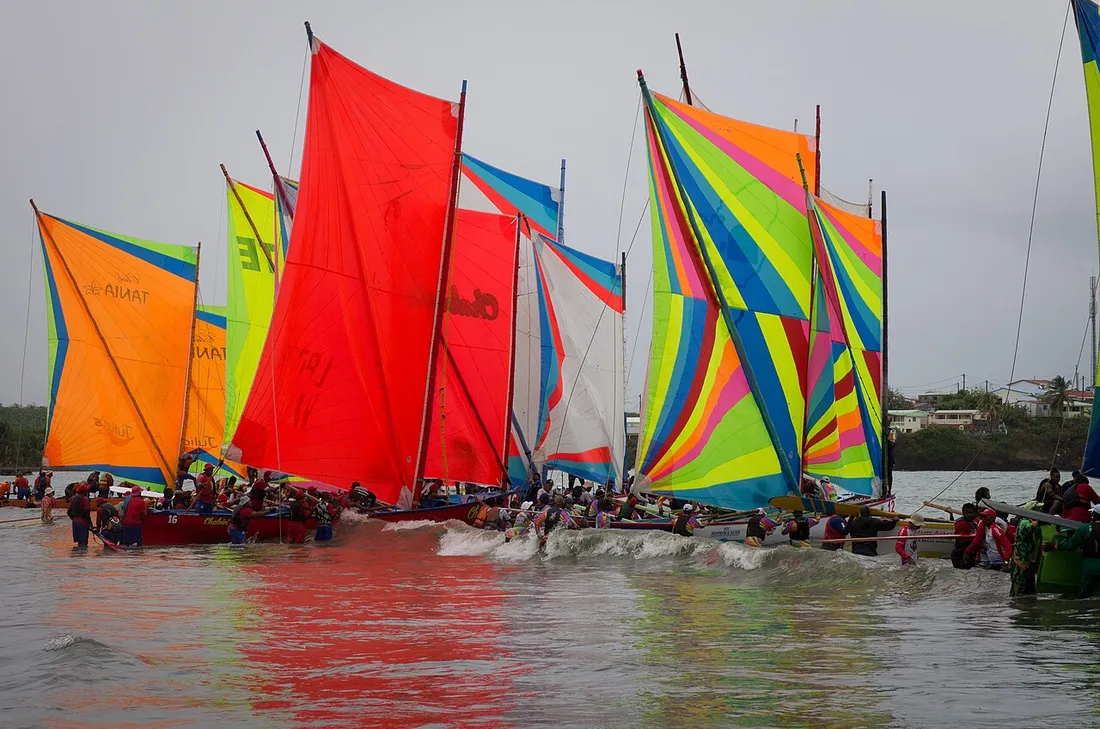
- Late July–early August: the Tour des Yoles Rondes (Round Yole Race), the great traditional sailing race that sets the Atlantic coast ablaze. The colourful yoles, sails unfurled, compete leg after leg between Le Robert, Le François, Les Trois-Îlets and the South. It’s the peak of local summer attendance, heightened by Martinicans returning from mainland France.
- July–August: the season of patron saint festivals is in full swing. Each town celebrates its patron saint over three to five days: Sainte-Luce, Le Diamant, Les Trois-Îlets… Creole mass, yole races, bèlè evenings and boudin stalls. In Fort-de-France, the Fête des Cuisinières brotherhood parades in madras in August. The full summer calendar town by town is detailed in our dedicated articles.
For these key weeks, book 2 to 4 months ahead and favour a single base from which to explore.
September to November: shoulder season and All Saints’ Day
This is the quietest period, and the most strategic when it comes to budget.
- September–October: the heart of the hurricane season and the wettest months. It’s also the low season, with the lowest prices of the year. For anyone travelling outside school holidays and accepting some weather risk (alerts are closely monitored on the island), it’s a window with excellent value for money.
- 1 November, All Saints’ Day: deeply rooted in local culture. At nightfall, cemeteries glow with thousands of candles and torches, families keeping vigil over their departed in a reverent, warm atmosphere. A unique nighttime spectacle, to be observed with respect.
In late November, the wet season runs out of steam and the weather turns drier again: it’s the moment to plan your year-end bookings ahead.
December: Chanté Nwèl, Creole magic
December closes the year on one of the warmest traditions in the Caribbean.
- All month long, the Chanté Nwèl gatherings bring together families, friends and neighbours to belt out Christmas carols reworked Creole-style, around a festive meal (Christmas ham, savoury pâtés, rum schrubb). These vigils, often improvised from house to house, are the soul of December.
- The return of the dry season makes December an excellent month to combine festivities and beaches, under a refreshing trade wind.
The Christmas holidays and New Year’s Day bring strong demand: this is a high season, to be booked early, especially around 31 December.
Martinique events calendar: choosing your dates by budget
To sum up this Martinique seasonality at a glance, here’s how I advise my guests:
- High season (December–April): best weather, Carnival, Easter. High prices, very early booking. Ideal for a first stay.
- Occasional peaks (Carnival, Easter, Yole Race, year-end): prices at their highest, to be locked in 2 to 4 months ahead.
- Low season (June–November): gentle prices, a calmer island, but possible weather risk and sargassum. Perfect for small budgets and flexible travellers.
Whatever window you choose, line up the rest of your itinerary with our complete guide to Martinique: the Salines beaches in Sainte-Anne, the Rum Route and AOC agricultural rhum, Mount Pelée, the Balata Garden or the Caravelle peninsula.
Living the event at the right moment with Hostel Toucan
Each highlight in this calendar creates a peak in rental demand. Planning ahead means securing the right place at the right price. At Hostel Toucan, booking direct means:
- No platform fees: you pay the fair price, with no hidden commission.
- Free cancellation up to 7 days before arrival, invaluable when a festival’s programme firms up late.
- WhatsApp support 7 days a week, in French and Creole, to find out which event falls during your dates and where to experience it best.
Discover our seasonal rentals in Martinique, hand-picked on the ground and well located by season. And if you own a property on the island, our concierge service for owners manages these event peaks for you all year round.
Martinique is lived twelve months out of twelve. Spot the highlight that makes you tick and set your dates: an nou allé!
FAQ
What is the biggest event of the year in Martinique?
Carnival, without a doubt. It unfolds over five days of revelry in February–March (the date depends on the Easter calendar and changes every year), with its parades, Vaval, the red devils of Mardi Gras and the final cremation on Ash Wednesday. It’s absolute high season: book your accommodation 3 to 4 months ahead.
What is the best time to visit Martinique?
For the weather, the dry season from December to April (the Carême) is ideal: sunny, with little rain, cooled by the trade winds. It’s also the period of the biggest events (Carnival, Easter), and therefore the most expensive. To save money, the shoulder season from June to November offers low prices, at the cost of possible weather risk and sargassum.
Which events can you see in Martinique in summer?
Summer is paced by the Tour des Yoles Rondes (late July–early August), a great sailing race on the Atlantic, and by the patron saint festivals of each town in July–August (Sainte-Luce, Le Diamant, Les Trois-Îlets), not forgetting the Fête des Cuisinières in Fort-de-France. It’s a peak of local attendance: book 2 to 4 months ahead.
What is the Chanté Nwèl in Martinique?
The Chanté Nwèl is a December tradition where families, friends and neighbours gather to sing Christmas carols in a Creole version, around a festive meal with rum. These warm vigils, often improvised from house to house throughout the month, are one of the most authentic moments of the year, just before the return of the dry season.