People ask me every week on WhatsApp: “When is the best season in Guadeloupe for nature?” My answer as a local always frustrates them a little: it depends on what you’re coming for. The best Guadeloupe nature season isn’t the same for climbing La Soufrière in dry conditions, seeing the Carbet Falls at full power, or diving the Cousteau Reserve with 30 metres of visibility. The butterfly-shaped archipelago lives to the rhythm of two seasons — the dry season (December to April) and the rainy season (June to November) — and each has its golden windows. Here’s the calendar I give our travellers, month by month.
Understanding Guadeloupe’s dry season: the prime hiking season
Guadeloupe’s dry season runs from December to April. The trade winds blow steadily, humidity drops, and the trails of Basse-Terre — often muddy the rest of the year — become walkable without wading.
Why the dry season changes everything on the trails
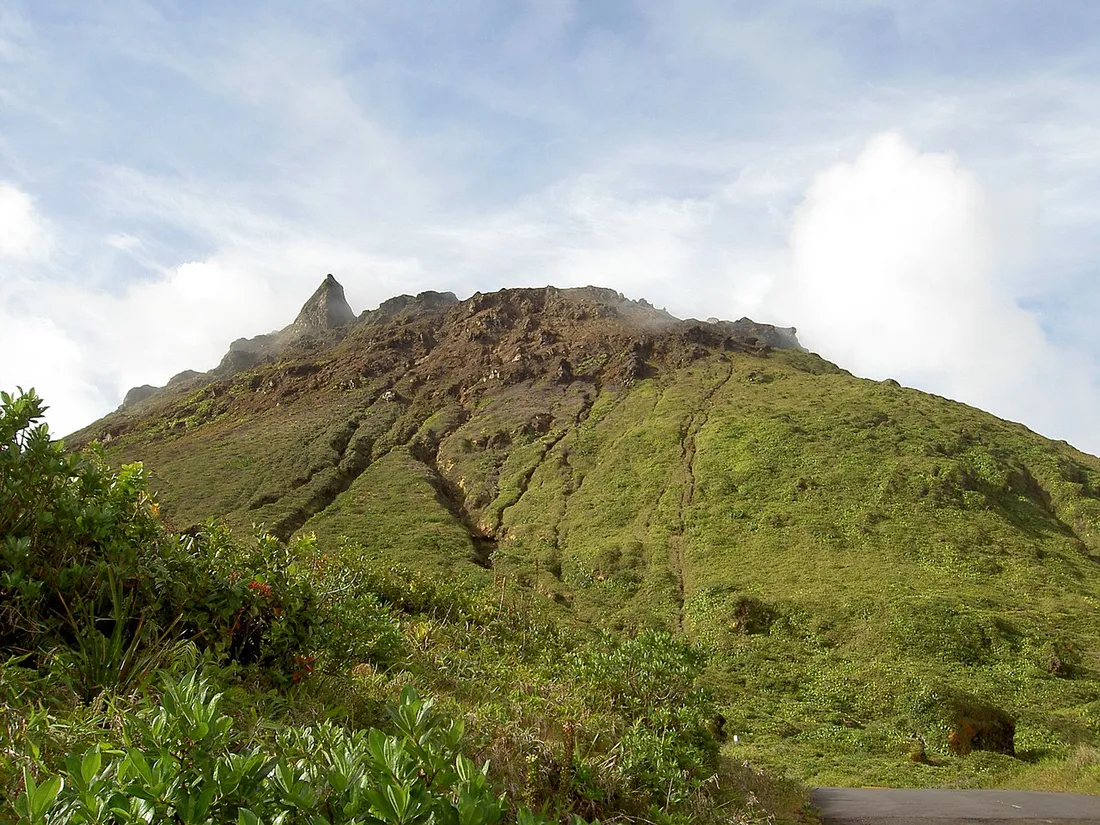
- La Soufrière (1,467 m): between January and April, your odds of a cloud-free summit climb sharply. Count on 2.5 to 3.5 hours round trip from Bains Jaunes, setting off before 7 a.m. — after 10 a.m., the “old volcano” almost always pulls on its cap of cloud.
- The Trace des Crêtes or Morne Léger: dry ground, less slippery root-laced sections, and open panoramas over the Côte-sous-le-Vent.
- Temperatures: 24 to 29 °C on the lowlands, around 15 °C at La Soufrière’s summit at daybreak. Bring a fleece — people thank me for that tip every time.
The flip side: this is high season. Paris–Pointe-à-Pitre flights (Pôle Caraïbes airport) climb to €800–1,100 round trip between mid-December and early March, versus €450–600 in June or October. If you’re aiming for February, book your accommodation in Guadeloupe four to six months ahead.
Beaches and the dry season: the obvious combo
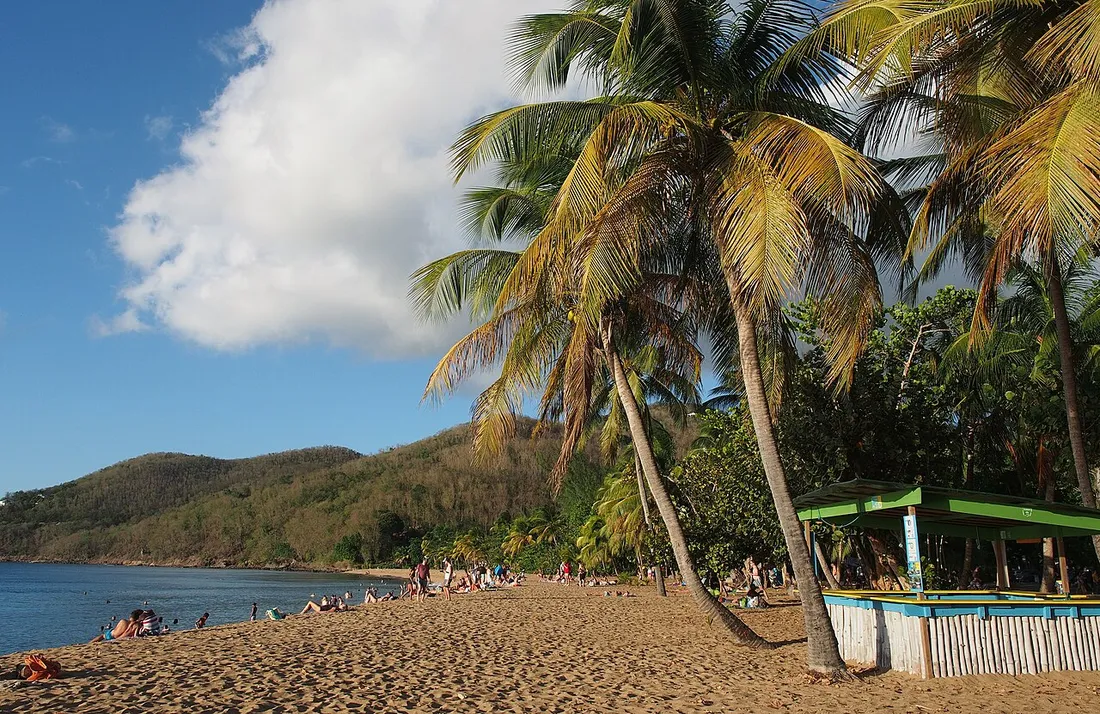
From December to April, the sea is generally calm on the Caribbean side and Grande-Terre’s beaches — La Caravelle in Sainte-Anne, the Saint-François lagoon — offer their turquoise waters almost free of sargassum. Grande Anse in Deshaies, my favourite at sunset, sometimes sees a northerly swell between December and February: watch the flags, the shore break is serious on those days.
Rainy season: the secret of full-flowing waterfalls
Here’s the counterintuitive tip I keep repeating: if you’re coming for the waterfalls, the rainy season is your ally. From July to November, the rains swell Basse-Terre’s rivers and turn trickles into spectacular curtains.
- Carbet Falls: the second fall (110 m), reachable in a 45-minute walk on a developed path (site entry: around €2.50 per adult), is twice as impressive in September as in March.
- Cascade aux Écrevisses: a 10-minute walk from the car park on the Route de la Traversée, perfect even with children, but avoid swimming after a heavy downpour — flash floods are real.
- Saut de la Lézarde, the pools of Vieux-Habitants: full, green and photogenic.
The golden rule of the rainy season: set off early (showers concentrate in the afternoon), check the Météo-France alerts every morning, and never cross a river that has turned cloudy. The National Park’s forest is then an almost unreal green, with ten times fewer people than in February.
Diving and snorkelling: the windows to know
The Cousteau Reserve, off Malendure beach in Bouillante, can be dived year-round thanks to the Côte-sous-le-Vent being sheltered from the trade winds. But not all periods are equal.
- April to June: my favourite window. Glassy sea, 20 to 30 m visibility around the Pigeon islets, water at 27–28 °C, and the clubs are less crowded than in high season. Discovery dive around €60–70, exploration dive €45–55, a 2-dive package often €90.
- December to March: excellent conditions too, but book your club 3–4 days ahead; this is peak crowds. Huge bonus: it’s humpback whale season (January–April), sometimes heard while diving and observable on a dedicated outing (€55–70 for a half day).
- September–October: warmest water (29 °C), but variable visibility after the rains and a risk of cancellation if a tropical wave moves through.
For free snorkelling, the transparent kayaks departing from Malendure (€25–35 for 2 hours) remain a safe bet. And don’t skip Petite-Terre: the reserve, reachable by catamaran from Saint-François (a full-day excursion around €95–120), teems with turtles — outings run year-round but are cancelled in strong easterly swell.
Hurricane season and hiking: plan ahead without giving up
Hurricane season officially runs from 1 June to 30 November, with a statistical peak from August to mid-October. Should you cross these months off? No — I take some of my finest outings then — but you have to work with a few habits.
The right habits during hurricane season
- Follow the weather alerts daily: a tropical wave shows up 3 to 5 days in advance, which leaves time to adapt the programme.
- Keep a plan B for each day: the Mémorial ACTe in Pointe-à-Pitre, the distilleries of Marie-Galante (Bielle, Bellevue, Père Labat — free visit or €5–8 with tasting), covered markets.
- On the trails: after a heavy rain event, the National Park sometimes temporarily closes trails (the Carbet Falls in particular). Check the Park’s website before driving an hour for nothing.
- On budget: it’s the cheapest season of the year. Flights from €450, lodging 30 to 40% below February rates.
It’s for these uncertainties that our travellers appreciate Hostel Toucan’s 7-day WhatsApp support: a squall ruins your diving day, and we switch you to a sheltered visit or contact the club to reschedule.
The month-by-month nature calendar
- December – January: dry season settling in, clear Soufrière, first whales. Possible northerly swell at Deshaies. Prices at their peak.
- February – March: the high point. Dry trails, calm sea, humpback whales, Sainte-Anne beaches at their best. Book very early.
- April – May: my favourite duo. Excellent conditions, fewer crowds, superb diving at Malendure, rates down 20–30%.
- June – July: transition. Beautiful sea windows, the first heavy showers; watch for sargassum on the east side (Le Moule, Pointe des Châteaux).
- August – mid-October: heart of hurricane season. Waterfalls at their fullest, water at 29 °C, a green and peaceful island — flexible programme and weather checked every morning.
- Mid-October – November: nature soaked with water, falling risks, gentle prices. Perfect for Les Saintes and the bay of Terre-de-Haut without the crowds.
To dig into each area, our complete Guadeloupe guide details itineraries and driving times — count on 1 hr 15 between Le Gosier and Malendure, for example.
Choosing your base by season
Your home base matters as much as your dates. In the dry season, a rental in Sainte-Anne or Saint-François puts you 10 minutes from the lagoons and 1.5 hours from La Soufrière. In the rainy season, prefer Deshaies or Bouillante, on the Caribbean side: sheltered sea, the Cousteau Reserve right on your doorstep, waterfalls 30 minutes away.
At Hostel Toucan, our properties are booked directly, with no platform fees and free cancellation up to 7 days before arrival — a real safety net when you travel in hurricane season. Browse our Guadeloupe rentals by town and by season. And if you own a property on the archipelago, our concierge service optimises it year-round, including the rainy-season lull: it’s all explained on our owners page.
FAQ
What is the best season for nature in Guadeloupe?
The dry season, from December to April: dry trails, calm sea, La Soufrière often cloud-free, and humpback whales from January to April. For full-flowing waterfalls and low prices, aim instead for September–October while keeping an eye on the weather.
Can you hike during hurricane season?
Yes, provided you set off early, check the Météo-France alerts each day, and avoid river crossings after heavy rain. The National Park sometimes closes certain trails after major events: check before setting out.
When should you come to Guadeloupe for the beach with the fewest people?
April–May and November: swimming still excellent at Sainte-Anne, Saint-François or Grande Anse, visitor numbers sharply down, and lodging 20 to 40% cheaper than in February.
Is diving in the Cousteau Reserve possible year-round?
Yes, the Côte-sous-le-Vent is sheltered from the trade winds and the Malendure clubs run outings year-round. Visibility is best from December to June; in September–October the water is warmer (29 °C) but the rains sometimes cloud it, and a tropical wave can cancel an outing.