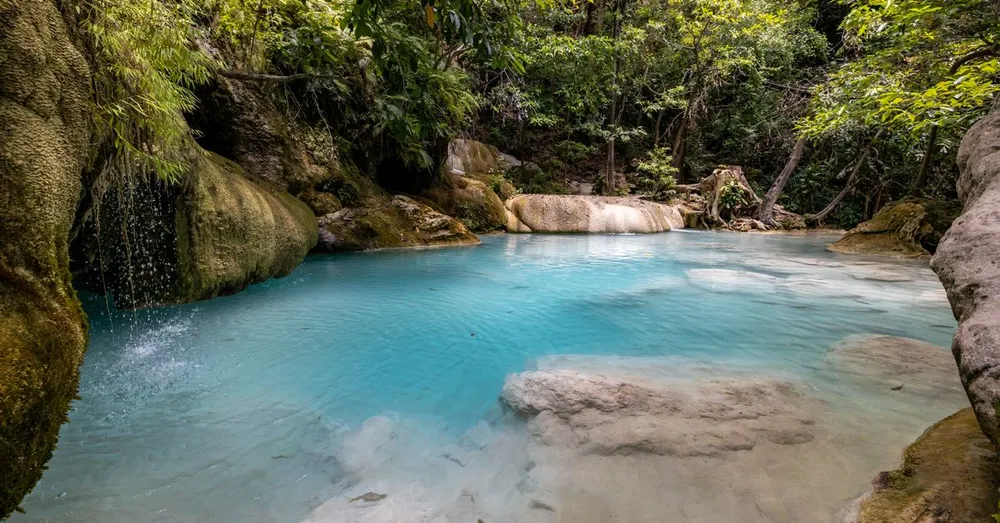
When people picture Martinique, they first imagine the golden-sand beaches of the South. Yet the island’s real magic hides in the North, beneath the canopy of the tropical rainforest. There, at the foot of Mount Pelée and along the Pitons du Carbet range, dozens of rivers tumble down the volcanic rock and form waterfalls and freshwater pools of incomparable coolness. After several years of hiking these trails, here is my pick of the 8 most beautiful natural swimming holes, with their real access details, my safety tips for dealing with flash floods, and the ideal season to enjoy them.
Why swim in a waterfall in Martinique
The water in Martinique’s rivers hovers around 22 to 24 °C: pure bliss after a hike in the tropics. Beyond the coolness, these sites offer scenery the beaches never can: tree ferns, red heliconias, the flight of hummingbirds, and a silence broken only by the roar of the water.
Martinique remains a French overseas department (DROM): you pay in euros, people speak French and Creole, and the dialling code is +596. The nature, however, is resolutely Caribbean and wild. Allow plenty of time for getting around: the island is only 80 km long, but the roads in the North are winding, and a rental car is strongly recommended for reaching the trails.
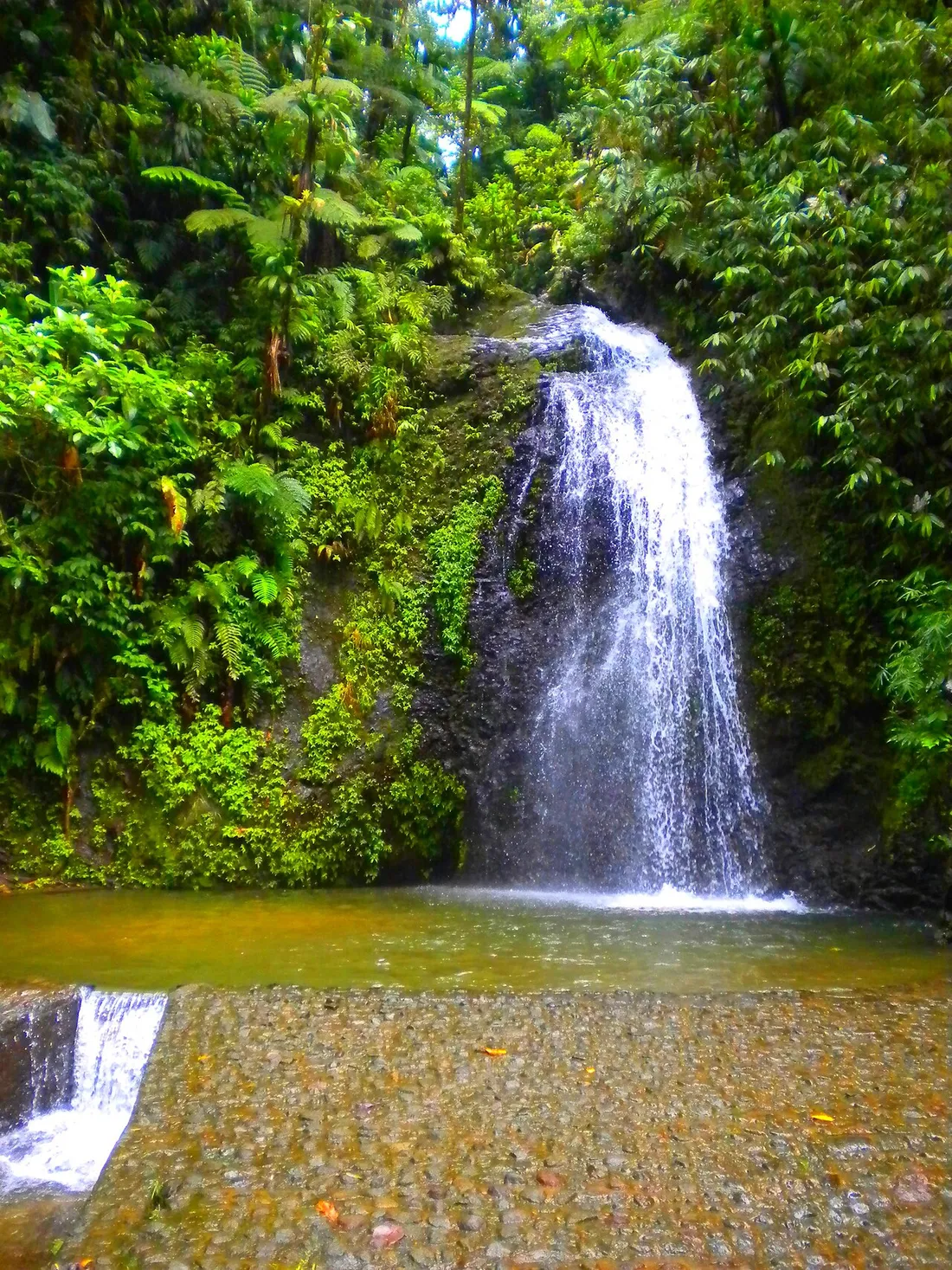
The 8 most beautiful natural swimming holes
1. Les Gorges de la Falaise (Ajoupa-Bouillon)
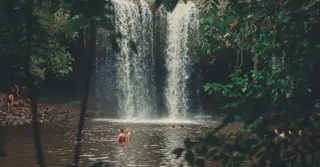
This is THE must-see waterfall, and my absolute favourite. In Ajoupa-Bouillon, in the heart of the North-Atlantic, you walk up the Falaise river through the water, between narrow walls of volcanic rock, all the way to a drop about ten metres high.
- Access: private, supervised site, usually open from 9 a.m. to 3 p.m. Entry around 12 to 15 € per adult, with parking on site.
- Duration: 1 to 1.5 hours round trip depending on your pace.
- Level: easy to moderate, but the water reaches your waist in places. Swimsuit required, sturdy shoes that stay on your feet.
It’s one of the few supervised sites: in case of heavy rain, the management closes access. A valuable safeguard in these narrow gorges.
2. Le Saut du Gendarme (Fonds-Saint-Denis)
Perfect for a first family outing, this waterfall sits right beside the Route de la Trace (N3), between Fort-de-France and Morne-Rouge.
- Access: free, parking right at the foot of the site. Barely 5 minutes of walking.
- Ideal for: picnics, children, a quick photo. The swimming is modest but the setting is magical.
It’s a perfect stop if you’re heading up to the Balata Garden or Mount Pelée the same day.
3. Le Saut Argis (Ajoupa-Bouillon)
Less famous than the neighbouring Gorges, Saut Argis rewards hikers with a large turquoise pool at the foot of a beautiful drop.
- Access: free trail from Ajoupa-Bouillon, about 30 to 45 minutes of descent.
- Watch out: the return is uphill, sometimes slippery. Bring good shoes.
The water here is deep: it’s one of my favourite spots for a real swim, far from the crowds.
4. La Cascade Couleuvre (Le Prêcheur)
At the end of the road, in the far North-Caribbean, this drop of nearly 120 metres is one of the highest on the island.
- Access: starts from the Habitation Céron estate, a trail of about 1 hour each way. Small fee for parking/the estate.
- Scenery: primary forest, giant bamboo, a Jurassic Park atmosphere.
The pool allows a refreshing swim after the effort.
5. Les Bassins de la rivière du Lorrain
On the North-Atlantic coast, the town of Le Lorrain is home to a series of natural pools popular with locals at weekends.
- Access: from the town centre, varied trails depending on the pools.
- Atmosphere: authentic, lively, Creole. Go on a weekday for peace and quiet.
6. La Cascade de Didier (Fort-de-France)
A surprise: there’s a swimming spot a stone’s throw from the capital. In the heights of Fort-de-France, the Didier river offers small shaded pools.
- Access: easy from the capital, ideal without renting a 4x4.
- Note: water level varies, prettier at the start of the dry season.
7. Le Bassin Zombi / Capot river (Pelée region)
The network of the Capot river, which flows down from Mount Pelée, hides several crystal-clear basins.
- Access: several entry points depending on the town (Ajoupa-Bouillon, Basse-Pointe). Ask locally.
- Highlight: very clear water, a bed of volcanic pebbles.
8. La rivière Mitan and the pools of Les Trois-Îlets (South)
For those staying in the South, near Les Trois-Îlets or Sainte-Anne, there’s no need to cross the whole island: a few rivers offer discreet swimming on the edge of mangrove and dry forest.
- Access: to combine with a visit to the distilleries of the Route des Rhums (La Mauny, Trois-Rivières).
- Advantage: close to Les Salines beach and Anse Dufour.
Safety: floods and the rainy season, my golden rules
The waterfalls of the North are magnificent, but a tropical river can turn deadly in a matter of minutes. The number one danger isn’t ordinary drowning: it’s the flash flood. A downpour on the heights of Pelée, invisible from the pool, can turn a trickle of water into a torrent in 10 minutes.
My rules, never up for negotiation:
- Check the weather before setting off, especially Météo-France Martinique and the “heavy rain/storms” alert.
- Never enter narrow gorges (like the Gorges de la Falaise) if rain threatens upstream.
- Watch the colour of the water: if it becomes cloudy or brown, get out immediately, it’s the sign of an oncoming flood.
- Spot a high exit as soon as you arrive at the site.
- Don’t swim alone and keep an eye on the children.
- Avoid jumping from the rocks: the depth changes after every flood.
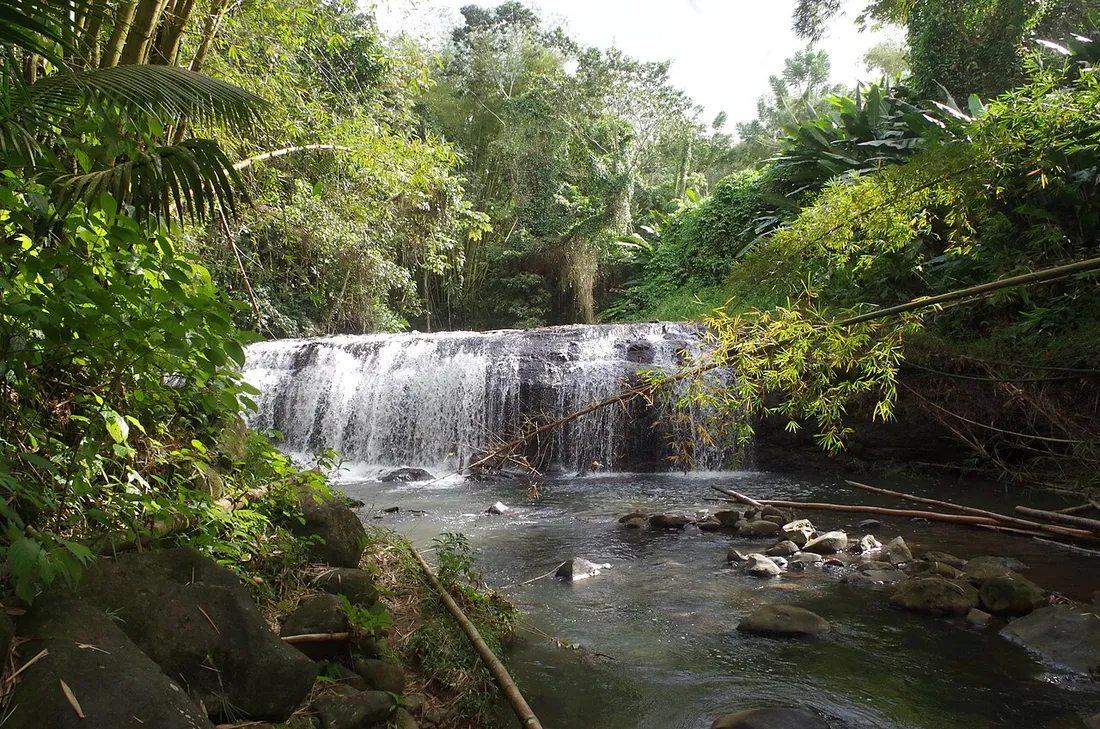
When to come: the season changes everything
The best time for the waterfalls is, paradoxically, the dry season, the Carême, from December to April. The trails are less muddy, floods are rarer, and the pools still stay well supplied. It’s also the high tourist season, with carnival in February-March.
The rainy season (hivernage), from June to November, offers more powerful and spectacular waterfalls, but multiplies the risks of flooding and slips. If you come during this period, favour supervised sites and set off very early in the morning.
A quick practical reminder for planning your stay: the time difference is -5h in winter and -6h in summer compared with Paris, Aimé Césaire airport is in Le Lamentin, and Martinique has around 360,000 inhabitants. To find out everything before you leave, see our complete guide to Martinique.
How to organise your waterfall day
A typical day I recommend to travellers staying in the centre or the North:
- Early start (7-8 a.m.) to avoid the heat and the crowds.
- A local breakfast on the way (bokit, cane juice).
- A big waterfall in the morning (Gorges de la Falaise or Couleuvre).
- Picnic at the Saut du Gendarme.
- A distillery visit in the afternoon (Depaz in Saint-Pierre, ideally combined with the UNESCO-listed ruins).
To roam easily towards these northern sites, the best option is to stay nearby. Discover our Martinique rentals chosen for their strategic location, from the forested North to the seaside South.
Book with complete peace of mind with Hostel Toucan
At Hostel Toucan, a concierge service and specialist in local seasonal rentals, we know every corner of the island. By booking direct, you avoid platform fees, enjoy free cancellation up to 7 days before arrival, and benefit from WhatsApp support 7 days a week for your on-the-ground questions (weather, trails, car rental).
And if you own a property on the island, discover our dedicated offer for owners: we handle everything, from welcoming guests to cleaning, while you grow the value of your home with complete peace of mind.
The waterfalls of Martinique take a little effort, but the cool water at the foot of a 100-metre drop, beneath the tropical canopy, will remain one of your most beautiful memories of the island. Prepare your gear well, keep an eye on the sky, and let yourself be carried away.
FAQ
What is the most beautiful accessible waterfall in Martinique?
The Gorges de la Falaise in Ajoupa-Bouillon are the most spectacular and the most accessible, because the site is supervised and secured. You walk up the river through the water between narrow walls to a drop about ten metres high, in 1 to 1.5 hours. Entry costs around 12 to 15 € per adult. For a free and easy stop, the Saut du Gendarme in Fonds-Saint-Denis is perfect for families.
Can you swim in the waterfalls during the rainy season?
It’s possible but riskier. From June to November, the waterfalls are more powerful but the danger of flash floods rises sharply: a downpour upstream, invisible from the pool, can turn the river into a torrent in 10 minutes. Favour supervised sites such as the Gorges de la Falaise, set off early in the morning, and always check the Météo-France alert before swimming.
What is the best time to discover the rivers of Martinique?
The dry season, the Carême, from December to April, is ideal: less muddy trails, rarer floods, and pools that stay well supplied. It’s also the high tourist season, with carnival in February-March. Swimming stays pleasant all year round thanks to water around 22 to 24 °C.
Do you need a car to reach the waterfalls?
Yes, a rental car is strongly recommended. Most of the waterfalls are in the North of the island, on winding roads poorly served by public transport. With a vehicle, you can combine waterfalls, distilleries of the Route des Rhums, and sites such as Mount Pelée or the ruins of Saint-Pierre in a single day.