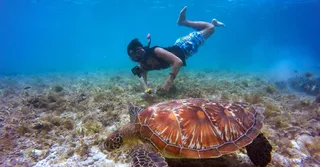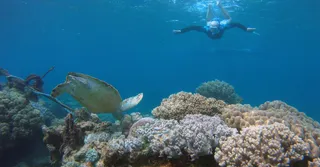
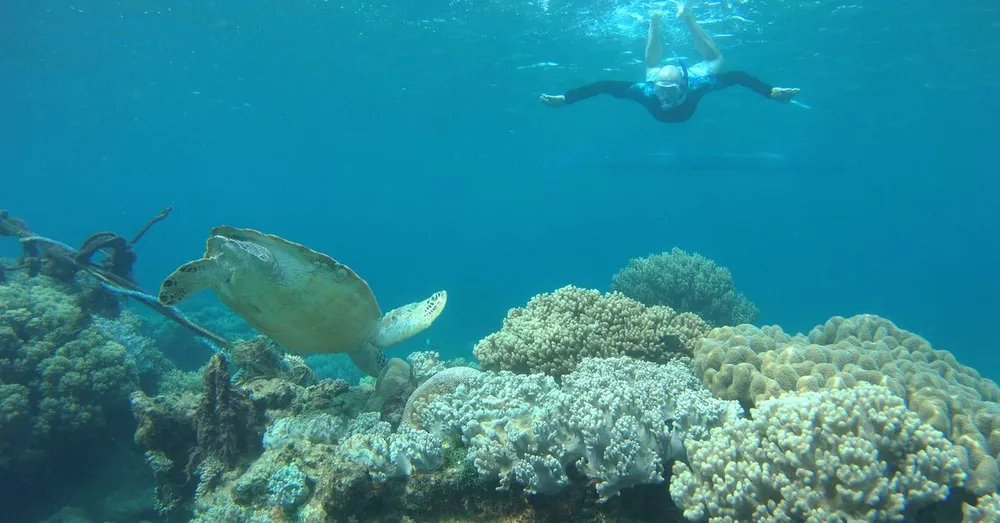
Gliding silently above a turquoise seagrass bed and watching a sea turtle graze peacefully just a few metres away from you: it is one of the most memorable experiences Martinique can offer. The good news is that you need neither a scuba tank nor a long boat trip to live this moment. In the town of Anses-d’Arlet, in the south-west of the island, several sheltered coves regularly welcome green turtles and hawksbill turtles, all within reach of a mask and snorkel. In this guide, you will find the best spots, the right time to watch them, the useful gear and, above all, the rules of respect that turn this encounter into a responsible ecotourism experience.
Why Martinique is a turtle hotspot
The Caribbean coast of Martinique, calmer than the Atlantic side, is home to bays sheltered from the wind where vast seagrass meadows grow. These underwater prairies are the pantry of the green turtles, which feed on them daily. Hawksbill turtles, on the other hand, are more likely to frequent the neighbouring coral areas in search of sponges. As a result, around Anses-d’Arlet you can come across both species in water that is often clear and shallow.
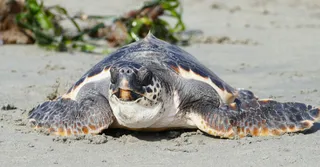
These turtles are wild and protected animals: they are neither fed nor trained. Spotting them therefore remains a matter of luck, never a guarantee. That is precisely what makes the encounter so precious — and what justifies approaching it with patience and discretion.
The best spots in Anses-d’Arlet
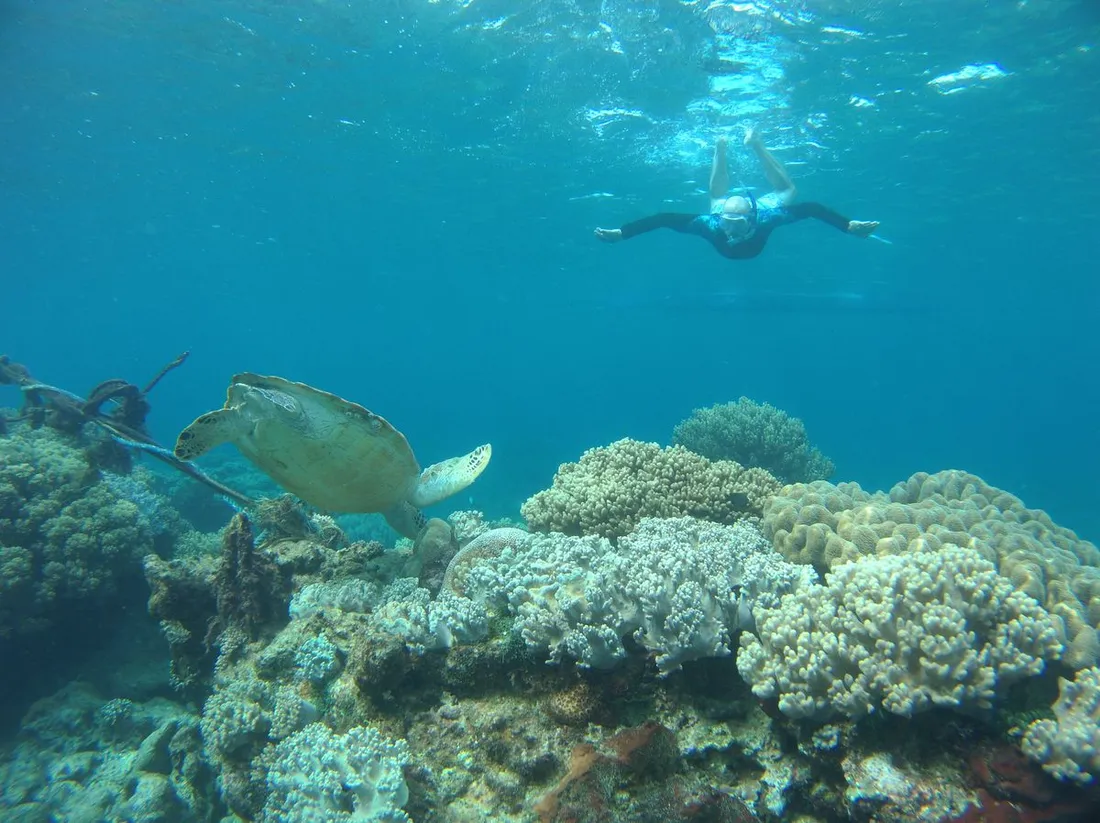
The town of Anses-d’Arlet brings together, within a few kilometres, the three most famous sites for snorkeling with turtles.
Anse Dufour
This is the most renowned spot on the island. This small cove of light-coloured sand, lined with a handful of fish restaurants, looks out over a seabed where turtles come to graze just a few metres from the shore. You can set off straight from the beach, fins on, and reach the seagrass bed in a few strokes. It is also the busiest spot: to enjoy the calm, it is best to get there early.
Anse Noire
The immediate neighbour of Anse Dufour, Anse Noire stands out for its dark volcanic sand and its more secluded atmosphere. You reach it via a staircase from the car park. The pontoon and the sheltered waters make it an excellent place to observe green turtles and shoals of fish. Pairing Anse Dufour and Anse Noire in the same morning is one of the great classics of the coast.
Grande Anse des Anses-d’Arlet
Wider and more open, Grande Anse boasts a seagrass bed close to the shore that regularly attracts turtles coming to graze. The beach, lined with colourful gommier boats, is ideal for alternating between swimming, snorkeling and lounging. From the pontoon or the rockier ends of the bay, you increase your chances of meeting the wildlife.
The village of Anses-d’Arlet
The village of Anses-d’Arlet, with its church facing the sea and its famous pontoon, is one of Martinique’s postcard scenes. Beyond the setting, its nearby waters shelter multicoloured fish and, sometimes, turtles. It is a convenient starting point for exploring the other coves and refuelling at a snack bar with your feet in the sand.
How to watch turtles while snorkeling
Snorkeling — fins, mask and snorkel — is the simplest and most respectful way to approach these animals. There is no need to know how to free-dive: turtles feed in shallow water, and most encounters happen at the surface.
A few principles to stack the odds in your favour:
- Spot the seagrass beds: these dark-green areas, more than bare sand, are the green turtles’ restaurants.
- Swim slowly and quietly, without big fin kicks that frighten the wildlife.
- Stay at the surface and let the turtle come to you: if it feels free to move, it will stay longer.
- Be patient: watch the areas where other swimmers are looking down at the seabed — it is often a sign of a presence.
- Breathe calmly through your snorkel to limit noise and energy expenditure.
The best time to see them
Early morning is by far the ideal window. The water is generally calmer, visibility better, the crowds thinner and the turtles more at ease. Arriving as soon as the car parks open also spares you the heat and the crowds of midday.
As for the season, turtles are present all year round at these sites. The most pleasant period often corresponds to the dry season (roughly from December to April), with its clear waters. During the wetter season, keep an eye on the weather and the swell, which can reduce visibility. Avoid getting into the water just after heavy rain and favour days without a strong wind.
The essential rules of respect
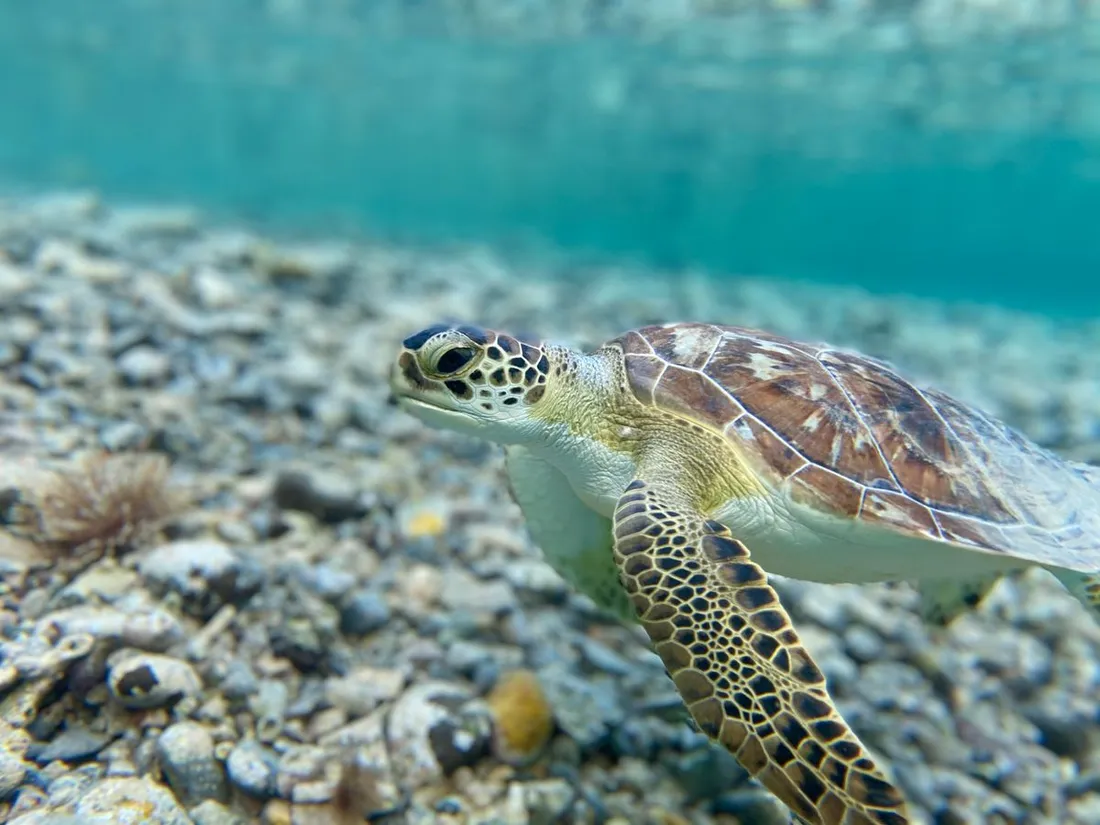
Approaching a protected species engages your responsibility. The golden rule: you are the guest, never the one in charge. Here are the gestures that make the difference between respectful observation and disturbance.
- Keep your distance: ideally stay several metres away (aim for at least ten metres) and never chase the animal.
- Never touch a turtle. Its shell is covered with a protective mucus and any contact stresses it; it is also forbidden.
- Do not block its access to the surface: the turtle is a reptile that breathes air. Always leave it a clear path to come up.
- Adopt slow movements and stay grouped at a distance rather than surrounding it in numbers.
- Do not feed it: this alters its natural behaviour and harms its health.
- No flash or aggressive selfie sticks: photograph from a distance, without crowding it.
- Choose a “reef-safe” sunscreen, or cover yourself with a rash guard rather than coating your skin with chemical filters before swimming.
- Leave no litter and take everything back with you, including cigarette butts, to protect the seagrass bed.
By following these rules, you take part in an ecotourism approach that allows these fragile animals to keep frequenting our coasts.
Gear and guided trips
For comfortable snorkeling, bring a well-fitting mask, a snorkel, and fins suited to your shoe size. A UV rash guard or a swim shirt protects you from the sun while reducing the need for cream. Also consider water shoes for rocky entries, a tube float for less confident swimmers, and water to stay hydrated. If you do not have your own gear, several rental shops and water sports clubs along the Caribbean coast offer it for hire.
Are you a beginner or would you like to be guided? Several guided trips are available from Anses-d’Arlet and the neighbouring towns: guided snorkeling outings with an instructor, trips in transparent kayaks or small boats to the best seagrass beds. Professional guidance helps you spot the wildlife without disturbing it and ensures best practices are respected. Always check that the provider you choose applies a turtle respect charter.
To easily reach Anse Dufour, Anse Noire and Grande Anse, which lie at the end of small roads, the most practical option is to have a vehicle: consider our car rental service to explore the Caribbean coast at your own pace.
Safety in the water
Snorkeling remains an accessible activity, as long as you stay cautious:
- Never swim alone and keep an eye on your buddy.
- Watch the weather and the swell; call it off if the sea is rough or the water murky.
- Identify the navigation zones (boats, jet skis) and stay clear of the channels.
- Beware of currents in the more open coves like Grande Anse.
- Take breaks and signal your presence with a visible float if you move away from the shore.
Where to stay to set off early to see the turtles
To make the most of the early morning without enduring a long drive, it is best to sleep nearby. Anses-d’Arlet is very close to Trois-Îlets, an ideal base for exploring the southern coast. Discover our selection of accommodation in Martinique and all of our accommodation to find the home base that suits you.
Also worth reading to prepare your stay: the most beautiful beaches in Martinique and what to do in Trois-Îlets.
At Hostel Toucan, we love sharing the island’s best nature tips and settling you as close as possible to the most beautiful coves. Book your stay with us, head out early, swim gently — and let the turtles offer you this unforgettable face-to-face encounter, with the utmost respect.