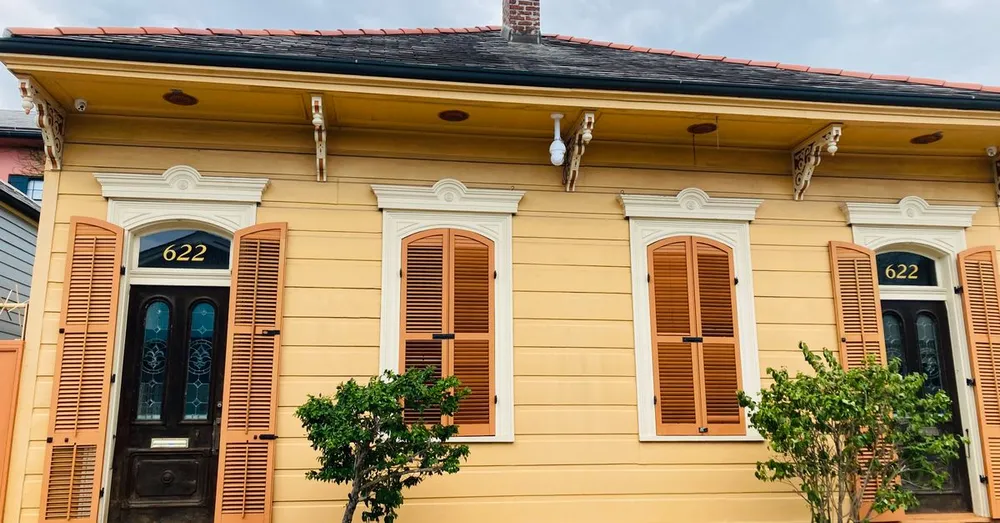
Cayenne reveals itself on foot, through the ear and on the palate. French Guiana’s capital lacks the polished postcard sheen of the West Indies: here, Creole façades peel in the sun, Creole blends with Hmong and Bushinenge across the market stalls, and a bo bun nuoc-mâm sits next to a bowl of awara broth. In two well-organised days, you take the pulse of this mixed-heritage city before heading off to the Salvation Islands, Kourou or the Maroni River. Here is the itinerary we actually plan for our travellers, tested season after season.
Before You Go: Practical Pointers
A few essentials to answer the question what to do in Cayenne without any unpleasant surprises.
- Status and currency: French Guiana is a French overseas region (DROM). You pay in euros, French is the official language (Guianese Creole is very present in everyday speech), and mobile networks and bank cards work just as they do in mainland France. Dialling code: +594.
- Time difference: -5 h in winter and -6 h in summer compared with Paris. Factor it in for your calls and flights.
- Best time to visit: the dry season, from mid-July to mid-November, is ideal for exploring the centre without tropical downpours. The rest of the year is still manageable, simply more humid.
- Arrival: Félix-Éboué airport, in Matoury, about twenty minutes from central Cayenne (budget €20-30 by taxi depending on the time).
- Health: the yellow fever vaccine is mandatory to enter the territory. Plan ahead with your doctor.
- Car: for Cayenne city centre, two days are easily done on foot. However, as soon as you want to roam further afield (Rémire-Montjoly beaches, Kourou, Kaw marshes), a car becomes essential.
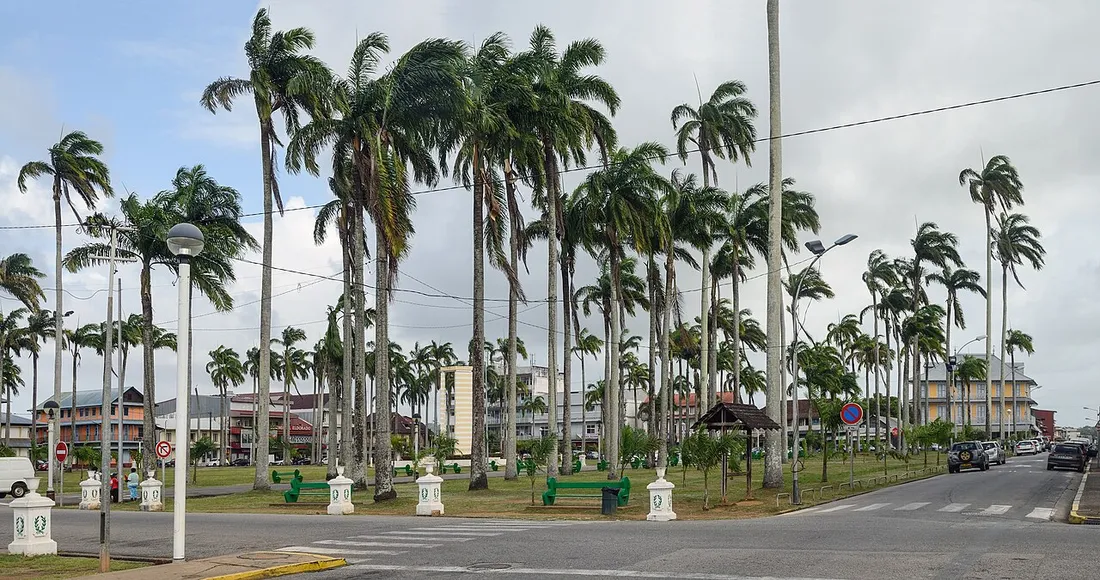
Day 1: The Historic and Creole Heart
Morning — Cayenne Market
Start early, around 7-8 a.m., at the municipal market (rue Sainte-Catherine). It is the belly of the city, and the best snapshot of Guianese cultural blending. Under the metal hall, Creole vendors sell chilli, calalou and breadfruit; a little further on, the Hmong community offers its impeccable market-garden vegetables; at the back, the phở and bo bun counters never empty. A large bowl runs around €8-10 and keeps you going until lunch.
Head off with a few local spices, a bag of couac (cassava semolina) or a jar of piment végétarien (a mild chilli): these are the most authentic edible souvenirs, and the cheapest.
Good to know: the market is busiest on Wednesday, Friday and Saturday morning. Avoid Monday, which is quieter.
Late Morning — Fort Cépérou
A ten-minute walk away, climb the hill of Fort Cépérou, the cradle of the city founded in the 17th century. Only ruins and a few walls remain, but the site offers the finest panorama over the harbour, the estuary mouth and the tin roofs of the centre. Access is open and free. The climb is short but in full sun: a cap and water are recommended.
Lunch — Guianese Cuisine
Head back down towards the centre to sample an iconic dish:
- Awara broth (if you happen to catch the Easter season);
- Chicken colombo or goat fricassee;
- Grilled fish with rice and red beans.
Budget €15-22 for a hearty dish in a Creole restaurant in the centre.
Afternoon — Squares and Creole Architecture
The afternoon is made for strolling. Three stops:
- Place des Palmistes: a vast esplanade shaded by royal palms, the gathering spot for Cayenne residents at the end of the day. Benches, kiosks, sugarcane-juice vendors.
- Place du Coq and the surrounding colonial streets: half-timbered Creole houses, ornate wooden balconies, colourful shutters. This is where you photograph the real Cayenne.
- Saint-Sauveur Cathedral, a fine example of 19th-century religious architecture.
Evening — Carbet and Local Atmosphere
At the end of the day, Place des Palmistes and the neighbouring terraces come alive. Try a ti-punch (in moderation) or a fresh maracuja (passion fruit) juice, and let the heat ease off. Many of our travellers stay within walking distance of the centre, precisely to enjoy this atmosphere without getting back behind the wheel at night.
Day 2: Nature, Beaches and Flavours
Morning — The Beaches of Rémire-Montjoly
A 15-20-minute drive from the centre, Rémire-Montjoly lines up the finest beaches accessible from Cayenne. Montjoly beach and the Rorota trail (a loop of about 1 hr 30, free) combine forest, viewpoint and swimming. In season, you may come across the tracks of sea turtles that have come to nest — a sight to observe without disturbing them.
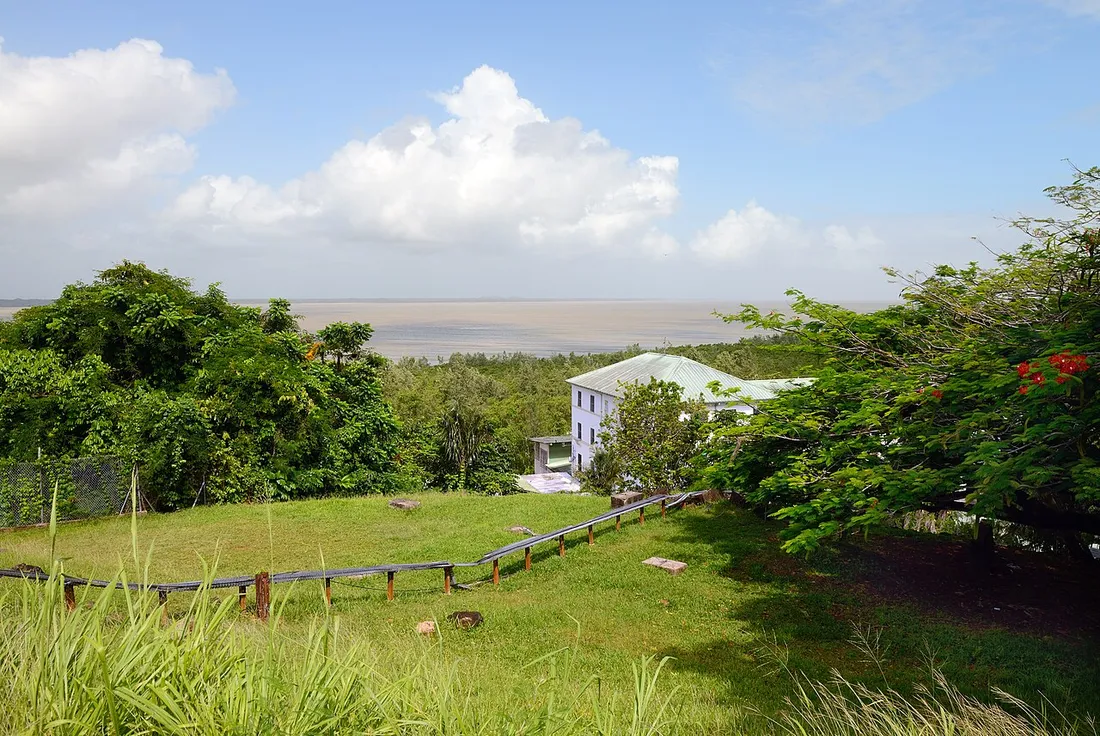
Worth knowing: the ocean here is laden with silt (the Amazon is not far), so the water is brownish rather than turquoise. That is normal, not pollution.
Lunch — Street Food and Seaside Carbets
At midday, play the local and budget-friendly card:
- Galettes and salt cod accras in a beach carbet;
- Brochettes and smoked chicken;
- An artisanal ice cream in a tropical flavour (golden apple, passion fruit, coconut).
Budget €8-14 to eat well on the go.
Afternoon — Take Your Pick According to Your Pace
Depending on your energy, two options to round off these 48 hours:
- Culture option: head back to the centre for the Museum of Guianese Cultures or the Franconie Departmental Museum, perfect for understanding the history of the penal colony, gold panning and the Amerindian peoples (entry a few euros).
- Nature option: if you are staying a few more days, this is the time to book an excursion to the must-sees beyond Cayenne — see below.
A Farewell Aperitif
Finish with a sunset on the waterfront, a planteur (rum punch) or a glass of comou juice, and one last loop around the market if it is open, to take home your spices.
And After Cayenne? The Excursions Not to Miss
Cayenne is an excellent base for exploring further. If your stay allows, add:
- The Guiana Space Centre in Kourou (1 hr drive): a free guided tour by reservation, and, with a little luck, an Ariane 6 or Vega launch from a viewing point.
- The Salvation Islands: a former penal colony (Île Royale, Île Saint-Joseph, Île du Diable), reachable by catamaran from Kourou.
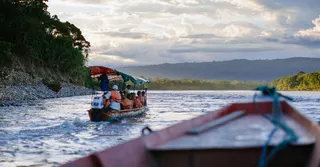
- The Kaw marshes: a night-time pirogue trip to meet caimans and scarlet ibises.
- Saint-Laurent-du-Maroni (2 hr 30 drive): the Camp de la Transportation, a striking relic of the penal colony, and the Maroni River by pirogue towards the Bushinenge villages.
How Long Does It Take and How Much Does It Cost?
For these 48 hours in Cayenne, excluding accommodation and flights:
- Meals: €8-22 depending on the format;
- City-centre sights: mostly free (market, Fort Cépérou, squares, beaches);
- Museums: a few euros;
- Car rental: €35-55/day, strongly recommended from day 2 onwards.
Two days are enough for the centre, but four to five days let you follow up with Kourou and the Salvation Islands without rushing.
Where to Stay to Make the Most of Cayenne
To experience the city like a local, you are better off in accommodation close to the centre and the beaches, with the means to cook your market finds. At Hostel Toucan, we select rentals in French Guiana designed for travellers who want to explore without constraints:
- Direct booking, no platform fees: you pay the fair price.
- Free cancellation up to 7 days before arrival.
- WhatsApp assistance 7 days a week, for your last-minute questions (a delayed Ariane launch, a restaurant tip, a closed road).
Discover our accommodation in French Guiana, prepare your stay with our complete guide to French Guiana, and if you own a property here, see how we manage it for you on our owners page.
Cayenne is not to be visited as a rushed tourist: it is to be savoured. Forty-eight hours are enough to fall in love with it — and to make you want to extend your trip towards the river, space and the forest.
FAQ
How many days do you need to visit Cayenne?
Two days are enough for the historic centre, the market, Fort Cépérou, the Creole squares and the beaches of Rémire-Montjoly. Allow rather 4 to 5 days if you also want to do Kourou, the Space Centre and the Salvation Islands from Cayenne.
What is the best time to go to Cayenne?
The dry season, from mid-July to mid-November, is ideal: less rain for exploring the city and setting off on excursions. The rest of the year is still manageable but more humid. Don’t forget that the yellow fever vaccine is mandatory.
Do you need a car to visit Cayenne?
For central Cayenne, no: the market, Fort Cépérou and the squares are easily done on foot. But as soon as you want to reach the beaches of Rémire-Montjoly, Kourou or the Kaw marshes, a car becomes essential (€35-55/day).
What to eat in Cayenne?
Try awara broth, chicken colombo, goat fricassee, grilled fish, as well as the street food: accras, galettes, bo bun and phở from the market. For souvenirs, bring back couac, spices and piment végétarien (mild chilli).