“My studio is in a residential zone: am I allowed to turn it into a furnished tourist rental?” This is the question that should come before any rental purchase on the island. Change of use for rentals in Martinique is the most misunderstood and the riskiest regulatory point: it’s the one thing that can derail an investment that looked “perfect for Airbnb” overnight. After years of putting together files from Fort-de-France to the Grand Sud, here is what this procedure actually covers, which towns require it today, and how to get compliant before your first night booked.
Change of use: what exactly are we talking about?
Martinique is a French overseas department and region (DROM): the Construction and Housing Code applies here word for word, just as it does in mainland France. This code draws a distinction between two notions that are almost always confused.
- The use of the premises: a dwelling has a “residential” use recorded in the administration’s files. Renting it out on a lasting basis to a transient clientele tips it into a “furnished tourist rental” use: that habitual shift is precisely the change of use.
- The intended purpose (an urban-planning notion from the local development plan, the PLU): a separate matter, concerning the nature of the building and governed by the building permit.
In practice, change of use only concerns you if a town has put it in place by deliberation. Where it applies, repeatedly turning a dwelling into a furnished rental requires prior authorization from the mayor. Without it, the civil fine can reach €50,000 per dwelling, together with a daily penalty. It’s therefore wise to check before signing a sale agreement.
What triggers (or doesn’t) the procedure
Three scenarios come up constantly in the files I handle:
- Primary residence (which you occupy at least 8 months a year): you can rent it short-term 120 days a year maximum with no change of use at all. It’s the simplest regime.
- Secondary residence rented as a furnished tourist accommodation: this is the profile typically targeted by change of use where it exists.
- Dedicated rental investment (a property bought to rent out year-round): same logic as the secondary residence, with the added question of compensation detailed below.
The Le Meur law changed everything in 2024
For a long time, change of use could only be imposed as of right in towns of more than 200,000 inhabitants. With Martinique having around 360,000 inhabitants across 34 towns, none crosses that threshold: Fort-de-France, the largest, caps out at around 75,000 inhabitants. On paper, the island escaped the mechanism.
The Le Meur law of 19 November 2024, which applies in the overseas departments, reshuffled the deck. It now allows any town, whatever its size, to introduce change of use by a simple deliberation. A town of 5,000 inhabitants can today regulate its furnished rentals the way Paris would: a paradigm shift for Martinique’s owners.
That same law also tightened taxation, which weighs in the trade-off:
- Unclassified furnished rental: micro-BIC allowance reduced to 30%, revenue ceiling of €15,000 per year.
- Classified tourist accommodation (1 to 5 stars): allowance of 50%, ceiling of €77,700.
The change-of-use question therefore arrives alongside a strong incentive to get your rental classified: the two steps are best prepared together.
Which Martinique towns are affected today?
Here is the lay of the land as I observe it on the ground in 2026. It moves fast: treat it as a snapshot, never as a definitive guarantee.
Fort-de-France: the most closely watched town
The island’s capital, Fort-de-France concentrates the working population, students and civil servants, in a genuinely tight housing market. This is therefore where the risk of change of use being introduced is highest.
- Primary residence: short-term rental up to 120 days/year after declaration.
- Secondary residence or investment: the profile for which a tourist-rental authorization at the town hall (the same DOM logic as in mainland France) would become decisive.
- Before any purchase: ask the urban-planning department. An apartment near the covered market or the seafront rents wonderfully to business travelers during the week, but a refused authorization would render the operation void.
Les Trois-Îlets, Sainte-Anne, Le Diamant: strong demand, regulation to watch
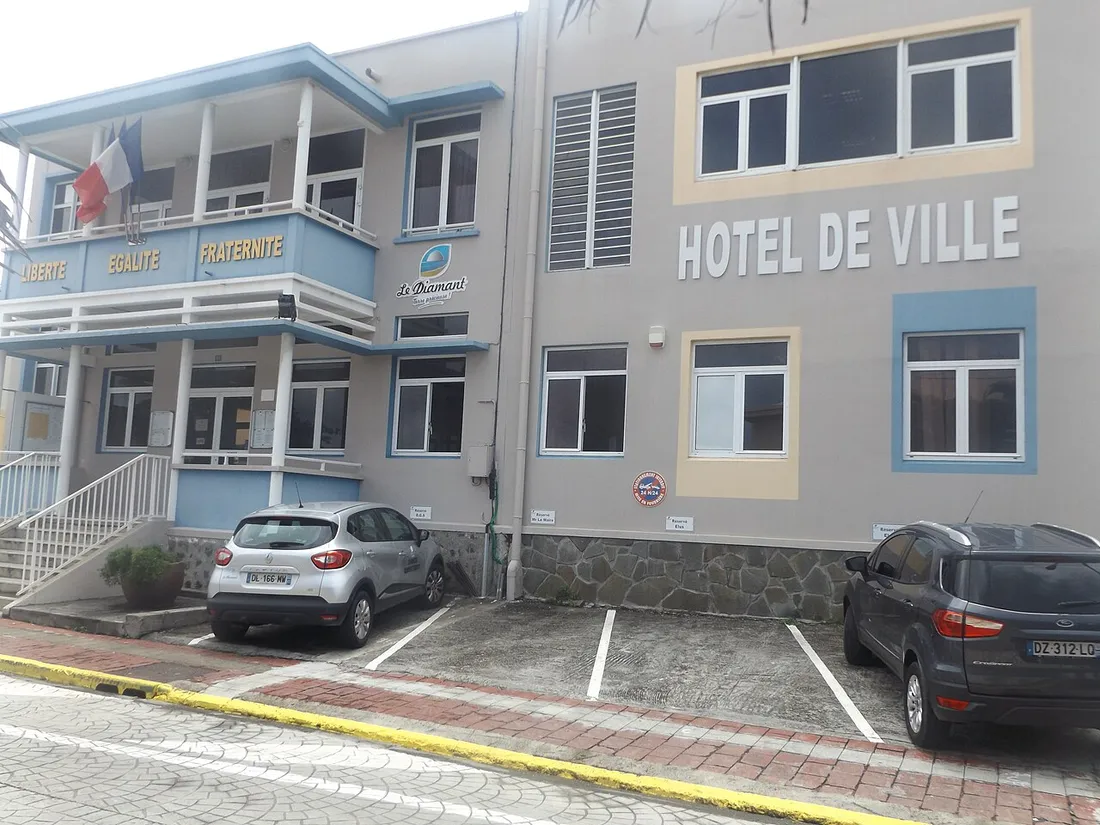
These seaside towns — Les Trois-Îlets (Pointe du Bout, the golf course, the village of Joséphine de Beauharnais), Sainte-Anne (Salines beach, Pointe Marin), Le Diamant (facing the rock) — do not require change of use to date. But their appeal makes them natural candidates for future regulation.
- The declaration at the town hall is unavoidable there and closely monitored.
- Star classification is particularly profitable there, given the competition.
- Watch the municipal deliberations: a resort as sought-after as Les Trois-Îlets can change its rules quickly.
Le François, La Trinité / Tartane, Saint-Pierre: still flexible areas
On the Atlantic side with Le François (white sandbanks, Joséphine’s bathtub), on the Caravelle peninsula with La Trinité / Tartane (surfing, fishing village), or at the foot of Mount Pelée with Saint-Pierre (UNESCO-listed ruins), regulation remains light: only the standard declaration applies. There is more room to maneuver there, but the same caution holds: check the deliberation in force before investing.

Compensation: the mechanism not to overlook
Where a town introduces change of use, it can pair it with a compensation rule for short-term rentals. The principle: to turn a dwelling into a furnished tourist rental, the owner must return an equivalent floor area of housing to the market elsewhere in the town (sometimes with an increased coefficient in the tightest areas).
This mechanism, designed to protect residents’ housing, is heavy: it requires acquiring or converting another premises, which reserves the operation for seasoned investors. To date, no Martinique town imposes compensation, but the Le Meur law puts it within reach of all of them. Hence my recommendation: regularize now any existing furnished rental, because properties already declared generally benefit from a transitional regime the day a town tightens its rules. Seniority is your best insurance.
Your roadmap to renting by the book
Whatever your town, here is the procedure to follow, property by property, in order:
- Qualify the dwelling: primary residence (120-day ceiling, no change of use) or secondary/investment (a stricter regime possible).
- Ask the town hall about the existence of a change-of-use procedure and any compensation requirement — in writing, to keep a record.
- Declare the furnished rental at the town hall (Cerfa form no. 14004, or online declaration generating a 13-digit registration number in the towns that have introduced it).
- Display this number on all your Airbnb, Booking or other listings: without it, the listing is in breach.
- Request the change-of-use authorization if the town requires it, before the first rental.
- Get the furnished rental classified (accredited body, roughly €150 to €250, valid for 5 years) to secure the 50% allowance.
- Collect and remit the tourist tax, or hand this task to the platform via agreement.
- Archive all supporting documents: a municipal inspection may occur, and a complete file keeps you safe.
Timing matters: from a few days (a simple declaration) to several weeks for a change-of-use authorization, plus 4 to 6 weeks for a classification visit in high season. Plan ahead before the dry season (December to April), the densest booking period, including the February-March carnival. To put these steps in context, lean on our complete guide to Martinique.
Why delegate compliance to a local concierge service
Putting together a compliant file is doable on your own. Keeping it up to date, tracking municipal deliberations, managing the tourist tax, the cleaning and the arrivals at Aimé Césaire airport (Le Lamentin) from mainland France — with a -5h time difference in winter and -6h in summer relative to Paris (dialing code +596) — is another story.
That is exactly what we do at Hostel Toucan, a concierge and seasonal rental management service in the French overseas departments. For Martinique owners, we take care of:
- Compliance: qualifying the property, the declaration, the registration number, the change-of-use file where applicable, and support with star classification.
- Regulatory monitoring: we track deliberations town by town to alert you before a new rule takes hold.
- Full rental management: listings, dynamic pricing, cleaning, guest welcome and tourist-tax collection.
- Direct marketing: direct booking with no platform fees, free cancellation up to 7 days before arrival and WhatsApp assistance 7 days a week.
Discover our offer on the owners page and browse our rentals in Martinique. Properly understood, town by town, change-of-use regulation is not a brake: it’s what durably secures your investment and turns a villa into lasting income.
FAQ
Is change of use mandatory to rent short-term in Martinique?
No, not everywhere. It only applies in towns that have introduced it by deliberation. To date, no Martinique town has done so across the board, but the Le Meur law of 19 November 2024 now allows all of them to, whatever their size. Fort-de-France remains the most exposed. Always check the situation with the urban-planning department before investing, and always declare your furnished rental at the town hall.
What is compensation for a short-term rental?
It’s an obligation that some towns add to change of use: to turn a dwelling into a furnished tourist rental, the owner must return an equivalent floor area of housing to the market elsewhere in the town. It aims to protect residents’ housing in tight areas. No Martinique town imposes it currently, but the Le Meur law makes it possible everywhere, which is why it’s worth regularizing your furnished rental now to benefit from seniority.
Do you need a tourist-rental authorization at the town hall in the overseas departments?
The declaration at the town hall (Cerfa 14004 or online declaration with a registration number) is always mandatory in the overseas departments, Martinique included. A separate change-of-use authorization is only required in the towns that have voted for it, and above all for secondary residences or rental investments. For a primary residence rented fewer than 120 days a year, the simple declaration is enough.
How many days a year can I rent my primary residence in Martinique?
As everywhere in France, 120 days a year maximum, with no change of use. Beyond that ceiling, the dwelling loses its primary-residence status and shifts to the stricter secondary-residence regime, with a possible change-of-use authorization depending on the town. The Le Meur law even allows towns to lower this ceiling to 90 days, but no Martinique town has done so to date.