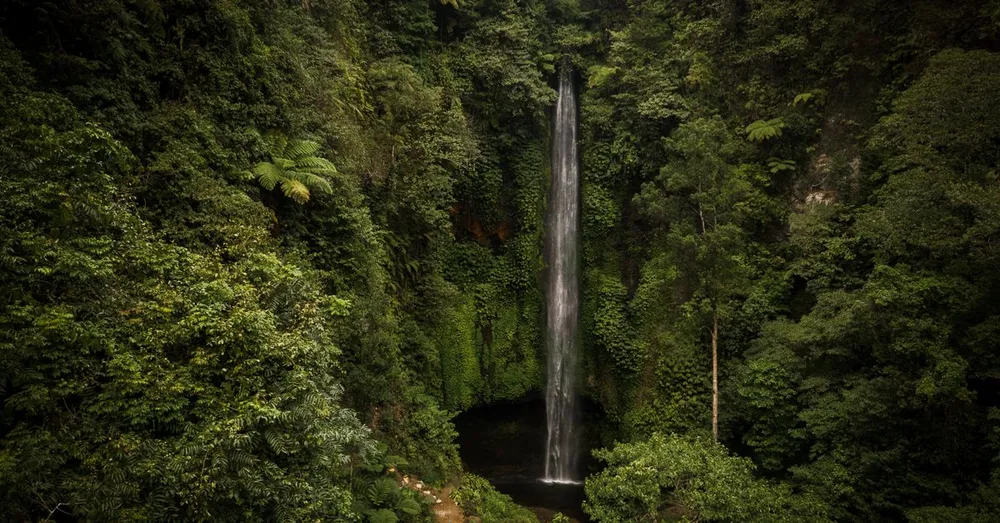
When planning a day in nature in Basse-Terre, one question keeps coming up among our travellers: “The Carbet Falls, do we go to the first, second or third drop?” The answer is never the same for everyone. These three waterfalls, fed by the rains of La Soufrière (1,467 m), don’t share the same access, the same elevation gain, or the same level of effort. And since our hosts live in Capesterre-Belle-Eau, just steps from the site, they know better than anyone what real shape the trails are in and which sections close after seismic events. Here is our honest comparison to help you pick the drop that matches your fitness and your mood.
Understanding the site before you set off
The Carbet Falls lie within the municipality of Capesterre-Belle-Eau, in the heart of the Guadeloupe National Park, on the “Basse-Terre” wing of the butterfly. You reach the site via the Route de la Traversée and then the D4, which climbs through the rainforest up to the Maison de la forêt and the welcome area. Allow roughly 1h15 of driving from Pointe-à-Pitre (the economic hub and Pôle Caraïbes airport) and 1h from the southern coast of Grande-Terre.
Two things to know before you even lace up your shoes:
- The water in the pools is cool (often 18 to 20 °C) and sometimes murky after rain. Swimming at the foot of the large falls is supervised, or even forbidden depending on local orders.
- The weather changes fast. The best period remains the dry season, from December to April. In the wet season, the trails become muddy and slippery, and the flow can shroud the beauty of the falls in mist.
A detail many people overlook: the three drops are not visited from the same starting point. Don’t expect to do all three in an hour.
The 2nd drop: the accessible must-see
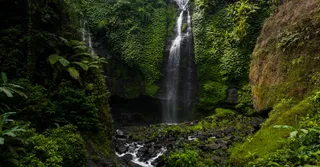
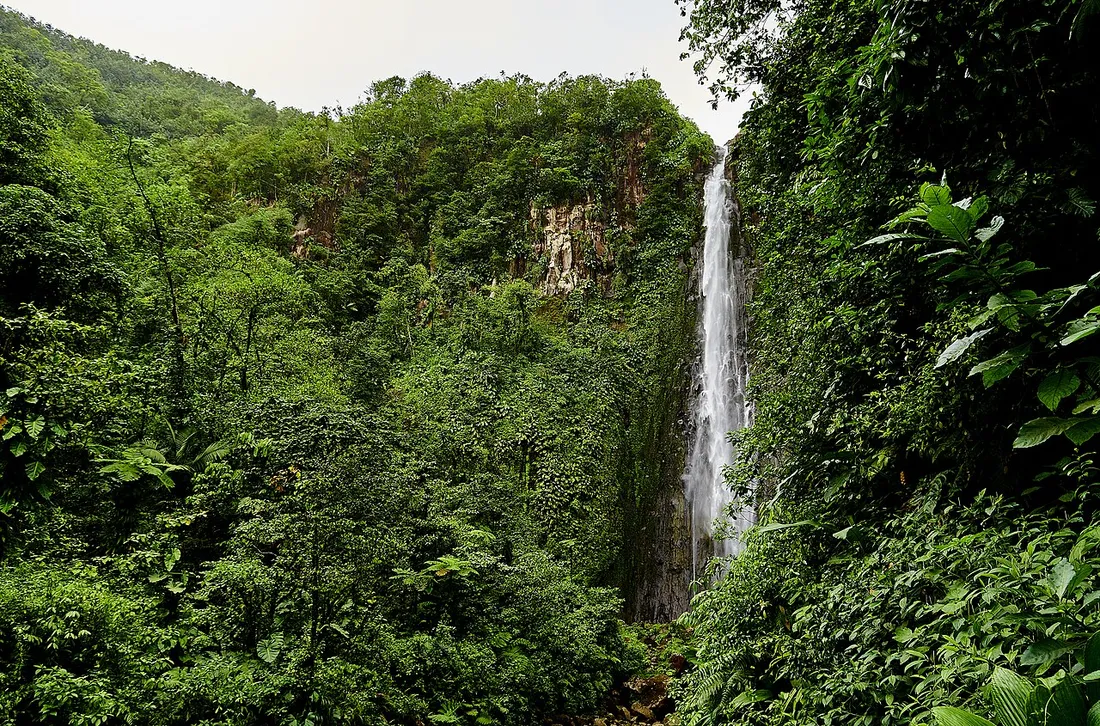
If you only had time for one, this would be it. The second drop, about 110 metres high, is the most visited and the most photographed of the three.
Access and level
- Start: Saint-Sauveur welcome area (fitted-out car park, paid: allow around €2.50 per person for site entry).
- Distance: about 1.4 km one way from the car park.
- Duration: 40 to 50 minutes of walking one way, or 1h30 to 2h round trip with photo stops.
- Elevation gain: moderate, around 130 m, on a fitted trail with footbridges and wooden steps.
This is the right choice for families, occasional walkers and anyone with half a day. The trail crosses a spectacular rainforest (tree ferns, heliconias, Carbet wood that gave the site its name). The final viewpoint offers a head-on view of the waterfall.
Tip from our hosts: set off before 9 a.m. From 10:30 a.m., the car park fills up and the footbridges become a bottleneck. By heading out early, you also boost your chances of spotting hummingbirds at daybreak.
The 1st drop: the highest, the most demanding
The first drop is the giant: about 115 metres of free fall, the most impressive of the three. But you have to earn it.
Access and level
- Start: same sector as the second drop, but the trail forks off and climbs much more steeply.
- Duration: 2h to 2h30 of walking one way depending on your pace, meaning a full day of hiking round trip.
- Elevation gain: significant, over 300 m cumulative, with steep, root-tangled and often muddy sections.
- Who it’s for: regular hikers, good physical condition, walking shoes mandatory.
The first drop is less frequented, which makes it a prime objective for those seeking quiet and effort. On the other hand, it is also the section most exposed to hazards: this is where rockfalls and closure orders occur most often.
The 3rd drop: the connoisseurs’ hidden gem
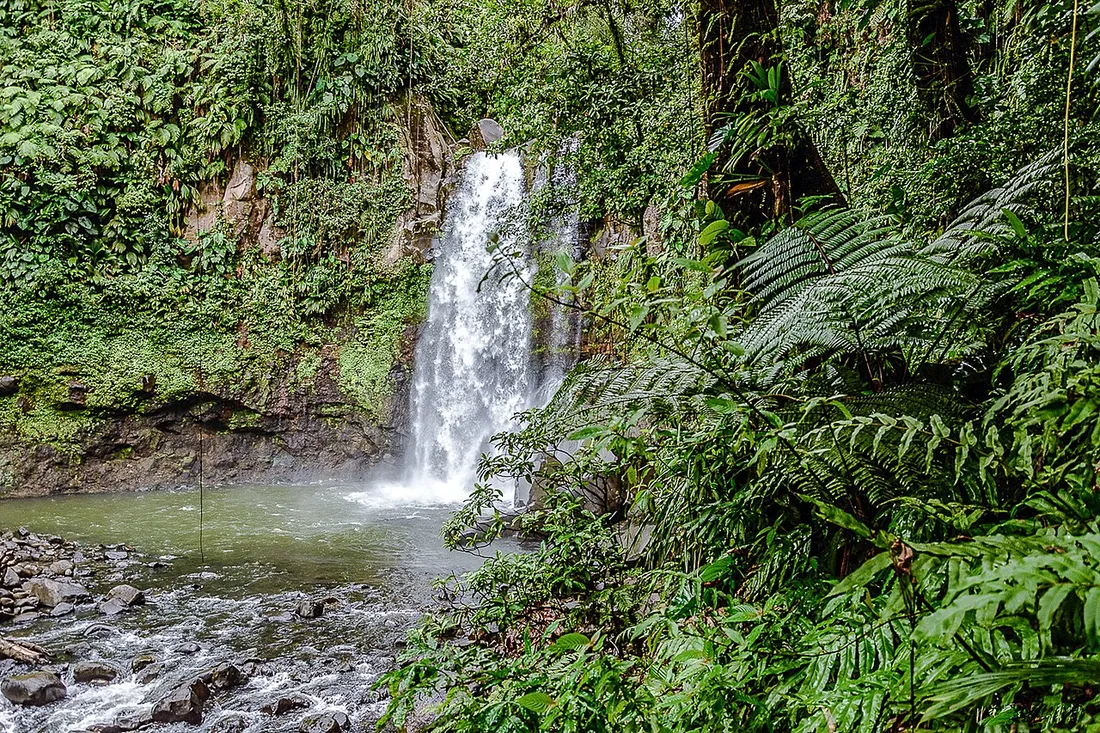
The third drop is the shortest in height (about 20 metres) but the wildest and the hardest to reach. It is accessed by a different route, from the hamlet of Routhiers (Capesterre-Belle-Eau).
Access and level
- Start: Routhiers car park, more modest.
- Duration: 2h to 3h one way depending on conditions, technical terrain.
- Elevation gain: demanding descent then climb, river fordings.
- Who it’s for: seasoned hikers only, ideally accompanied by a guide.
The pool of the third drop is one of the few where swimming is sometimes possible, in a tropical canyon atmosphere far from the crowds. It’s our favourite for those who want a real adventure, but you should never attempt it after heavy rain: the floods are fast and dangerous.
Comparison table of the three drops
| Criterion | 1st drop | 2nd drop | 3rd drop |
|---|---|---|---|
| Height | ~115 m | ~110 m | ~20 m |
| Walk one way | 2h–2h30 | 40–50 min | 2h–3h |
| Elevation gain | High (300 m+) | Moderate (130 m) | High, technical |
| Level | Sporty | Accessible | Seasoned |
| Crowds | Low | High | Very low |
| Swimming | No | Supervised/forbidden | Sometimes possible |
Seismic closures and trail conditions: the reality on the ground
This is the point that online guides often forget, and it’s precisely where living in Capesterre makes the difference. Guadeloupe is a zone of strong seismic activity: tremors, even moderate ones, weaken the rock faces and trigger rockfalls on the trails to the falls.
In concrete terms, in recent years:
- The first drop’s trail has seen several prolonged closures after landslides. Always check its status before setting off.
- Access to the immediate surroundings of the pools is regularly restricted by prefectural order due to the risk of falling rocks.
- After a felt earthquake, the National Park may close all or part of the site as a precaution, sometimes for several weeks.
Our common-sense recommendations, passed on by our hosts:
- Check the site’s status the day before with the Guadeloupe National Park or the Capesterre-Belle-Eau Tourist Office.
- Never cross a barrier or a closure ribbon. These markers are not decorative: they signal a real risk of rockfall.
- Plan a fallback around Capesterre: the Galion waterfall, the pools of the Allée Dumanoir or Roseau beach if everything is closed.
What to pack and good habits
To make the most of it, whatever drop you choose:
- Closed hiking shoes (flip-flops are the leading cause of falls on site).
- 1.5 L of water per person, a light windbreaker, insect repellent.
- Swimsuit and towel if swimming is allowed on the day.
- An early start, for the light, the cool air and the parking.
- Leave no waste behind: we are in a protected national park.
Planning your nature getaway on the Basse-Terre side
The Carbet Falls are best savoured when you sleep nearby, on the windward coast (Capesterre, Sainte-Marie, Trois-Rivières). You avoid the morning drive and easily combine them with the other gems of Basse-Terre: La Soufrière, the Cousteau Reserve at Malendure for snorkelling, the Grande Anse beach in Deshaies, or a crossing to Les Saintes from Trois-Rivières.
At Hostel Toucan, we manage hand-picked holiday rentals across the whole island, with genuine local support. Direct booking with no platform fees, free cancellation up to 7 days before arrival, and WhatsApp assistance 7 days a week to tell you, that very morning, whether the falls’ trails are open or whether it’s better to postpone. To plan your whole trip, check out our complete guide to Guadeloupe, browse our holiday rentals in Guadeloupe, and if you own a property on the island, discover our concierge offer for owners.
The Carbet Falls are more than a photo: they’re an encounter with the humid rainforest, provided you choose the drop that truly matches your level and the conditions of the day. Make the right choice, set off early, and let yourself be carried by the roar of the water.
FAQ
Which Carbet Falls drop is the easiest to reach?
The second drop is by far the most accessible: about 40 to 50 minutes of walking one way on a fitted trail with footbridges, for a moderate elevation gain. It suits families and occasional walkers. The first and third drops require far better physical condition and several hours of walking.
Are the Carbet Falls sometimes closed?
Yes. Guadeloupe is an active seismic zone and rockfalls can occur on the trails, especially towards the first drop. The National Park or the prefecture then close all or part of the site by order. Always check the opening status the day before with the National Park or the Capesterre-Belle-Eau Tourist Office.
Can you swim at the Carbet Falls?
Swimming at the foot of the first and second drops is generally supervised, or even forbidden by order due to the risk of falling rocks. The third drop, wilder, has a pool where swimming is sometimes possible, but never after heavy rain because of the risk of a fast flood.
What is the best time to visit the Carbet Falls?
The dry season, from December to April, is ideal: less muddy trails, better visibility of the waterfalls and safer swimming. In the wet season, the paths become slippery and the flow can drown the falls in mist. In any case, set off early in the morning for the light and the parking.