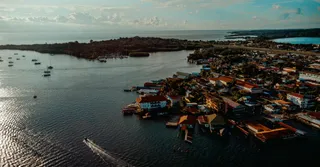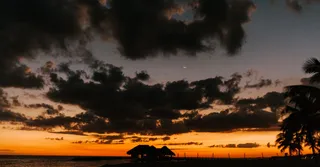
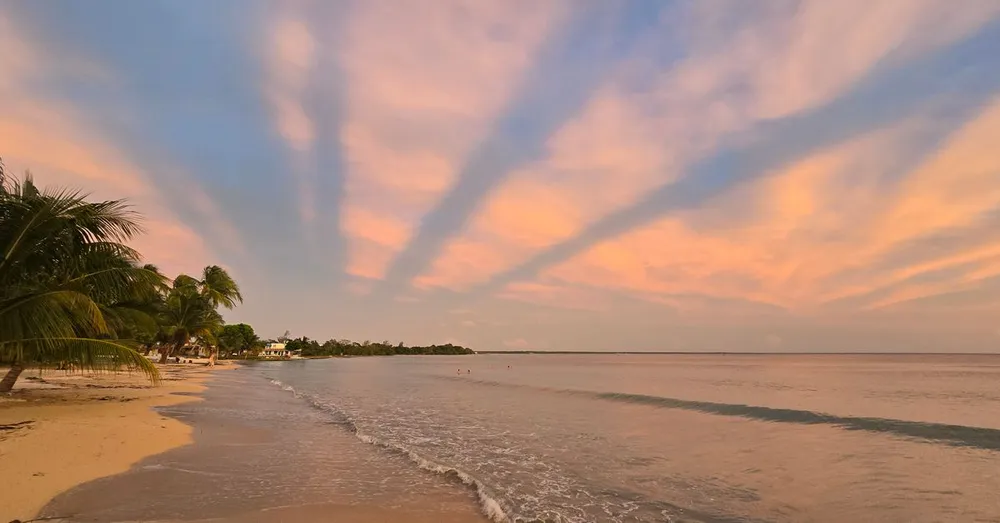
In Guadeloupe, the sun doesn’t set just anywhere. On the Caribbean side of Basse-Terre, the famous leeward coast, the sun plunges straight into a glassy sea, with no relief to block it. It’s here, between Deshaies and Vieux-Habitants, that the butterfly island stages its most beautiful blazes of colour. Here is our selection of spots tested across the seasons, with timing, access and that famous chance of catching the green flash.
Why the leeward coast offers the best sunsets
Guadeloupe is shaped like two wings. On the Grande-Terre side, limestone and seaside, the sun sets behind the land or the hills. On the Basse-Terre side, the west coast known as “leeward” is sheltered from the trade winds by the volcanic massif of La Soufrière (1,467 m). The result: a sea that is often calm, flat, almost waveless, acting like a mirror at dusk.
This due-west orientation is the decisive argument. From Deshaies to Vieux-Habitants, the sea horizon is wide open, sometimes punctuated by the silhouette of Montserrat or Les Saintes in the distance. The sky shifts from gold to burnt orange, then pink and mauve, over some twenty minutes. The dry season, from December to April, guarantees a clearer sky and therefore sharper colours.
What time does the sun set in Guadeloupe?
Guadeloupe is close to the equator, so the times vary little over the year:
- December to February: sunset between 5:35 and 5:55 p.m.
- March to May: sunset around 6:00 to 6:15 p.m.
- June to August: the latest sunset, between 6:25 and 6:35 p.m.
- September to November: a gradual return towards 5:40 p.m.
A local’s tip: arrive 30 minutes before the listed time. The best moment isn’t the sunset itself but the ten minutes that follow, when the sky catches fire a second time (photographers call it a reversed “blue hour”).
Our 5 sunset spots on the Caribbean side
1. Grande Anse beach, Deshaies
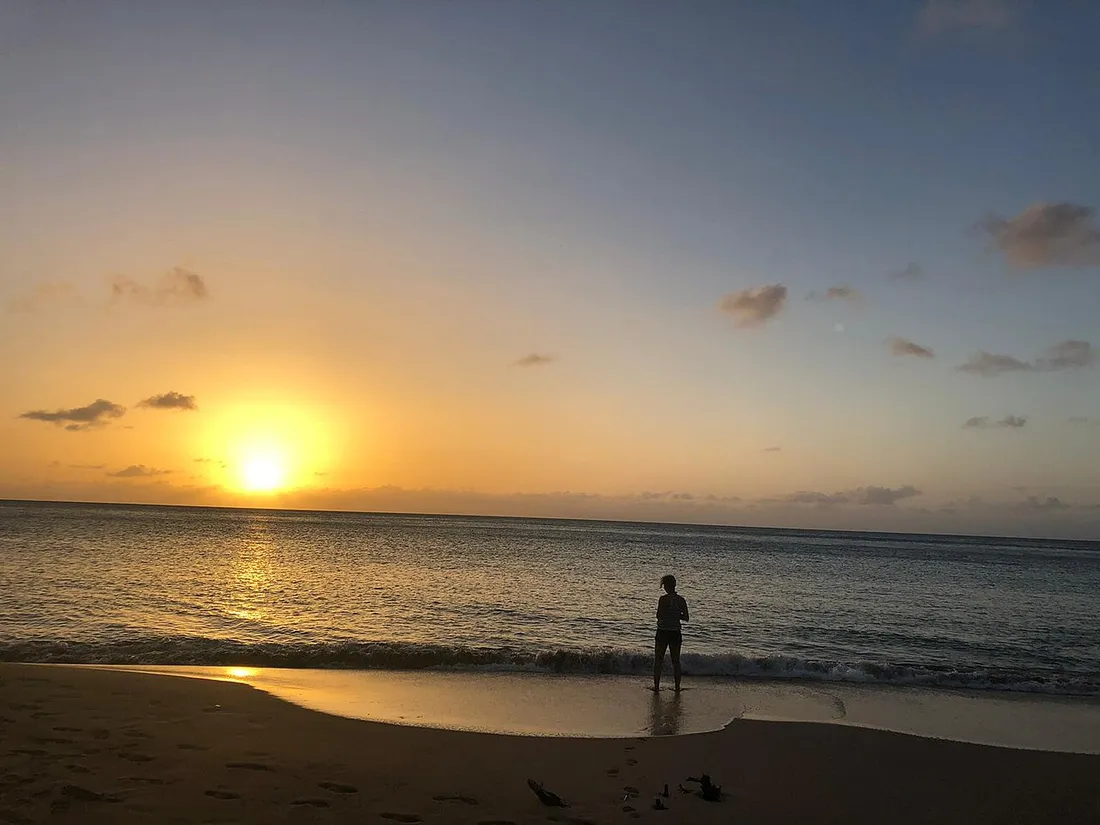
This is the must-see. This large bay of golden sand fringed with coconut palms, at the far north-west, faces a completely open horizon. You settle in with your feet in the sand, a cool drink in hand, and watch the sun disappear behind the waterline.
- Access: free parking at the beach entrance, 5 min from the village of Deshaies.
- Distance from Pointe-à-Pitre: about 50 km, allow 1 h 10 of driving.
- Bonus: covered shelters and a few snack stands open at the end of the day (a planteur cocktail runs about €7–9).
2. The village of Deshaies and its jetty
More intimate than Grande Anse, the little fishing port of Deshaies offers a sunset framed by the hills and the boats at anchor. The restaurant terraces look straight out over the bay: the ideal spot to follow the show with a dinner of grilled fish (a main course around €18–25).
3. Malendure beach and the Pigeon islets, Bouillante
At the heart of the Cousteau Reserve, Malendure is known for world-class diving and snorkelling. But at dusk, the grey volcanic sand beach empties of divers and becomes a magnificent viewpoint: the sun sets exactly behind the silhouette of the two Pigeon islets.
- Photo bonus: the islets create a perfect foreground, rare on this coast.
- Tip: some clubs offer late-afternoon snorkelling outings (about €25–35) that finish facing the sunset.
- Distance from Deshaies: 25 km, or 40 min by the coastal road.
4. The point at Vieux-Habitants
Further south, Vieux-Habitants is one of the oldest villages on the island. The seafront and the surroundings of Saint-Joseph church offer an open due-west view, far from the tourist crowds. It’s here, on a particularly flat sea, that our guests most often report seeing the green flash.
5. Ferry-Deshaies and the wild coves
Between Pointe-Noire and Deshaies, several small coves reachable on foot reward the curious. Less frequented, they require a bit of walking but offer a precious solitude at sunset. Bring a headlamp for the way back: night falls quickly and without transition in the tropics.
The green flash: myth or reality in Guadeloupe?
The green flash truly exists. It’s an emerald-green flash that appears for a fraction of a second at the exact moment the last point of the sun slips below the sea horizon. The leeward coast brings together the ideal conditions to observe it.
To maximise your chances:
- Choose a perfectly clear sea horizon (Grande Anse, Vieux-Habitants, Malendure).
- Aim for the dry season (December to April), when the air is less laden with humidity.
- Favour evenings with no low clouds on the western horizon.
- Don’t stare at the sun too early: protect your eyes and only truly look in the very last seconds.
- Keep a pair of binoculars handy: the phenomenon is tiny and fleeting.
Statistically, count on one or two successful sightings per week of holiday in the dry season, with a little patience and luck.
When to come depending on the season
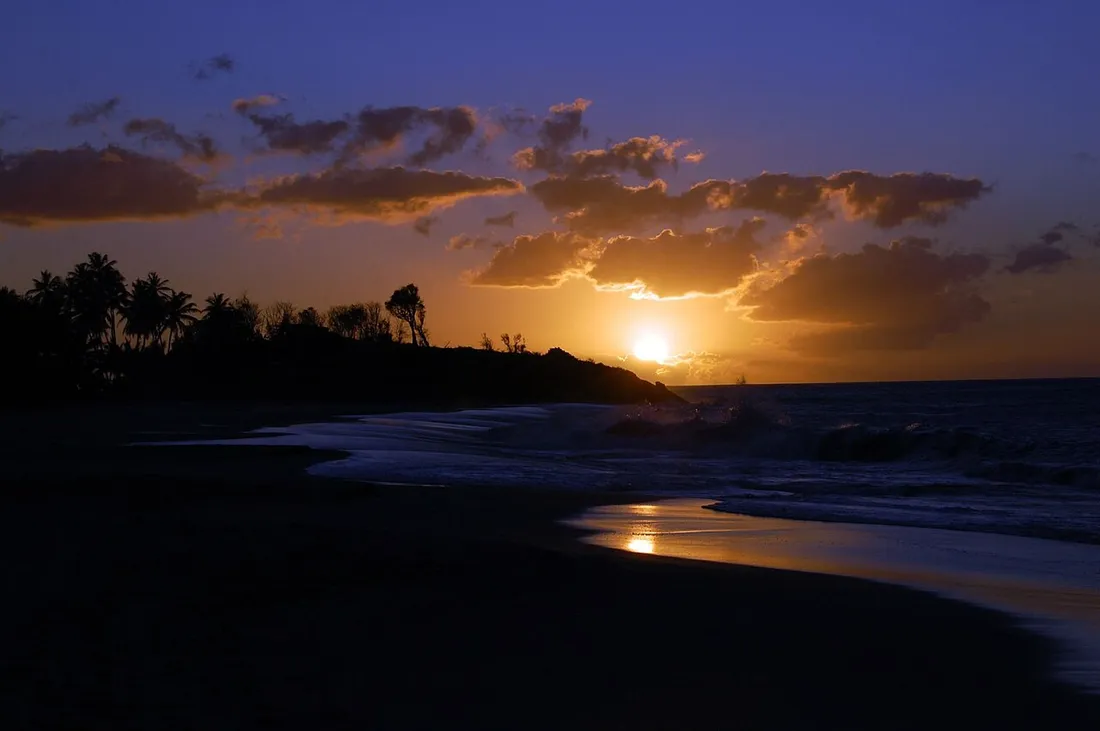
Each season changes the mood of the sunset:
- Dry season (Dec.–Apr.): clear sky, vivid colours, the best period for the green flash. It’s also the high tourist season: arrive early at Grande Anse.
- Shoulder season (May–June): beautiful light, calmer beaches, mild temperatures.
- Wet season (Jul.–Nov.): sometimes spectacular sunsets thanks to dramatic clouds, but showers are possible. Watch the weather and stay flexible.
Planning your twilight getaway
The leeward coast is easily explored by car along the Route de la Traversée and the west coast. A few practical pointers:
- Rent a vehicle: public transport is scarce at the end of the day.
- Fill up before leaving the main villages: the stations close early.
- Plan dinner ahead: book your table in Deshaies in high season.
To make the most of these sunsets without rushing, the best option is still to stay right there, on the Basse-Terre side. Hostel Toucan offers holiday rentals ideally located on the Caribbean side, with direct booking and no platform fees. You enjoy free cancellation up to 7 days before arrival and 7-day WhatsApp support for your last-minute questions (the best spot of the evening, a table to book, a shower to dodge).
Discover our accommodation in Guadeloupe and prepare your trip with our complete Guadeloupe guide. Do you own a property on the west coast and want to make the most of it? Our concierge service is detailed on the owners page.
The sunset on the leeward coast isn’t a mere postcard: it’s a daily ritual that you learn to savour, spot after spot, evening after evening. Lay your towel down at Grande Anse, wait for the silence of Malendure, watch for the green flash at Vieux-Habitants. Guadeloupe offers you one of the most beautiful twilight theatres in the Caribbean.
FAQ
Where can you see the best sunset in Guadeloupe?
On the leeward coast of Basse-Terre, facing the Caribbean Sea. Our favourite spots are Grande Anse beach in Deshaies, Malendure facing the Pigeon islets in Bouillante, and the point at Vieux-Habitants. These places offer a completely open sea horizon, due west.
What time does the sun set in Guadeloupe?
The sun sets between 5:35 and 5:55 p.m. from December to February, and until about 6:30 p.m. in June–July. The times vary little because Guadeloupe is close to the equator. Arrive 30 minutes early to enjoy the most beautiful colours.
Can you really see the green flash in Guadeloupe?
Yes. The green flash, an emerald-green flash at the moment the sun disappears, is observable on the leeward coast thanks to its open sea horizon. Your best chances are in the dry season (December to April), under a clear sky, at Grande Anse, Malendure or Vieux-Habitants.
What is the best season for sunsets in Guadeloupe?
The dry season, from December to April, offers a clear sky and vivid colours, ideal for the green flash. The wet season sometimes gives spectacular sunsets thanks to the clouds, but with a risk of showers: stay flexible and watch the weather.