
You’ve just bought a villa in Saint-François, a sea-view apartment in Le Gosier or a Creole cottage in Deshaies, and you plan to rent it out to holidaymakers? Before that first booking, one step is too often overlooked: the furnished tourist rental declaration in Guadeloupe with your town hall. This isn’t an optional formality but a legal obligation that determines the legality of your activity, the listing of your ad on the platforms and, sometimes, the issuing of your registration number.
After several years guiding owners across the Guadeloupean butterfly, I keep seeing the same oversights. Here’s the practical guide to declaring your property by the book.
Why declaring your furnished tourist rental is mandatory
A furnished tourist rental (meublé de tourisme) is a furnished property rented to a transient clientele who do not make it their permanent home, for stays by the day, week or month. Whether you rent on Airbnb, Booking, Abritel or directly, the status is the same.
As Guadeloupe is a French overseas department and region (DROM), national law applies in full, in particular the Tourism Code. In practice, any rental of a furnished tourist property must be declared at the town hall. This obligation pursues three goals:
- to allow the municipality to collect the tourist tax;
- to regulate supply in coastal towns under pressure (Sainte-Anne, Le Gosier, Saint-François);
- to guarantee the traveller that the property is identified and legal.
Failing to declare exposes you to penalties and undermines your entire activity. It is also, for the traveller, a mark of seriousness.
Simple declaration or change of use: don’t confuse the two
Many owners confuse two distinct procedures:
- The furnished tourist rental declaration (CERFA 14004): the foundation, mandatory as soon as you rent by the night, except a primary residence rented less than 120 days a year with no registration required.
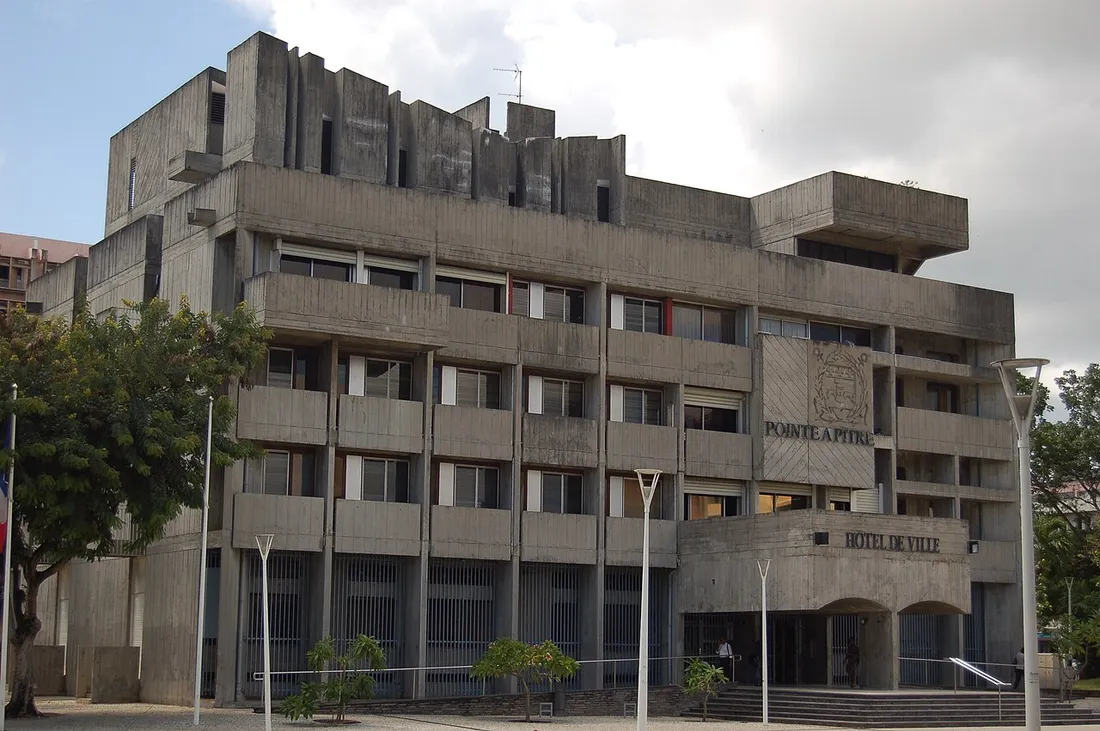
- The change of use: it converts a residential premises into a short-term commercial premises, and only concerns the dense towns that have introduced it by official resolution (mainly Pointe-à-Pitre and Le Gosier).
For a secluded villa in Deshaies or Bouillante, it generally doesn’t apply; for an apartment in a co-ownership building in an urban zone, check with the town hall. That’s where the surprises hide.
The step-by-step procedure for declaring at the town hall
Here is the concrete sequence for the furnished tourist rental declaration in Guadeloupe, in four steps valid almost everywhere.
Step 1: identify your town’s procedure
First reflex: call your town hall’s planning department (dialing code +590) or check its website, to clarify two points:
- Do I need to submit a paper CERFA or go through an online service?
- Does my town require a registration number and/or a change of use?
Answers vary from one town to another. From mainland France, allow for the time difference (-5h in winter, -6h in summer) and call in the Guadeloupean morning.
Step 2: fill in the CERFA 14004 form
The CERFA 14004 is the national document for declaring a furnished tourist rental. On it you provide:
- your identity and contact details as the landlord;
- the exact address of the rental;
- the number of rooms, beds and the guest capacity;
- the rental periods planned over the year.
Download it from service-public.fr or pick it up at the counter, and fill it in legibly: an incorrect capacity throws off the tourist tax calculation.
Step 3: submit the declaration
Two channels depending on your town:
- Online, via the digital service some town halls have set up (often coupled with immediate issuing of the number).
- At the town hall, by submitting the CERFA at the counter or by registered mail with acknowledgement of receipt, to keep as proof.
The process is free: beware of private sites that charge €20 to €50 for a declaration you can make yourself.
Step 4: display your registration number
In towns that require it, you receive a Guadeloupe registration number of 13 characters, which must appear on all your ads (Airbnb, Booking, personal website). Without it, the platforms can remove your ad, or even block its publication.
Which towns require a registration number in Guadeloupe
There is no single rule for the whole archipelago: each town decides by official resolution. The short-term rental regulation in the overseas departments remains that of national law, but its local application varies. The main scenarios observed on the ground:
- High-demand coastal towns (Sainte-Anne, Saint-François, Le Gosier): strong likelihood of mandatory registration and an active tourist tax.
- Pointe-à-Pitre and its conurbation (economic hub, dense urban zone): this is where the change of use is most likely to apply, on top of the declaration.
- Rural or Basse-Terre towns (Deshaies, Bouillante, Le Moule): a town hall declaration is most often sufficient.
- Southern islands (Les Saintes / Terre-de-Haut, Marie-Galante, La Désirade): case by case; the appeal of Terre-de-Haut, whose bay is a listed site, is driving growing regulation.
The golden rule: never assume. A resolution can change from one year to the next. Check with your town hall before each season, especially before the dry season (December to April).
The tourist tax, the declaration’s twin
Declaring also means collecting the tourist tax from your travellers and remitting it to the municipality. Its amount, voted locally, generally ranges from a few tens of cents to €1.50 per night per adult. Airbnb often collects it automatically, but with a direct booking, it’s up to you to charge and remit it: keep a clear register of your overnight stays.
The penalties for failing to declare
Renting without declaring is no administrative detail. The penalties laid down by the Tourism Code and the Construction Code are very real:
- Absence of declaration or missing registration number on the ads: a fine of up to €5,000 per undeclared property.
- Non-compliance with a change of use in a town that requires it: a civil fine that can climb to €50,000 per premises, with a daily penalty until the situation is regularised.
- Failure to collect or remit the tourist tax: enforced recovery and penalties.
Beyond the financial risk, an inspection can lead to the removal of your ads and the halting of your activity in the middle of the dry season, your best quarter. Getting compliant in advance costs zero euros and a few hours: the maths is quickly done.
Getting your rental activity off to a good start in Guadeloupe
Once the declaration is made and the number obtained, on to the essentials: renting a property that pleases and keeps booking. A few reflexes that make the difference across the archipelago:
- Anticipate seasonality: the high season (December to April) concentrates most of the demand. Calibrate rates and availability accordingly.
- Get the arrival right: a welcome booklet with the good spots (Grande-Terre beaches, the Cousteau Reserve at Malendure, the Carbet Falls) leaves a mark on travellers.
- Manage local constraints: salt, humidity and sargassum on the Atlantic side call for ongoing upkeep.
This is where a local concierge service makes all the sense. At Hostel Toucan, we support owners from the declaration to day-to-day management: upkeep, guest welcome and overnight-stay optimisation. Discover our owners offer to entrust your property with peace of mind.
And if you’re a traveller looking for a declared property kept by serious hosts, our rentals are available for direct booking with no platform fees, with free cancellation up to 7 days before arrival and WhatsApp assistance 7 days a week. Browse our accommodation in Guadeloupe and prepare your stay with our Guadeloupe guide.
FAQ
Is the furnished tourist rental declaration chargeable in Guadeloupe?
No. The declaration via the CERFA 14004 form and the issuing of the registration number are entirely free, both at the counter and via an online service. Beware of private sites that charge €20 to €50 for a procedure you can complete yourself at no cost.
Do I absolutely need a registration number to rent in Guadeloupe?
It depends on your town. The number is only required in towns that have introduced it by official resolution, often the most touristy ones such as Sainte-Anne, Le Gosier or Saint-François. Contact your town hall to confirm. If it is required, it must appear on all your ads, failing which the platforms can remove them.
How long does it take to obtain your registration number?
It varies by town. With an online service, the number is often issued immediately. By paper submission at the town hall, allow a few days to a few weeks. Plan ahead: declare well before the high dry season (December to April) so as not to delay your first listing.
What’s the risk of renting without declaring your furnished tourist rental?
The penalties are real: up to €5,000 in fines for an undeclared property or one without a number on the ads, and up to €50,000 for non-compliance with a mandatory change of use. Add to that the possible removal of your ads and penalties on the tourist tax. Getting compliant in advance remains free and quick.