
Do you own an apartment overlooking the Sainte-Anne lagoon or a Creole villa on the heights of Deshaies, and want to rent it to holidaymakers? Demand is strong, especially from December to April during the dry season. But before you publish your listing, one step is unavoidable: registering your furnished tourist rental in Guadeloupe. At Hostel Toucan, a concierge service established in the French overseas departments, we still see far too many seaside rentals put online without prior registration, with avoidable fines as a result. Here is the complete procedure, exactly as we apply it on the ground.
Why registering a furnished tourist rental is mandatory in Guadeloupe
Guadeloupe is a French overseas department and region: the Tourism Code applies there exactly as it does in mainland France. Any furnished property rented out repeatedly to a passing clientele (stays by the night, week or month, with no permanent residence established) is a furnished tourist rental within the meaning of article L.324-1-1.
In practical terms, you must register your property as soon as:
- you rent out a second home, even for just a few weeks a year;
- you rent out your primary residence for more than 120 days a year (below that, a simple declaration via the online service is enough in registration municipalities);
- you offer a studio, apartment, villa or bungalow, directly or through a platform.
The risks of overlooking this are not theoretical: a fine of up to €450 for failure to declare, and up to €5,000 in civil fines per property where a registration number is required but missing. The tourist municipalities of Grande-Terre have stepped up their checks since 2024 by cross-referencing online listings against their registers.
The Cerfa 14004 and the online service: the step-by-step procedure
Step 1: identify your municipality and its rules
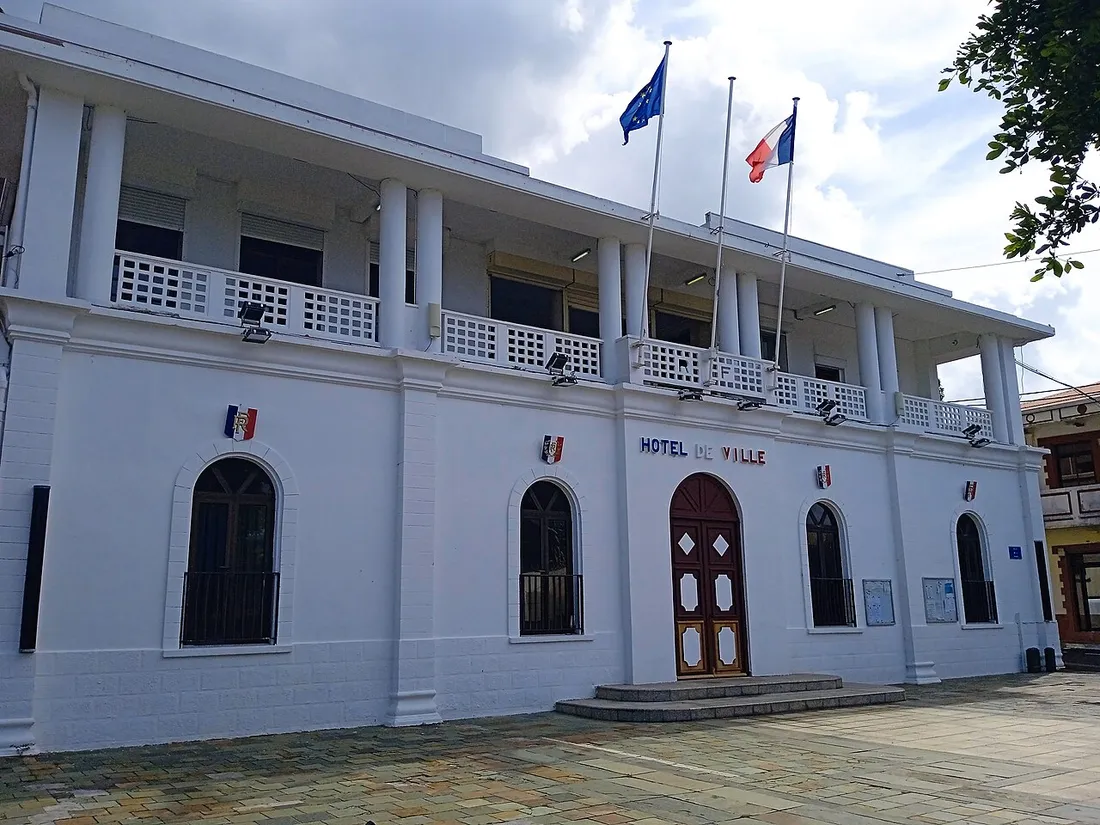
The starting point is the town hall of the municipality where the property is located — not your municipality of residence if you live elsewhere. In Guadeloupe, situations vary:
- Sainte-Anne, Le Gosier, Saint-François: the most touristic municipalities of Grande-Terre have introduced declaration with a mandatory registration number. This is where you’ll find Caravelle beach, the Saint-François marina and the road to Pointe des Châteaux.
- Deshaies, Bouillante: on the Basse-Terre side, these popular municipalities (Grande Anse beach, the Cousteau Reserve at Malendure) have historically applied the standard town-hall declaration.
- Le Moule, Pointe-à-Pitre and the other municipalities: prior declaration is mandatory for any second home.
Important: the law of 19 November 2024 (known as the Le Meur law) made registration general. Since 20 May 2026, all municipalities, Guadeloupe included, go through the national online registration service. If your town hall has not yet communicated about it, file the standard Cerfa and keep the receipt.
Step 2: fill in the Cerfa 14004 form
The Cerfa no. 14004*04 is free and downloadable from service-public.fr. Allow 10 to 15 minutes to complete it. You will need to provide:
- the declarant’s identity and contact details;
- the exact address of the rental (specify building, floor, lot number if a co-ownership);
- the number of rooms and the maximum guest capacity (number of beds);
- the planned rental periods;
- the classification level if the rental is classified (1 to 5 stars), optional.
You can submit it in person, by registered letter with acknowledgement of receipt, or online where the municipality allows it. The town hall issues you a receipt within about 15 days: this is your proof of compliance, keep it carefully.
Step 3: obtain and display your registration number
In registration municipalities, the online procedure immediately generates a 13-character number (typical format: 97128 000 123 AB for Sainte-Anne, the municipality’s INSEE code opening the sequence). This Guadeloupe rental registration number must appear on all your listings: Airbnb, Booking, Abritel, but also your direct booking page. Platforms now block publication without a number in the municipalities concerned.
Any change (capacity, periods, owner) requires a new declaration. The procedure is entirely free: beware of sites that charge €30 to €90 for it.
Change of use in the overseas departments: are you affected?
This is the question that comes up most often among the owners we support. The change of use is an additional authorisation (converting residential premises into tourist accommodation) imposed by certain municipalities under pressure. In Guadeloupe, few municipalities have activated this mechanism to date, but the November 2024 law now allows all of them to introduce it, with possible quotas of furnished rentals per neighbourhood. Our field advice:
- Check in writing with the town planning department of your town hall or the agglomeration community (Riviera du Levant for Sainte-Anne and Saint-François, CAP Excellence for Pointe-à-Pitre) before any rental investment.
- In a co-ownership, re-read the co-ownership regulations: an exclusive residential-use clause may prohibit short-term rental, declaration or not.
- If the change of use applies, allow 1 to 2 months for the file to be processed.
After registration: tourist tax, classification and taxation
Registration is only the first building block of a fully compliant rental:
- Tourist tax: you must collect it from your guests and pass it on to the municipality or the agglomeration. On the Riviera du Levant, expect between €0.65 and €1.50 per night per adult depending on the property’s classification. Platforms often collect it automatically, but passing on the tax for direct bookings remains your responsibility.
- Star classification: optional but profitable. The inspection by an accredited body costs around €150 to €250, the classification is valid for 5 years and grants the increased tax allowance: 50% under the micro-BIC scheme (€77,700 revenue ceiling) for a classified rental, versus only 30% (€15,000 ceiling) for an unclassified one since the 2025 reform.
- SIRET: the activity of furnished-rental landlord requires registration via the INPI one-stop shop, which is also free.
To put the potential into perspective: a one-bedroom flat a 5-minute walk from the beach in the Bourg of Sainte-Anne rents for €70 to €110 a night in high season, and a villa with a pool in Saint-François exceeds €250 a night between Christmas and Easter. A fully compliant registration lets you make the most of this potential with peace of mind, including direct bookings through our accommodation in Guadeloupe page.
Delegate the management: support from Hostel Toucan
Filling in a Cerfa is simple; managing arrivals via Pôle Caraïbes airport, the cleaning between two stays and guests’ questions at 10 p.m. is far less so, especially from mainland France with a 5- to 6-hour time difference. This is Hostel Toucan’s business, a concierge service specialising in the overseas departments:
- a check of your compliance (declaration, number, tourist tax) before the property goes on the market;
- marketing through direct booking with no platform fees, with free cancellation up to 7 days before arrival to reassure guests;
- WhatsApp assistance 7 days a week for your guests and for you;
- field advice to position your property, from the Cousteau Reserve to excursions to Les Saintes or Marie-Galante, thanks to our Guadeloupe guide.
Own a property in Guadeloupe? Discover our management offer on the owners page: we take over the administrative file wherever you are, even if registration has not yet been done.
FAQ
Is registering a furnished tourist rental free in Guadeloupe?
Yes. Filing the Cerfa 14004 and obtaining the registration number are free in every municipality of the archipelago. Only the star classification, which is optional, has a cost (around €150 to €250, valid for 5 years).
Do I have to register my primary residence if I rent it out during my holidays?
If you rent it out for fewer than 120 days a year, you escape the standard declaration, but you must still obtain a registration number and display it on your listings (mandatory everywhere since 20 May 2026). Beyond 120 days, the property switches to being a second home under the regulations.
How long should I allow between registration and the first rental?
Online registration with a number is immediate: you can publish your listing the same day. For a paper submission, allow up to 15 days for the receipt, and 1 to 2 months more if a change of use applies: plan ahead before the December high season.
What does an owner risk by renting without registration in Guadeloupe?
A fine of €450 for failure to declare, up to €5,000 in civil fines per property where a registration number is missing, plus a reassessment of the unremitted tourist tax and the possible delisting of your listings by the platforms.