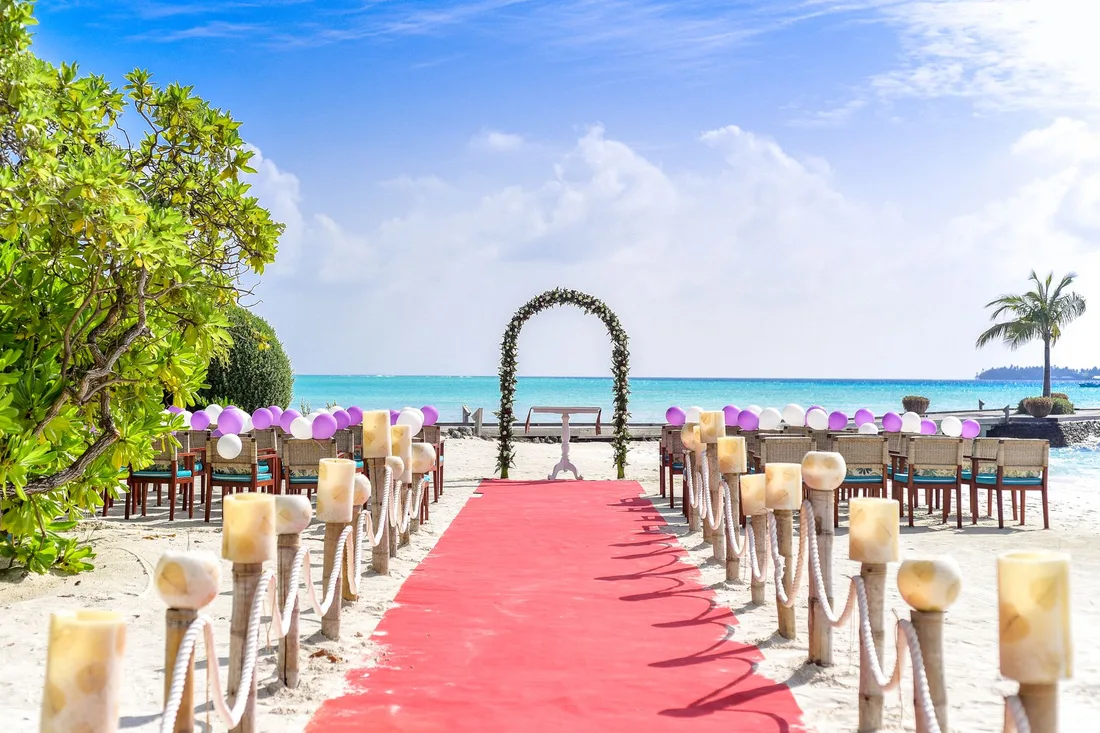
The destination wedding — marrying somewhere else and bringing your people with you — has taken over the Riviera Maya, Bali and the Caribbean. French Guiana remains entirely off the radar. Which is precisely what makes it a strong idea: nobody you know has ever attended a wedding between the Amazon and the Atlantic, and for European guests there is no passport queue, no visa and no currency to change. But a wedding-trip is not a regular wedding relocated: it is a multi-day stay to orchestrate for thirty to sixty people. Here is how it is built, with the real numbers.
Why French Guiana rather than the Caribbean
The question is unavoidable, since Martinique and Guadeloupe dominate the overseas wedding market. The Guianese case is different, and deliberately so.
What French Guiana offers
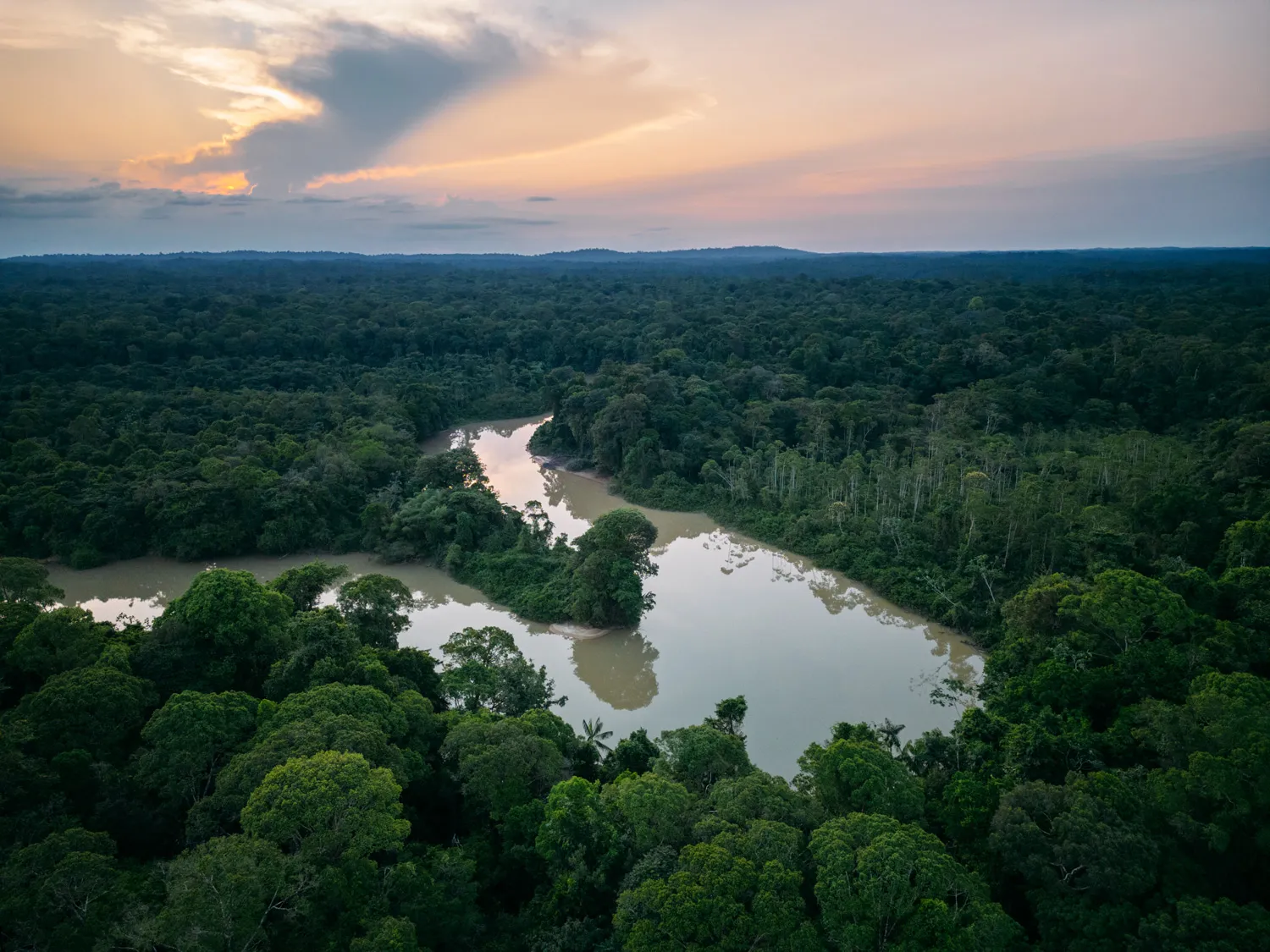
- Genuine surprise. A wedding on a Caribbean beach is beautiful, but your guests have already seen the photos. A ceremony facing primary rainforest, an evening under a carbet or a day on the Îles du Salut produce images nobody has in mind.
- A real journey, not just a beach. The Guiana Space Centre, the Kaw marshes, a pirogue trip up the Maroni, the Hmong village of Cacao: your guests come home with a story, not just a tan.
- Zero administrative friction for EU travellers. A French department: euro, French civil code, French mobile networks, valid driving licence. The one universal requirement is yellow fever vaccination.
- Lower costs on the ground. Excluding flights, local services and above all self-catering accommodation generally come in below Caribbean equivalents, because tourist demand is far lighter.
What you have to accept
- The weather. Equatorial climate: the rainy season from April to June rules out an outdoor reception. Aim for the dry season, July to late November.
- A small pool of suppliers. Caterers, photographers, DJs, equipment hire: they exist and they are good, but there are few of them, and they book early in the dry season.
- Yellow fever vaccination, mandatory to enter the territory. Every guest must plan ahead: injection at least 10 days before departure, at an approved centre.
- Limited accommodation capacity, which means booking beds before anything else.
The real budget of a wedding-trip
Let’s talk numbers, separating what the couple pays from what the guests pay. That distinction is the one most couples overlook — and the one that decides your attendance rate.
What your guests pay
- Return flights to Cayenne: from €400-550 booking early and outside school holidays, €600-750 at average fares, and up to €900-1,300 at peak. This is the decisive item: announce your date 12 to 14 months ahead so everyone can buy in the right window.
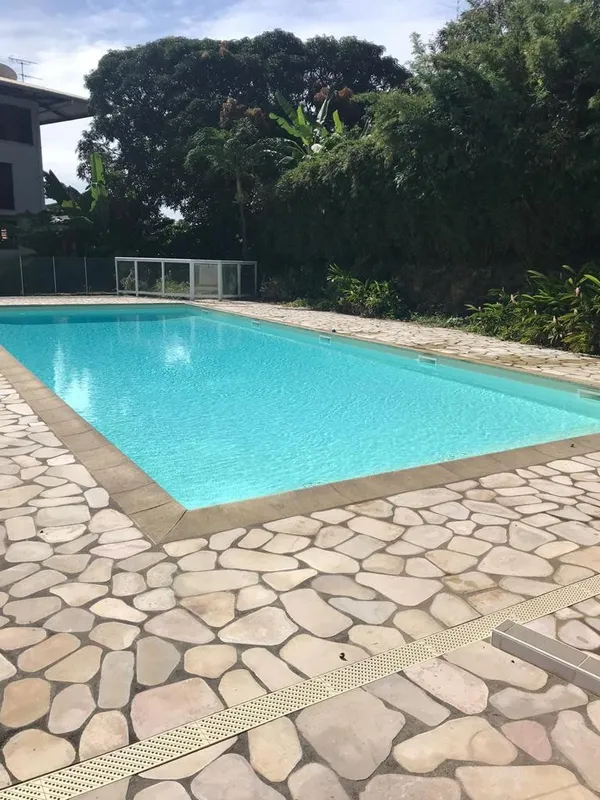
- Accommodation: in shared self-catering flats, the per-person, per-night cost drops far below an individual hotel room, particularly over a week with tapering rates.
- Car hire: essential, and best shared. Count one car per three or four guests.
- Yellow fever vaccination: at their own cost, to be planned ahead.
Our guide to flights from Paris to Cayenne covers airlines, off-peak windows and buying strategy — the link to send with your save-the-date.
What the couple pays
The usual items: venue and reception logistics, catering, drinks, photographer, sound, decoration, guest transport between accommodation and venue. Two local specifics weigh on the budget:
- Covered fallback, non-negotiable: marquee, carbet or indoor room. Budget it from the start, not as an option.
- Shuttles. Inland roads are unlit and there is no night transport. Minibuses or designated drivers are a budget line of their own.
One item gets substantially lighter, though: accommodation for the couple and close family, if you use grouped self-catering rentals rather than a block of hotel rooms.
The programme: five days that make the trip
A successful destination wedding is not one evening surrounded by four empty days. It is a narrative thread. Here is the structure that works best.
D-2: arrivals and recovery
Flights from Paris-Orly land at Félix-Éboué, 15-20 minutes from Cayenne and Rémire-Montjoly. After 8.5 hours in the air and 5 to 6 hours of time difference, nobody is available. Keep it simple: key handover, basic groceries already in the flats, and an informal first dinner. This is also when you hand out the stay booklet: addresses, numbers, shuttle plan.
D-1: the discovery day
One collective outing, not three. Two options that work with a large group:
- The Îles du Salut for the day from Kourou: around 1h15 crossing, Île Royale, penal colony ruins, free-roaming monkeys and agoutis, lunch on site. Spectacular and unifying.
- A visit to the Guiana Space Centre, free with prior registration and genuinely impressive, even for those with no interest in space.
The wedding day
Near the equator, night falls fast and early, around 6.30pm all year round. That structures the day: ceremony in late afternoon for the low light, photos straight after, reception once darkness falls. Provide mosquito protection for guests from dusk, especially in forest settings — a detail that saves an evening.
D+1: brunch, then breathing space
A late brunch the next day at the couple’s flat or on a shared terrace. This is the great advantage of self-catering over hotels: everyone gathers without booking anything.
D+2 onwards: French Guiana à la carte
Let guests organise in small groups, with a list of suggestions: the Kaw marshes and their caiman safari, a pirogue day on the Comté river, the road to Cacao and its Sunday Hmong market, the beaches and trails of Rémire-Montjoly, or a trip up the Maroni from Saint-Laurent. Our selection of things to do in French Guiana makes a ready-made menu for your wedding website.
And for the couple, the sequel is obvious: the honeymoon starts on the spot, with no second flight.