Saying yes between the ocean and the Amazon rainforest, on a beach in Rémire-Montjoly or under the coconut palms of the Îles du Salut: French Guiana offers a wedding setting few French destinations can match. And since this is a French department, there is nothing exotic about the paperwork: a civil marriage here works exactly as it does in Lyon or Nantes, under the same civil code and producing the same family record book. What remains is the real difficulty, the one nobody anticipates: housing twenty, forty or sixty guests flying in from Europe, in a territory with limited hotel capacity. Here is how to organise the whole thing, from banns to wedding night.
The paperwork: a 100% French marriage
French Guiana is an overseas department and region. Your wedding will be conducted by the mayor or a deputy, in French, and will have exactly the same effect as one held in mainland France. No additional recognition or transcription is needed.
The residency condition, the real sticking point
This is obstacle number one for a European couple dreaming of a ceremony in Cayenne. A marriage is celebrated in the commune where one of the two spouses-to-be, or one of their parents, has their domicile or residence. That residence must be continuous and at least one month long at the date the banns are published, and it must be evidenced.
In practice, three situations:
- You live in French Guiana (relocation, a post at the space centre, hospital, gendarmerie, education): no problem, you marry in your commune.
- One of your parents lives there: you can marry in their commune, even if you live in Europe. This is the most common route for Guianese families settled elsewhere.
- Nobody lives there: you must establish genuine residence for at least a month before the banns are published, with solid evidence (lease or accommodation certificate, bills, rent receipts). A holiday booking is not enough.
This rule explains why many couples opt for a two-stage formula: civil marriage at home, then a symbolic ceremony and celebration in French Guiana. The second option carries no residency constraint and leaves complete freedom over venue and format.
The file to submit at the town hall
It is filed at the town hall of the commune of celebration, generally two to three months ahead. You will need:
- Proof of identity for each spouse-to-be.
- A birth certificate less than three months old (six months if issued abroad).
- Recent proof of domicile or residence.
- The list of witnesses (minimum two, maximum four) with copies of their ID.
- Where applicable, the notary’s certificate if you are signing a marriage contract.
- For a foreign spouse: certificate of custom and of celibacy, issued by the consulate.
The town hall then holds an interview with the couple, followed by publication of the banns, displayed for ten days before the ceremony. Do not cut your date fine: between filing, interview and banns, allow a comfortable margin, especially as smaller Guianese communes have limited Saturday ceremony slots.
Lead times from abroad
Civil status documents, exchanges with the town hall and document delivery all take longer than you expect. Add the 5-hour time difference in winter and 6 in summer with Paris, which narrows the useful calling window to the European morning. Start your paperwork six months ahead, not three.
Where to celebrate: the finest settings
Your choice of venue depends first on your format: a civil ceremony at the town hall followed by a reception, or a fully staged symbolic ceremony.
The Cayenne and Rémire-Montjoly coast
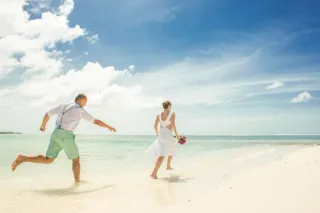
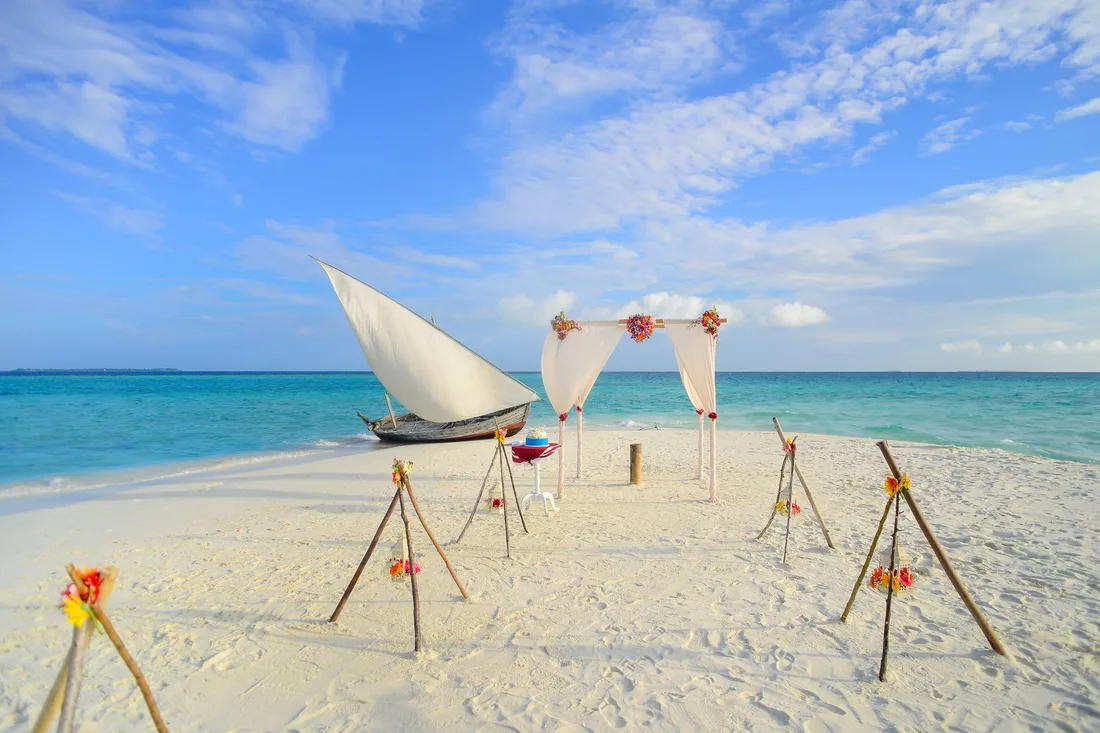
By far the most practical choice. Montjoly beach, its coconut palms and pale sand offer a sunset backdrop that is hard to beat, 15 minutes from central Cayenne and 20 from Félix-Éboué airport. The decisive advantage: your suppliers, guests and accommodation are all close by. Check the tide times, which completely change the look of the beach, and bear in mind that leatherback turtle nesting, between April and July, requires respecting marked zones and avoiding direct lighting on the sand.
The Îles du Salut, the spectacular option
A symbolic ceremony on Île Royale, facing the Atlantic, with the ruins of the penal colony and free-roaming monkeys, leaves an unforgettable memory. But the logistics are demanding: a catamaran crossing from Kourou (around 1h15), very limited accommodation on the island, and total dependence on weather and shuttle timetables. Book the entire chain a year ahead, and plan a mainland fallback. It is a beautiful setting for an intimate ceremony of 20 to 30 people, rarely for 80.
Carbets, creeks and inland estates
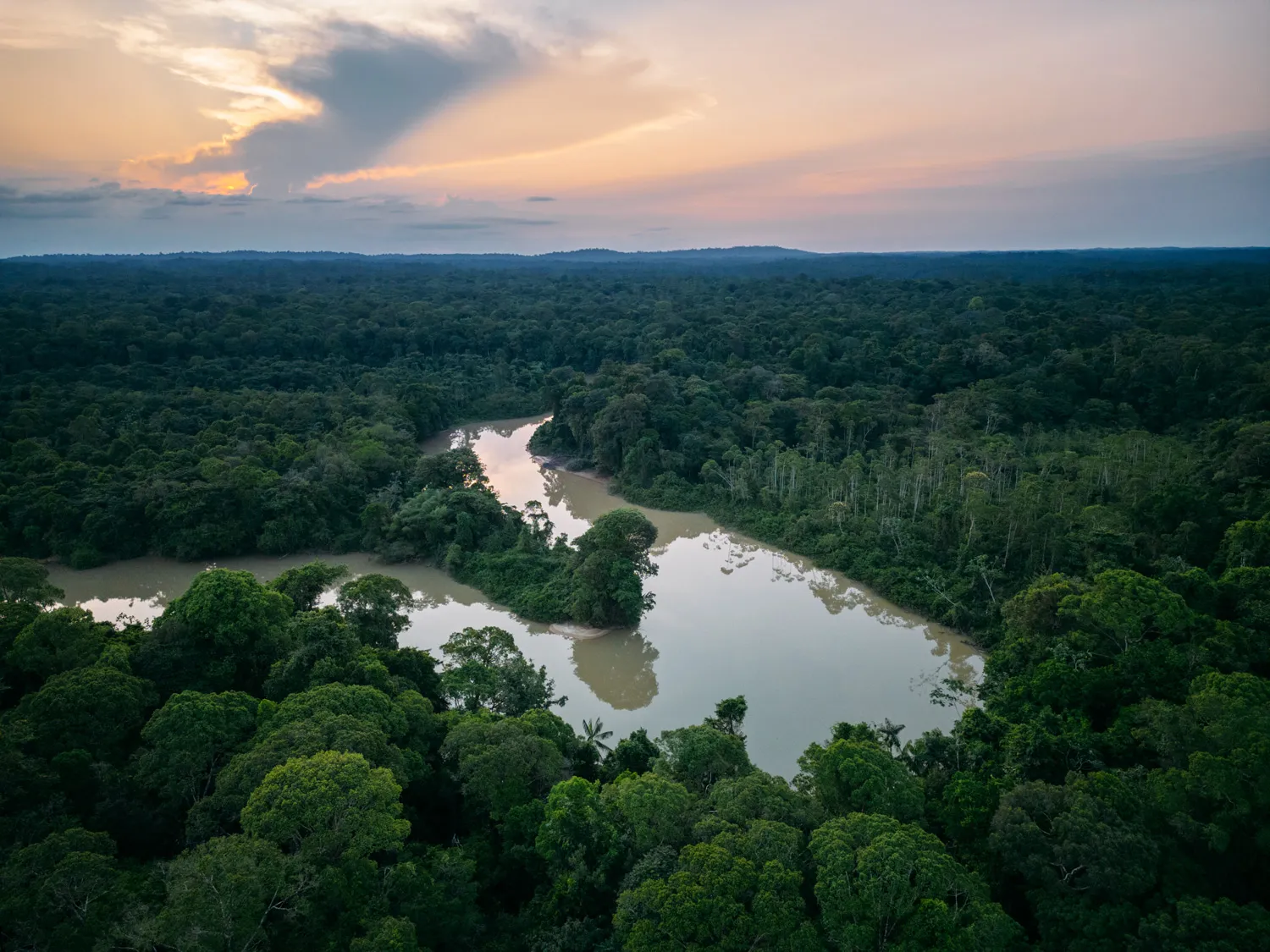
Around Roura, Montsinéry-Tonnegrande, Macouria or along the road to Cacao, several estates and carbets host receptions in the heart of nature: freshwater pools, gallery forest, tables under a covered carbet. The atmosphere is incomparable and the budget often gentler than a coastal venue. In exchange: mosquitoes at dusk (bring protection for guests), unlit roads at night, and shuttles to organise for everyone.
Kourou and the space coast
Kourou combines beaches, hotels and proximity to the Guiana Space Centre. A wedding timed during a launch campaign adds a rare dimension — but also maximum pressure on accommodation and rental cars. If your date coincides with a launch, lock everything down very early.
Wedding season: when to marry
The Guianese equatorial climate has neither winter nor heatwaves, but it does have rain, and that changes everything for an outdoor event.
The main dry season, July to late November
This is the window to aim for. Clear skies most of the time, short showers, steady heat around 30 °C, walkable ground. August, September and October concentrate most outdoor weddings. It is also when European families can take leave, which makes guest travel simpler.
The “little summer of March”
A relative lull often settles in March, between the December-January rains and the heavy rains of April to June. It is a secondary window, riskier but workable, and often cheaper on flights than mid-summer.
Periods to avoid
- April to early July: the heart of the rainy season, with the highest rainfall of the year. An outdoor reception is a gamble.
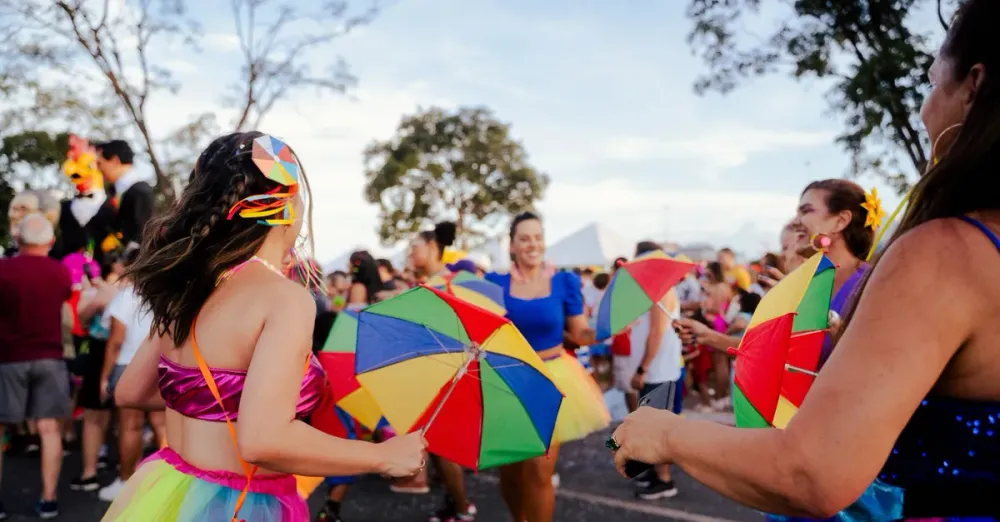
- January to February-March: carnival season. Not a deal-breaker, but weekends are taken over by parades and masked balls, venues book early, and the whole city is turned towards carnival.
- The end-of-year holidays: flights at their most expensive, availability at its lowest.
Whatever the season, always plan a covered option: carbet, marquee or indoor room. Near the equator, a twenty-minute downpour can arrive under a blue sky, and night falls early and fast, around 6.30pm all year round.