French Guiana has one quirk that often surprises travellers: the yellow fever vaccine is mandatory there. The good news is that it’s nothing insurmountable. With a little planning, you can sort out these formalities stress-free and set off with peace of mind to explore the Amazon rainforest, the rivers and the turtle-nesting beaches. Here, for 2026, is everything you need to know: the mandatory vaccine, the other recommended precautions, mosquito protection, entry requirements and the health kit to pack.
⚠️ Information provided for guidance only. Travel health guidelines change: always check the current official requirements (ARS French Guiana, Institut Pasteur, French Ministry of Health) and consult a doctor or an international vaccination centre before you leave. Only they can tailor the recommendations to your personal situation.
Is the yellow fever vaccine mandatory in French Guiana?
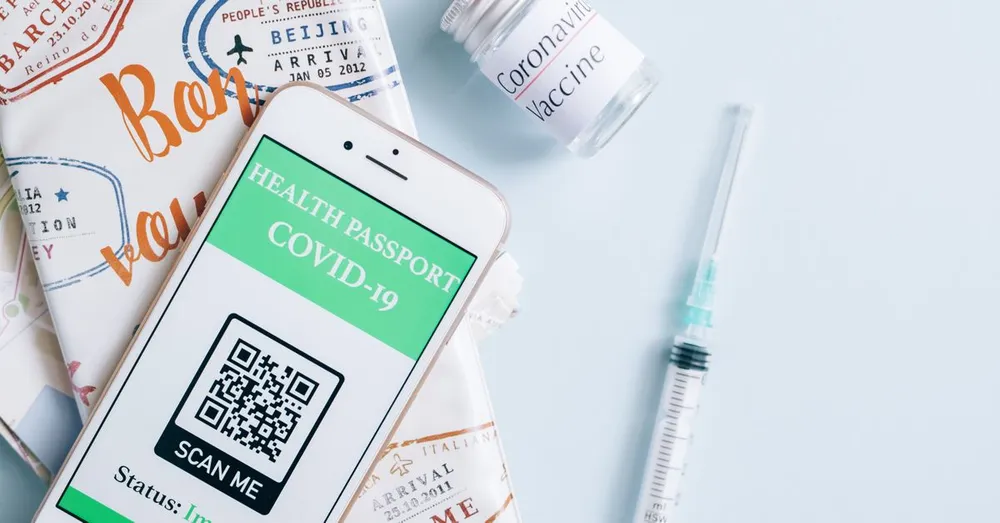
Yes. Since 1967, entry into French Guiana has been conditional on presenting a valid yellow fever (amaril) vaccination certificate, or a medical contraindication certificate issued by an authorised doctor. The requirement applies to anyone over 1 year of age, residents and tourists alike, regardless of where you are coming from.
Yellow fever is a serious viral disease transmitted by mosquitoes and present in the Amazon region. This requirement is therefore not a mere administrative formality: it genuinely protects your health and limits the spread of the virus. It is also the only vaccination required under the International Health Regulations to enter the territory.
In practice, you may be asked for your certificate at boarding or on arrival. So it’s best to have it sorted out well before you pack your bags.
How far in advance should you get vaccinated?
The vaccination must be carried out at an approved international vaccination centre (often attached to a hospital, the Institut Pasteur or a travel medicine department), at least 10 days before departure. This lead time corresponds to the period needed for the vaccine to become effective and for the certificate to be valid.
A few practical tips:
- Plan well ahead. Approved centres sometimes have appointment waiting times of several weeks, especially as school holidays approach.
- Book your appointment early so you can combine other vaccines or boosters in a single visit if needed.
- Keep your international certificate safe (the famous yellow card): it is the document that counts.
If you’re not yet sure when to come, our article on when to visit French Guiana helps you choose the best season and therefore schedule your vaccination appointment at the right time.
How long is the certificate valid?
Since 1 February 2016, the international yellow fever vaccination certificate has been valid for life (under the International Health Regulations). In other words, a single earlier vaccination (dating back more than 10 days) is in principle enough for the rest of your life.
If you’ve already been vaccinated for a previous trip to a tropical area, you are probably in order: dig out your yellow card and check that the entry is properly recorded. If in doubt, or in certain specific situations (immunocompromised people, vaccinations dating back a very long time, etc.), seek the advice of a healthcare professional: only they can confirm whether a booster is relevant in your case.
Are there any exceptions?
Yes, a few special cases exist:
- Short airport transit: for a transit of less than 12 hours without leaving the airport, the vaccination is generally not required.
- Children under 1 year old: they are not subject to the requirement.
- Medical contraindication: some people (immunosuppression, severe allergy, pregnancy depending on the case, etc.) may be unable to receive the vaccine. In that case, only an authorised doctor can issue a contraindication certificate, which must be presented in place of the vaccination certificate.
These situations always come down to an individual medical assessment. Never decide on your own that you are exempt: have your case validated by an international vaccination centre.

What other vaccines and precautions are recommended?
Beyond yellow fever (the only mandatory one), several vaccinations and precautions are recommended for a stay in French Guiana. They depend on your itinerary, the length of your stay and your state of health. Here are the key pointers, to be confirmed without fail with your doctor:
- Up-to-date routine vaccines: remember to check your diphtheria-tetanus-polio (DTP), and depending on the recommendations, hepatitis A and B, as well as any other vaccines on the immunisation schedule.
- Malaria: a risk exists mainly in the interior of the territory (forested areas, rivers, remote sites, gold panning). Depending on your precise destination, preventive medication may be advised. This is exactly the kind of decision to be made with a professional, based on your exact itinerary.
- Mosquito-borne diseases: dengue, zika and chikungunya circulate in the region. There is no simple preventive treatment for the general public: the best protection remains avoiding bites (see the next section).
For details of the zones and activities, our French Guiana travel guide gives you an overview of the regions, from the coast to the deep forest.
Important: we give no dosage or medication protocol here. The names and treatment regimens must be prescribed and explained by a doctor, according to your profile.
Protecting yourself well from mosquitoes
In French Guiana, mosquito protection is your best everyday health ally. Mosquitoes carry several diseases, and they bite both during the day (dengue, zika, chikungunya) and at night (malaria). A few simple habits greatly reduce the risk:
- Apply a suitable skin repellent on exposed areas, and reapply throughout the day.
- Wear covering, light-coloured clothing (long sleeves, trousers), especially in the forest and in the evening.
- Sleep under a mosquito net, ideally treated, in poorly protected accommodation or in interior areas.
- Favour accommodation with mosquito screens on the windows, ventilation or air conditioning.
- Eliminate standing water around you (saucers, containers): that’s where mosquitoes breed.
These measures apply to everyone, vaccinated or not, because no vaccine protects against dengue, zika or chikungunya on a daily basis.
Entry requirements: ID and travel documents
On the administrative side, travelling to French Guiana remains simple for French citizens: French Guiana is a French territory (an overseas department and region). So you don’t need a passport or a visa if you are a French national.
A few points to keep in mind:
- For French travellers: a valid national identity card is enough to board the plane. A valid passport also works.
- Check the validity of your documents well before departure: an expired ID can block boarding.
- Travellers of other nationalities: entry rules may differ (passport, or even a visa). Check the requirements for your nationality with the relevant authorities.
- Minors travelling without their parents: remember the exit-from-territory authorisation where applicable, along with an ID document.
And in all cases, don’t forget the key health document: your international yellow fever vaccination certificate, to keep with your travel papers.
What to put in your health kit?
A well-planned health kit will save you a lot of hassle once you’re there, especially in remote areas. Adapt it to your stay and to the advice of your doctor or pharmacist:
- Your health papers: international vaccination certificate (yellow card), health insurance card, insurance or assistance certificate.
- Mosquito protection: skin repellent, possibly a travel mosquito net.
- Sun protection: high-factor cream, hat, sunglasses.
- Personal treatments: your usual medication in sufficient quantity, with the prescriptions.
- Basic first-aid kit: something to relieve common ailments, plasters, disinfectant, rehydration.
- Hydration: bring something to drink safe water, especially on excursions.
Also remember to take out travel insurance or assistance covering medical costs and possible repatriation, particularly useful if you plan outings in the forest or on the rivers.
Plan your stay with complete peace of mind
Once your health formalities are sorted and your documents checked, all that’s left is to enjoy French Guiana: the Amazon rainforest, the rivers, exceptional wildlife and the nesting beaches of leatherback turtles. Book your accommodation in advance, especially in high season, so you can set off with a light heart.
At Hostel Toucan, we welcome you in comfortable, well-located accommodation to explore the region with complete peace of mind. Discover our accommodation in French Guiana and all of our accommodation, then fine-tune your plans with our French Guiana travel guide and our advice on when to visit French Guiana.
👉 Ready to experience the Guianese adventure? Book your stay with Hostel Toucan now and set off well prepared, with complete peace of mind.