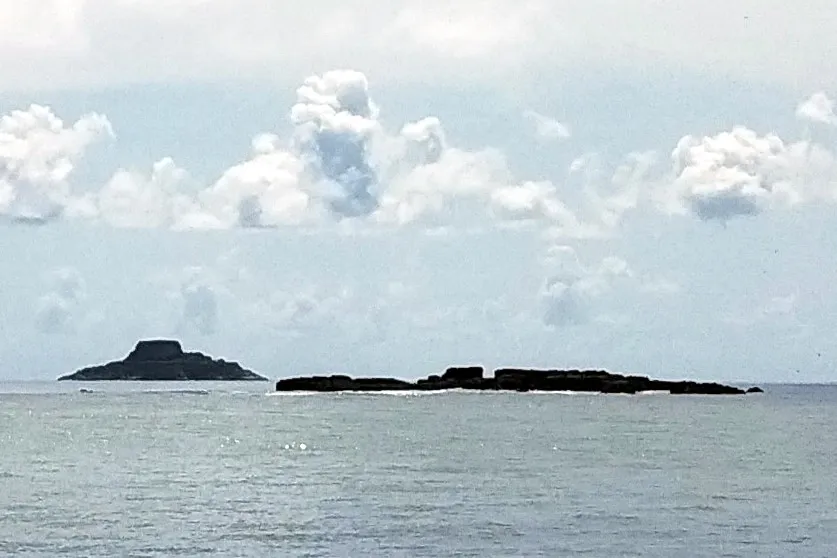
Off the mouth of the Approuague, some thirty kilometres from Régina, a black rocky peak rises out of the muddy Atlantic. From afar it looks like a stooped, helmeted figure: old sailors saw in it a connétable, that great officer crowned with a helm. Today it is the heart of the Grand Connétable Island nature reserve, French Guiana’s only marine reserve and one of the most spectacular seabird sanctuaries in the entire tropical Atlantic. Living here, I learned that few Guianese themselves have had the chance to see it up close: it has to be earned, and that is what makes it unforgettable.
Why Grand Connétable is unique in French Guiana
French Guiana is a French overseas department (DROM), more than 95% covered by Amazon rainforest. People come for the rivers, the leatherback turtles, the Kaw marshes or the Ariane 6 launches from the Guiana Space Centre. But it is easy to forget that this territory has a 350 km coastline, and a single reserve dedicated to the sea.
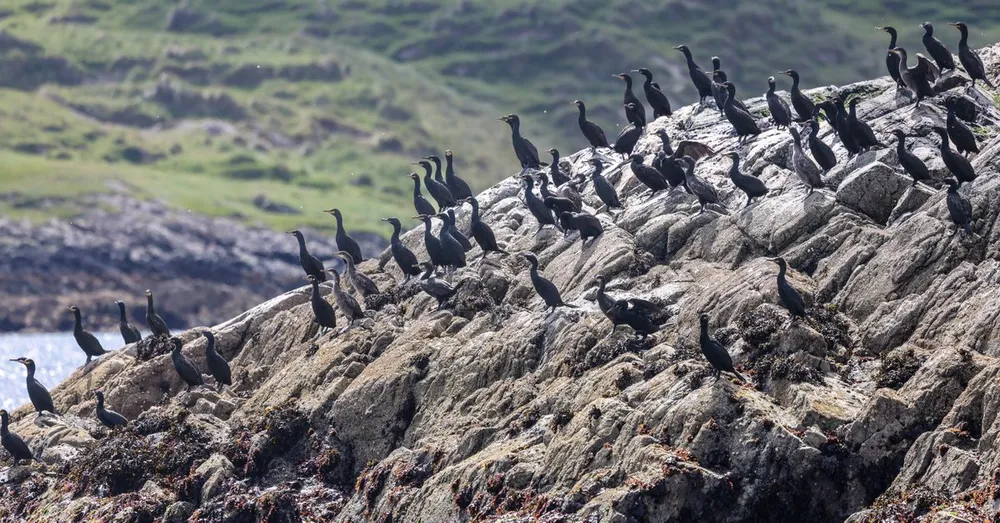
Created in 1992, the Grand Connétable reserve covers nearly 7,800 hectares around two rocky islets: the Grand and the Petit Connétable. What makes it exceptional is the improbable meeting between waters laden with sediment from the Amazon and the Approuague, rich in nutrients, and an isolated rocky reef. The result: a giant larder that draws tens of thousands of seabirds, in a region where this kind of habitat is exceedingly rare.
One of the largest seabird colonies in the area
The numbers are dizzying when you discover them on site. At the height of the breeding season, the reserve hosts several tens of thousands of nesting pairs. Among the emblematic species:
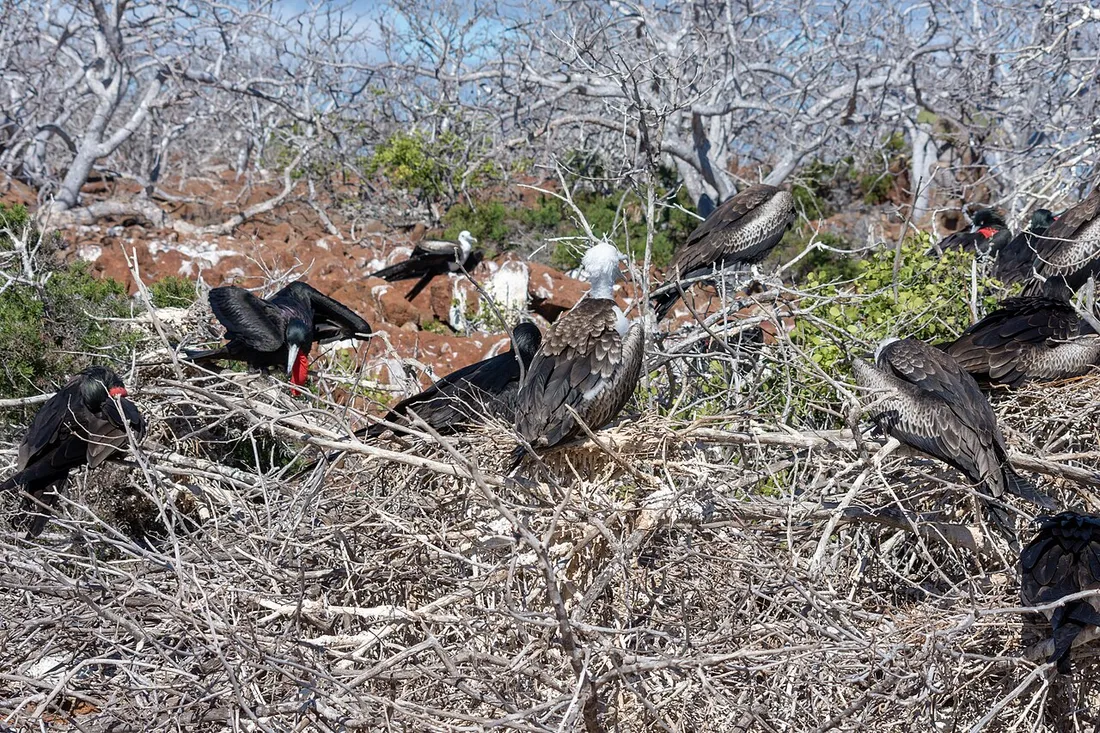
- The magnificent frigatebird (Fregata magnificens), the star of the site, recognisable by the bright red gular sac that males inflate like a balloon to attract a mate.
- The royal tern and the Cayenne tern, which form noisy white carpets on the ledges.
- The brown noddy and several species of gulls.
- Seasonal passages of shearwaters, boobies and skuas.
Grand Connétable is the only breeding site for several of these species across the entire Guianas shelf. Watching a cloud of frigatebirds with their angular wings wheel overhead, riding the currents like black kites, remains one of the most powerful images French Guiana has ever given me.
Understanding the frigatebirds from offshore Régina
You do not approach Grand Connétable like a beach. Landing is strictly regulated and reserved for scientists and the reserve’s managers. The general public observes it from the boat, offshore, and that is precisely where the magic of the experience lies.
Trips generally leave from the Régina landing stage, a small town set on the Approuague, about 110 km from Cayenne by road (allow 1.5 to 2 hours by car, a car being essential in French Guiana). From Régina, the boat heads down the river and reaches the mouth before making for the island.
Frigatebird behaviour, explained
The frigatebird is a pirate. Unable to dive because its plumage is not waterproof, it practises “kleptoparasitism”: it harasses terns and boobies in flight until they disgorge their fish, which it snatches in mid-air. From the deck, you witness these spectacular aerial chases. The males, for their part, display on the rocks with their scarlet throats inflated. With a wingspan that can exceed 2.3 m for a featherlight body, the frigatebird glides for hours without a single wingbeat: a living glider.
How to organise your trip in practice
Here is what you need to know before booking, drawn from several guided outings along the east coast.
When to go
- Best time: the dry season, from mid-July to mid-November. The sea is easier to handle, the sky is clear, and the breeding season is in full swing from March to August.
- In the rainy season, trips are more uncertain: swell, reduced visibility, and access to the river sometimes complicated.
How to book the sea trip
As access to the reserve is regulated, observation trips are offered by a limited number of approved operators, often working with naturalist associations or ecotourism providers. A few concrete pointers:
- Duration: allow a full day, that is 6 to 8 hours round trip including the navigation on the Approuague and the observation offshore.
- Budget: expect generally between €90 and €150 per person depending on the operator and the size of the group.
- Booking: essential in advance, as places are scarce. Trips are cancelled or postponed when the sea is rough.
What to bring
- Light clothing, a windbreaker and really something to protect you from the sun (hat, sunglasses, SPF 50 cream).
- Plenty of water, snacks, and seasickness medication: the swell at the river mouth can take you by surprise.
- Binoculars and a camera with a good zoom, a waterproof bag.
- Shoes that can get wet for boarding at the landing stage.
Note: the yellow fever vaccine is mandatory to enter French Guiana, so plan ahead before departure. The territory uses the euro, French and Creole are spoken, the dialling code is +594, and the time difference with Paris is -5h in winter, -6h in summer.
Combining Grand Connétable with the east coast
Régina and the Approuague deserve more than a single day. The east coast of French Guiana is less visited than the Cayenne–Kourou–Saint-Laurent axis, and therein lies all its charm.
- The Kaw marshes, at Roura, less than an hour away: black caimans, scarlet ibises and nights in a floating carbet.
- The Nouragues reserve, accessible from this area for primary forest enthusiasts.
- The town of Régina itself, an authentic river stop far from mass tourism.
- Heading back towards the capital: the Cayenne market, the Place des Palmistes and the Hmong village of Cacao at Roura.
For anyone wanting to grasp the full richness of the territory, our complete guide to French Guiana details itineraries, seasons and must-sees, from the Salvation Islands to Awala-Yalimapo.
Planning your stay with Hostel Toucan
Exploring Grand Connétable takes organisation: an early-morning trip from Régina is far better prepared from a comfortable base on the Cayenne – Rémire-Montjoly – Matoury axis, from which you can reach the east coast stress-free.
At Hostel Toucan, a concierge service and specialist in seasonal rentals in French Guiana, we offer accommodation designed for travellers who genuinely want to discover the territory. By booking directly, you enjoy:
- Direct booking with no platform fees: a better price, with no commission.
- Free cancellation up to 7 days before arrival, ideal when a sea trip depends on the weather.
- WhatsApp assistance 7 days a week, for on-the-ground advice, to connect you with the right operators and adjust your programme in real time.
Discover our accommodation in French Guiana to set up your stay as close as possible to your love of nature. And if you own a property in the territory, our concierge service for owners takes care of everything, from welcoming guests to optimising bookings.
Grand Connétable Island is no easy postcard: it is a naturalist’s experience, raw and alive, where you discover the other, maritime face of Amazonia. From offshore Régina, facing the cloud of frigatebirds, you understand why French Guiana jealously guards this treasure. Prepare for it well, and it will repay you a hundredfold.
FAQ
Can you land on Grand Connétable Island?
No. As the island is the heart of a nature reserve, landing is forbidden to the public and reserved for scientists and managers. Seabird observation is done from the boat, offshore, which is more than enough to enjoy the spectacle of the frigatebirds and terns.
What is the best time to observe the frigatebirds?
The dry season, from mid-July to mid-November, offers the calmest sea and the clearest sky. The breeding season, from March to August, is also very favourable as the colonies are then at their most active on the rocks.
How do you get to the departure point for the trips?
Trips generally leave from the Régina landing stage, about 110 km from Cayenne, that is 1.5 to 2 hours by road. A car is essential in French Guiana. From Régina, the boat heads down the Approuague to the mouth before reaching the island.
How much does an observation trip to Grand Connétable cost?
Expect generally between €90 and €150 per person for a full day of 6 to 8 hours, depending on the approved operator and the size of the group. Booking in advance is essential as places are scarce and trips depend on the weather.