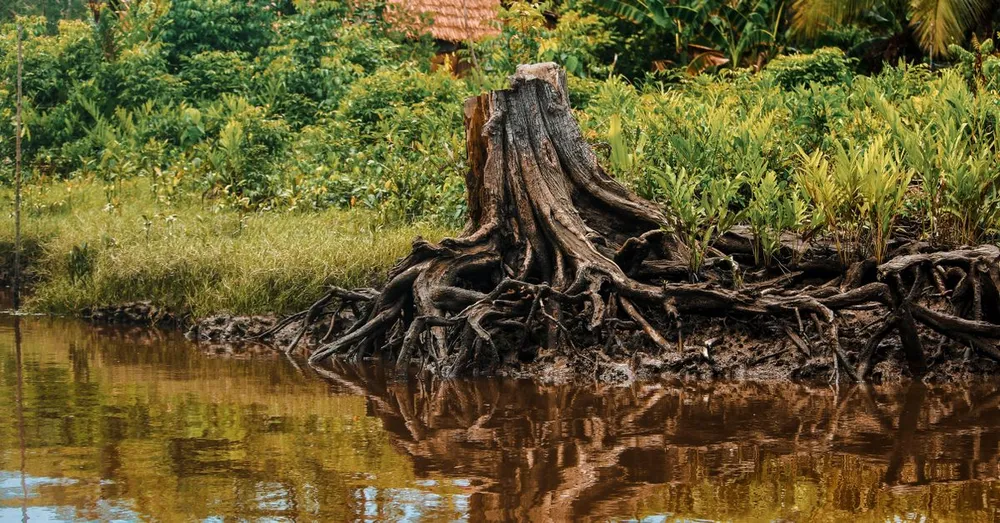
Some places in French Guiana stay with you for life. The Nouragues Reserve is one of them. As you head up the Arataye River by pirogue, cut the engines and hear, for the first time, the roar of red howler monkeys in the canopy, you understand that you’ve just entered one of the last great sanctuaries of intact tropical forest on Earth. It’s a territory where nature still sets the rules, where scientists from around the world come to unlock the secrets of the Amazon, and where humans remain passing visitors. As a French Guiana resident and a nature lover, I wanted to share everything you need to know before attempting the adventure: what to expect, how to get there, and why this place remains one of the most extraordinary in the department.
What is the Nouragues Reserve?
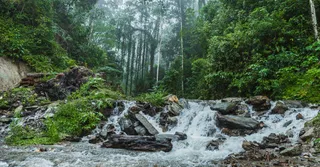
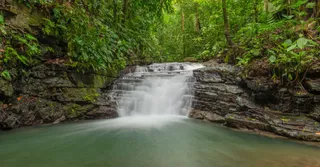
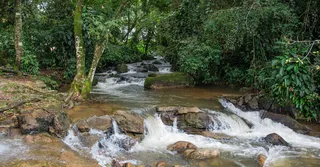
Created in 1995, the Nouragues national nature reserve covers nearly 100,000 hectares of primary rainforest, in the heart of French Guiana, across the communes of Régina and Roura, east of the Approuague River. It’s one of the largest tropical forest reserves in France and the European Union. Here, there are no roads, no villages, no phone network: only a forest that stretches as far as the eye can see, crossed by black rivers and dotted with spectacular rocky outcrops.
The territory takes its name from the Nouragues, an Amerindian people who lived here before disappearing in the 18th century; archaeological traces (grinding stones, remains) can still be found within the reserve. Today, the reserve is co-managed by the GEPOG association and the National Forestry Office, under the aegis of the State. This historical dimension adds a special depth to the experience.
A reserve dedicated above all to science
Unlike the Salvation Islands or the Kaw marshes, the Nouragues are not a conventional tourist destination. What truly sets them apart from other protected areas in French Guiana is their scientific mission. The reserve is home to two CNRS research stations:
- The Inselberg station, at the foot of the famous rocky sugarloaf, dedicated to the study of the canopy and biodiversity.
- The Pararé station, on the banks of the Arataye (a tributary of the Approuague), more focused on the study of rivers and large mammals.
Since the late 1980s, hundreds of researchers from around the world have carried out programs of international scope there: canopy ecology, forest dynamics, animal behavior, tropical climatology, bats, ants. The reserve even has a flux tower and facilities for studying the canopy, that vegetal dome so hard to reach which holds most of the forest’s life. It’s in places like this that part of our understanding of the role of tropical forests in the global climate is built: to visit the Nouragues is, above all, to step into an open-air laboratory.
The inselberg: the geological jewel of the Nouragues
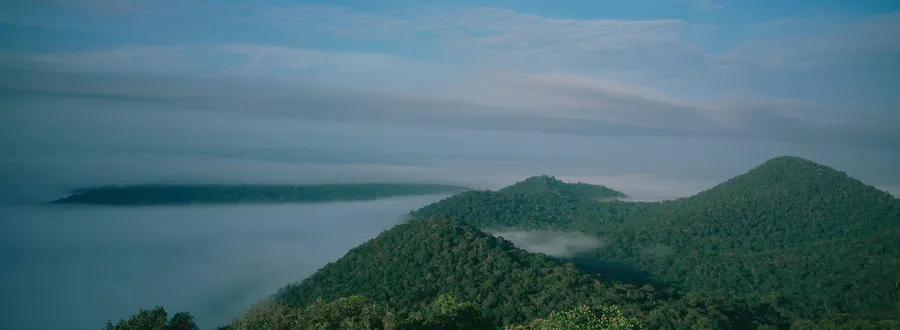
If there’s one image to take away, it’s that of the Roche Nouragues inselberg. This immense granite dome rises from the forest like a frozen wave of stone, topping out at more than 400 meters (about 411 m). The word, of German origin, literally means “island mountain”: an isolated relief that towers over the forest plain.
Reaching its summit after several hours of walking remains a powerful moment. From up there, the view embraces an ocean of deep green canopy, without the slightest human trace all the way to the horizon. At daybreak, mist clings to the trees and the spectacle becomes surreal. On the rock itself grows a unique rupicolous vegetation, adapted to drought and sun, completely different from that of the undergrowth.
Biodiversity among the richest in the world
The Nouragues concentrate a density of species hard to imagine. The figures are dizzying:
- Flora: more than 1,800 plant species identified, including century-old trees exceeding 40 meters in height.
- Mammals: jaguar, puma, tapir, peccaries, howler monkeys, sakis, spider monkeys, sloths.
- Birds: around 400 species recorded (nearly two-thirds of French Guiana’s avifauna), including the orange cock-of-the-rock, the harpy eagle and numerous toucans.
- Reptiles and amphibians: caimans, dendrobates (the famous colorful frogs), snakes.
- Insects: a staggering diversity of ants, electric-blue morpho butterflies and beetles, many of which remain to be described.
It’s one of the rare places where you have a real chance of hearing — or even glimpsing — South America’s large wildlife in a totally preserved environment.
How do you access the Nouragues Reserve?
That’s the big question, and the answer requires preparation. The reserve is closed to mass tourism and free individual visits: you don’t enter it as you would a park, access is strictly regulated to protect the site and the research. Entry requires prior authorization issued by the manager.
Access routes
There’s neither road nor track. The itinerary generally combines several stages from Cayenne:
- Road: drive to the dégrad (landing) on the Approuague, near Régina, about 2h30–3h from Cayenne via the RN2. A car is essential in French Guiana.
- Pirogue: heading up the Approuague River then the Arataye, several hours of navigation deep in the forest. That’s already an experience in itself.
- Walking: forest trails to reach the stations and the inselberg.
Allow a full day of travel to reach the stations, in the favorable season. Depending on conditions, some access is also organized by helicopter for scientific missions, but that remains exceptional.
How to organize your visit
For the general public, several options exist:
- Guided stays: approved operators and the managing association occasionally organize very low-impact ecotourism stays, often linked to educational or citizen-science programs.
- Volunteering and scientific missions: students and enthusiasts can sometimes join field campaigns.
- Guided tours of the periphery: while access to the core of the reserve is restricted, excursions on the Approuague and in the surrounding forest already offer a striking foretaste.
My advice: contact the reserve manager in advance and ask about open slots. Places are scarce and the logistics need to be prepared weeks, even months ahead.
When is the best time to go?
In French Guiana, everything depends on the rains. The dry season runs from mid-July to mid-November: by far the best window for the Nouragues. Rivers are navigable, trails less muddy, and wildlife observation more comfortable. In the middle of the rainy season, water levels change navigation and some access becomes complicated.
Also keep the time difference in mind if you’re coming from mainland France: -5h in winter, -6h in summer compared to Paris.
Preparing your stay: the essentials to know
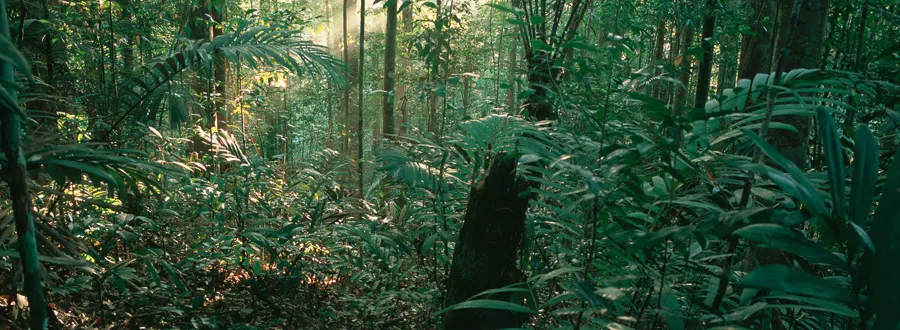
A primary rainforest stay can’t be improvised. Here’s our checklist:
- Yellow fever vaccine: mandatory to enter French Guiana.
- Anti-mosquito protection: strong repellent, long clothing, antimalarial treatment as advised by a doctor.
- Hammock and mosquito net: forest lodging is in a carbet, French Guiana style.
- Boots and quick-drying clothes: humidity is constant.
- Headlamp, water bottle, waterproof bags for sensitive gear.
- Good physical condition: walking in the undergrowth and climbing the inselberg are demanding.
Don’t forget there’s no network on site: let your loved ones know before you leave. Since French Guiana is a French overseas region, no passport or currency exchange: you live in euros, in French (alongside Creole, Bushinengé and Amerindian languages).
How much time to plan and what to combine?
A stay in the Nouragues deserves at least 3 to 4 days on site, the time to absorb the remoteness and the rhythm of the forest. But the adventure fits into a wider French Guiana journey. Before or after, take time to discover the department’s must-sees:
- The Kaw marshes at sunset, another biodiversity jewel reachable by pirogue, kingdom of caimans and night birds.
- A trip up the Maroni River by pirogue from Saint-Laurent-du-Maroni on the penal-colony side.
- The Guiana Space Centre in Kourou (free visit, and if you’re lucky an Ariane 6 or Vega launch).
- The Salvation Islands and their history-laden penal colony, or the Hmong village of Cacao and its Sunday market.
- The Cayenne market and the Place des Palmistes for the Creole atmosphere.
This chain linking primary rainforest, cutting-edge science and heritage is what makes a journey to French Guiana so singular. To build a coherent itinerary, our complete guide to French Guiana details seasons, distances and must-see stages.
Expert tips for experiencing the French Guiana rainforest
After several seasons spent roaming the interior, here are the recommendations that make the difference:
- Book early: places on guided stays in the reserve are rare and go months in advance.
- Travel light but well equipped: hammock with mosquito net, quick-drying clothes, high-cut walking shoes and a headlamp are essential.
- Accept the unexpected: in the Amazon forest, the weather and river levels rule. Flexibility is your best ally.
- Favor approved operators: it’s the guarantee of minimal impact on this fragile environment and of safe supervision.
- Keep a comfortable base for your return: after several days in a hammock, getting back a real bed, a shower and air conditioning changes everything.
Where to stay to explore wild French Guiana
Before plunging into the forest, you’ll need a comfortable base on the coast, in Cayenne, Rémire-Montjoly, Matoury, Roura or Kourou. That’s where Hostel Toucan comes in. Our concierge service offers vacation rentals ideally located to prepare your expeditions, set off early toward Régina or Kaw, recover after several days in a carbet, and store your gear safely.
By booking directly with us, you enjoy:
- Direct booking with no platform fees: a better rate, no middleman.
- Free cancellation up to 7 days before arrival — useful when a forest stay depends on the weather.
- WhatsApp assistance 7 days a week, to advise you on local logistics, car rental or the right contacts for ecotourism.
Discover our rental accommodations in French Guiana to find your home base, and if you own a property there, see how we support owners, from listing to welcoming guests.
The Nouragues Reserve isn’t a destination you tick off: it’s an encounter with the forest in its purest state. Prepare it seriously, go in the dry season, and let yourself be transformed by this living silence. You’ll come back different.
FAQ
Can you visit the Nouragues Reserve as a free independent tourist?
No. Access is strictly regulated and subject to prior authorization from the manager, to protect the forest and scientific research. It mainly concerns scientists and, occasionally, stays supervised by approved operators following a low-impact ecotourism approach. There is neither a road nor a free tourist visit.
How do you physically access the reserve?
From Cayenne, allow about 2h30 to 3h by car to the Régina dégrad, on the Approuague, then several hours of pirogue on the Arataye and walking in the forest to reach the Inselberg or Pararé stations and the inselberg. Allow a full day of travel, only feasible in the dry season.
What is the best time to explore French Guiana’s nature?
The dry season, from mid-July to mid-November: navigable rivers, less muddy trails and better wildlife observation. The rainy season greatly complicates expeditions in the forest and on the rivers.
What is the Nouragues scientific station for?
The reserve is home to two CNRS research stations, Inselberg and Pararé, where researchers have been studying canopy ecology, forest dynamics, animal behavior and the tropical climate since the late 1980s. It’s a benchmark laboratory on the role of Amazonian forests.
What vaccines and precautions should you plan for?
The yellow fever vaccine is mandatory in French Guiana. Also plan for reinforced anti-mosquito protection, antimalarial treatment as advised by a doctor, boots, a hammock with mosquito net and good physical condition. Be aware that there is no phone network on site.