Fifteen days on the island is the ultimate luxury: enough time to stop rushing. Yet after several years welcoming travellers here, I keep seeing the same mistake, even on long stays: sticking to a single base and spending every afternoon stuck in the bends between the South and Mount Pelée. My 2-week Martinique itinerary follows a more relaxing logic: two successive bases, one in the beachy South, one in the nature-rich North, with a single move at mid-stay and off days built in as weather buffers. The island is only 80 km long, but the trick to enjoying it is to avoid crossing it every single day.
Why two bases rather than one for this 15-day Martinique trip
Unlike a single week, where one base is enough, two weeks justify a mid-trip move. The reason is geographical: the postcard beaches lie in the Caribbean South, the heritage and dramatic nature in the North, and between the two you should count on 1h to 1h15 of driving, more when crossing Fort-de-France, the main town, at rush hour. Here is my split for this 15-day Martinique trip:
- Week 1 — South base: the Les Trois-Îlets / Sainte-Anne / Caribbean South area. Beaches, snorkelling, the Rum Route, white-sand shallows.
- Week 2 — North base: the Le Carbet / Saint-Pierre area. The 1902 heritage, forest hikes, the wild Atlantic, the Far North.
A few pointers before you go. Martinique is a French overseas department and region (DROM) of about 360,000 inhabitants; you pay in euros, people speak French and Creole, and the time difference with Paris is -5h in winter, -6h in summer (dialling code +596). Aimé Césaire Airport (Le Lamentin) is 15-20 minutes from Fort-de-France. The best time to go is the dry season (the Lent period, Carême), from December to April; carnival (February-March) packs out the urban area. Finally, a car is strongly recommended. For details on each site, keep our complete guide to Martinique close at hand.
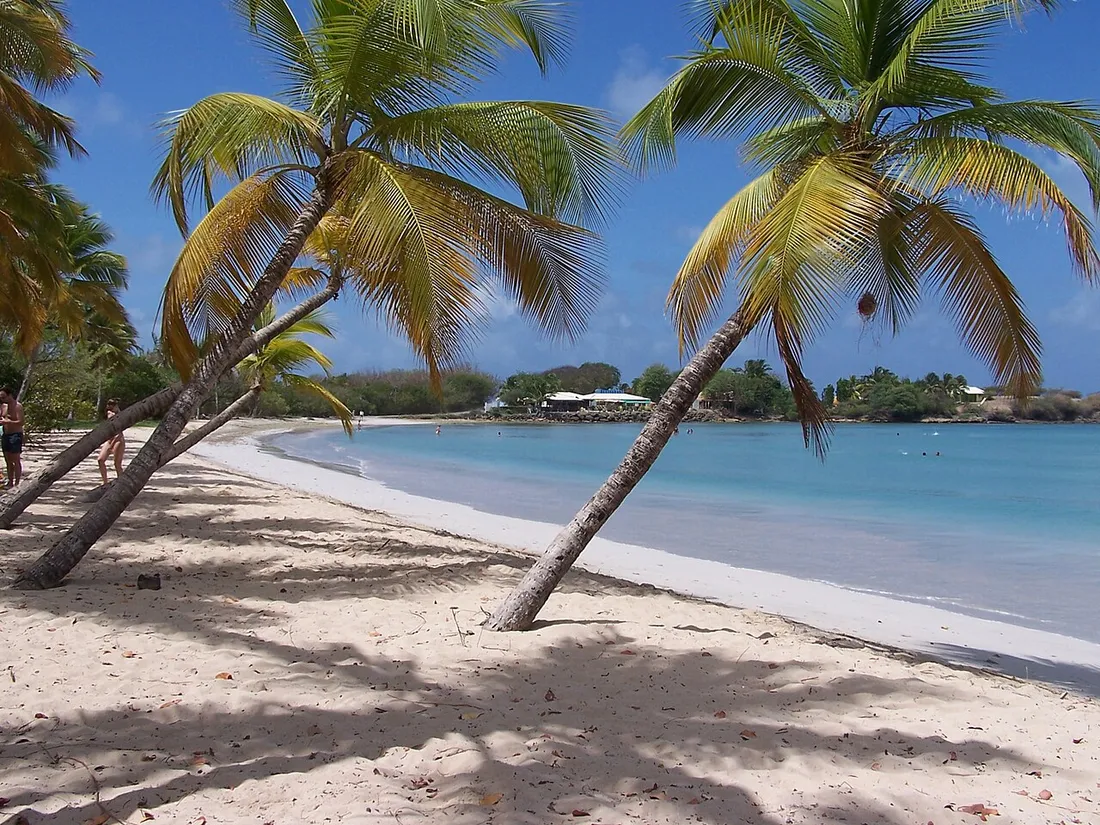
Week 1: the South base, beaches and lazing about
Deliberately beach-focused, this first week is ideal for shaking off the jet lag after the 8.5-hour flight from Paris.
Days 1 to 2 — Arrival and the South’s legendary beaches
Day 1 is an acclimatisation day: pick up the car, head to your rental (30-45 min from the airport towards Les Trois-Îlets) and savour a first sunset over the Caribbean Sea, ti-punch in hand.
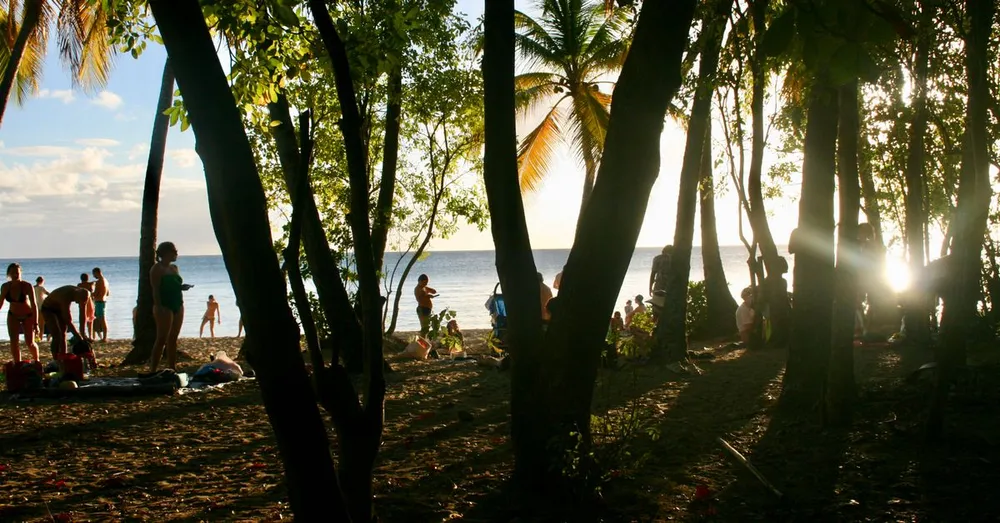
On day 2, set off for Sainte-Anne and the famous Les Salines beach, arguably the most beautiful on the island: golden sand, coconut palms, turquoise water. Arrive before 10am for the light and the (free) parking. Lunch in a lolo, those Creole beach shacks: grilled fish or colombo for €12 to €18.
Days 3 to 5 — Les Anses-d’Arlet, Le Diamant and the Rum Route
- Day 3 — snorkelling at Les Anses-d’Arlet. At Anse Dufour and Anse Noire (black volcanic sand, reached by a staircase), you swim with green turtles just a few metres from shore. Push on to Grande Anse d’Arlet, with its jetty and its church right by the water.
- Day 4 — Le Diamant and rum. A long beach pounded by the trade winds, facing Diamond Rock, then a distillery: La Mauny or Trois-Rivières (Rivière-Pilote / Sainte-Luce). A tasting of AOC agricole rum is included, and entry is often free. Make a moving stop at the Cap 110 Memorial (Anse Caffard).
- Day 5 — Les Trois-Îlets and the bay. The Pagerie Museum (childhood home of Joséphine de Beauharnais), the Pottery Village and the Savane des Esclaves. In the afternoon, reach Fort-de-France by ferry from Pointe du Bout (a few euros, and no more traffic jams).
Day 6 — Off day (your first buffer)
This is the whole point of two weeks: allowing yourself to plan nothing. Stay close to base, alternate beach and hammock, or catch up on something you postponed. This buffer day is your weather margin: if a downpour spoiled a visit, you reschedule it stress-free.
Day 7 — Le François and the white-sand shallows
Before changing base, treat yourself to a sea outing at Le François: a boat trip to the white-sand shallows (fonds blancs) and the legendary Joséphine’s Bathtub, those turquoise sandbars where you bathe in the middle of the lagoon. Budget €40 to €70 per person.
The mid-stay transition: changing base stress-free
The move from one base to the other happens on day 8, in the morning. Rather than driving straight to the North, use the route for a stop: the Balata Garden (a tropical botanical garden with rope bridges suspended in the canopy, entry around €16), ideally placed along the way. You thus reach your second base, around Le Carbet or Saint-Pierre, in the early afternoon, without losing a day. Local tip: fill up before heading north, as filling stations become scarce beyond Saint-Pierre.
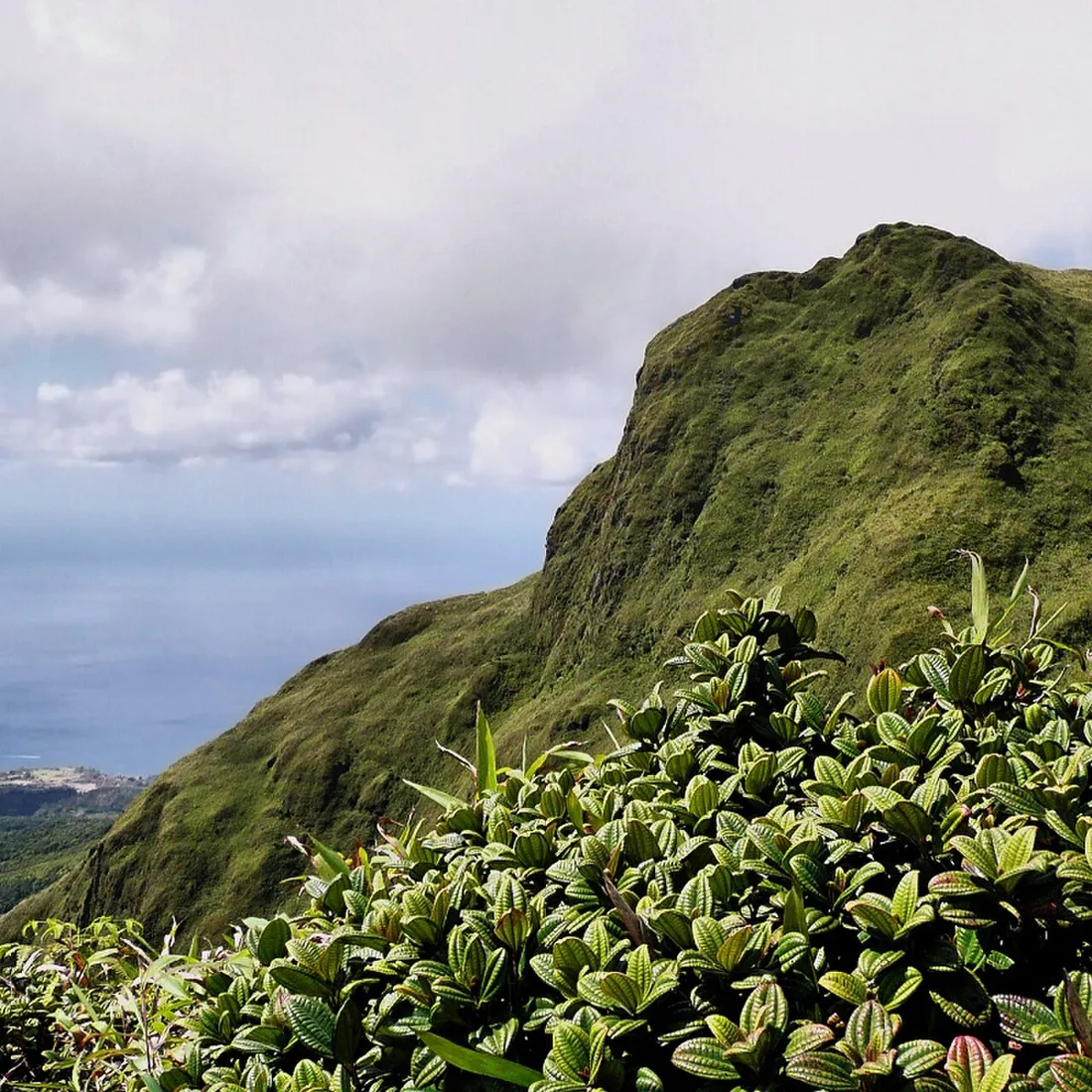
Week 2: the North base, nature and heritage
The Caribbean North is more humid and far greener than the South (up to 4,000-5,000 mm of rain a year on the heights, against 1,200-1,600 mm in the South): expect a few showers, especially in the afternoon.
Days 8 to 10 — Saint-Pierre, Mount Pelée and black sand
- Day 9 — Saint-Pierre, the martyred town. The former “little Paris of the West Indies”, destroyed by the eruption of Mount Pelée in 1902. The ruins (theatre, Cyparis’s dungeon), the museum and the town — listed as a Ville d’art et d’histoire (Town of Art and History) — can be explored on foot. End the day with a black-sand swim at Le Carbet.
- Day 10 — Mount Pelée. Seasoned hikers aim for the ascent (very early start, 5 to 6 hours round trip); opt for the Aileron route, which is shorter, if the summit is in the clouds. Otherwise, head for the northern distilleries such as Depaz, at the foot of the volcano, or Saint-James at Sainte-Marie.
Day 11 — The wild Atlantic: Tartane and the Caravelle
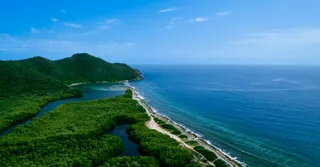
Cross to La Trinité for the Caravelle peninsula: the nature reserve trail, the lighthouse, the ruins of Château Dubuc and the mangrove. Tartane, a fishing village, is also the island’s surf spot. Wind and swell are stronger here: magnificent, but swim with care.
Day 12 — Off day (second weather buffer)
As in the first week, this free day absorbs the unexpected, all the more valuable since the North is wetter. Otherwise, head off to a waterfall such as Saut Gendarme (Fonds-Saint-Denis).
Days 13 to 14 — The Far North and the return
On day 13, push to the tip of the island at Grand-Rivière, an isolated fishing village with a black-pebble beach and the start of the coastal hike towards Le Prêcheur: an end-of-the-world atmosphere, light-years from the South. On day 14, depending on your flight time, fit in a last swim or pack up (2h at the airport before departure, 1h-1h15 of driving from the North).
A realistic budget for two weeks
For two people, excluding flights, over 14 days:
- Accommodation: €1,200 to €2,200 (two rentals, from studio to villa depending on the season).
- Car: €450 to €750 over fifteen days, fuel included.
- Meals: €30 to €70/day for two depending on lolos or restaurants, less if you cook.
- Activities: €200 to €350 (sea outings, distilleries, Balata).
A comfortable fortnight thus comes to €2,500-3,800 for two on the ground. Accommodation is where you save the most, and the shoulder season (May, September-November) noticeably eases the bill.
Book your two bases directly with Hostel Toucan
This complete Martinique road trip rests on two good home bases. At Hostel Toucan, a concierge service and short-term rental specialist in the French overseas territories (DROM), we select properties in the strategic towns of this two-week Martinique programme: Trois-Îlets, Sainte-Anne and Le Diamant in the South, Le Carbet and Saint-Pierre in the North. By booking direct, you avoid platform fees, enjoy free cancellation up to 7 days before arrival and WhatsApp support 7 days a week for your on-the-ground questions.
Browse our rentals in Martinique to lock in your two bases. And if you own a property on the island, discover our support for owners.
FAQ
Two weeks — isn’t that too long for Martinique?
No, it’s the ideal length to see the island without rushing. Where a single week forces choices, fifteen days let you combine the beachy South, the heritage-rich North, the wild Atlantic and the Far North, while still treating yourself to off days.
Do you really have to change accommodation mid-stay?
For two weeks, yes. A base in the South and then one in the North saves you 1h to 1h15 of daily driving between the beaches and Mount Pelée. A single move, halfway through, is enough. For just one week, a single base remains preferable.
What’s the best time of year for this 15-day trip?
The dry season, from December to April (the Carême), offers the least rain and the safest roads for the wetter North. For the best value, aim for May or November. In hurricane season (June to November), opt for flexible cancellation.
Can you do this itinerary without a car?
Only with great difficulty. The sites on this programme (Les Salines, Les Anses-d’Arlet, Saint-Pierre, the Caravelle, Grand-Rivière) are poorly served by public transport, especially for the North base. A car is strongly recommended: book it as soon as you buy your tickets. Only the Fort-de-France / Trois-Îlets ferry will occasionally spare you the need.