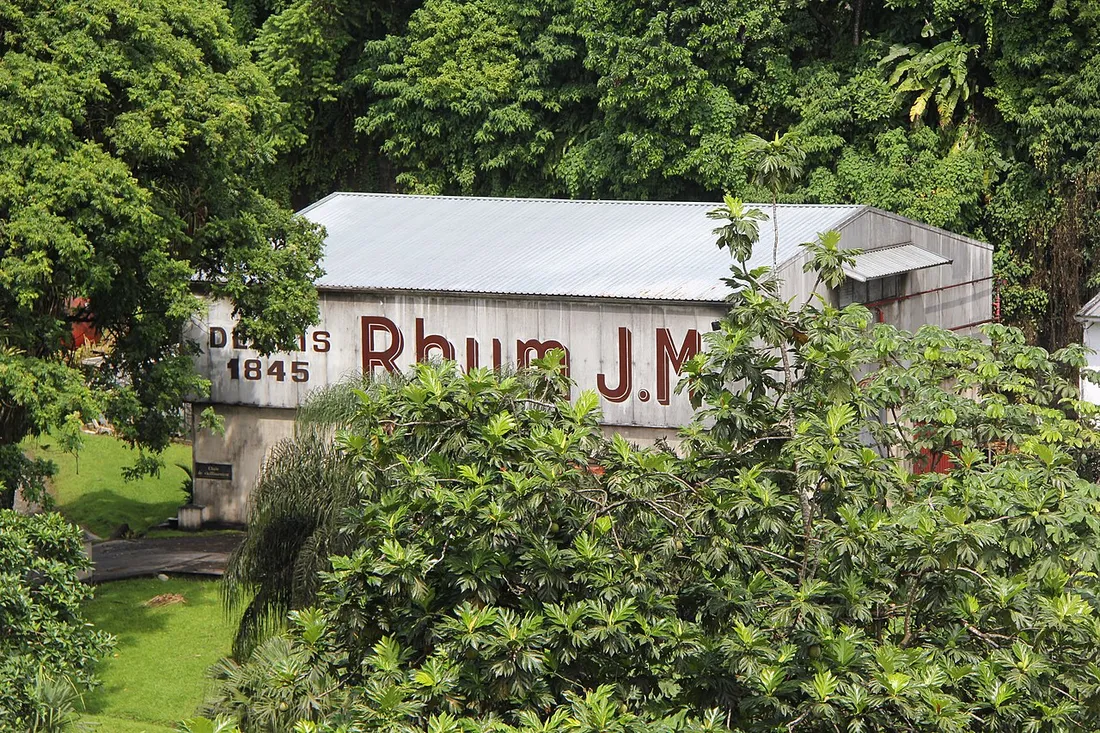
When you picture Martinique’s Rum Trail, the big names of the centre and south usually come to mind first: Clement in Le Francois, La Mauny, Trois-Rivieres. And yet the purest rum on the island is made right at the top, where the road narrows and the cliffs plunge straight into the Atlantic. The JM distillery, tucked into the Macouba valley at the foot of Mount Pelee, is one of the most confidential and authentic addresses in Martinique. Here is how to build a full day in this rum-soaked far north, between tastings, panoramas and villages the classic tours overlook.
Why make the climb up to the JM distillery
The JM distillery (the initials of Jean-Marie Martin, a former owner) sits in Macouba, the island’s northernmost town, about 1h15 by road from Fort-de-France. That very isolation is its strength. The water used for fermentation comes directly from the source of the Roche River, which flows down the slopes of Pelee. The cane is cut just a few hundred metres from the vats, shortening the time between harvest and pressing: a technical detail that explains the aromatic finesse for which JM rums are renowned.
The distillery produces an AOC Martinique agricole rum, meaning it is distilled from pure fresh cane juice (“vesou”) rather than molasses. The house is especially celebrated for its aged vintages and cask-strength bottlings.
What you’ll see on site
- The garden and botanical trail winding between the vats, the distillation columns and the wooden cellars.
- The ageing room with its hundreds of oak barrels.
- A tasting shop where you can sample several bottlings for free (white, amber, aged).
- A magnificent viewpoint over the lush valley and the sea.
Realistic practical info: free-roam entry is generally free or around 5 to 10 EUR depending on the guided options; allow 1h to 1h30 for the visit. Usually open Monday to Saturday; aim for the morning (9am-12pm) to dodge the heat and enjoy the light. A bottle of 50-proof white rum runs about 20-25 EUR, while an aged vintage can top 60 EUR. The tasting is offered free, but driving is still driving: arrange for a sober driver.
The scenic road: the Allee des Marronniers and the north coast
The journey is worth as much as the destination. To reach Macouba you have two options from Saint-Pierre, and the most beautiful one hugs the coast.
The Allee Dumaine and the cane landscapes
Heading up via Le Precheur and then crossing over to the Atlantic coast, or arriving inland from Basse-Pointe, you pass through the Allee des Marronniers (sometimes called Allee Dumaine), an avenue lined with century-old trees leading towards the former plantation estates. The filtered light, the cane fields rippling in the trade wind and the red sheet-metal roofs make up a scene typical of the agricultural North.
The Atlantic cliffs
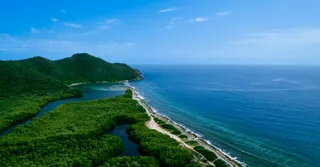
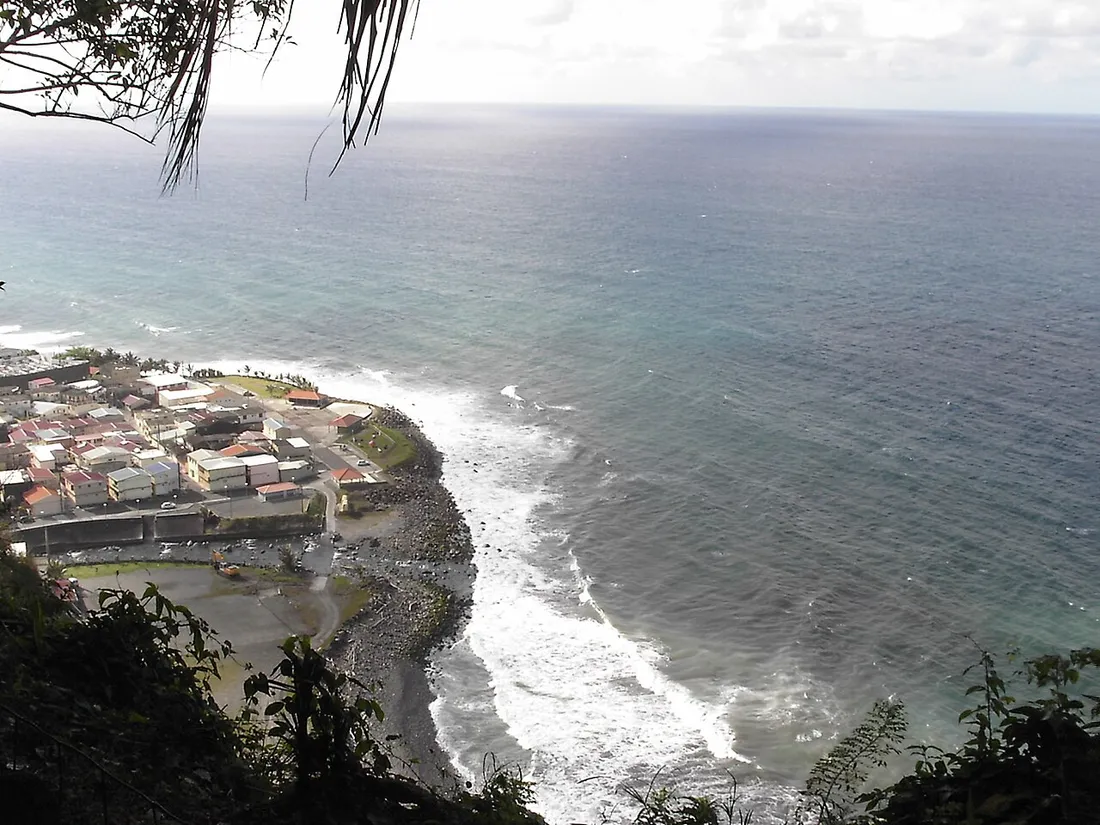
Macouba and its neighbour Grand-Riviere mark the end of the drivable road. Here the coast has nothing of the golden beaches of the South: these are black cliffs hammered by the Atlantic, a powerful sea and a sense of being at the end of the world. The church of Macouba, perched over the void, offers one of the most spectacular viewpoints on the island. A word of caution: swimming here is dangerous; you come for the panorama, not for a dip.
A few distance markers from your accommodation:
- Fort-de-France → Macouba: about 50 km, 1h15-1h30 (winding road).
- Saint-Pierre → Macouba: about 25 km, 45 min.
- Macouba → Grand-Riviere: about 10 km, 20 min.
Local tip: fill up on petrol in Saint-Pierre or Le Carbet before heading up, as stations become scarce in the north. And drive carefully: the bends are tight and rain falls quickly on this slope.
The least-visited villages of the far north
The real luxury of the North is the quiet. Make the most of the day by pushing on to the towns that tour groups ignore.
Grand-Riviere, the village at the end of the road
Ten minutes from Macouba, Grand-Riviere is literally the end of the line: the D10 stops here, wedged between mountain and ocean. An authentic fishing village, it’s where you eat fresh grilled fish facing the colourful yawls. It’s also the starting point of the famous Grand-Riviere to Le Precheur hiking trail (about 18 km, a full day, demanding level), one of the most beautiful wild coastlines in the Caribbean.
Basse-Pointe and the plantations
On the Atlantic slope, Basse-Pointe is banana and pineapple country. This is also home to the estate of another great rum house and some fine historic plantations. The black-sand beaches here are striking but unsafe for swimming.
Le Precheur and the Anse Couleuvre
On the Caribbean slope, Le Precheur leads to the Anse Couleuvre, a wild black-sand beach at the end of a shaded trail and a refuge for sea turtles. It’s one of the island’s finest nature spots, to be combined with the distillery if you loop back along the west coast.
Building your ideal day in the North
Here is a tried-and-tested itinerary, balanced between rum, landscapes and heritage:
- 9am: departure, photo stop at the ruins of Saint-Pierre (the listed “martyr city,” destroyed by Pelee in 1902).
- 10am: climb up to Macouba along the coast, stopping at the church and the cliffs.
- 10.30am-12pm: visit and tasting at the JM distillery.
- 12.30pm: grilled fish lunch in Grand-Riviere.
- 2.30pm: return via Le Precheur and a nature swim (with caution) or a walk to the Anse Couleuvre.
- 5pm: back to your accommodation before nightfall (the sun sets around 6pm all year round).
The best time for this excursion is the dry season (Careme), from December to April, when the northern roads are less slippery and the views are clear. The north slope stays wetter than the South: keep a windbreaker in your bag.
Why stay in the North (or not too far away)
Most travellers settle in the South for the beaches, but sleeping in the centre or the Caribbean North (Saint-Pierre, Le Carbet) changes everything when it comes to exploring this area without spending hours on the road. You gain in immersion, authenticity and peace and quiet.
At Hostel Toucan, we select accommodation that’s well placed for ranging across the whole island, including up to this often-overlooked rum-soaked north. Direct booking comes with no platform fees, with free cancellation up to 7 days before arrival and WhatsApp assistance 7 days a week for your itinerary questions, distillery recommendations or an unexpected change in the weather. Discover our accommodation in Martinique and our complete guide to Martinique to plan your stay.
Are you the owner of a property in the North or elsewhere on the island, and would you like to showcase it to travellers seeking authenticity? Our concierge service for owners takes care of everything.
In summary
The rum-soaked North isn’t the Martinique of the South’s postcards, and that’s precisely what makes it unforgettable. The JM distillery offers one of the island’s most renowned AOC agricole rums in a spectacular valley setting; the scenic road, the Atlantic cliffs of Macouba and the confidential villages of Grand-Riviere or Le Precheur round off a day you’ll be talking about for a long time. Rent a car, line up a sober driver, set off early, and let yourself be carried away by this Caribbean end of the world.
FAQ
Is the JM distillery visit free?
The free-roam walk through the garden and the tasting at the shop are generally free. Guided or premium options cost on average 5 to 10 EUR per person. Allow 1h to 1h30 for the visit, ideally in the morning between 9am and 12pm.
How long does it take to get to Macouba from Fort-de-France?
About 1h15 to 1h30 to cover the 50 km, as the northern road is winding. From Saint-Pierre, allow 45 minutes (25 km). A rental car is strongly recommended; there is no convenient public transport to this area.
What is the best time to visit the North of Martinique?
The dry season, the Careme, from December to April, offers the least slippery roads and the clearest views. The north slope stays wetter than the South all year round, so bring a windbreaker even in fine weather.
Can you swim near the JM distillery and at Macouba?
No, the Atlantic cliffs of Macouba are pounded by a powerful sea and swimming there is dangerous. For a nature swim, head down instead to the Anse Couleuvre at Le Precheur, a wild black-sand beach reached by a shaded trail.