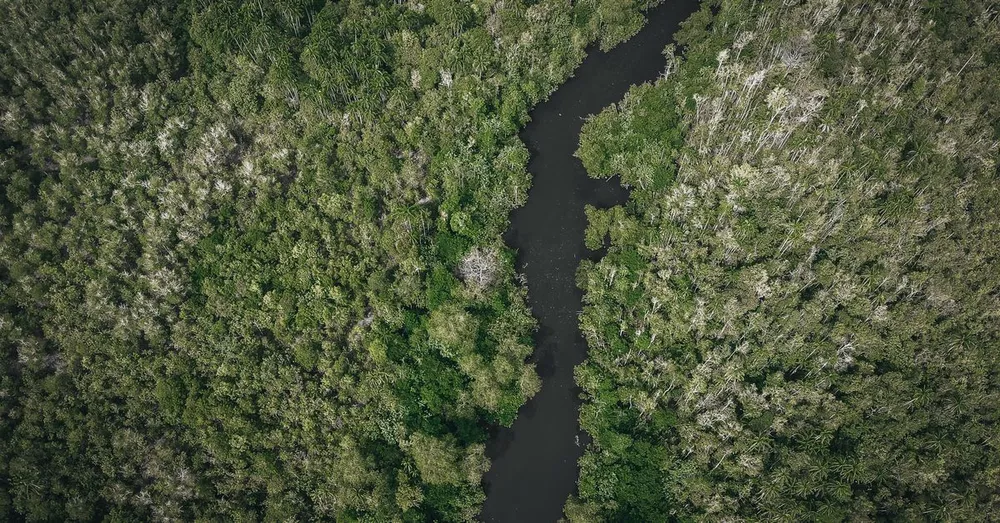
When people mention the Oyapock River in French Guiana, many think of the Franco-Brazilian bridge linking Saint-Georges to Oiapoque. Yet the river tells a very different story as you head south, toward its source. There, hundreds of kilometres from the coast, lies one of the most remote regions in all of French territory: the Upper Oyapock and its legendary village, Trois-Sauts. This is the deep Amazon, home to the Teko and Wayampi peoples, a world where the dugout canoe replaces the car and where time is measured in days of river travel.
At Hostel Toucan, we regularly welcome travellers fascinated by this side of French Guiana. Here is an honest overview of this extraordinary territory, its inhabitants, and the strict rules governing access to it.
Where is the Upper Oyapock?
The Oyapock is the border river between French Guiana and Brazil, roughly 400 km long. Its mouth lies near Saint-Georges-de-l’Oyapock, just over 180 km from Cayenne, the regional capital, by national road. But the “Upper Oyapock” refers to the upstream stretch, south of Camopi, which pushes deep into the forest as far as the foothills of the Tumuc-Humac Mountains.
A few concrete reference points to grasp just how remote it is:
- Cayenne → Saint-Georges: about 3 hours by road (190 km).
- Saint-Georges → Camopi: several hours by motorised canoe travelling upriver.
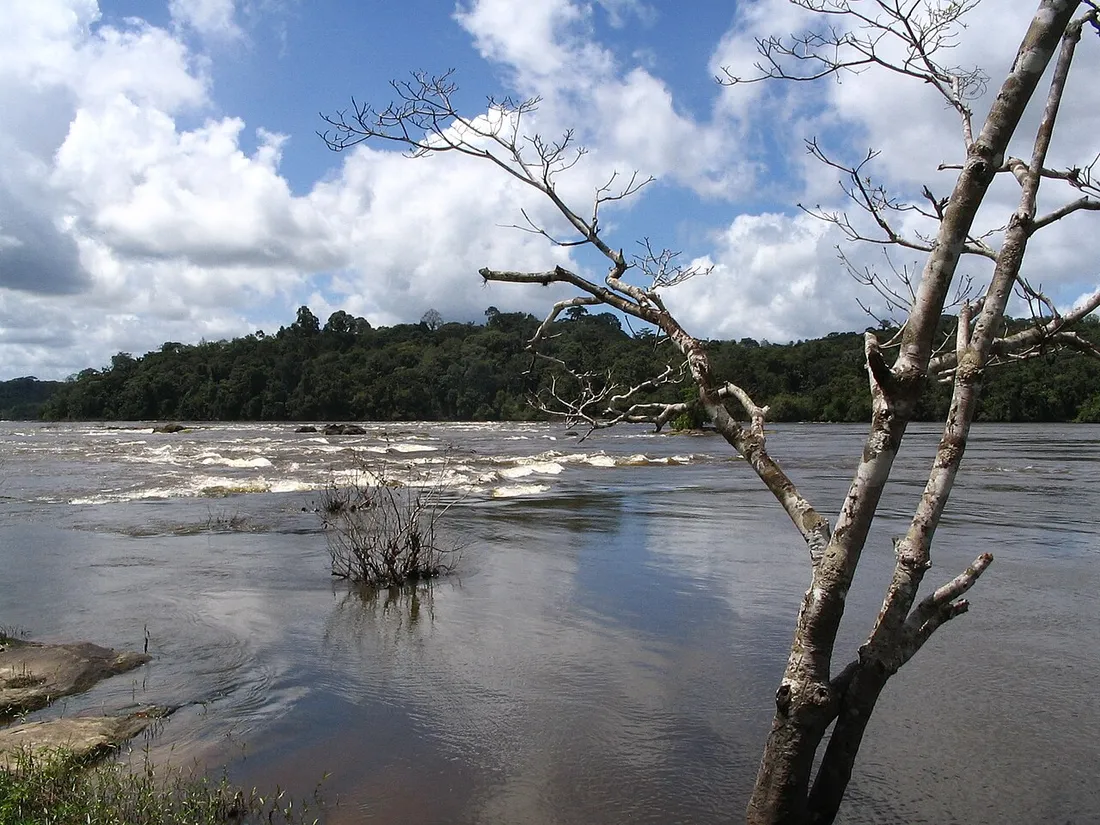
- Camopi → Trois-Sauts: another full day of navigation, punctuated by rapids (sauts) that are sometimes impassable in the dry season.
Trois-Sauts is thus the southernmost inhabited village in French Guiana, almost on the Brazilian border and at the heart of the Guiana Amazonian Park, the largest national park in France and in Europe.
The Teko and Wayampi peoples
What makes the Upper Oyapock unique is above all its inhabitants. The area is home to two Amerindian peoples whose ways of life remain deeply rooted in the forest.
The Wayampi
The Wayampi (or Wayãpi) live mainly around Trois-Sauts and Camopi. Speakers of a language from the Tupi-Guarani family, they traditionally live from slash-and-burn farming (abattis), hunting and fishing. Their crafts — basketry, pottery, feather ornaments — reflect know-how passed down from generation to generation.
The Teko
The Teko (formerly called Émerillon) share this territory, often in mixed communities with the Wayampi along the river. Also a Tupi-Guarani-speaking people, the Teko are among the smallest Amerindian groups in French Guiana, which makes preserving their culture and language particularly sensitive.
Locally, French coexists with Amerindian languages; across French Guiana as a whole, people also speak Creole and Bushinenge. This linguistic diversity is part of the department’s identity.
Strictly regulated access
This is the essential point to understand: you cannot freely travel to Trois-Sauts or the Upper Oyapock. The area is protected on two counts.
- Restricted access zone: from Camopi upstream, access requires authorisation from the prefecture. This regulation aims to protect the Amerindian populations, their health and their way of life, and to curb the illegal gold mining that threatens the region.
- Heart of the Guiana Amazonian Park: visits there are tightly managed to preserve an exceptional ecosystem.
In practical terms, a traveller cannot improvise. Access requires:
- An authorisation request to the prefecture, justified (professional, family or scientific reasons, or an invitation from the communities).
- Most often, an escort or an invitation from the local communities or an accredited body.
- Heavy logistics by canoe, with an experienced boatman, supplies and fuel.
For the ordinary visitor seeking discovery, it pays to be clear-headed: this is not an open tourist destination. Wanting to “tick off” Trois-Sauts the way you visit the Salvation Islands would be both unrealistic and disrespectful. The right mindset is to understand and respect these territories rather than try to penetrate them at any cost.
Experiencing the spirit of the Oyapock differently
The good news is that you can get close to the culture and landscapes of the Oyapock without crossing the regulated boundaries. Several accessible experiences let you touch this riverine French Guiana.
Saint-Georges-de-l’Oyapock
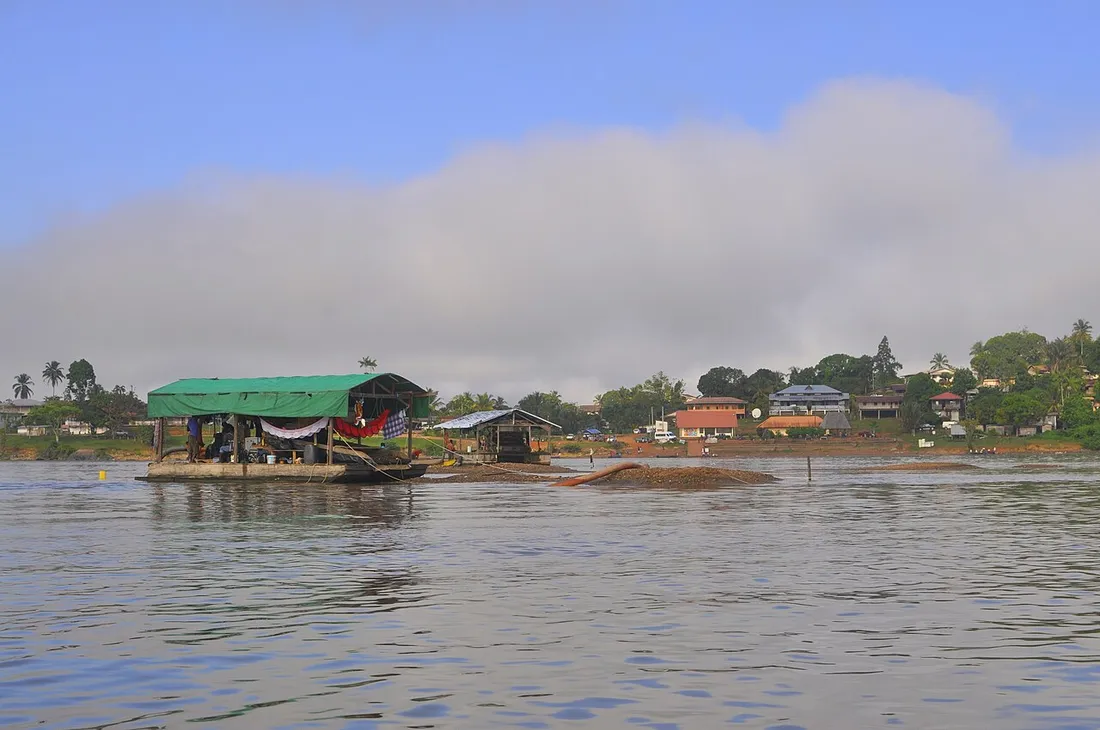
This border town, connected to Cayenne by road, offers an authentic immersion: a riverside atmosphere, the crossing to the Brazilian town of Oiapoque, a market, and a starting point for supervised excursions on the lower and middle Oyapock.
A supervised canoe excursion
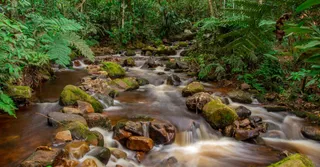
Going down or up an accessible stretch of the river with a local operator and an Amerindian boatman remains one of the finest ways to understand life on the water: clearing a rapid, watching the canopy reflected in the tea-coloured water, listening to the boatman’s stories.
The best time to come
The dry season, from mid-July to mid-November, is by far the best period. The tracks and riverbanks are more passable, the water level more stable and canoe travel safer. It is also the ideal season to combine your stay with the must-see sights of French Guiana.
Planning your trip to French Guiana
French Guiana is a French overseas department and region (DROM): you pay in euros, French is spoken, and the telephone dialling code is +594. Expect a time difference of -5 h in winter and -6 h in summer compared with Paris. The international airport Félix-Éboué is located in Matoury, near Cayenne.
A few essential practical points:
- Yellow fever vaccination required to enter the territory.
- A car is essential to get around the coastal strip (Cayenne, Rémire-Montjoly, Matoury, Kourou, Saint-Laurent-du-Maroni).
- Pack repellent, light covering clothing and rain protection even in the dry season.
While the Upper Oyapock remains reserved for a rare few, French Guiana is brimming with accessible experiences:
- Guiana Space Centre in Kourou: free tour, and the thrill of an Ariane 6 or Vega launch.
- Salvation Islands: penal-colony history and beaches lined with coconut palms.
- Kaw Marshes: caimans, scarlet ibises and nights on the water.
- Maroni River by canoe from Saint-Laurent-du-Maroni, whose penal colony can be visited.
- Cayenne market and a stroll on the Place des Palmistes.
To build a coherent itinerary, see our complete guide to French Guiana, which details seasons, distances and must-see stops.
Where to stay to explore the Oyapock and French Guiana
Exploring these territories calls for a comfortable, well-located base on the coast. At Hostel Toucan, we offer carefully selected holiday rentals between Cayenne, Rémire-Montjoly, Matoury and Kourou — ideal for venturing east and toward the Oyapock River.
By booking directly, you enjoy:
- Direct booking with no platform fees: the best rate, with no commission.
- Free cancellation up to 7 days before arrival.
- WhatsApp support 7 days a week, from locals who know the ground and can point you to the right excursion operators.
Discover our accommodations on location-guyane and plan your stay with peace of mind.
Do you own a property in French Guiana and want to showcase it to travellers in search of authenticity? Our concierge service takes care of everything: learn more for owners.
For most of us, the Upper Oyapock will remain a horizon rather than a destination. And that is just as it should be: its preservation depends precisely on this distance. Understanding the Teko and Wayampi peoples, respecting the access rules, and savouring riverine French Guiana in its open stretches — that is the finest way to honour this corner of the deep Amazon.
FAQ
Can you freely visit Trois-Sauts and the Upper Oyapock?
No. Access to the Upper Oyapock, upstream of Camopi, is strictly regulated and requires authorisation from the prefecture in order to protect the Amerindian populations and the environment. It is not a tourist destination open to the public.
Which peoples live in the Upper Oyapock?
Mainly the Wayampi and the Teko, two Amerindian peoples speaking Tupi-Guarani languages who live from slash-and-burn farming, hunting and fishing, around Camopi and Trois-Sauts, at the heart of the Guiana Amazonian Park.
How can you get close to the Oyapock without crossing the regulated zone?
You can stay in Saint-Georges-de-l’Oyapock, accessible by road from Cayenne (about 3 hours), and take part in supervised canoe excursions on the accessible stretches of the river with a local boatman.
What is the best time to visit French Guiana and the Oyapock?
The dry season, from mid-July to mid-November, is ideal: a more stable water level for canoeing, passable tracks and better conditions for combining must-sees like Kourou or the Salvation Islands.