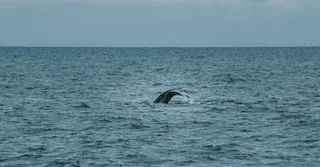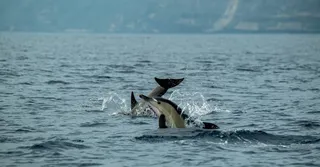
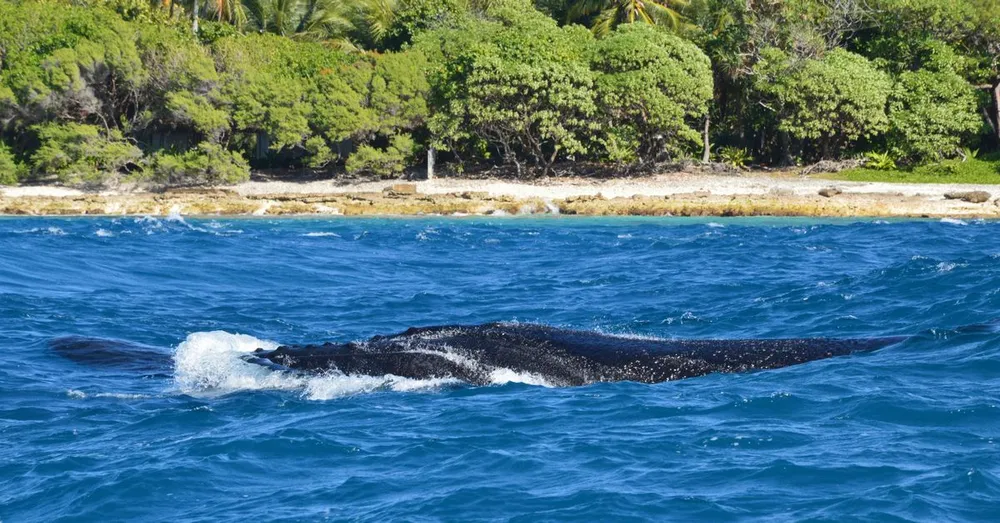
The leeward coast of Basse-Terre hides one of the archipelago’s most beautiful living secrets: a deep oceanic corridor where sperm whales, humpback whales and bottlenose dolphins roam. In the ten years I’ve spent guiding travellers along the Bouillante coast, I’ve seen entire families moved to tears at the sound of a sperm whale’s blow echoing just a few metres from the hull. Whale watching in Guadeloupe is no tourist myth: it’s a real, regulated experience, accessible to anyone who picks the right season, the right departure point and, above all, the right operator. Here’s everything you need to know before booking your trip off Malendure.
Why the waters off Basse-Terre are a cetacean sanctuary
Guadeloupe is a French overseas department shaped like a butterfly, split between two wings: Grande-Terre, limestone and beach-focused, and Basse-Terre, volcanic, dominated by La Soufrière (1467 m) and the National Park. Everything happens along the western flank of Basse-Terre, known as the leeward coast.
Just a few hundred metres beyond the Cousteau Reserve (Malendure, Pigeon Islets), the seabed plunges abruptly to more than 800, then 1000 metres. This trench shelters giant squid, the sperm whale’s favourite food. The result: a resident population of sperm whales frequents these waters all year round, a rare case in the Caribbean. Added to this permanent core, in season, are the migrating humpback whales and several species of dolphin.
On a typical outing, you may encounter:
- The sperm whale (resident, observable almost year-round)
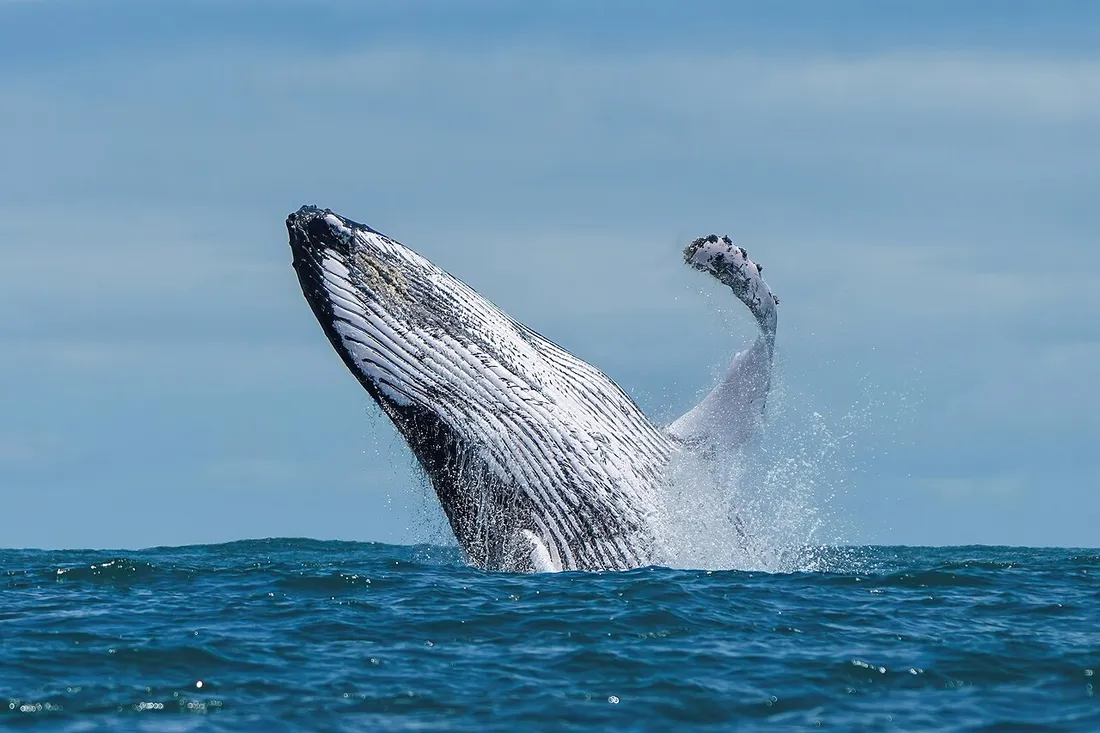
- The humpback whale, a winter visitor spectacular for its breaches
- The bottlenose dolphin and the spotted dolphin, in pods sometimes numbering several dozen
- The pilot whale and the Fraser’s dolphin
Guadeloupe is part of the Agoa Sanctuary, a marine protected area dedicated to the marine mammals of the French Antilles. This frames strict approach rules that every serious operator respects.
Cetacean season: when to head out off Malendure
The question I’m asked most often: when can you see whales in Guadeloupe? The answer depends on the species you’re after.
Sperm whales: year-round, peaking in the dry season
Since sperm whales are resident, you can observe them in any season. But the dry season, from December to April, offers a calmer sea, better visibility and ideal sailing conditions. It’s also the high tourist season, so book early.
Humpback whales: January to March
Humpback whales travel up to the warm Caribbean waters to mate and give birth. The most reliable window runs from mid-January to late March, with songs, breaches and sometimes the chance to see calves. It’s the most moving time of the year.
Dolphins: almost guaranteed
Dolphins are encountered nearly all year long. On my outings, the encounter rate with at least one cetacean species during the dry season comfortably exceeds 80%, even though no honest operator will guarantee a 100% sighting: these are wild animals, in an open environment.
For comfort, opt for a morning outing (departure around 8-9 a.m.), when the sea is at its flattest and the light at its softest.
The approach code: watching without disturbing
This is the heart of a responsible approach, and the criterion that separates a good operator from a bad one. In the Agoa Sanctuary, approaching cetaceans is governed by a code of good conduct that I summarise for my travellers as follows:
- Minimum distance: never approach within 100 m of a cetacean, and 300 m for a mother accompanied by her calf
- No more than one boat near the same group at a time
- Slow, parallel approach, never head-on or from behind, never cutting across the animal’s path
- Reduced speed under 5 knots in the observation zone
- Limited duration: a short observation time per group so as not to disrupt their diving and resting cycle
- No swimming with cetaceans: entering the water in contact with whales and sperm whales is forbidden and dangerous
- Silence and calm on board: no loud music, no abrupt movements
A good captain sometimes cuts the engine and lets the animal decide whether to approach. Those moments, when a sperm whale surfaces voluntarily near the boat, are infinitely more powerful than a chase. Be wary of any trip promising “swimming with whales”: it’s the sign of an operator who doesn’t respect the rules.
Choosing a certified operator departing from Bouillante
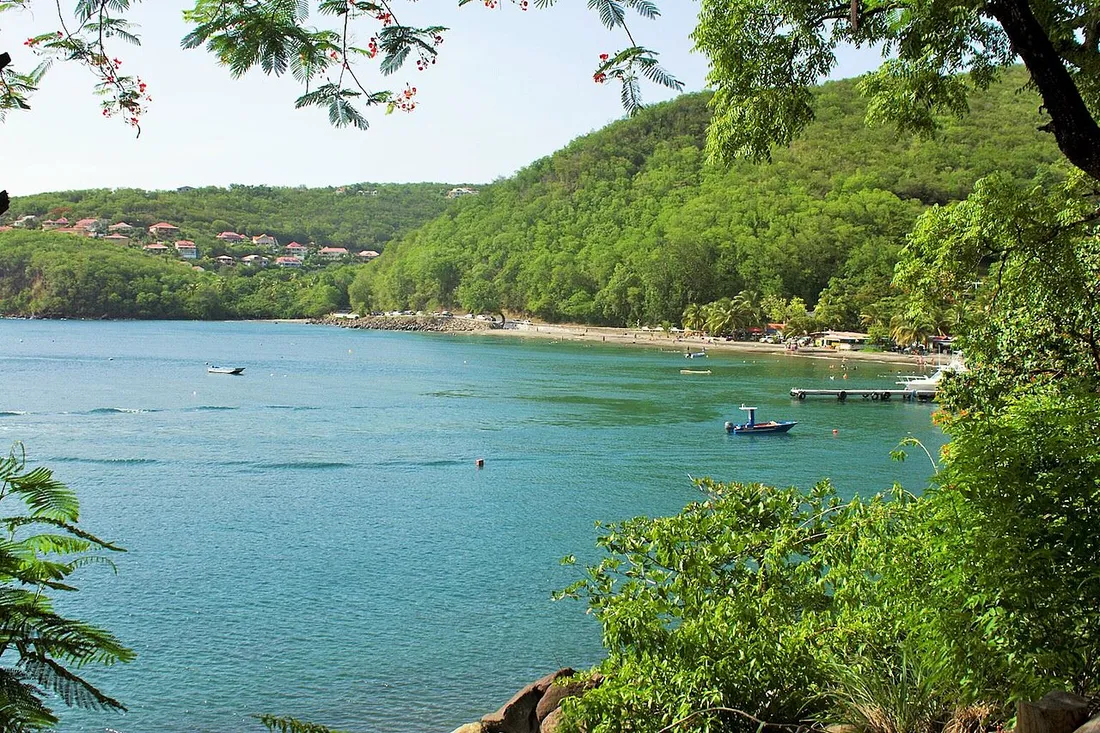
Bouillante, a thermal and volcanic town on the leeward coast, is the ideal departure point. Malendure beach and its jetty are just a few minutes away, and the sperm whale trench is only 20 to 40 minutes’ sailing. Here are my selection criteria, refined over the years.
The good signs
- Agoa label or code displayed, captain trained in approaching marine mammals
- Small group: a boat limited to 10-12 passengers offers a far better experience than a crowded large catamaran
- Naturalist on board able to comment on the species, their behaviour, and to respect distances
- Hydrophone: some operators use an underwater microphone to locate the sperm whales’ clicks and let you listen live, a major asset
- Transparency: no promise of a guaranteed sighting, a clear postponement policy when the sea is too rough
Realistic prices and durations
For a cetacean watching trip departing from Bouillante or Malendure, expect:
- Half-day (3 to 4 h): around 70 to 90 € per adult, 45 to 60 € per child
- Full-day long outing: 110 to 150 € per person, often combined with snorkelling in the Cousteau Reserve
- Private hire of a rigid inflatable: from 600 to 900 € depending on duration and number of passengers
Bring mineral sunscreen, a hat, a windbreaker, water and, if you’re prone to it, a seasickness tablet taken before departure.
Combining cetacean watching with the rest of Basse-Terre
The advantage of basing your stay on the leeward coast is the density of experiences within reach. Around Bouillante and Deshaies, you can string together:
- Snorkelling at the Cousteau Reserve (Pigeon Islets), ranked among the finest beginner-level dive sites
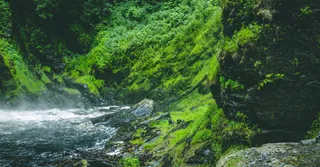
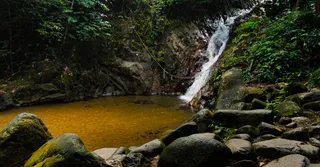
- The hike to the Carbet Falls and the ascent of La Soufrière in the National Park
- The beach of Grande Anse in Deshaies, one of the most beautiful in the archipelago
- An excursion to Les Saintes (Terre-de-Haut, a listed bay) from Trois-Rivières
Allow 30 to 40 minutes’ drive between Bouillante and Deshaies, and around 1h15 from Pôle Caraïbes airport in Pointe-à-Pitre. A quick practical reminder: Guadeloupe uses the euro, people speak French and Creole, the dialling code is +590, and the time difference is -5h in winter and -6h in summer compared with Paris.
Book your Basse-Terre stay with Hostel Toucan
To make the most of your whale outings, the smart move is to stay as close as possible to the jetties of Bouillante, Malendure or Deshaies. At Hostel Toucan, we offer hand-picked seasonal rentals on the leeward coast, ideal for setting off early in the morning before the sea picks up.
By booking direct, you enjoy:
- A booking with no platform fees, hence a better price than elsewhere
- Free cancellation up to 7 days before arrival, useful when the marine weather is uncertain
- 7-day WhatsApp support, to recommend the right certified operator and schedule your outing according to conditions
Discover our accommodation in our selection of rentals in Guadeloupe, plan your whole trip with our complete guide to Guadeloupe, and if you own a property on the island, entrust it to our concierge service via the owners page. The whale season is short: surround yourself with the right partners so you don’t miss a thing.
FAQ
What is the best time for whale watching in Guadeloupe?
The dry season, from December to April, offers the best sea and visibility conditions. Sperm whales are resident and observable all year round, while migrating humpback whales are seen mainly from mid-January to late March. Dolphins are encountered almost all year.
Can you swim with whales off Basse-Terre?
No. Entering the water in contact with sperm whales and whales is forbidden in the Agoa Sanctuary and would be dangerous. Any operator promising to swim with cetaceans is breaking the rules. Observation is done from the boat, at a respectful distance.
How much does a cetacean watching trip in Bouillante cost?
Expect around 70 to 90 € per adult for a half-day of 3 to 4 hours, and 110 to 150 € for a full-day outing often combined with snorkelling at the Cousteau Reserve. Private hire of a rigid inflatable starts at around 600 to 900 € depending on duration.
Are you sure to see whales on an outing?
No honest operator guarantees a 100% sighting, as these are wild animals in an open environment. That said, on the leeward coast of Basse-Terre in the dry season, the encounter rate with at least one cetacean species comfortably exceeds 80%.