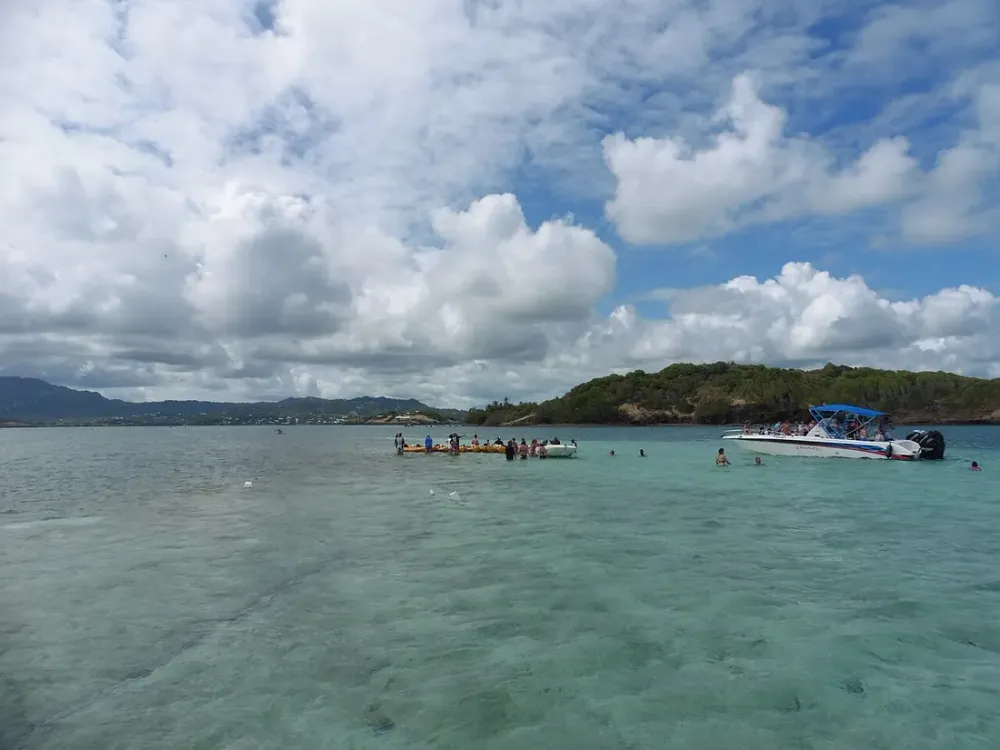
As a concierge, I’m often asked which activity you simply must not miss in Martinique. My answer hasn’t changed in ten years: spend a morning on the white sands of Le François. Water that reaches only your waist a kilometre from shore, milk-white sand underfoot, wooded islets scattered across the lagoon. It’s unique in the Caribbean, and yet fragile. This guide isn’t a catalogue of offers: it’s a how-to for choosing the right tour, understanding the islets, and enjoying Joséphine’s Bathtub without harming the very thing you came to admire.
Understanding the white sands before you set off
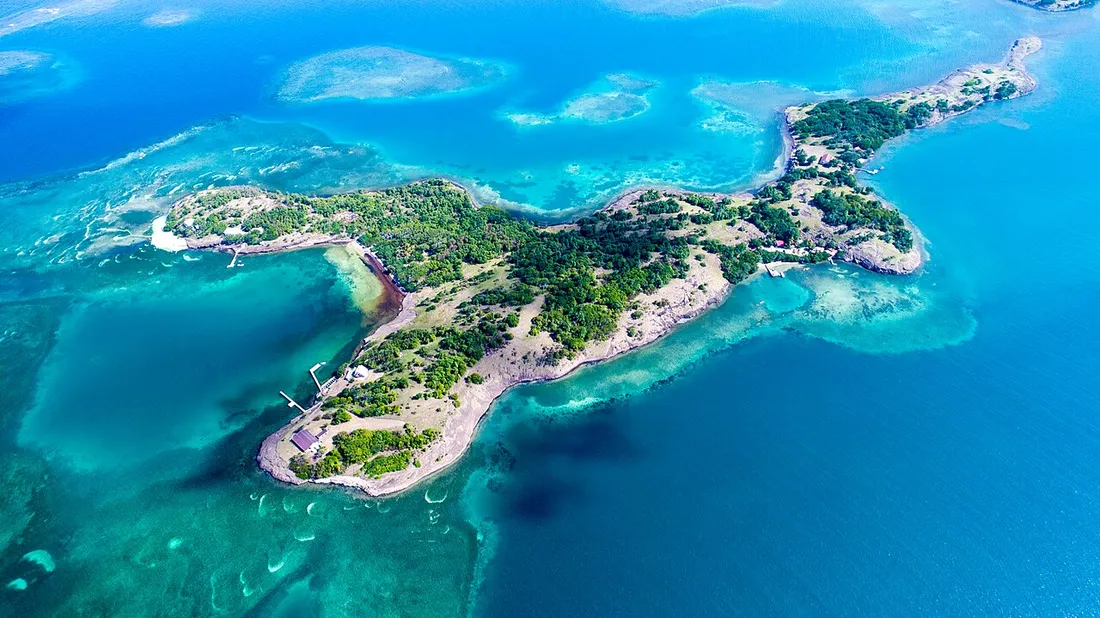
The white sands aren’t beaches: they’re shallows, broad plateaus of coral sand submerged under 60 cm to 1.30 m of water, far from land, in the lagoon sheltered by the double coral reef of the east coast. A few key points:
- The milky, turquoise water comes from sunlight bouncing off the pale sand: an optical effect, not an added colour.
- The temperature stays between 27 and 29 °C year-round — comfortable swimming in any season.
- Le François is 25 km from Fort-de-France (a 40-minute drive) and 30 minutes from Aimé Césaire airport (Le Lamentin).
- You can only reach them by boat: no white sand bank is within swimming distance, and a shallow remains a living ecosystem (seagrass beds, sea urchins, starfish) that is fragile.
Joséphine’s Bathtub, between legend and reality
The highlight remains Joséphine’s Bathtub. Tradition has it that Joséphine de Beauharnais, born in Les Trois-Îlets before becoming empress, came here to cool off: a charming story, impossible to verify. What is very real is the feeling of standing in the middle of the ocean, in translucent water. Local ritual calls for a white-sands ti-punch prepared on board and shared standing in the water.
The string of islets: knowing where you’re stepping
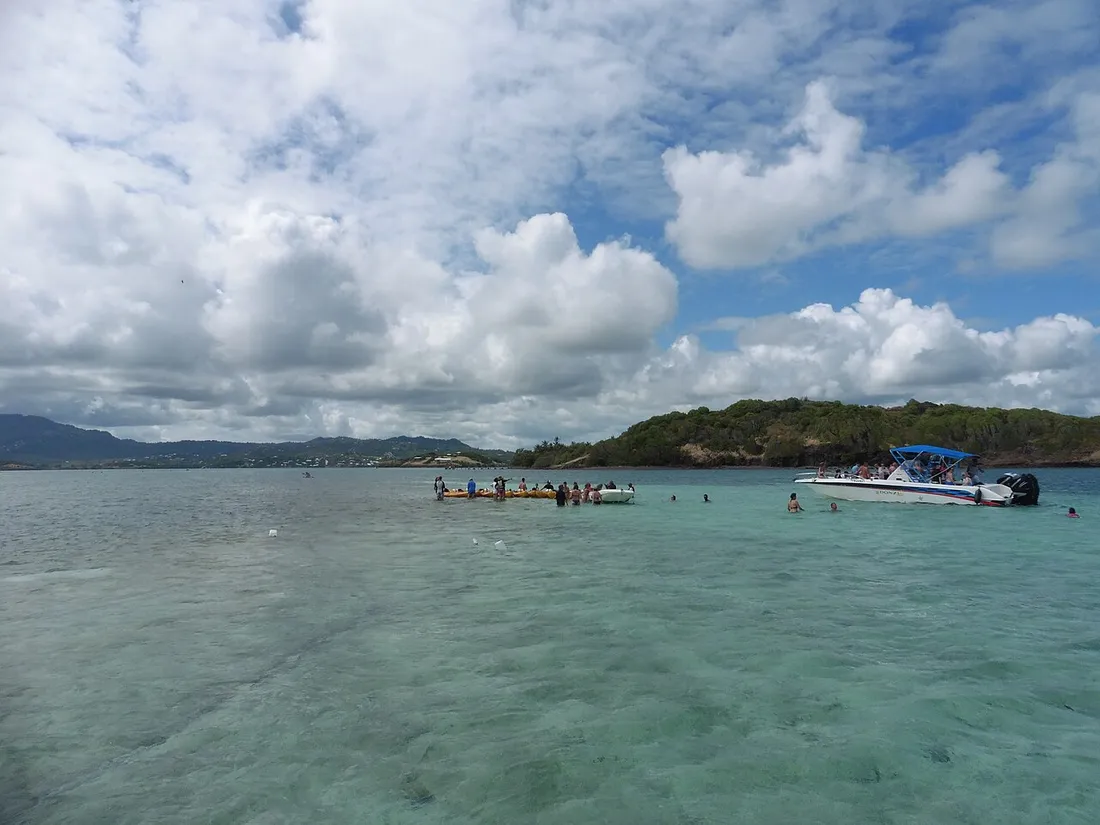
Le François’s other treasure is its islets: a dozen little islands dotting the lagoon. Knowing their names helps you follow a skipper’s route.
- Îlet Oscar: the most iconic, with its listed wooden Creole house; you don’t go ashore (it’s inhabited private property), but the anchorage is superb.
- Îlet Thierry: known for its table-d’hôte dining and lunch stops, a chic Robinson Crusoe vibe.
- Îlet Frégate, Îlet Long, Îlet Métrente: low islets fringed with sea grapes, perfect for shade and snorkelling.
- Pointe Thalémont and neighbouring banks: this is where the main white sands and Joséphine’s Bathtub are found.
Good to know: nearly all of Le François’s islets are privately owned, and it’s that status that protected them from concrete development. An operator with negotiated access to an islet for lunch therefore offers you a genuine privilege — an excellent criterion for choosing.
Choosing your operator: the heart of the decision
This is where the success of your day is decided. Le François has a dense range of options, and not all boats are equal.
Group trips by catamaran or motor launch
The most common and affordable option: you board with 15, 30, sometimes 50 passengers, in a friendly atmosphere.
- Half-day (about 4 hrs): €45 to €65 per adult, ti-punch usually included.
- Full day with lunch on an islet (6 to 7 hrs): €80 to €105 per adult, drinks included.
- Child rate: reduced by 30 to 50%, sometimes free for toddlers.
Private trips with a skipper
You book the boat for your group alone (6 to 12 people): privacy, calm and flexible timing, perfect for a family or a birthday. Expect €380 to €580 for the boat for a half-day and €650 to €950 for a full day, skipper included.
Licence-free rental, for the self-reliant
You rent a craft of under 6 hp, no licence needed, for around €130 to €190 a day. Tempting, but not advised for beginners: navigating among the coral heads means knowing how to read the colour of the water, or you’ll damage the reef.
My local criteria so you don’t get it wrong
- Check for negotiated access to an islet for lunch and snorkelling gear provided in good condition.
- Make sure water and the white-sands ti-punch are included: staying hydrated matters under the sun.
- Favour a recent engine, read the reviews (quality comes mainly from the skipper) and book directly with a Le François operator rather than through a platform that piles on its commission.
Best practices: protecting the white sands
It’s the subject too often skipped, and yet the one that will decide the state of the lagoon twenty years from now. Victims of their own success, the white sands suffer from trampled seagrass and litter. An informed visitor makes a real difference.
- Don’t walk on the seagrass or the coral: stay on the bare white sand. Seagrass beds are fish nurseries.
- Take nothing: sea urchins, starfish and corals stay in the water. A starfish taken out into the air dies within minutes.
- Reef-safe sunscreen or a rash guard: standard chemical filters contribute to coral bleaching.
- Zero waste in the water: bring everything back, cigarette butts included.
- Choose a skipper who anchors on sand and uses mooring buoys rather than dropping the anchor on coral.
These gestures cost nothing, and a good operator will remind you of them unprompted — a sign of professionalism.