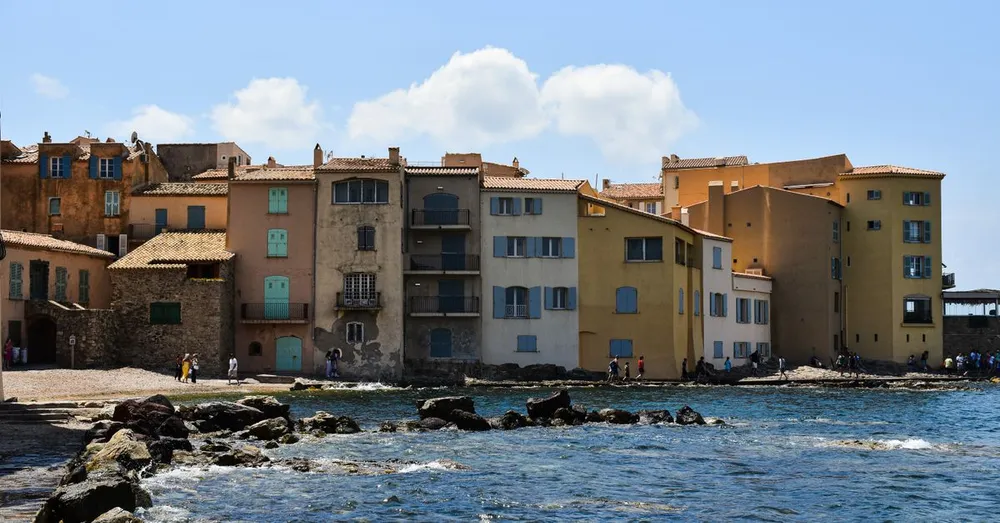
Owning a furnished rental in Terre-de-Haut means betting on one of the most coveted settings in the Caribbean: a bay ranked among the most beautiful in the world, red-roofed Saintois houses and an easygoing way of life found nowhere else in Guadeloupe. But running a vacation rental in Les Saintes is nothing like managing a villa in Grande-Terre: here, there are no cars, land is exceedingly rare, and a heritage framework regulates everything down to the colour of your shutters. Based on the islands and used to the logistics of the southern islands, we share the real playbook — constraints, costs and levers — before you take the plunge.
Why Terre-de-Haut is a market apart
Les Saintes form a small archipelago south of Basse-Terre, of which Terre-de-Haut is the inhabited, touristy island (around 1,500 residents). You can only reach it by boat: about twenty minutes by ferry from Trois-Rivières (23 to 28 euros for an adult round trip) or an hour from Pointe-à-Pitre. This island-within-an-island creates a market that is both highly sought-after and tightly constrained.
Demand, first of all, is strong and spread out:
- Day-trippers who, won over, come back to stay the night — a furnished rental captures precisely this clientele frustrated at having to leave on the last ferry.
- Couples and travellers seeking quiet, willing to pay for a view over the bay or a flower-lined lane.
- Divers and nature lovers, drawn by the Pain de Sucre, Pompierre beach and the protected seabeds.
Supply, meanwhile, is capped by geography: the island is tiny, the building stock is dominated by traditional Saintois houses, and every buildable square metre commands a high price. The result: a decent, well-managed property easily runs at 70-80% annual occupancy, where a Grande-Terre villa tends to aim for 65-75%. To place Les Saintes within the wider Guadeloupean archipelago, our complete guide to Guadeloupe breaks down what travellers are looking for island by island.
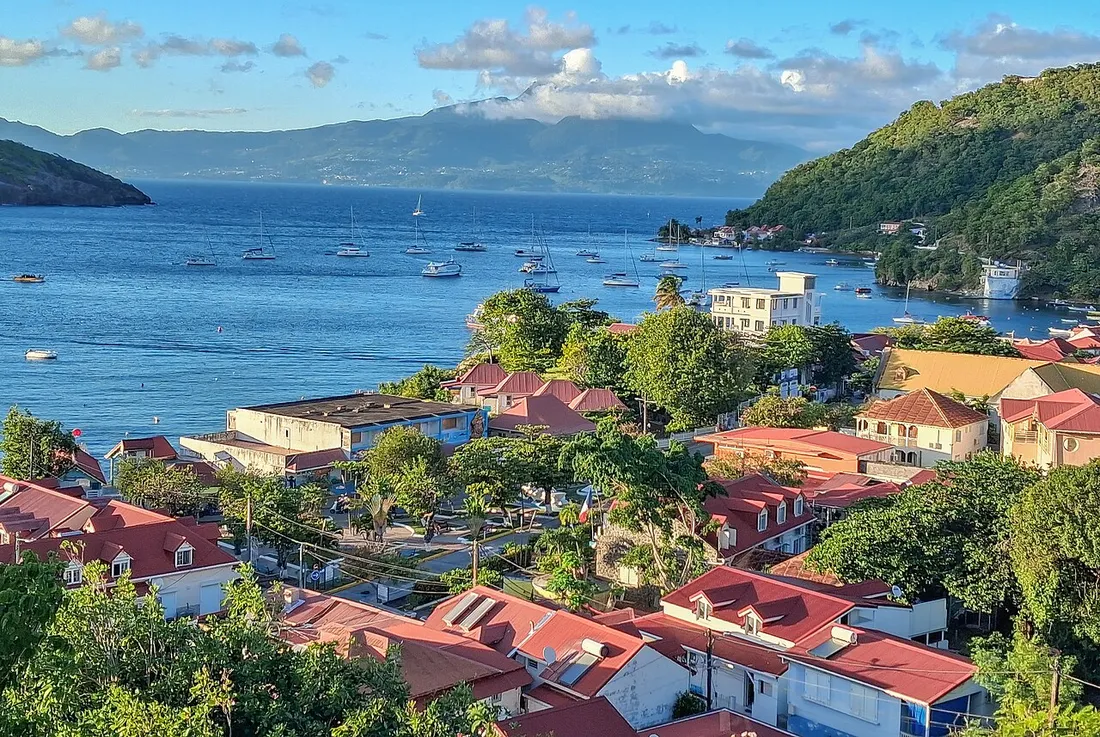
Constraint number one: an island (almost) without cars
This is the feature that shapes the entire management approach. Car traffic is strictly limited on Terre-de-Haut: no car rental for tourists, vehicles reserved for residents and professionals, and a village best explored on foot, by bike or by scooter (rental around 25 to 35 euros a day).
In practice, for an owner, this changes everything:
- The welcome doesn’t happen by car. Your travellers arrive at the pier with their luggage and have to reach the property on foot or by baggage shuttle. A rental more than a 10-minute walk uphill from the landing loses bookings — proximity to the village is a major search criterion.
- Cleaning and linen logistics are dictated by the terrain. No car boot to carry sheets and supplies: everything is carried or moved by cargo tricycle. A local team, on the ground on the island, becomes indispensable.
- Works and supplies come by boat. A sofa, a mattress, an air conditioner: every material arrives by barge from Basse-Terre, with a transport surcharge of 15 to 30% and lead times of one to two weeks. You don’t “pop to the hardware store” the way you would in Pointe-à-Pitre.
The right instinct: when buying, choose a property close to the pier and the centre, and plan ahead for every intervention. A broken air conditioner on a Saturday in August can’t be fixed the same day here.
Scarce land and heritage buildings: what the protected bay imposes
The Bay of Les Saintes is a listed site, and the village of Terre-de-Haut has a strong architectural identity protected by planning rules. For an investor, this has two direct consequences.
Buying: few properties, high prices
Buildable land is almost nonexistent and transactions are rare. Price ranges remain high for Guadeloupe:
- A small Saintois house to renovate in the village: often 250,000 to 400,000 euros.
- A house with sea view or garden, ready to rent: 400,000 to 700,000 euros, sometimes more for a bay view.
On top of these prices comes the cost of renovation, inflated by the transport of materials. But scarcity supports value: a property in Les Saintes rarely sells at a loss.
Renovating and furnishing: respecting the framework
Façades, joinery, colours, roofing: any changes visible from public space are regulated. Before any exterior work, you must check with the town hall what falls under a simple declaration or a more thorough review in a protected zone. This framework isn’t just a constraint: it’s what preserves the “postcard” charm that justifies your rate. A rental that respects the Saintois style (wooden shutters, light tones, Creole furniture) rents better than a generic interior.
On the rental formalities side, the rule is the same as across Guadeloupe: declaration at the town hall before the first booking (Cerfa form no. 14004), with a registration number to display on your listings wherever the municipality has activated it — rollout planned for all municipalities by the end of 2026. You also collect the tourist tax from travellers, to pass on to the local authority.

Investing in Les Saintes: income, seasonality and specific costs
Let’s talk numbers, because investing in Les Saintes doesn’t follow the same logic as a property on mainland Guadeloupe.
Realistic rates and occupancy
- Studio or small house for 2-4 people in the village: 110 to 180 euros a night in high season (December to April), 80 to 120 euros in the shoulder season.
- Saintois house for 6 people with a view: 200 to 320 euros a night in high season.
- A frequent minimum stay: 2 to 3 nights, which fits the “extended day-trip” clientele well.
With 70-80% occupancy, a well-located studio commonly generates 25,000 to 38,000 euros in gross annual revenue; a family house with a view often exceeds 45,000 euros. The dry high season (December-April) and weekends book up early; September-October, quieter, is ideal for renovation work.
The cost overruns unique to the island
- Transport of consumables and linen: budget 15 to 25% more than an equivalent property in Grande-Terre.
- Deferred maintenance: keeping wear parts (seals, taps, AC remote) on site avoids waiting for a barge.
- Salt and humidity: as everywhere by the sea, air conditioners, locks and joinery age quickly — a regular technical check-up is essential.
- Remote management is impossible: without a local presence, the post-ferry welcome, the cleaning between tight back-to-back stays and the slightest breakdown become unmanageable.
That’s why an island tourist rental like this one is almost always entrusted to a team on site. The full management commission in Les Saintes is generally between 20 and 25% of rents — the gap with the mainland covers boat logistics and the on-foot welcome. To compare with other Guadeloupean property profiles, browse our rentals in Guadeloupe.
The Hostel Toucan approach to a rental in Terre-de-Haut
Managing a rental in Les Saintes is as much a craft of organisation as of hospitality. At Hostel Toucan, a concierge and vacation rental service in the French overseas territories, we approach these properties with a local team and clear commitments:
- Direct booking with no platform fees: your travellers book on our site, and you recover the OTA margin (15 to 18%).
- Free cancellation up to 7 days before arrival: decisive for a destination subject to ferry schedules and weather, and excellent for conversion.
- WhatsApp assistance 7 days a week: last-boat times, scooter rental, welcome basket, small fixes — a fast response, in the right time zone (-5 h in winter, -6 h in summer vs Paris).
- Mastered island logistics: welcome at the pier, cleaning between tight stays, maintenance planned ahead by barge.
Dreaming of sleeping facing the bay rather than leaving on the last ferry? Discover our accommodations in Guadeloupe. Do you own a Saintois house and want to rent it out with peace of mind, without dealing with the headache of boats and check-ins? Tell us about your property on our owners page: a free, no-commitment income estimate based on comparable properties in Terre-de-Haut.
FAQ
Can you manage a vacation rental in Terre-de-Haut on your own from mainland France?
It’s very difficult. The absence of cars, the mandatory welcome at the pier, the cleaning between closely spaced stays and the dependence on the barge for the slightest part make remote management hardly realistic. A local presence (or a concierge on the island) is all but indispensable to maintain a good level of service and reviews.
Do you need special authorisation to renovate a house in Les Saintes?
The bay is a listed site and the village has a protected architectural identity: any change visible from public space (façade, shutters, roofing, colours) must be checked with the town hall before work, sometimes with a reinforced review in a protected zone. Inside, you have more freedom, but respecting the Saintois style still pays off for rentals.
What budget is needed to buy a rental property in Terre-de-Haut?
Count on roughly 250,000 to 400,000 euros for a small house to renovate in the village, and 400,000 to 700,000 euros for a property ready to rent or with a sea view. To this add works whose cost is increased by transporting materials by boat. The scarcity of land does, however, strongly support resale value.
Is renting in Les Saintes profitable despite the cost overruns?
Yes, provided you position your property well (close to the pier and village) and manage it carefully. With 70-80% occupancy and rates of 110 to 320 euros a night depending on size and view, the income comfortably covers the logistical overruns, especially with direct booking and no platform commission.