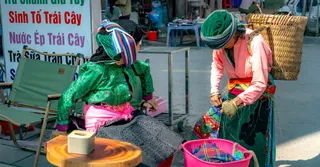
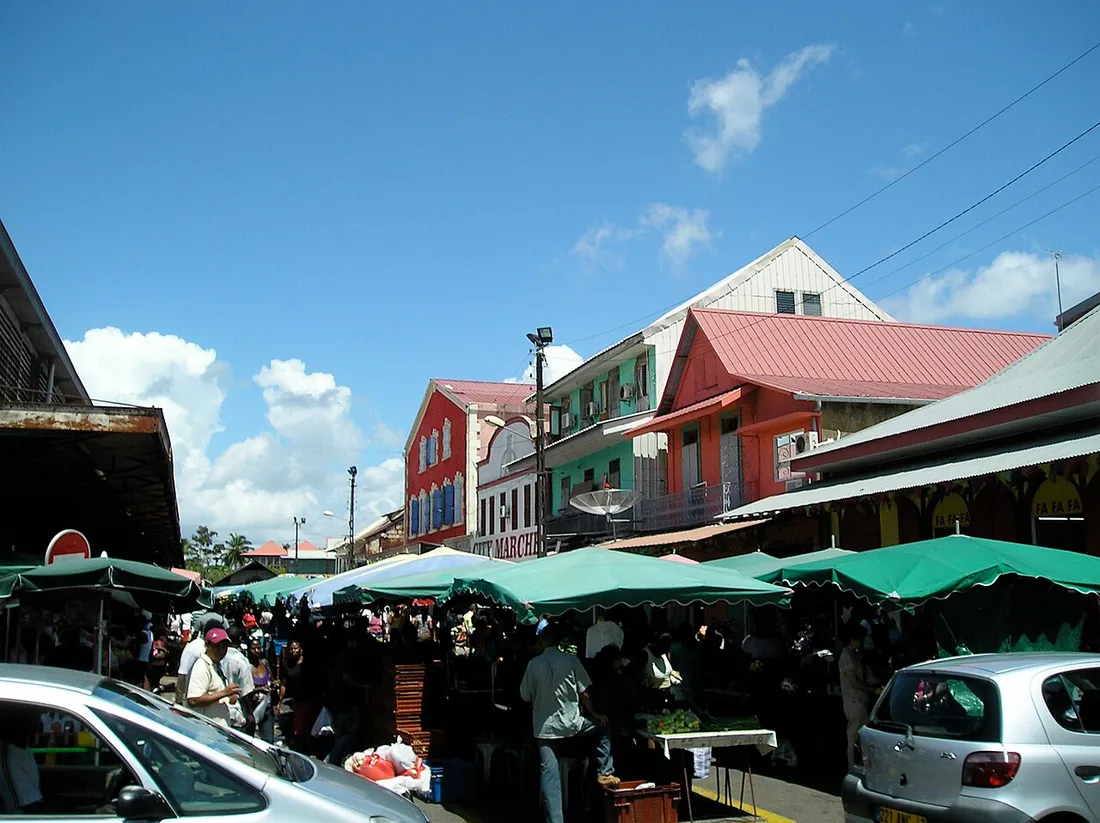
If there’s only one morning outing you plan during your stay in French Guiana, make it Cayenne Market. It’s here, under the central hall and along the colourful stalls that spill over onto the neighbouring streets, that the region truly comes into its own: a Creole, Hmong, Brazilian, Amerindian and metropolitan melting pot that crosses paths over plantains, chillies and bunches of herbs still damp with dew. As residents based a few kilometres from the centre, doing our weekly shop here, we’ll take you around like locals: the right days, the right hours, the must-see stalls and the shopping reflexes that make all the difference.
When Cayenne Market is open: the days that matter
Cayenne’s covered market, in the very heart of the capital and a stone’s throw from Place des Palmistes, runs four mornings a week: Wednesday, Friday, Saturday and Sunday. For a visitor, it’s the last three that are worth the trip.
- Friday morning: the buzz builds, the Hmong market gardeners from Cacao and Javouhey come down in force, and the choice of vegetables and herbs is at its peak.
- Saturday morning: the busiest, most festive day, when the whole town crosses paths and producers from the interior come down. Ideal for the atmosphere, less so for peace and quiet.
- Sunday morning: our favourite. The pace is gentler, you take time to chat, the Hmong gardeners come down en masse, the fishermen lay out the night’s catch, and the Asian food stalls are running at full tilt.
The bulk of the activity is concentrated between 6 a.m. and 1 p.m., with a vibrant heart of the market around 8–9 a.m. After midday, the stalls gradually empty. Wednesday remains more modest, geared more towards local regulars.
When to really come
Here’s the breakdown we suggest to our travellers, depending on what you’re after:
- 6 a.m. – 7:30 a.m.: for the freshest produce (just-landed fish, herbs, leafy greens), the pho soups beginning to steam and the air still cool. You avoid the 9–11 a.m. crush.
- 8 a.m. – 10 a.m.: the peak of the atmosphere, perfect for photos, tastings and buying spices. It’s also the time for good awara stews and jars of preserves.
- 11 a.m. – 1 p.m.: the end of market. Producers happily knock prices down rather than pack up: this is the bargain window, but the choice has thinned out.
A little tip: after 10 a.m., the best fish are gone and it starts to get heavy (often 30 °C by mid-morning). Bear in mind the time difference when you land — French Guiana is 5 hours behind Paris in winter and 6 in summer: if you’re arriving from mainland France, your body will wake you early the first few days, so you may as well make the most of it. As for the weather, in the dry season (mid-July to mid-November) the morning is glorious; in the rainy season a tropical downpour can come out of nowhere, and a folding umbrella in your bag weighs nothing.
The Asian corner: the famous Hmong soups
If there’s only one thing you taste, make it this. The Hmong community, settled notably in Cacao (around 75 km and a 1 h 15 drive from Cayenne) and in Javouhey since the late 1970s, has become French Guiana’s market-gardening lungs and shaped part of the local cuisine. At the market, its soup stalls are an institution.
The Hmong soup / broth
Served in a large steaming bowl, the Hmong broth pairs a fragrant pho (beef or chicken broth, rice noodles, fresh herbs, bean sprouts) with condiments you add yourself: chilli, lime, nuoc-mâm sauce. Reckon on €5 to €9 a bowl. It’s generous, it’s the connoisseur’s breakfast, and yes, you eat a scalding soup in the tropics at 7 a.m. — trust us. Ask for the chilli on the side if you’re not used to it: here, it doesn’t mess about.
Also worth trying in the Asian corner:
- Spring rolls and prawn fritters fried to order, around €1 each.
- Bo bun and fried rice to take away for lunch.
- The Hmong vegetables: bok choy, water spinach, Chinese mustard, chayote (christophine), various leafy greens, sold in generous bunches at around €1.50 to €2.50, which you won’t find anywhere else this fresh.
If Cacao tempts you, know that its own Sunday morning market is worth the trip for anyone with a car (essential in French Guiana). But in Cayenne, you’re already tasting the essentials.
Amazonian fruits: the great change of scene
This is the stall that gets the phones out. Guiana’s fruits often have no equivalent in mainland France, and the vendors will gladly let you taste if you ask nicely.
Our list of discoveries to bring back:
- Maracudja (passion fruit): tangy, perfect in juice. Around €3–4 a kilo.
- June plum, custard apple, sapodilla: creamy textures, floral aromas.
- Comou and wassaï (Guianese açaí): the Amazonian berries turned into a thick, nourishing juice.
- Awara: the emblematic orange fruit, the base of the famous Easter awara stew, a dish that simmers for 24 to 48 hours.
- Starfruit, soursop, rambutan, mango and the huge, sweet Guianese grapefruit.
A local tip: try a fresh wassaï juice on the spot. Served plain or sweetened, it’s the experience that best sums up Amazonian generosity.
Spices, chillies and Creole products
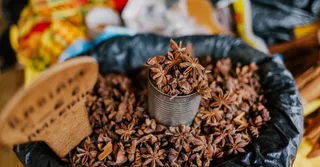
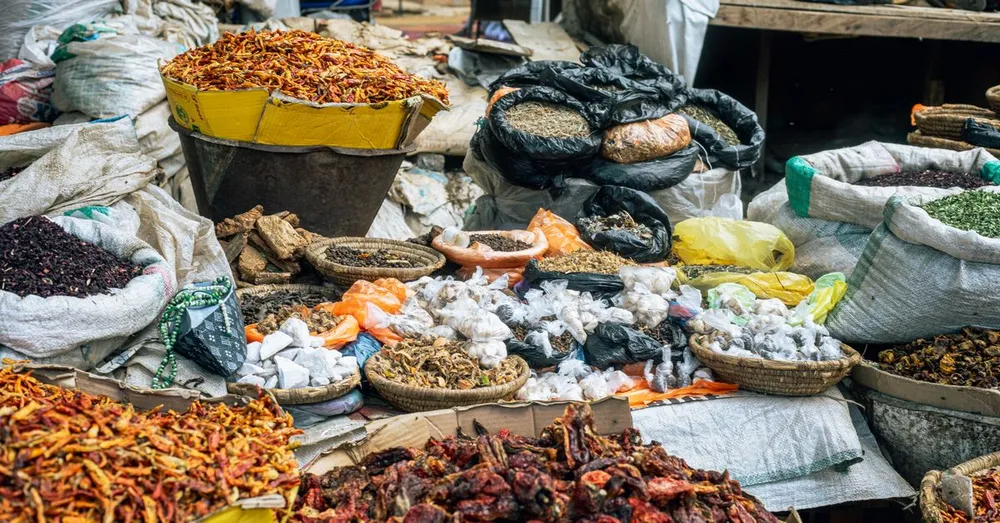
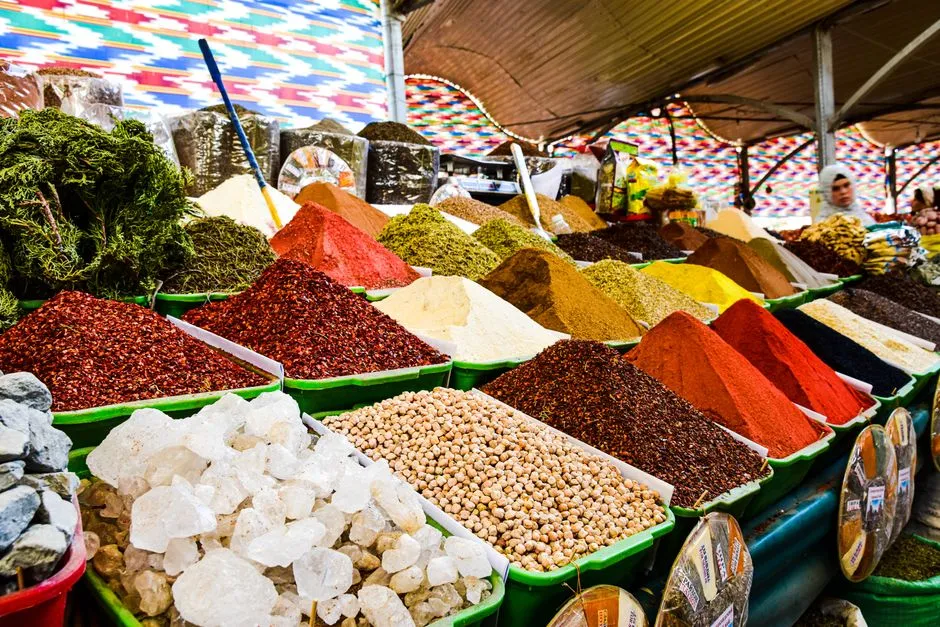
As you head up towards the covered aisles, the smell changes: you enter the kingdom of spices and of Creole and Bushinengue cooking. This is where we advise our travellers to put together their “edible souvenir kit”, far more authentic than at an airport shop.
- Chillies: from the mild, fragrant vegetable pepper to the fearsome “7-pot” chilli or piment-bonda-man-Jacques (cousins of the habanero), to be handled with care. Reckon on €2 to €4 a punnet. Ask to taste or smell, and specify “mild” or “hot” according to your tolerance.
- Roucou (annatto): the red-orange powder that colours and flavours rice and sauces. Light, unbreakable, found nowhere else: the perfect souvenir.
- Couac: the toasted cassava semolina, a staple of local food, sold in bags (1 kg for €5 to €7, or small bags at €2–3). Keeps for months, ideal as a gift.
- Colombo, massalé, bay rum berry: the blends that flavour chicken colombos and fish court-bouillons.
- Exotic jams and syrups: maracudja, guava, comou, June plum, parépou — often homemade.
This is also where you’ll find the Creole cakes (buttered bread, sweet-potato cake, coconut sugar), ideal for an afternoon snack, as well as the chocolate and coffee from Cacao.
Fish and seafood
Along the fish hall, the night’s catch is spread out on ice: weakfish, catfish, coulans, Guianese prawns, sometimes river coumarou or balaou. Prices vary with the catch — reckon on €8 to €18 a kilo depending on the species. A few reflexes:
- Buy fish last, just before you leave, to keep the cold chain in this climate.
- Ask for it to be scaled and gutted on the spot: it’s free and included.
If you’re staying in a rental with a kitchen, it’s the chance for a court-bouillon or a home grill that very evening.
Shopping tips: buying smart and local
A few on-the-ground reflexes that make the difference:
- Bring cash and small change. This is a French overseas region, so everything is in euros, but many small producers have no card terminal. Notes of €5, €10 and €20 and coins make everything easier, especially for fruit sold by the piece.
- Come with your shopping basket. Plastic bags are becoming scarce; a basket or sturdy bag is more practical and greener.
- Taste and ask for advice. The vendors love explaining how to cook couac, dose a chilli, prepare a broth or cook dachine.
- Compare by doing a full first lap before buying. Prices and freshness vary from one stall to the next, especially for fruit and fish.
- Early morning for freshness, end of market for prices. Match your timing to your goal.
- Beware of the heat. Buy fresh produce at the end of your round and get it stored quickly.
- Speak Creole with a smile. A “bonjou, ça ka maché?” opens many a conversation.
Our ideal 2-hour foodie itinerary
Allow 1 h 30 to 2 h to wander without rushing, taste a dish and do your shopping. Here’s how we string together a successful Sunday morning, in practice:
- 6:45 — Arrival, coffee and a Hmong broth to wake up.
- 7:30 — Tour of the Amazonian fruits, a taste of wassaï juice, buying maracudja and sapodilla.
- 8:15 — Spice stop: roucou, vegetable chilli, couac.
- 8:45 — Fish hall for the evening’s dinner.
- 9:15 — Final stop for Creole pastries, then a break on Place des Palmistes, in the shade of the royal palms.
What to bring home in your suitcase
The most travel-friendly foodie souvenirs:
- Roucou and spice blends (light, unbreakable).
- Couac and bags of dry sweets.
- Chilli sauce and jam in jars (to put in the hold).
- Chocolate and coffee from Cacao.
Avoid, on the other hand, overly ripe fruit if you’re flying again straight away: the heat of the hold is fatal to them.
How to get there and extend the Guianese experience
A car is essential in French Guiana. From Félix-Éboué airport (Matoury), reckon on about 20 minutes to the centre of Cayenne; from Rémire-Montjoly, around ten minutes. As city-centre parking is tight at weekends, park near Place des Palmistes or the seafront, 5 minutes’ walk away, and finish on foot.
The market is just a gateway. Once your spices are in the bag, French Guiana opens its arms: the Guiana Space Centre at Kourou (1 hour’s drive, free visit by reservation, and the thrill of an Ariane 6 or Vega launch), the Salvation Islands, the Kaw marshes at sunrise, or Saint-Laurent-du-Maroni and its Transportation Camp. A practical reminder: the best time remains the dry season, from mid-July to mid-November, and the yellow fever vaccine is mandatory to enter the territory. To organise all of this, our complete guide to French Guiana gathers our itineraries and good addresses tested on the spot.
Planning your stay around the market
Cayenne Market is best savoured with a comfortable base and a kitchen to transform your finds. At Hostel Toucan, our accommodation in Cayenne, Rémire-Montjoly and Matoury is designed for just that: well located to explore, equipped to cook your market buys. By booking directly, you benefit from:
- Direct booking with no platform fees: you pay the fair price.
- Free cancellation up to 7 days before arrival.
- WhatsApp assistance 7 days a week for your questions, including “what time does the market open tomorrow?” and our best stalls of the moment.
Discover our rentals in French Guiana to plan your stay. And if you own a property here, find out how our property management for owners takes care of everything, all year round.
On a Sunday morning, we’ll surely be somewhere between the chadon béni stalls and the jars of maracudja jam. Cayenne Market isn’t an attraction to tick off: it’s an encounter. Come with an empty stomach and a curious appetite — you’ll leave with a bag of spices and a much better understanding of what French Guiana really is.
FAQ
What days and hours is Cayenne Market open?
The covered market opens four mornings a week — Wednesday, Friday, Saturday and Sunday — generally from 6 a.m. to 1 p.m. For visitors, Friday, Saturday and Sunday morning are the liveliest, best-stocked slots. Arrive between 6:30 and 7:30 a.m. for the freshest produce and to avoid the crowd, or between 8 and 10 a.m. for the peak atmosphere.
What absolutely must you taste at Cayenne Market?
Three essentials: the Hmong broth (fragrant pho soup, €5 to €9 a bowl), a fresh wassaï or comou juice, and Amazonian fruits like maracudja, sapodilla or custard apple. On the spice side, leave with roucou, vegetable chilli and couac.
What foodie souvenirs to bring back, and can you pay by card?
Go for roucou and spice blends, couac, chilli sauces and jam in jars, and the chocolate and coffee from Cacao: light and long-lasting, they travel well in the hold. Bring cash in euros: many small stalls, especially producers and the soups, don’t take cards.
How do you get to the market and where to stay to visit it easily?
A car is essential: reckon on about 20 minutes from Félix-Éboué airport and around ten from Rémire-Montjoly. A rental near the centre of Cayenne or in Rémire-Montjoly lets you reach the market in a few minutes. Hostel Toucan offers well-located accommodation with direct booking, no platform fees, free cancellation up to 7 days before arrival and WhatsApp assistance 7 days a week.