When people ask us where to start a stay in Martinique, our answer is almost always the same: the covered market of Fort-de-France. Before the beaches of Les Salines, before Mount Pelée, before that first sip of agricultural rum, there is this big, colourful hall in the heart of the island’s capital, where the whole island reveals itself to be smelled, tasted and understood in a single morning. It’s free, it’s central, and it’s the ideal place to grasp the soul of Martinique: the colours of the spices, the scent of sun-ripened fruit, the Creole chatter of the market women and the smell of smoked chicken rising from the food stands. Here is our hyperlocal guide, written by people who actually shop there, to enjoy the Fort-de-France market without getting the hours, the prices or the stalls wrong.
The grand covered market: the beating heart of Fort-de-France
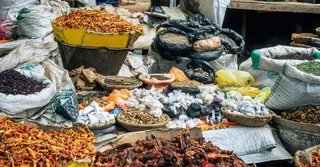
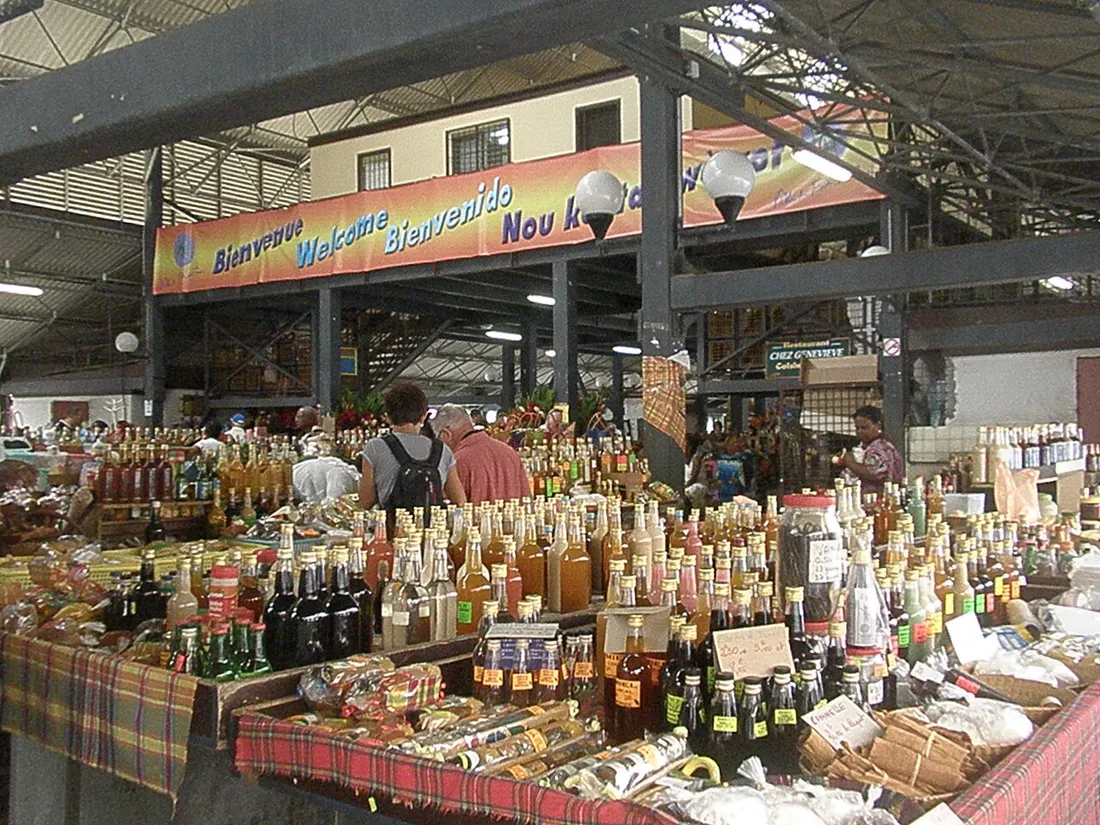
The main covered market occupies a historic iron-and-cast-iron building on rue Isambert (between rue Blénac and rue Antoine Siger), a stone’s throw from the Saint-Louis cathedral and La Savane park. It’s often called the “Victor Schoelcher market”, the “Sainte-Catherine market” or simply “the grand market”. Its late-19th-century metal structure, painted in bright colours, is part of the city’s heritage: look up, the framework is worth the glance. It brings together a good hundred stalls divided between fine groceries, local fruit and vegetables, flowers, jams, basketry, crafts and rum-based products, with a cluster of small Creole restaurants along the sides.
The fish market and the vegetable market occupy neighbouring halls (notably towards rue Antoine Siger and the seafront). Many tourists think they’ve “seen it all” by staying under the grand hall: take ten extra minutes to push on to the fruit-and-vegetable stalls, that’s where the people of Fort-de-France really come alive. There are three reasons to come: to buy spices and products you won’t find elsewhere at this price, to taste real Creole cooking served by the women who’ve been making it for thirty years, and to soak up the atmosphere, camera in hand. Allow one to two hours to wander round at a relaxed pace. As Martinique is a French overseas department, you pay in euros and everyone speaks French, even if Creole remains the language of the market.
Real hours (not the ones in the brochures)
Posted hours and reality often differ. Here is what we observe on the ground:
- Monday to Saturday, activity starts around 6-7am and is in full swing from 8am to 1pm; the market generally closes around 5pm, with the food stands operating mainly at lunchtime.
- In the afternoon, many stalls close or empty out from 1-2pm; some market women stay until 4-5pm in high season.
- On Sunday, the atmosphere is very subdued: only a few stalls, or even closure. Don’t schedule your only visit for a Sunday.
- The best window: the morning, between 7am and 11am, when the produce is fresh, the light is soft and the crowd still bearable.
For choosing the day: Friday and Saturday mornings are the peak of activity, all the producers are there, ideal for the experience and the photos. Tuesday to Thursday mornings are quieter, perfect for taking the time to chat and haggle without the crowd.
A handy reminder: Martinique lives in its dry season (the Carême) from December to April, the most pleasant period to stroll around. During carnival (February-March), the town centre comes alive enormously and certain parade days can disrupt access or shift the hours. Bear in mind the time difference too if you’re arriving from mainland France (-5h in winter, -6h in summer compared to Paris): the early-morning wake-up for the market happens all by itself in the first few days.
The spice stalls: the beating heart of the market
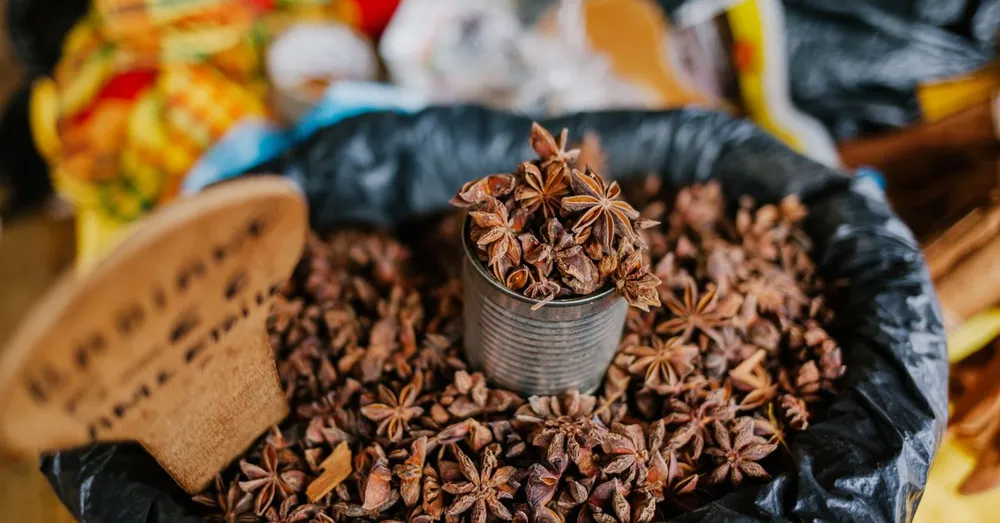
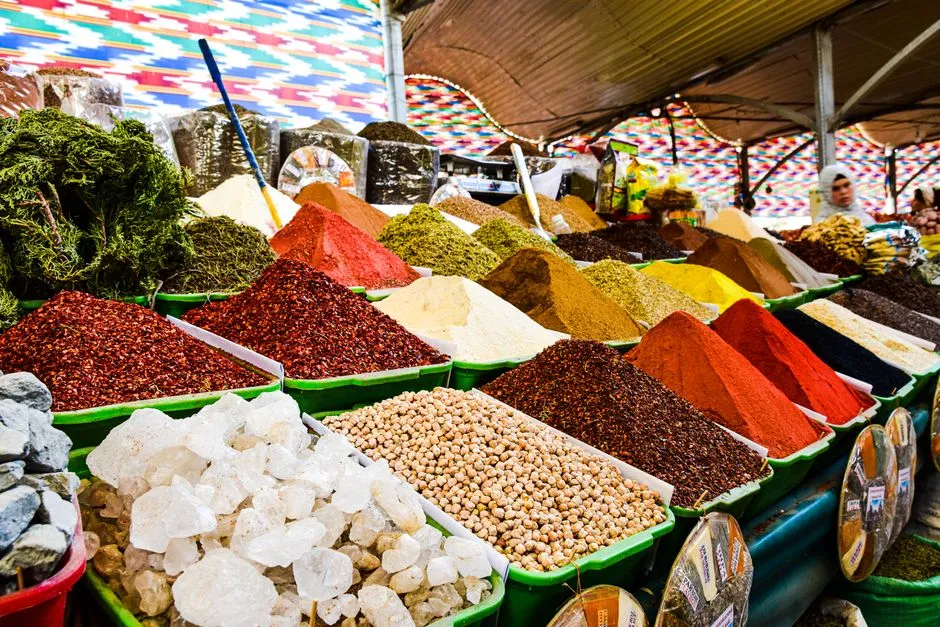
If one thing alone justifies the detour, it’s the pyramids of spices. The market women line up bags and jars with names that whisk you away.
Colombo, the emblematic blend
Colombo is to Caribbean curry what ras el hanout is to the Maghreb: a blend (turmeric, coriander, cumin, mustard, garlic, sometimes toasted rice) that flavours chicken, pork or goat. A 100 g bag goes for around €3 to €5. Choose blends ground in front of you or freshly prepared: they are noticeably more fragrant than supermarket ones.
Don’t forget to put in the basket
- Bay rum leaves (bois d’Inde) (leaves and berries): the aromatic signature of black puddings and court-bouillons.
- Sweet pepper (piment végétal) and Bondamanjak pepper: the latter, scorching, to be dosed with care.
- Martinique vanilla (Bourbon vanilla): plump pods, count on €2 to €4 per pod depending on size, or €5 to €10 for a batch of 3-5.
- Nutmeg, cinnamon sticks, dried ginger, allspice.
- Steeped rums and homemade punches (flambéed banana, passion fruit, ginger): €12 to €20 for a 50 cl bottle; you’ll also find bags of fruit and spices to steep in rum yourself.
- Guava jams and cane syrups: €4 to €7 for the artisanal jar.
Price benchmarks to avoid the “cruise” tariff: a “tourist assortment” spice bag often sells for €10, sometimes negotiable down to €8.
How to recognise real quality
- Vanilla: a good pod is supple, glossy, slightly oily, with no dry cracks. Be wary of stiff, dull pods sold at a premium.
- Colombo: it should smell strongly (turmeric, coriander, cumin); a bland blend has often been sitting too long.
- Steeped rum: ask whether it’s homemade or rebottled; taste it when offered, that’s the custom.
Local fruit and vegetables: the Creole basket
The market is also the best place to discover fruit you’ll never come across in mainland France, at far gentler prices than in a tourist shop. An absolute must to taste:
- Mango (Julie, Bassignac) in full season from May to August, a kilo between €3 and €5;
- Sugarloaf pineapple, sweet and low in fibre, around €2 to €3;
- Passion fruit (maracudja), starfruit, soursop, guava;
- Chayote (christophine), yam, breadfruit and sweet potato on the vegetable side;
- Local lime and bananas (apple-fig, plantain).
Don’t hesitate to ask for a taste: it’s part of the market’s culture, and the market women love explaining how to cook a chayote or open a soursop.
The Creole food stands: the gourmet break
It’s impossible to leave the market on an empty stomach. The little restaurants tucked around the hall serve authentic Creole cooking, often at gentle prices. Worth a try:
- Crispy salt cod fritters (accras), the king of Caribbean snacks;
- Chicken or goat colombo, served with rice and red beans;
- Smoked chicken (poulet boucané) smoked over wood;
- Bokit, the doughnut-sandwich to fill;
- Fresh local juices: passion fruit, guava, ginger, sorrel (groseille pays), cane.
A full dish generally costs between €10 and €15, a fresh juice around €3. For the ti-punch or the rum, ask for advice: Martinique produces an AOC agricultural rum unique in the world, and many stands offer homemade punches.
Key market women and the art of the encounter
The market is above all about people. The market women (“doudous”, even if the term should be used with respect) know their products and love to explain. Our tip: spot a smiling vendor who takes her time, ask her about colombo or vanilla, and you’re in. You’ll leave with recipes thrown in. A few rules of local etiquette that change everything:
- Say hello when stepping up to a stall: a “Bonjour, ça va?” opens every door.
- Ask before photographing people or stalls: some market women happily agree, others don’t.
- Creole is everywhere; French is understood by all, but slipping in a “Sa ka maché?” always raises a smile.
- Buy a little from whoever gives you a taste: it’s the basis of the exchange.
Anti-scam tips for tourists
The market is no den of thieves, far from it, but as in any tourist area, a few reflexes will spare you disappointment:
- Compare 2-3 stalls before buying vanilla or rum: the price gaps are real.
- Beware of the unposted “fixed price”: always ask the price beforehand, especially for vanilla sold by weight.
- Haggle with a smile, never aggressively: 10-15% off a batch is reasonable, no more. Bargaining goes down better on large volumes and basketry than on fruit, which is already fairly priced.
- Check the capacities of steeped-rum bottles and the date on the jams.
- Pay in cash for small amounts (many stalls have no card terminal), but keep an eye on the change handed back.
- Stay alert in the crush: bag closed in front of you, as in any town-centre market.
For vanilla in particular, an abnormally low price often hides a dried-out pod. Better to pay €2 more for a product that will truly perfume your desserts.
What to bring home in your suitcase?
Here’s our little list of souvenirs that pass through Aimé Césaire airport (Le Lamentin) security without a hitch:
- Dry spices (colombo, bay rum, nutmeg, vanilla): light, fragrant, foolproof — place them in sealed, labelled bags, perfectly allowed in the cabin.
- Jams and syrups: to put in the hold if you don’t have a generous cabin allowance.
- Steeped rum or AOC agricultural rum: in the hold, well wedged; mind the customs limits on arrival.
- Basketry and artisanal soaps: authentic and easy to carry.
How to get there and plan your visit
The covered market is right in the centre of Fort-de-France, about 25 minutes from the airport and 20 minutes from Les Trois-Îlets. If you’re staying in town, everything is within walking distance. From Les Trois-Îlets, the maritime shuttle (the vedettes) is the most pleasant option: a 20- to 30-minute crossing to the La Savane landing stage, a 5-minute walk from the market, for about €7 to €8 return, and you avoid the traffic jams.
By car, parking in the town centre is tricky in the morning: aim for a paid car park (Savane, Perrinon) early rather than circling around. Generally speaking, a car remains strongly recommended to explore the rest of the island (80 km long, the winding North towards Pelée and Saint-Pierre), but for the market itself, the boat or walking are better. Bring some change: certain small stalls don’t take cards.
A well-paced morning:
- 8am: arrival at the grand covered market, a tour of the spices.
- 9.30am: neighbouring halls (fish, fruit, vegetables).
- 10.30am: fresh-juice break (passion fruit, cane) or accras in the neighbourhood.
- 11.30am: La Savane, the Schœlcher library and the cathedral just a few steps away.
The market fits perfectly into a wider itinerary, from the distilleries of the Rum Route (Clément, Depaz, Saint-James) to the Balata Garden, taking in the Caravelle peninsula and the southern beaches (Les Salines at Sainte-Anne, Anse Dufour or the black-sand Anse Noire). Find our other gems in our complete guide to Martinique.
Make the market your first Martinican stop
The Fort-de-France market is the ideal sensory gateway: in a single morning, you leave with the flavours, the words and the faces of the island. The secret comes down to three words: come early, compare, connect.
To make this outing smooth, you’ll want a well-placed base. At Hostel Toucan, we offer accommodation in Martinique selected for their location and comfort, with direct booking and no platform fees, free cancellation up to 7 days before arrival and WhatsApp assistance 7 days a week for all your on-the-ground questions: where to buy the best colombo, what time to avoid the crowd, which beach to choose depending on the swell. And if you own a property on the island, discover our concierge offer for owners.
Bring a shopping bag, come on an empty stomach with your camera charged: the Fort-de-France market will set the perfect tone for the rest of your Creole holidays.
FAQ
What are the opening hours of the Fort-de-France covered market?
The grand covered market opens Monday to Saturday, with activity from 6-7am, a peak from 8am to 1pm and a closing time around 5pm depending on the stalls. The best time to visit is the morning, between 7am and 11am, when the produce is fresh and the crowd bearable. On Sunday, activity is very subdued or even closed: avoid scheduling your only visit then.
What is the best day to go to the Fort-de-France market?
Friday and Saturday mornings are the liveliest, with all the producers present and the atmosphere at its peak, perfect for the experience and the photos. For more quiet and to chat at leisure with the market women, favour Tuesday, Wednesday or Thursday morning.
What can you buy at the Fort-de-France market?
Spices are the star: colombo (€3 to €5 for 100 g), bay rum (bois d’Inde), pepper, Martinique vanilla (€2 to €4 a pod), cinnamon, steeped rums and homemade punches (€12 to €20 for 50 cl) and guava jams. On the fruit side, taste the mango, the sugarloaf pineapple, the passion fruit and the soursop. The neighbouring halls house the fish and vegetable markets, and the food stands serve fritters, colombo and fresh juices.
How do you avoid scams at the Fort-de-France market?
Compare two or three stalls before buying, always ask the price beforehand (especially vanilla sold by weight) and haggle with a smile, without going beyond 10-15% off. Check the suppleness of the vanilla pods, the capacity of the bottles and the date on the jams. Pay in cash for small amounts, as many stalls have no card terminal, and keep an eye on the change handed back.
How do you get to the covered market from Les Trois-Îlets?
The most pleasant way is the maritime shuttle (the vedettes) linking Les Trois-Îlets to the La Savane landing stage in 20 to 30 minutes, for about €7 to €8 return. From there, the market is a 5-minute walk away. By car, parking in the town centre is difficult in the morning: favour a paid car park such as Savane or Perrinon rather than circling around. To explore the rest of the island, a car is strongly recommended.