There is something in the heat of a Creole market that sums up all of Guadeloupe: the ochre hues of dried chillies, the heady scent of fresh vanilla, the buzz mixing French and Creole, and those vendors who call out to you with a mischievous smile. Visiting a Guadeloupe market is no mere shopping chore, it is a feast for the senses. But it is also a place where the unwary traveler can pay three times the fair price. Here is the breakdown our hosts share with every one of our travelers.
Why the market is the beating heart of the archipelago
Guadeloupe is a French overseas department shaped like a butterfly, set in the Caribbean, 5 hours behind Paris in winter. With its roughly 380,000 inhabitants, the euro as its currency and Creole coloring its French, the archipelago lives to the rhythm of its market stalls. Here the market remains a social space as much as a commercial one: people come as much to swap news as to buy their local vegetables.
On the two wings of the butterfly, the atmosphere shifts. On the Grande-Terre side (limestone, turquoise beaches), the markets are lively and touristy, especially in Pointe-à-Pitre, the economic hub. On the Basse-Terre side (the Soufrière volcano at 1,467 m, the tropical forest of the National Park), the markets smell more of the land, of market gardening and Creole gardens.
The markets to know
- Saint-Antoine Market (Pointe-à-Pitre): the most iconic, a covered hall, ideal early in the morning. A riot of color, but the most tourist-oriented area.
- Sainte-Anne Market: friendly, by the sea, perfect to pair with Caravelle beach.
- Saint-François Market: a good balance between authenticity and carefully selected products.
- Basse-Terre Market: more local, less frequented by visitors, often gentler prices.
Host tip: arrive before 9 a.m. The produce is fresher, the choice complete, and the vendors more available to explain their products.
Decoding the stalls: what you are really looking at
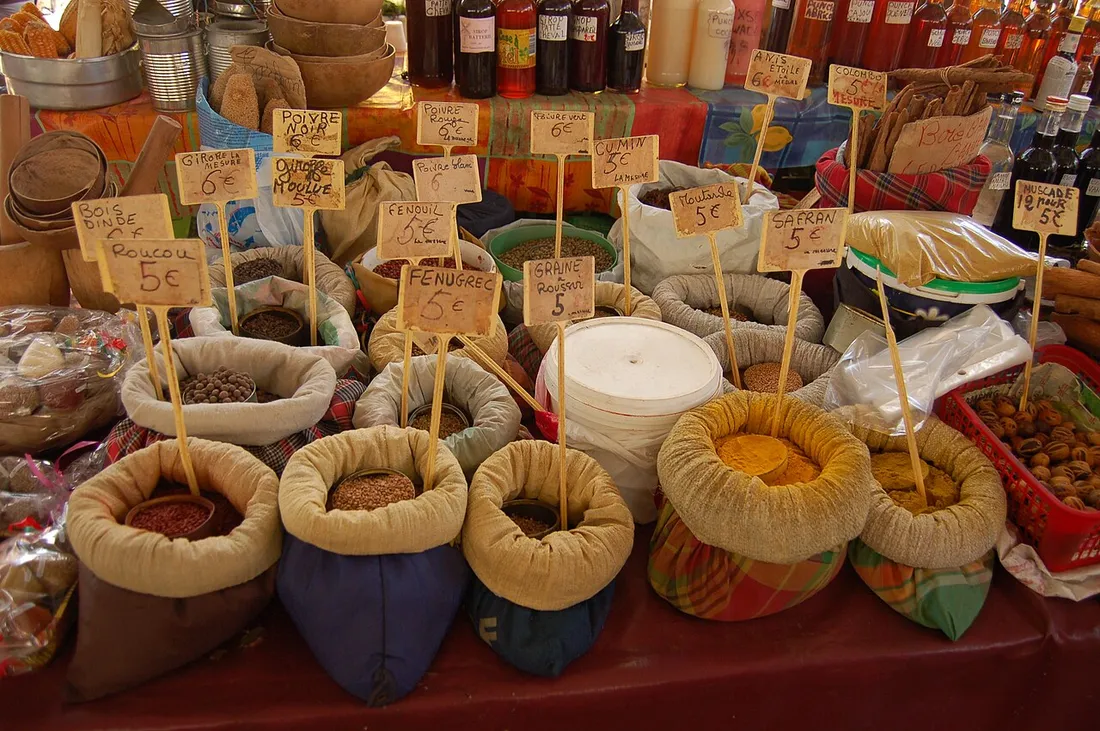
The classic traveler’s trap is buying by pretty colors without understanding. Here is how to read a Creole stall.
The star spices of colombo
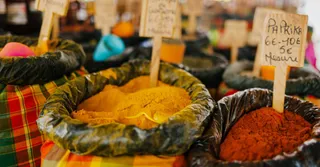
Colombo is THE iconic blend of Guadeloupean cuisine, a legacy of indentured Indian laborers. A good colombo combines turmeric, coriander, cumin, fenugreek, mustard and chilli. Beware of uniformly fluorescent-yellow packets: an excess of coloring turmeric often masks a poor blend. A quality colombo has a complex, slightly roasted aroma, not just a “yellow” one.
- Fair price: €3 to €6 per 100 g for an artisanal blend in a packet.
- Tip: ask to smell it before buying. A vendor proud of her product will hold it out without hesitation.
Vanilla: a fragile and costly queen
Locally grown Bourbon vanilla is a treasure, but also a product frequently overpriced or of mediocre quality on the tourist side.
- A quality pod is supple, plump, dark brown, and bends without breaking. If it is dry and brittle, walk away.
- Realistic price: €2 to €4 for a fleshy pod sold individually; beware of “lots” dumped at €1 a pod, often dried out.
- The white frosting (vanillin crystals) on the surface is a good sign of ripeness, not a defect.
Bois bandé and other “preparations”
You cannot talk about a Guadeloupe market without mentioning the famous bois bandé, this bark sold as an aphrodisiac, often steeped in rum. It is a cultural product, but surrounded by a great deal of commercial folklore.
- Sold as dried bark or in a prepared punch, expect €5 to €10 for a packet of bark.
- Stay clear-eyed: its virtues are mostly traditional. Don’t buy a “miracle elixir” for €30.
- Same goes for packets of “detox ti-punch” or “péyi slimming tea”: often pure marketing for visitors.
The other must-haves
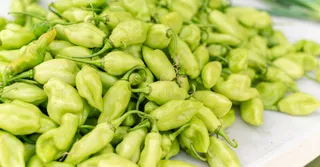
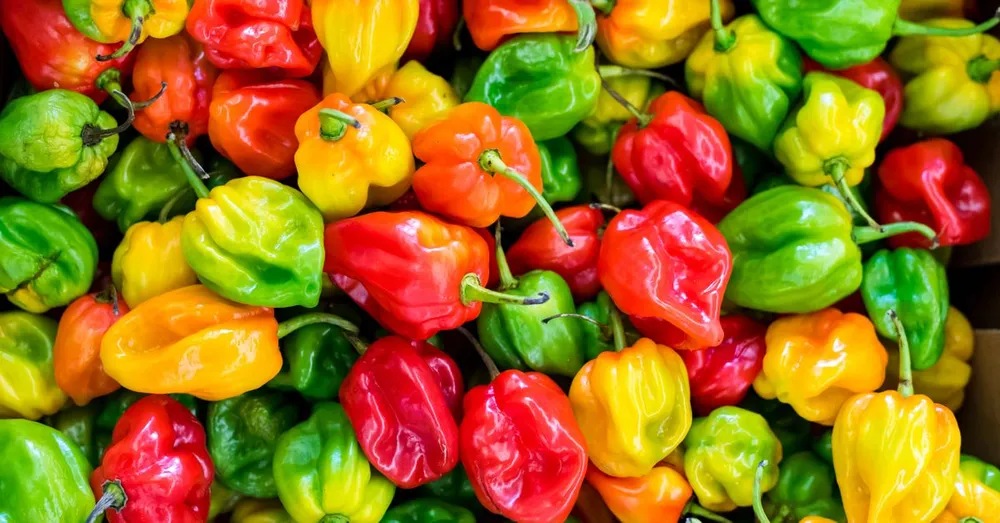
- Chillies: West Indian (very hot), vegetarian (fragrant without the heat). Sold fresh, as powder or as paste.
- Cinnamon sticks, nutmeg, ginger, fresh turmeric: Basse-Terre overflows with them.
- Péyi jams and syrups: guava, passion fruit, coconut. Check the ingredient list, some are overloaded with industrial sugar.
- Flavored rums: lemon-ginger, vanilla, passion fruit. Delicious, but compare with the distilleries (Marie-Galante: Bielle, Bellevue, Père Labat) to gauge a fair price.
Smart buying habits: avoiding tourist traps
Every week our hosts see travelers come back delighted… and a few who got fleeced. Here are the golden rules tested in the field.
- Take a first walk around without buying. Spot the average prices before committing. The gaps between neighboring stalls can reach 40%.
- Compare tourist vs. local. The stalls along the edge of the main aisle, facing the cruise shuttles, often charge the highest rates. Step back two rows.
- Negotiate with a smile. Haggling is accepted, especially on lots. But it is done with respect: a friendly Creole “ça, c’est cher pour moi” (“that’s expensive for me”) opens many doors.
- Buy by weight when you can. The pre-packaged “special souvenir” bags carry the biggest markup. Loose is fresher and cheaper.
- Pay in cash. Many stalls have no card terminal. Bring small euro change.
- Beware of cellophane-wrapped “souvenir packs.” Prettily presented, they often contain lower-quality spices at an inflated price.
- Ask about the origin. A “péyi” (local) product is worth more than a repackaged reimported one. An honest vendor will tell you.
A realistic budget for a discovery basket
To bring home real treasures without being fleeced, count on roughly:
- 1 packet of artisanal colombo: ~€5
- 3 fleshy vanilla pods: ~€9
- 1 jar of péyi guava jam: ~€5
- 1 packet of dried vegetarian chilli: ~€3
- 1 small artisanal flavored rum: ~€12
That makes a complete, authentic gourmet basket for around €30 to €35, versus double in a tourist-aisle “souvenir pack.”
When and how to plan your market outing
The best time to visit Guadeloupe is the dry season, from December to April: a market in the sun, without a shower, is ideal. Pôle Caraïbes Airport (Pointe-à-Pitre) puts most of our accommodations within 30-45 minutes of the major markets.
A few itineraries our travelers love:
- Grande-Terre morning: Sainte-Anne market at daybreak, then a swim at Caravelle beach (5 min).
- Basse-Terre day: Basse-Terre market, then the Carbet Falls or snorkeling at the Cousteau Reserve (Malendure, Pigeon Islets).
- Island getaway: market in Terre-de-Haut (Les Saintes), a bay ranked among the most beautiful in the world.
Also keep the time difference in mind when you arrive: a morning market is perfect for settling into your rhythm the first few days.
Staying in the right place to live the markets
Fully experiencing the Creole markets also means staying a few minutes from the stalls, with a fully equipped kitchen to simmer your first colombo. At Hostel Toucan, our accommodations in Sainte-Anne, Saint-François, Le Gosier or Deshaies are chosen for their closeness to these living hubs.
By booking directly on Hostel Toucan, you enjoy a booking with no platform fees, free cancellation up to 7 days before arrival, and WhatsApp support 7 days a week: our hosts point you to the best market of the day, trusted vendors and recipes to try. To plan your whole trip, check out our complete guide to Guadeloupe. And if you own a property on the archipelago, find out how we showcase it through our owners offer.
The market, in Guadeloupe, is not a box to tick: it is the first true contact with the Creole soul of the island. Take your time, open your nostrils, ask questions. And leave with a little piece of the archipelago in your suitcase, to cook up again at home.
FAQ
Which is the best market to visit in Guadeloupe for a first trip?
The Saint-Antoine market in Pointe-à-Pitre is the most iconic for its atmosphere, but it is also the most touristy. For a more authentic experience and often gentler prices, favor the Basse-Terre market or the one in Sainte-Anne, ideal to combine with Caravelle beach. Arrive before 9 a.m. for freshness and the best choice.
How can you recognize a real, quality vanilla pod at the market?
A good Bourbon vanilla pod is supple, plump and dark brown: it bends without breaking. If it is dry and brittle, avoid it. The white frosting on the surface (vanillin crystals) is a sign of ripeness, not a defect. Count on €2 to €4 for a fleshy pod; beware of lots dumped at €1, often dried out.
Can you negotiate prices at Guadeloupean markets?
Yes, haggling is accepted, especially on lots and loose goods, as long as you stay smiling and respectful. First take a full walk around to spot average prices: the gaps between neighboring stalls can reach 40%. Step back two rows from the main aisle facing the cruise shuttles for better rates.
Is the bois bandé sold at the market worth buying?
Bois bandé is a Guadeloupean cultural product, sold as dried bark or in a prepared punch for around €5 to €10 a packet. Its aphrodisiac virtues are mostly a matter of tradition. Stay clear-eyed in the face of miracle elixirs sold at €30 or péyi slimming teas, often pure marketing for tourists.