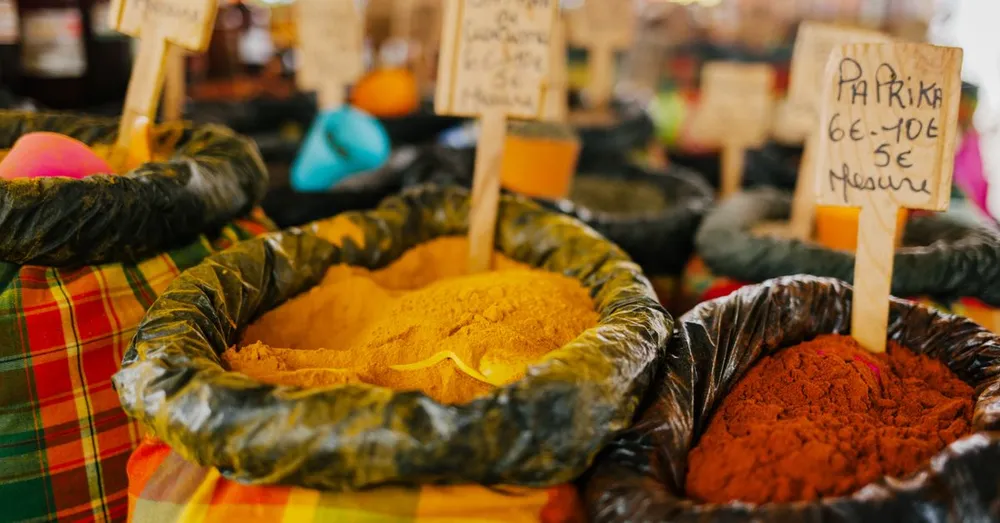
I’ve been cooking Creole on this island for years, and I say it to every traveler who stays near us: you don’t truly understand Martinique until you’ve breathed in the scent of a court-bouillon with bay rum leaves simmering inside. The Creole spices of Martinique are not folkloric decoration: they are the building blocks of an entire cuisine, inherited from the Amerindians, Africans, Europeans and Indian indentured workers. In this French overseas department, where French and Creole are spoken, I’ll break these aromas down one by one, with their real uses and the right price to pay for them, just as I would for a friend who’s just landed.
Why Creole spices tell the story of Martinique
The blending of cultures explains everything. The Kalinago (Amerindians) were already using annatto and chili before the Europeans arrived; slavery brought the African smoking techniques that call for powerful seasonings; then Indian indenture after the abolition of 1848 introduced masala-style blends, which became colombo and massalé. The Creole palette thus mixes native spices (bay rum leaf, local chilies, annatto) with imported blends reinvented locally: that’s what makes it so recognizable, and what no jar from a mainland supermarket can really replace.
Bay rum leaf: the soul of Creole court-bouillon
If I could save just one spice, it would be this one. Bay rum leaf (close to allspice) comes in two forms used differently:
- The leaves, dark green and leathery, tossed whole into the broth like a super-charged bay leaf: fish court-bouillons (snapper, sea bream, kingfish) with island lime, daubes, soups, and the famous morning bread-dipping in the North.
- The berries (dried seeds), whose taste evokes clove, cinnamon, nutmeg and pepper. They’re ground for Creole blood sausage (where leaves and berries are inseparable), marinades and certain pastries.
As for price, a bag of dried leaves costs €1.50 to €3, the berries €3 to €4 per 50 g. My tip: crush a leaf before buying. If it releases no scent, it’s too old.
Creole chilies: from fragrant to volcanic
Chili is the great misunderstanding among visitors: many think everything in Martinique burns. Wrong. There are two distinct families, and knowing how to tell them apart changes everything.
The vegetarian chili, the brilliant false friend
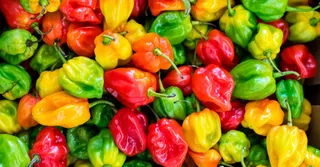
The vegetarian chili (or “vegetal chili”) looks deceptively like the Bondamanjak, its incendiary cousin: same bumpy shape, same intense fruity fragrance… but virtually no heat. It’s exactly what you want, all the habanero aroma without the punishment. You mince it finely into sauce chien (that raw onion-chive-lime sauce for grills and fish), marinades for accras and fish, and everyday simmered dishes (lentils, pigeon peas). Expect €3 to €6 per kilo at the market. It’s the Creole aromatic signature, risk-free for your timid guests.
The Bondamanjak chili, to be handled with respect
At the opposite end, the Bondamanjak (“behind Madame Jacques” in Creole) is one of the most powerful habaneros in the world. You don’t eat it: you drop it in whole, without piercing it, and remove it before serving. It diffuses its fragrance, not its violence; pierced or crushed, it makes a dish inedible. You’ll also find it in the bottled hot sauces at markets (€4 to €7 per bottle), to be dosed drop by drop. My rule: one vegetarian chili for the flavor, one whole Bondamanjak for the soul.
Annatto: color before flavor
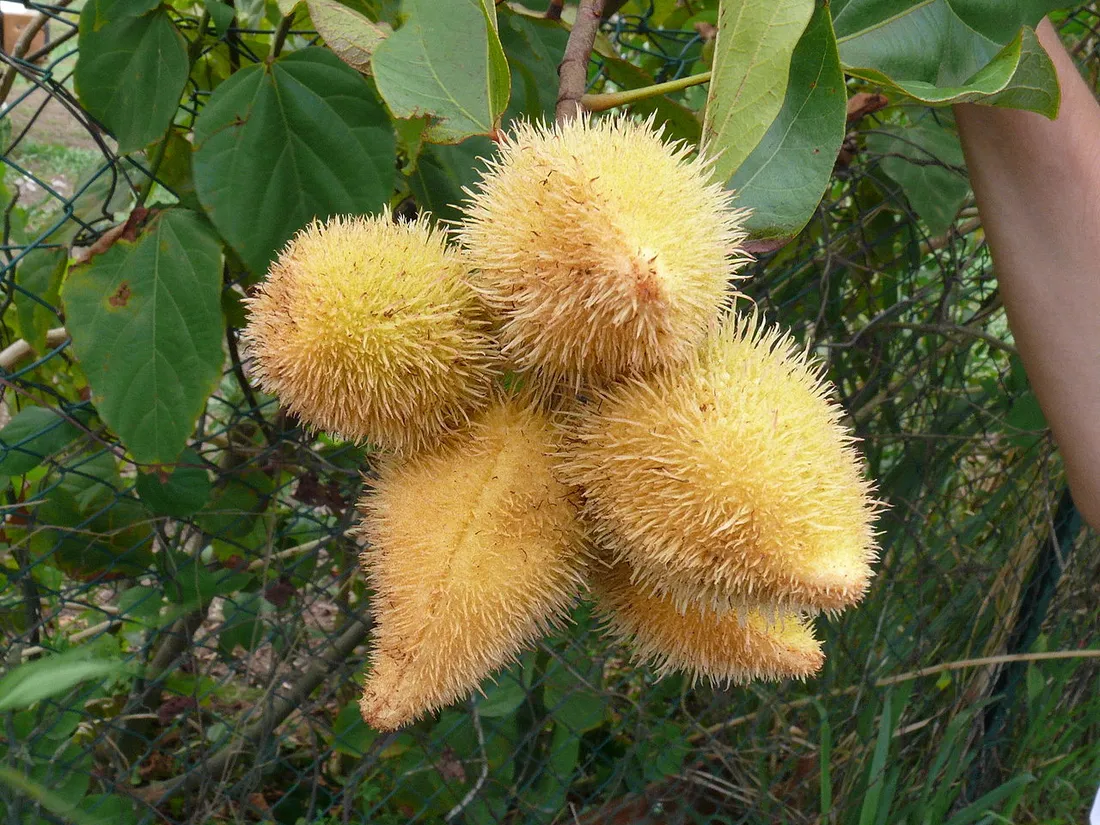
Annatto (urucum, the brick-red seeds of the Bixa orellana tree) is one of the island’s oldest ingredients, inherited from the Amerindians who painted their bodies with it. It’s used mainly for its warm orange color and its discreet, earthy, peppery taste. The seeds are infused in hot oil to make an “annatto oil” that colors Creole rice, sauces, fish and blood sausage; a ready-to-use paste/powder also exists. A bag of seeds costs €2 to €4 and keeps for a very long time: it’s the local equivalent of paprika for the eye, without imitating its taste.
Massalé and colombo: the blends of Indian heritage
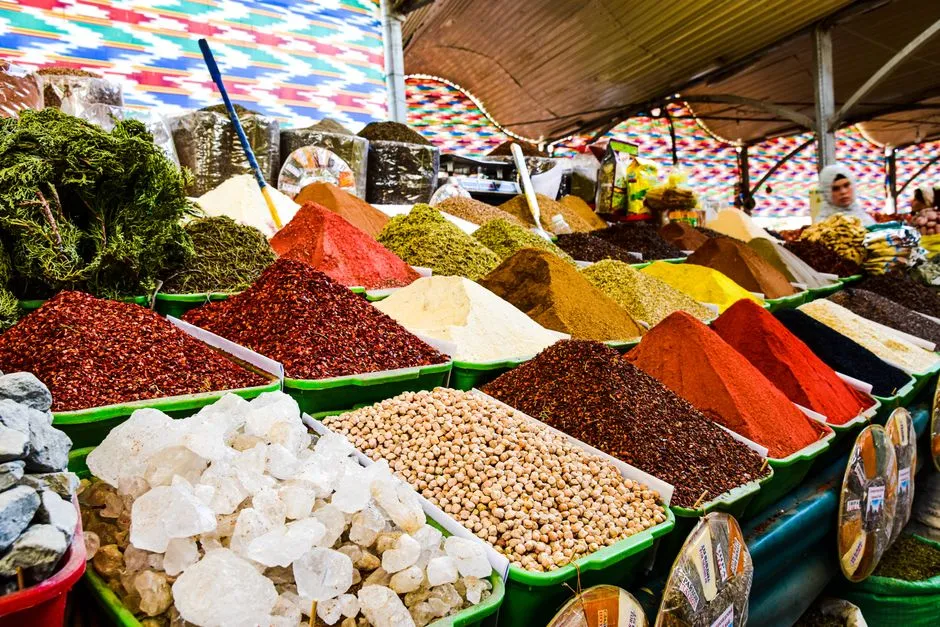
You can’t talk about Creole spices without the two great blends (the reinvented masala), which many people confuse. Here’s how I distinguish them:
- Colombo: a turmeric-dominant powder (hence its yellow-ochre color), with coriander, cumin, mustard, fenugreek, sometimes toasted rice. Milder, it gives structure to the famous chicken, pork or goat colombo.
- Massalé (or massala): a darker, roasted blend, often more pungent, that smells grilled. It’s used for goat and the more distinctive dishes of the Indo-Martinican community.
To use them well, first fry the powder in a little hot oil before adding the meat (that’s what wakes up the aromas), and prefer recently ground blends: a 100 g bag goes for €3 to €5, far more fragrant than the industrial versions. I detail the field-tested recipe for Martinican colombo and its Tamil history in a dedicated article; you’ll find these blends again in our overview of what to eat in Martinique.
Where to buy your Creole spices in Martinique (and at what price)
The best place remains the spice market of Fort-de-France, under the hall of the covered Grand Marché (Sainte-Catherine market), in the heart of the capital, about 25 minutes from Aimé Césaire airport in Lamentin and 20 minutes from Les Trois-Îlets. The vendors there line up bay rum leaves, chilies, annatto, colombo and vanilla (€2 to €4 per pod), and gladly explain the doses. For practical logistics (days, hours, parking), see our guide to the Fort-de-France market.
My buying tips:
- Smell and crush before buying: the aroma should be clear and strong.
- Favor labeled, sealed bags if you’re flying home; dry spices are perfectly allowed souvenirs, to tuck into your carry-on.
- Buy in the dry season (the Carême, December to April) if possible: it’s the most pleasant time to wander the market, outside the February-March carnival.
- Bring cash: some small stalls don’t take cards.
Cooking Creole during your stay: the most local experience
The activity I recommend most to our travelers is turning their spice purchases into a meal: a bag of colombo, some bay rum leaves, fresh herbs (chive, parsley, garlic, island lime), a stop at the fishmonger by the port, then simmer it all on the terrace at sunset. That’s a memory worth more than many restaurants.
But you still need a real kitchen. At Hostel Toucan, concierge service and seasonal rentals in the French overseas territories, we choose accommodations equipped to cook for real, placed between markets, the southern beaches (Les Salines, Anse Dufour, the black-sand Anse Noire) and the Rum Route. By booking directly on our site, you avoid platform fees, enjoy free cancellation up to 7 days before arrival and WhatsApp support 7 days a week: we’ll gladly tell you which market opens the morning you arrive, or how to dose the Bondamanjak.
- Plan every step with our complete guide to Martinique.
- Browse our rentals in Martinique with equipped kitchen and terrace.
- Own a property on the island? Discover our concierge offer for owners.
Leave with a bag of bay rum leaf and a little annatto in your suitcase: it’s the simplest way to recreate, back home, the scent of a real Creole court-bouillon and extend the trip.
FAQ
What is bay rum leaf and how do you use it?
Bay rum leaf is a Caribbean spice (close to allspice) used in two forms: the leaves, tossed whole into court-bouillons, daubes and soups like a powerful bay leaf, and the dried berries, ground for blood sausage, marinades and certain pastries. Its taste recalls clove, cinnamon and nutmeg. Expect €1.50 to €3 per bag of leaves at the market.
Is Martinican vegetarian chili hot?
No, and that’s exactly the point. The vegetarian chili (or vegetal chili) has the intense fruity fragrance of the habanero family but virtually no heat. It brings the Creole aroma to sauce chien, marinades and simmered dishes without the burn. Don’t confuse it with the Bondamanjak, its lookalike, which is extremely hot and is dropped in whole before being removed.
What is the difference between colombo and massalé?
Colombo is a turmeric-dominant blend, yellow-ochre and rather mild, that flavors chicken, pork or goat colombo. Massalé (massala) is a darker, more roasted and often more pungent blend, used for the more distinctive dishes of the Indo-Martinican community. In both cases, you fry the powder in hot oil before adding the meat.
Can you bring Creole spices home from Martinique by plane?
Yes. Dry spices (bay rum leaf, colombo, massalé, annatto, vanilla) are perfectly allowed souvenirs: buy them in sealed, labeled bags and tuck them into your carry-on. Bottled hot sauces, on the other hand, fall under the rules on liquids: place them in your checked luggage.