
To eat and drink well in the south of Martinique, I point you toward the Le Marin – Sainte-Luce duo. Just ten minutes apart, these two villages hold the heart of Le Marin’s Martinique food scene: a lively market right by the water, two of the island’s most renowned AOC agricultural rum distilleries, and a string of seaside tables where the fish still comes straight off the morning ice. Here is my resident’s gourmet itinerary for savouring this corner of the Caribbean without falling into the tourist traps.
Le Marin and Sainte-Luce in brief: location and key facts
Le Marin and Sainte-Luce sit at the far south of Martinique, 40 km from Fort-de-France, the island’s main town, and a 35-minute drive from Aimé Césaire airport in Le Lamentin. Neighbours, they are separated by just 10 to 12 minutes by car. It makes an ideal base camp: Sainte-Anne and Les Salines 15 minutes away, Le Diamant 25, and the Rum Route on your doorstep.
A few useful pointers:
- Status: French overseas region (DROM), so the euro, no currency exchange or customs. Dialling code: +596.
- Languages: French and Martinican Creole.
- Time difference: -5h in winter and -6h in summer compared with Paris.
- Best time to visit: the dry season, the Carême, from December to April, perfect for stringing together market, distilleries and terrace lunches. Carnival brings the island to life in February-March.
My first piece of advice: rent a car. Between the market in the morning, a distillery at midday and a seaside table in the evening, a vehicle changes everything; the south’s public transport is too limited for a gourmet programme.
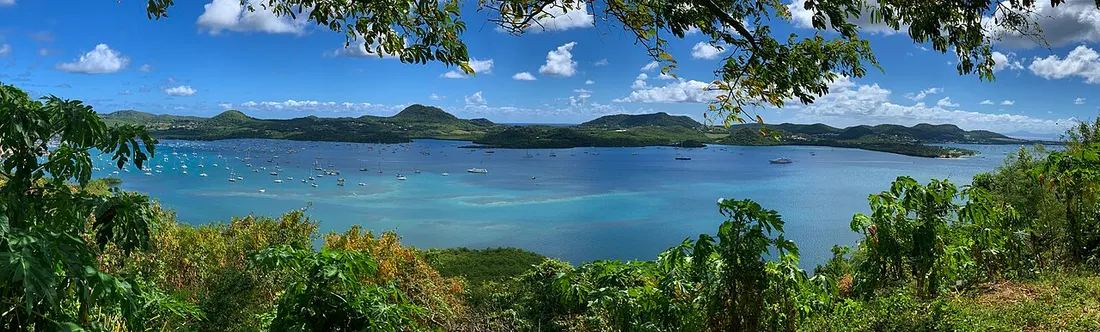
The Le Marin market: the belly of southern Martinique
You can’t talk about Le Marin’s Martinique food scene without starting with its market. Set near the waterfront, facing the first marina in the Antilles, the Le Marin market is one of my favourite weekend outings.
What you’ll really find there
On the stalls, it’s the peak season that calls the shots. Depending on the month, you’ll fill your basket with:
- Local fruits: mangoes (May to July), passion fruit, guavas, ambarella (golden apples), genips, southern pineapples.
- Local vegetables: yams, taro, chayote, breadfruit, pumpkin squash, vegetarian peppers.
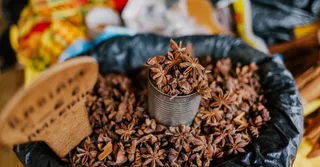
- Spices: colombo powder, bay rum leaf, artisanal jams, cane syrup for ti-punch.
- Seafood when the fishermen come in: snappers, mahi-mahi, spiny lobster in season.
On the budget side, count on €2 to €4 a kilo for fruit and vegetables, €5 to €8 for a bag of colombo spices, €8 to €12 for a jar of jam. Come mid-morning, when the stall is still full.
My on-the-ground tips
- Come early on Saturday morning (before 9:30 a.m.): freshest produce, fewer crowds, available farmers.
- Bring cash: cards rarely work at the markets. There’s an ATM in the village.
- Taste before you buy: someone will gladly hand you a piece of mango.
- Grab a bag of Creole black pudding or some accras from the vendors at the edge: the local breakfast.
In a rental with an equipped kitchen, the Le Marin market transforms your stay: nothing beats a colombo simmered with your own spices, or a court-bouillon bought that very morning.
The Rum Route, southern side: Trois-Rivières and La Mauny
Southern Martinique is also sugarcane country, and therefore a land of great AOC agricultural rum. Two iconic houses can be visited just minutes apart.
Trois-Rivières distillery: the windmill icon
The Trois-Rivières distillery is the most photogenic on the island, with its famous windmill. The production unit has moved to Sainte-Luce, home to the ageing cellar and the shop. Self-guided and free visit, with a tasting included for the basic rums. On site, I taste the white rum at 50° (the absolute reference for a good ti-punch) before the aged blends. In the shop, count on €18 to €25 for a quality white rum, €35 to €60 for an aged rum, more for vintages.
La Mauny distillery: the grand classic of Rivière-Pilote
About fifteen minutes from Le Marin, the La Mauny distillery, in Rivière-Pilote, is one of the most visited on the island. Tucked into the valley, it offers a more structured tour, with an interpretive trail through the facilities.
Good to know:
- Access to the site and the self-guided trail are free; guided tours or premium tastings are paid (€5 to €15).
- Excellent value for money on the whites (€16 to €22 a bottle).
- Plan for a sober driver: the tastings come fast and the southern road is winding.
A useful reminder: Martinican rum holds the only rum AOC in the world (1996 decree), distilled from pure fresh cane juice and not molasses, hence its so-typical grassy aromas.
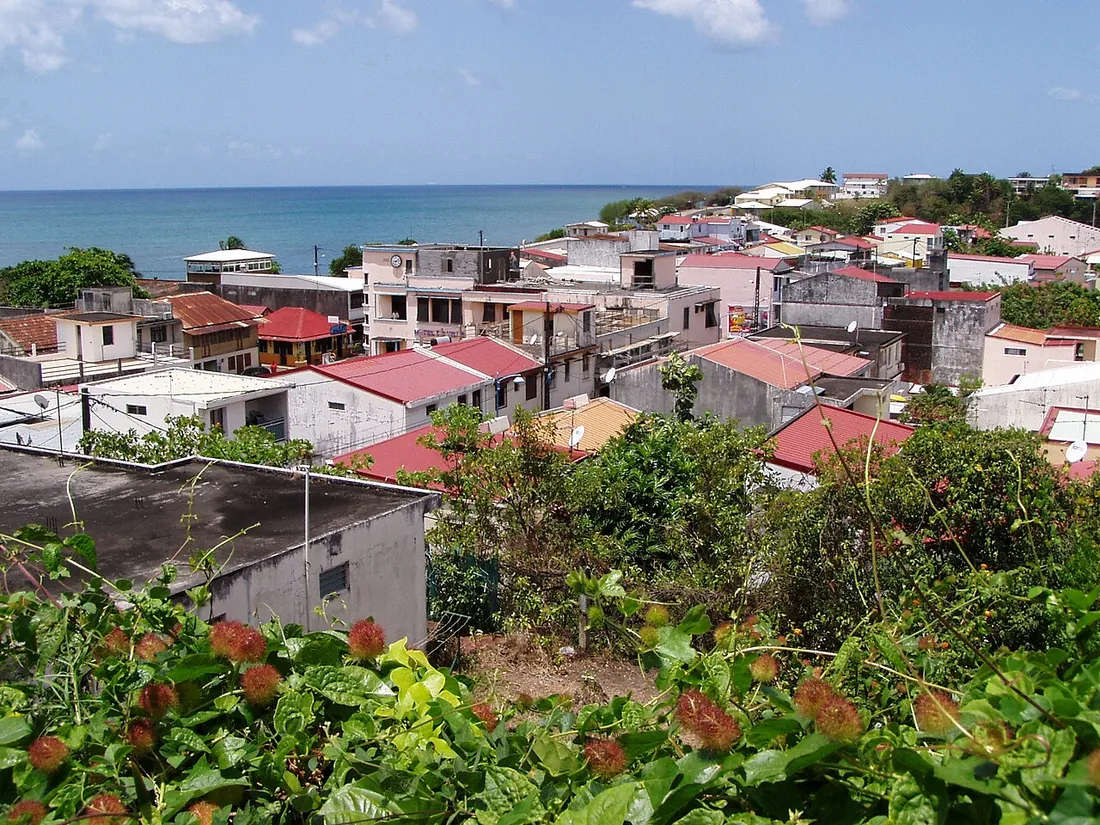
The southern tables: where to eat in Le Marin and Sainte-Luce
Time for the main course: this area is one of the island’s richest for anyone who loves fish and Creole cooking.
Restaurant in Sainte-Luce: fish with your feet in the sand
For a restaurant in Sainte-Luce, I favour the seafront, toward Anse Mabouya and Anse Corps de Garde: a laid-back vibe, often facing the sunset. On the menu at the good spots:
- Grilled fish of the day (snapper, mahi-mahi) with chayote gratin, €18 to €26.
- Blaff or Creole court-bouillon, simmered with lime and bay rum leaf, €16 to €22.
- Octopus (chatrou) fricassee or conch in season, €20 to €28.
- The essential salt cod accras as a starter, €6 to €9 a portion.
Average budget of €30 to €45 per person with a starter, main and ti-punch, more for grilled spiny lobster (at market price).
Tables and lolos in Le Marin
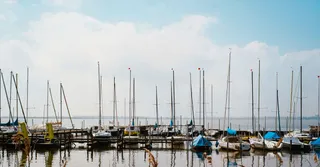
On the Le Marin side, the marina lines up several tables on the harbour, perfect for a dinner facing the sailboats (€18 to €30 a dish). But my favourite remains the lolos, those Creole shacks where you eat generous home-style cooking for €12 to €18 for the dish of the day: cheaper, more authentic, often better.
My local reflexes for choosing well:
- Spot the tables where Martinicans eat: the best quality indicator.
- Ask for the fish of the day rather than the fixed menu.
- Book in the evening during high season (December-April), especially at the weekend.
- Finish on a Creole dessert: tourment d’amour or coconut flan.
Organising your gourmet stay in the south
To string together market, distilleries and tables without rushing, stay locally. Le Marin and Sainte-Luce are full of holiday rentals: studios near the marina, villas with equipped kitchens, apartments a stone’s throw from the beaches.
At Hostel Toucan, we manage accommodation across southern Martinique, directly and without intermediaries. Booking with us means:
- No platform fees: you pay the fair price, not the commission of a booking giant.
- Free cancellation up to 7 days before arrival, because a stay in the Antilles should stay flexible.
- WhatsApp assistance 7 days a week: which table to dine at, the market day, the distillery to choose? We share our best addresses.
To plan your trip, check out our complete Martinique guide, browse our rentals in Martinique, and if you own a property in the south, discover our concierge service for owners.
My ideal gourmet itinerary over a single day
Here’s how I structure a day of flavours and rum in the area:
- Morning: the Le Marin market for local fruits, spices and a bag of accras on the harbour.
- Late morning: a tasting at the Trois-Rivières distillery in Sainte-Luce, buying a 50° white rum.
- Midday: lunch with your feet in the sand in Sainte-Luce, grilled fish of the day and a ti-punch.
- Afternoon: a detour by the La Mauny distillery in Rivière-Pilote, then a swim at Anse Mabouya.
- Evening: dinner on the pontoons of the Le Marin marina and a Creole dessert.
Le Marin and Sainte-Luce are gourmet Martinique in its most sincere form: a market that smells of mango, two distilleries that tell the story of agricultural rum, and tables where the fish has never seen a freezer. Drop your bags in the south and let your palate travel.
FAQ
What is the best day for the Le Marin market?
Saturday morning: come before 9:30 a.m. for the freshest produce. Bring cash, as cards rarely work at the markets. You’ll find local fruits, vegetables, colombo spices and artisanal preparations at low prices.
Which distilleries should I visit near Le Marin and Sainte-Luce?
Two houses stand out: the Trois-Rivières distillery, set in Sainte-Luce with its cellar and shop (free self-guided visit), and the La Mauny distillery in Rivière-Pilote, fifteen minutes from Le Marin. Both produce AOC agricultural rum. Plan for a sober driver.
Where can I eat fresh fish in Sainte-Luce?
Favour the seafront, toward Anse Mabouya and Anse Corps de Garde, where they serve grilled fish of the day (snapper, mahi-mahi) for €18 to €26, as well as blaff and Creole court-bouillon. Average budget of €30 to €45 per person.
How much does a bottle of agricultural rum cost at the distillery?
In a distillery shop, a good AOC agricultural white rum runs between €16 and €25, an aged rum between €35 and €60, more for vintages. The prices there are often better than in the supermarket.