When you think of Martinique, you first picture the southern beaches and the turquoise blue of Les Salines. Yet the northern Atlantic coast hides some of the most authentic experiences on the island. Sainte-Marie, set facing the ocean between La Trinite and Le Marigot, is the perfect example. Here there are no crowds and no rows of sun loungers: an islet linked to the mainland by a strip of sand that appears and disappears with the tides, one of the oldest agricultural rum distilleries on the island, and banana groves stretching as far as the eye can see that support the entire region. Here is our guide to discovering this iconic town of Martinique’s North Atlantic.
Sainte-Marie, capital of the North Atlantic
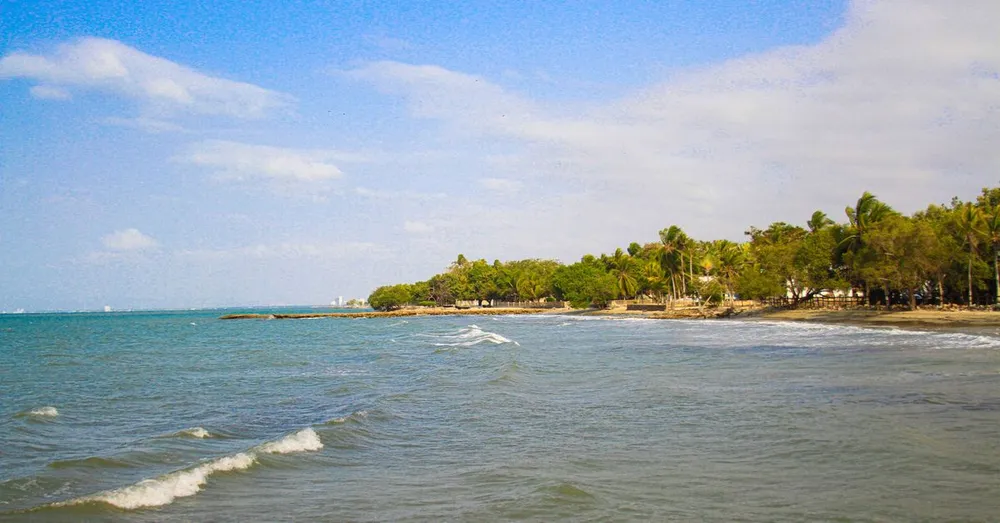
Sainte-Marie is the second most populated town in Martinique after Fort-de-France, with around 17,000 inhabitants. It stretches along the Atlantic coast, buffeted by the trade winds and a swell far livelier than that of the Caribbean to the southwest. It is this geography that gives the town its character: a lush coastline, hills covered with crops and a climate a little wetter than in the South.
As everywhere in Martinique, you are in French territory here (a French overseas region), you pay in euros and people speak French and Creole. The phone code is +596 and the time difference with Paris is -5h in winter and -6h in summer. Aime Cesaire airport in Le Lamentin is about a 45-minute drive to the south, and a car remains essential to explore this part of the island, which is poorly served by public transport.
How to get there and when
- From Fort-de-France: allow about 35 to 45 minutes by road (45 km) via the N1 then the coastal road.
- From Le Lamentin airport: 40 to 50 minutes depending on traffic.
- Best time: the dry season, the Careme, from December to April. The sky is clearer and the tides easier to read for the tombolo.
- Worth noting: carnival (February-March) brings the whole island to life, Sainte-Marie included.
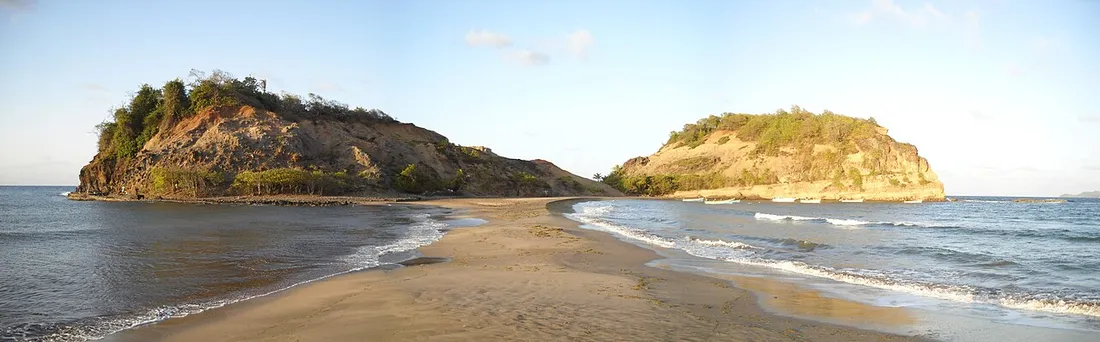
The tombolo: walking on the sea between two tides
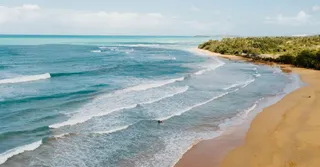
This is Sainte-Marie’s gem and one of the rare phenomena of its kind in the West Indies. The tombolo is a natural sandbank that links the beach of Sainte-Marie to Ilet Sainte-Marie, located about 200 metres from the shore. For several months a year, generally from January to April (sometimes until early May), this ribbon of sand emerges at low tide and lets you reach the islet on dry feet.
The rest of the year the tombolo is submerged and the islet becomes inaccessible again without a boat. Walking in the middle of the ocean, water on either side, is a striking experience that many visitors never even suspect exists.
Making the crossing safely
- Check the tide times before setting off (free apps or local tide tables) and aim for a low tide with a high coefficient.
- Allow 15 to 20 minutes to walk across, and as long again to walk around the islet once there.
- Wear footwear: the sand may be scattered with coral and shells.
- Don’t linger: head back well before the tide covers the strip again. The current can be strong.
- Bring water and sun protection: there are no shops on the islet.
The beach on the mainland side is free and pleasant for a picnic while waiting for the right tide. Remember to check the flag colour and the state of the sea, as the Atlantic is rougher than the Caribbean coast.
The Saint-James rum museum, an institution
Sainte-Marie is home to one of the best-known distilleries on Martinique’s Route des Rhums (Rum Route): Saint-James, founded in the 17th century and established in Sainte-Marie since 1973. Martinique produces an agricultural rum, distilled from pure freshly pressed cane juice, and since 1996 it has enjoyed a unique Martinique AOC in the world for this spirit.
The Saint-James Rum Museum occupies a former Creole manor house and traces the whole history of sugar cane and rum in the West Indies. The visit is self-guided and free, and ends with a tasting at the shop.
What not to miss on site
- The museum: old machinery, stills and period items, in a restored colonial setting.
- The Plantation Train (in season, subject to operation): a small tourist train that winds through the cane fields, allow about an hour and a ticket of around 12 to 15 euros.
- The shop and the tasting: white rums, aged rums and vintage cuvees. You can buy on site to take home an AOC bottle.
- Allow 1.5 to 2 hours to enjoy the site without rushing.
For enthusiasts, Saint-James is part of a wider itinerary: across the island, the Route des Rhums also links Clement, Depaz, La Mauny and Trois-Rivieres. Enough to put together a gourmet themed day. Our complete guide to Martinique details the other distilleries to visit.
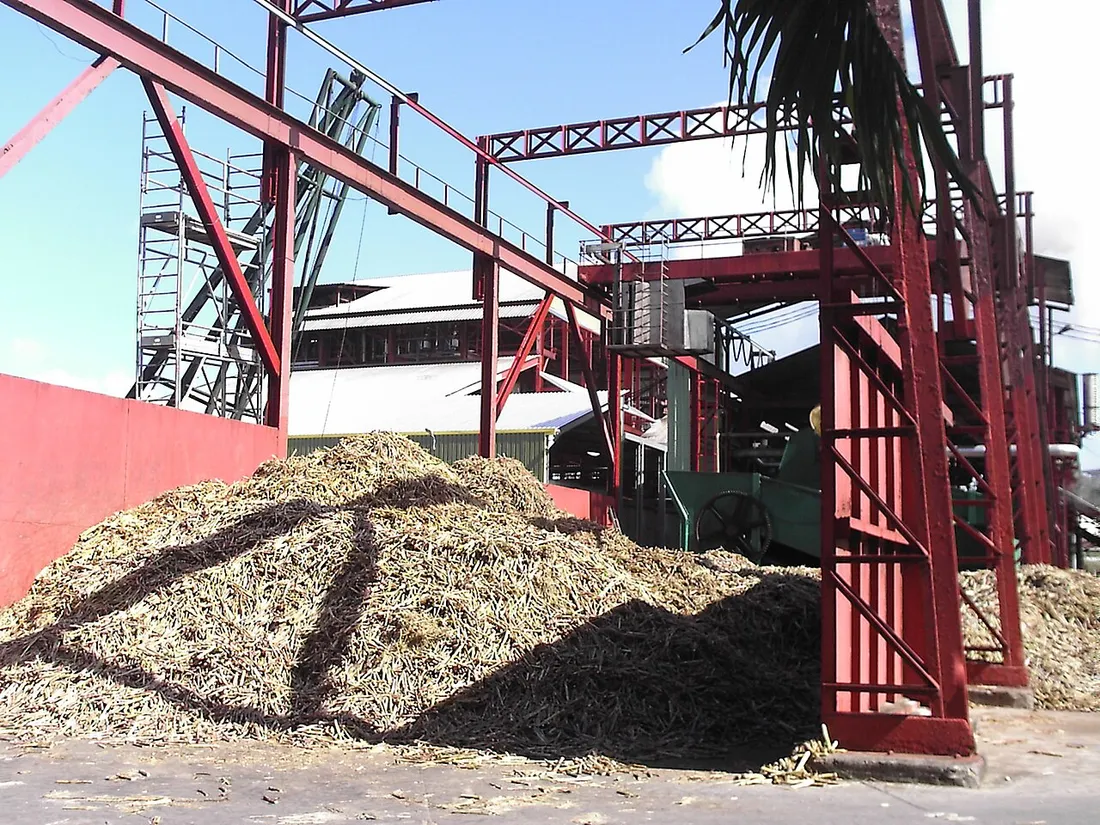
The banana, Sainte-Marie’s other treasure
It is impossible to cross the North Atlantic without noticing the vast banana groves that carpet the hills. The banana is one of Martinique’s leading export crops, and Sainte-Marie is one of its historic heartlands.
A few minutes from the town centre, La Maison de la Banane (Habitation Limbe) offers an open-air educational trail through some fifty varieties of banana plant. There you learn to tell the dessert banana from the plantain, the role of the bunches, the planters’ work and the history of this sector. The visit, suitable for families, lasts about 1 hour and generally costs around 8 to 10 euros per adult.
Why it’s worth the detour
- A hands-on immersion in Martinique’s agriculture, far from the seaside clichés.
- Lush gardens ideal for photos and for understanding the landscape of the North.
- A tasting of banana-based products (jams, juices) depending on the season.
Planning your day in Sainte-Marie
Sainte-Marie is best enjoyed over a full day, combining the three must-sees according to the tide schedule.
- Morning: visit the Saint-James Rum Museum (and the Plantation Train in season).
- Midday: a Creole lunch in the town centre or a picnic on the tombolo beach.
- Afternoon: cross the tombolo at low tide, then La Maison de la Banane.
Extending your exploration of the North Atlantic
- The Caravelle peninsula and Tartane (La Trinite), close by, for surfing, hiking trails and the lighthouse.
- Saint-Pierre and Mount Pelee, further to the northwest, listed as UNESCO World Heritage.
- The volcanic black sand beaches of the coast, a striking contrast with the golden sand of the tombolo.
On the budget side, the North is noticeably more affordable and quieter than the touristy South. Plan to fill up on fuel before setting off, as service stations are scarce along the way.
Where to stay to explore the North
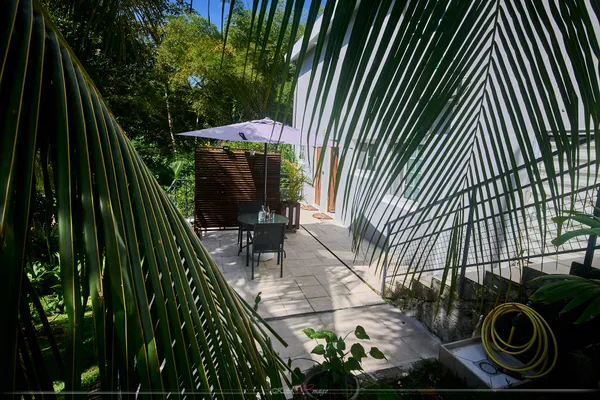
To explore Sainte-Marie, the Caravelle and the North without spending hours on the road, it is better to stay in the region rather than in Fort-de-France or the South. A holiday rental with a kitchen lets you enjoy local produce (fresh fish, fruit, rum) and plan your days around the tides in complete freedom.
At Hostel Toucan, a concierge and holiday rental service in Martinique, we select accommodation designed for this kind of stay. Direct booking comes with no platform fees, you benefit from free cancellation up to 7 days before arrival, and our 7-day-a-week WhatsApp support keeps you informed about the best spots, tide times and finest places to eat. Explore our accommodation in Martinique to find your ideal base in the North.
Do you own a property in the area and want to make it profitable without the hassle? Our concierge service for owners takes care of everything, from welcoming guests to cleaning.
Sainte-Marie embodies the Martinique of connoisseurs: raw nature, living heritage and local know-how. The tombolo, the rum and the banana form a unique trio that fully deserves a place in your itinerary.
FAQ
When can you walk across the tombolo of Sainte-Marie?
The tombolo generally emerges from January to April, sometimes until early May, during the dry season. You need to aim for a low tide with a high coefficient. Check the local tide tables before setting off and head back well before the sea covers the strip of sand, as the Atlantic current can be strong.
Is there an entrance fee for the Saint-James Rum Museum?
No, the Saint-James Rum Museum in Sainte-Marie can be visited free of charge and ends with a tasting at the shop. Only the Plantation Train, which crosses the cane fields in season, has a fee (about 12 to 15 euros). Allow 1.5 to 2 hours to enjoy the whole site.
How do you get to Sainte-Marie in Martinique?
Sainte-Marie is on the northern Atlantic coast, about a 45-minute drive from Fort-de-France and 40 to 50 minutes from Aime Cesaire airport in Le Lamentin. A car is strongly recommended: the town and the North Atlantic are poorly served by public transport.
What is the best time to visit Sainte-Marie?
The dry season, the Careme, from December to April, is ideal: the sky is clear and the tides more favourable for crossing the tombolo. It is also carnival time (February-March). As the North Atlantic is wetter than the South, it is best to avoid the rainy season.