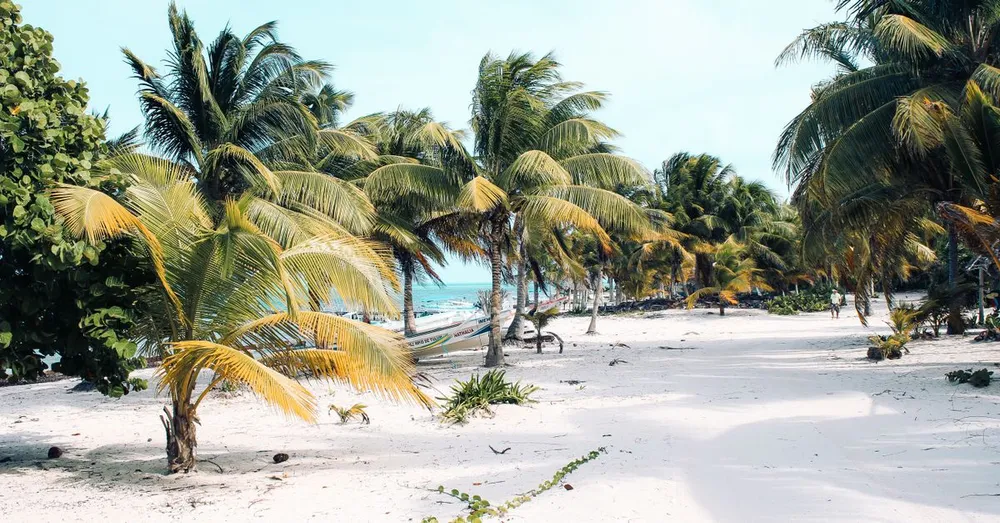
Martinique boasts nearly 350 kilometres of coastline and a mosaic of beaches that change character depending on whether you head south or work your way up north. In the south, you’ll find the postcard-perfect white sand and turquoise water; in the north, coves of black volcanic sand tucked at the foot of Montagne Pelée. In between lie secluded bays where you’re more likely to meet turtles than swimmers. In this guide, we take you to our favourite beaches, tell you who each one is best suited to, and above all how to get there and swim with complete peace of mind.
What are the most beautiful beaches in Martinique?
Here is our pick of the must-sees, from the great family classic to the wild cove only the regulars know about:
- La Grande Anse des Salines (Sainte-Anne) — the most famous: white sand, coconut palms, turquoise water. Perfect for families, but best avoided at peak times.
- Anse Dufour & Anse Noire (Les Anses-d’Arlet) — two neighbouring coves, one with golden sand, the other with black sand, renowned for swimming with turtles.
- Anse à l’Âne (Les Trois-Îlets) — a family beach facing the bay of Fort-de-France, served by a ferry to the capital.
- Plage du Diamant — a long, wild beach facing the famous Rocher du Diamant.
- Anse Couleuvre (Le Prêcheur) — a black sand beach at the far north, at the end of a spectacular road.
- Cap Macré (Le Marin) — wild and unspoilt, reachable only on foot, to escape the crowds.
- The beaches of the Caribbean North — Anse Turin, Le Carbet, Anse Céron: the raw charm of black volcanic sand.
La Grande Anse des Salines: the unmissable beach of the south
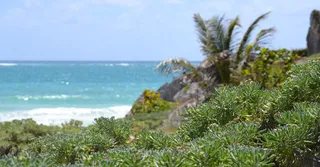
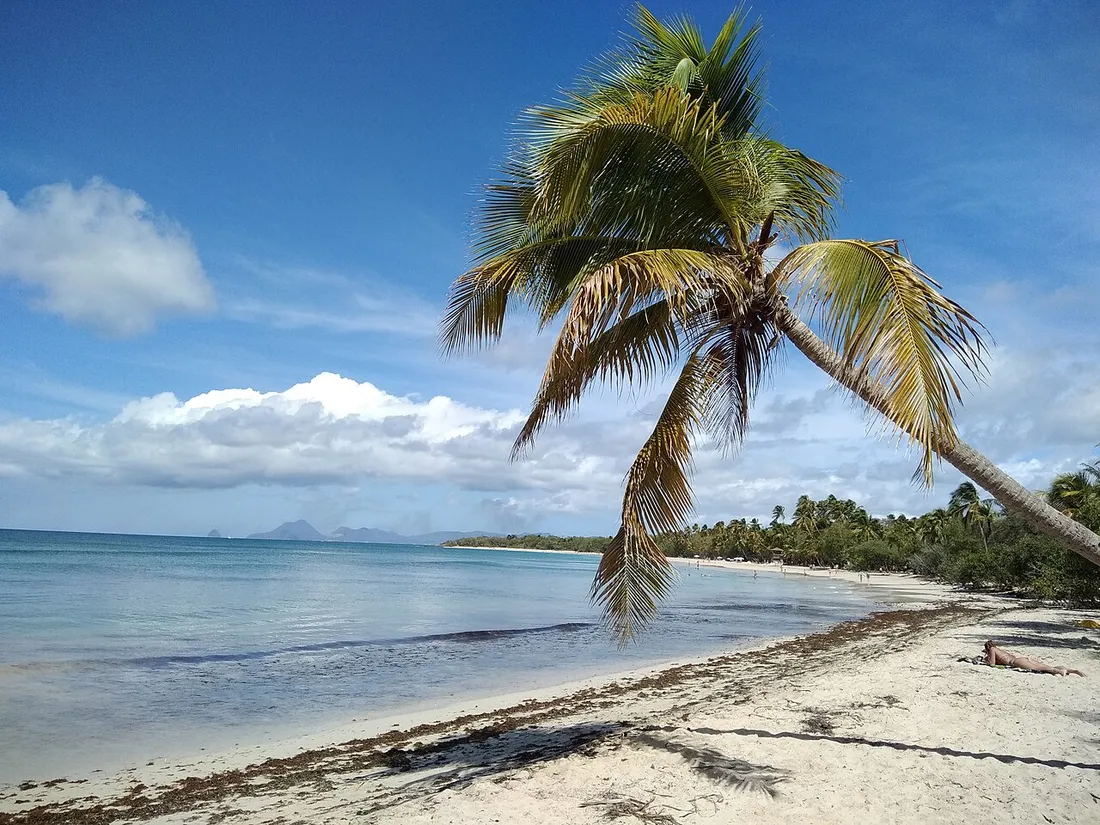
You can’t talk about the beaches of Martinique without starting with Les Salines, at the southern tip of the island, in the commune of Sainte-Anne. This vast stretch of golden sand, lined with coconut palms and sea grape trees, borders shallow, crystal-clear water: it’s the island’s iconic beach, the one you’ll see on every postcard.
A few tips to make the most of it:
- Arrive early (before 9–10am) or in the late afternoon: the car park fills up fast at weekends and during school holidays.
- Set up on the Petite Anse side of Les Salines, which is quieter, if you’re after a bit of shade and tranquillity.
- Snacks and roaming vendors (coconut sorbet, accras, cane juice) are often around, but bring water all the same.
- Swimming here is generally safe and child-friendly, with the water staying shallow for several dozen metres.
From Sainte-Anne, you’re ideally placed to explore the whole south of the island. Consider booking a car rental: it’s by far the most practical way to hop from beach to beach at your own pace.
Anse Dufour and Anse Noire: the kingdom of the turtles
In Les Anses-d’Arlet, on the western Caribbean coast, two small neighbouring coves share the same little valley and offer a striking contrast: Anse Dufour with its pale sand, and Anse Noire with its dark volcanic sand, linked by a path and a staircase that descends through the vegetation.
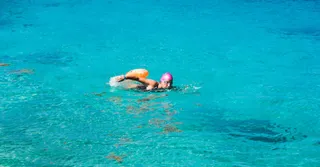
These two coves are above all famous for one unforgettable experience: swimming with sea turtles, which come to graze on the seagrass right by the shore. You may also come across rays and lovely shoals of fish.
To make the most of your outing:
- Bring a mask, snorkel and fins (or rent them on site when available).
- Watch the turtles without touching or feeding them: keep your distance and don’t block their path to the surface, where they breathe.
- Parking spaces are limited: come early in the morning, when the water is also at its calmest.
We explain everything in our dedicated guide on swimming with turtles in Martinique, with the right etiquette and the best time slots.
Anse à l’Âne: the family beach of Les Trois-Îlets
Facing the bay of Fort-de-France, Anse à l’Âne is one of the most convenient beaches on the coast. Its golden sand, calm water and the presence of restaurants, sun lounger rentals and toilets make it a safe bet for families with young children.
Its big advantage: the ferry that connects the beach to Fort-de-France in around twenty minutes. You can spend the morning on the beach and the afternoon exploring the capital, without getting back in the car or facing the traffic jams at the city’s entrance.
The commune of Les Trois-Îlets also has plenty to offer: a market, gardens, distilleries and fishing villages. So you don’t miss anything, take a look at our article on things to do in Les Trois-Îlets.
Plage du Diamant: open horizons and a legendary rock
Several kilometres long, Plage du Diamant stretches its sand opposite the famous Rocher du Diamant, the volcanic islet rising from the sea. It’s a wild and photogenic beach, swept by the trade winds, perfect for long barefoot walks at sunset.
Beware, though: exposed to the Atlantic swell, it sometimes sees stronger currents and waves. A few common-sense rules:
- Swim near the village, where the sea is generally more sheltered.
- Keep an eye on children at all times and stay close to the shore if the swell picks up.
- Avoid swimming alone and stay out of the water on rough sea days.
It’s more a beach for strolling and taking in the views than for relaxed swimming: good to know so you’re not caught off guard.
Wild beaches: Anse Couleuvre and Cap Macré
If you love raw nature, two beaches stand out from the rest.
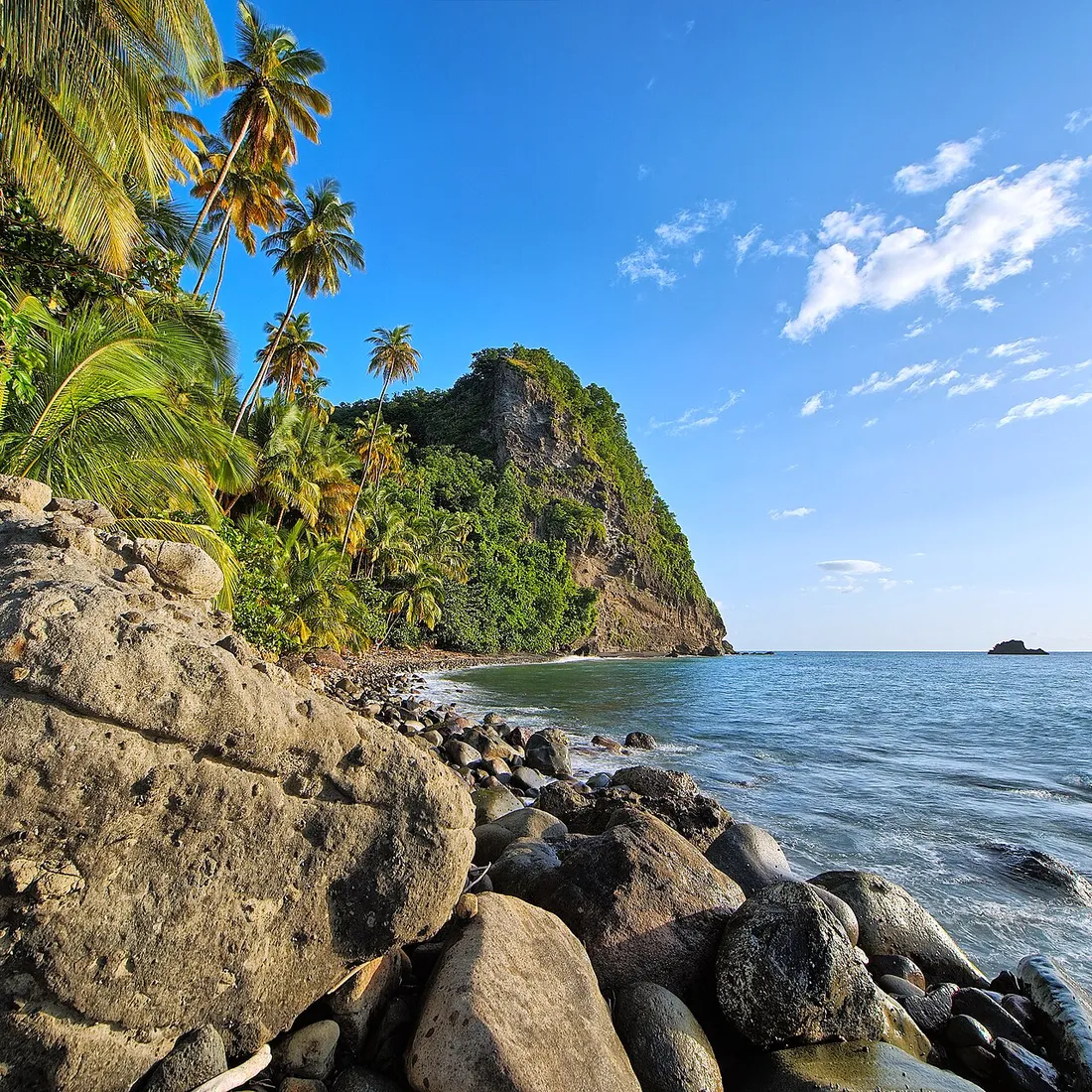
Anse Couleuvre, in Le Prêcheur, marks the end of the road in the north-west of the island. After a short shaded path, you emerge onto a black sand beach nestled between cliffs and tropical forest, at the foot of Montagne Pelée. The atmosphere here is wild and soothing. Bring good shoes for the path and something to protect you from the sun: there are no facilities on site.
Cap Macré, in Le Marin (on the Atlantic side), has to be earned: it’s reachable only on foot via a coastal path. The reward is a string of small, unspoilt coves, far from the crowds. Once again, bring water, a hat and walking shoes, and take the Atlantic swell into account before swimming.
For these nature escapes, the ideal is to stay somewhere central and head out for the day: explore all of our accommodation to find the perfect base.
Black sand beaches of the North vs family beaches of the South
The big question when planning your stay is: south or north? Here’s how to decide.
The south (Sainte-Anne, Le Marin, Les Trois-Îlets, Les Anses-d’Arlet) offers:
- beaches of white or golden sand and turquoise water;
- a sea that’s often calm and family-friendly;
- more facilities (restaurants, rentals, car parks).
The north (Le Prêcheur, Le Carbet, Saint-Pierre) appeals with:
- its more secluded beaches of black volcanic sand;
- spectacular scenery at the foot of Montagne Pelée;
- an authentic atmosphere, but a sea that can be more demanding.
Our advice: combine the two. Set up base in the south for comfort and easy swimming, then dedicate a day to the Caribbean north for its unique atmosphere.
Which beach to choose for your profile?
To get straight to the point, here’s a summary based on what you’re after:
- Families with children: Les Salines, Anse à l’Âne (calm water, nearby facilities, soft sand).
- Snorkelling and turtles: Anse Dufour, Anse Noire.
- Nature and tranquillity: Anse Couleuvre, Cap Macré, the beaches of the Caribbean north.
- Photos and wide open spaces: Plage du Diamant facing its rock.
- Beach + town the same day: Anse à l’Âne, thanks to the ferry to Fort-de-France.
Practical tips: access, swimming and safety
A few simple habits for enjoying Martinique’s beaches with peace of mind:
- Sun: it’s strong in the tropics. Sunscreen (ideally reef-safe), a hat, a UV-protection shirt for snorkelling, and stay hydrated regularly.
- Swimming: favour supervised areas when they exist, watch out for rip currents on beaches exposed to the Atlantic, and never overestimate your strength.
- Personal belongings: never leave anything valuable in the car or unattended on the sand.
- Environment: take your rubbish with you, don’t pick the coral, and keep your distance from the wildlife.
- Manchineel tree: spot the trees marked with a red stripe; don’t shelter under them or touch their fruit, as their sap is irritating.
- Access: many beaches are reached via small roads or paths. A rental car will give you precious freedom to explore them all.
Where to stay near the beaches of Martinique?
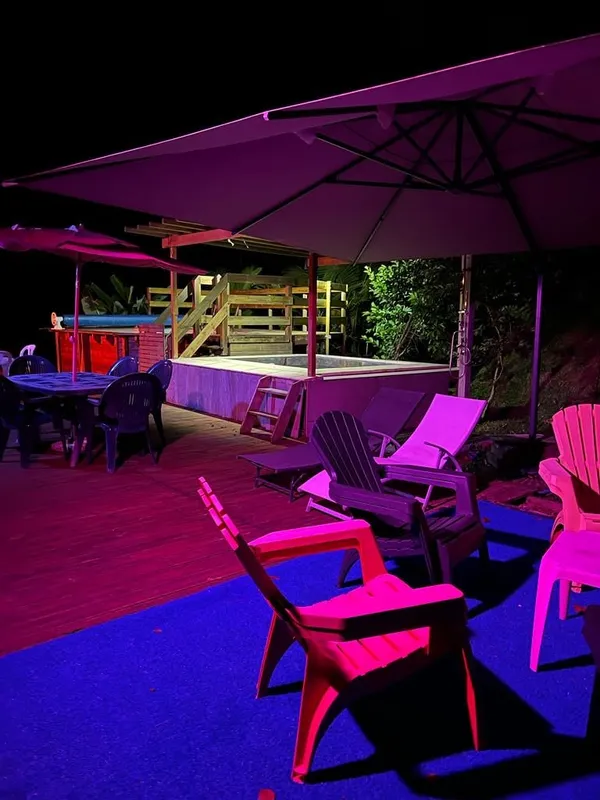
To explore the beaches of the south and the bay of Fort-de-France, Les Trois-Îlets (Anse à l’Âne) makes an ideal base: sea views, a swimming pool, a ferry to town and quick access to both Les Anses-d’Arlet and Sainte-Anne.
At Hostel Toucan, our accommodation in Martinique, rated 4.7/5, places you just minutes from the most beautiful beaches, with all the comfort you need to come home in the evening after a day of sand and turtles. Book now and build your stay beach by beach: your slice of Martinique paradise awaits.