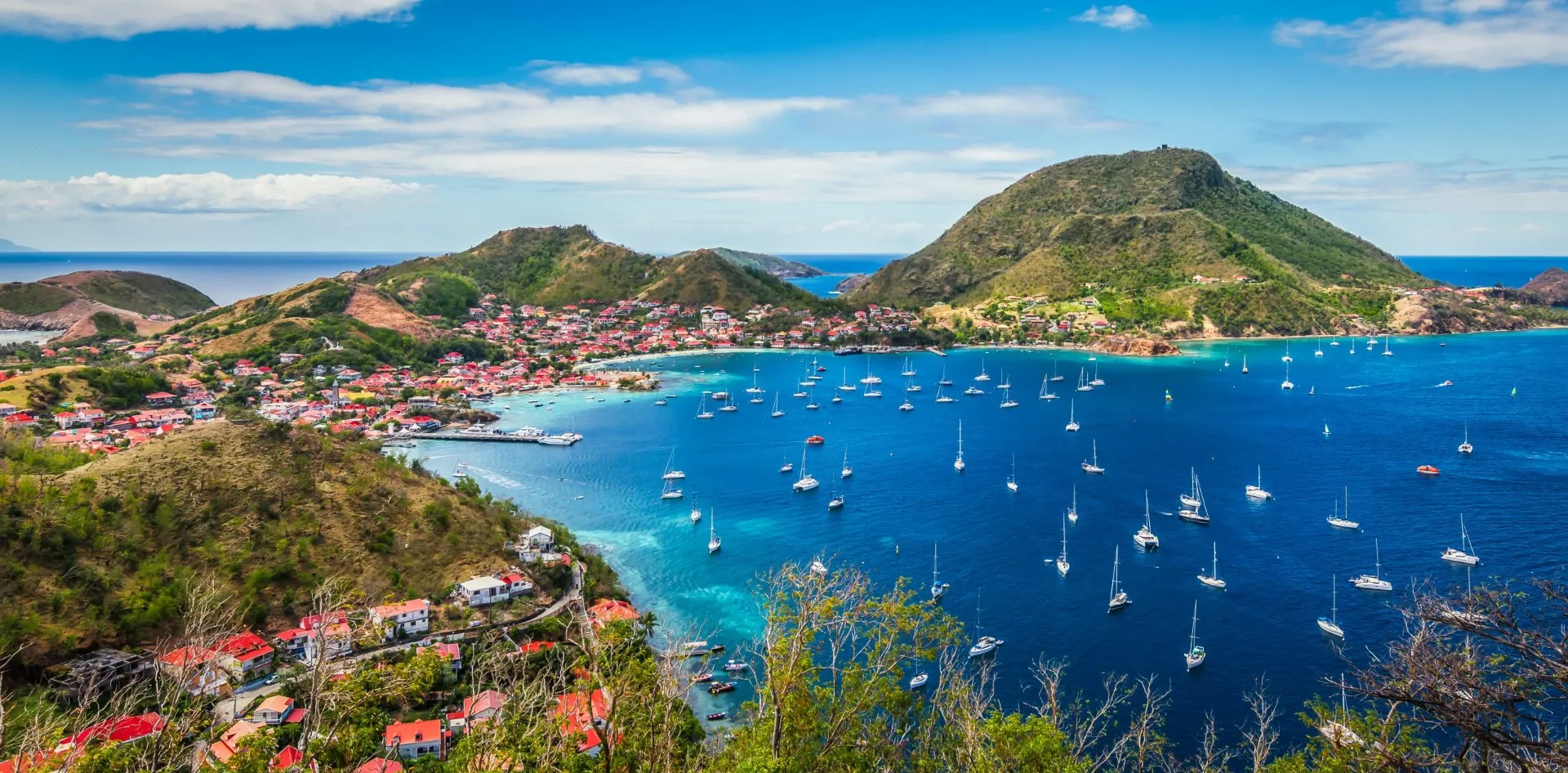
Changing your life for Guadeloupe, whether it follows a job transfer, a career change or a deep craving for sunshine, very quickly raises one central question: where should you live? The Guadeloupe archipelago is not a uniform block. Between Grande-Terre and Basse-Terre, between the tourist coastline and the more rural towns, the realities of housing, budget and daily life vary enormously. Choosing the right base for your first few weeks, and then your long-term home, is often what separates a smooth relocation from a stressful start.
This article is for anyone arriving from mainland France (or elsewhere) who wants to understand the geography of housing in Guadeloupe before taking the plunge. We will look at how the archipelago is structured, which towns suit which profiles, how to find temporary housing while you search for something better, what the rental market looks like, and which practical steps to plan ahead. The figures given here are indicative and vary with the season, the town and the condition of the property: treat them as orders of magnitude, never as guarantees.
Understanding Guadeloupe’s geography before you choose
“Mainland” Guadeloupe is shaped like a butterfly whose two wings are separated by a narrow arm of sea, the Rivière Salée. This geography directly shapes your housing choice.
Grande-Terre: the most urban and driest side
The eastern wing, Grande-Terre, is flatter, drier and more densely populated. There you will find:
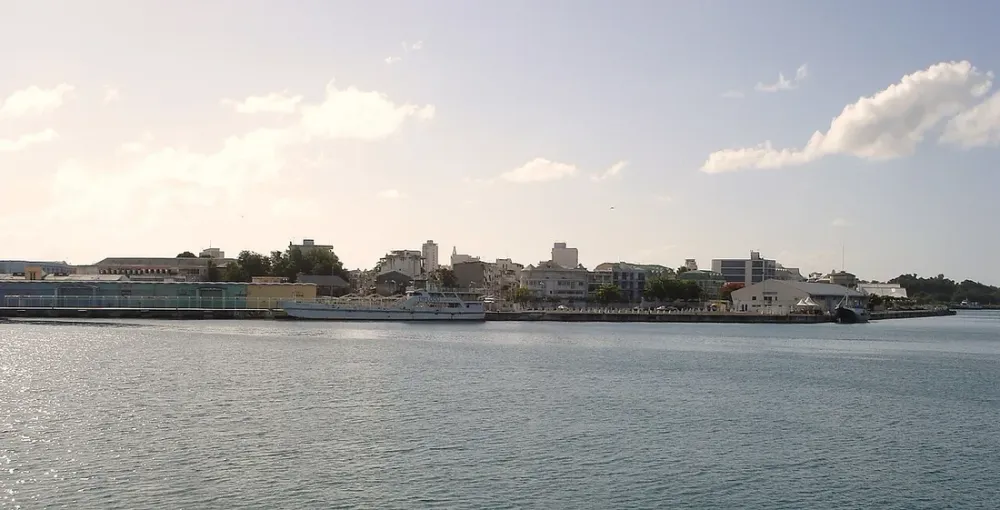
- Pointe-à-Pitre and Les Abymes: the economic and administrative heart, the most built-up area, close to Pôle Caraïbes airport (in Les Abymes) and the teaching hospital.
- Le Gosier: a very popular seaside town, lively, close to Pointe-à-Pitre, with plenty of rentals and a nightlife scene.
- Sainte-Anne and Saint-François: the tourist south, famous beaches, holiday atmosphere, marina in Saint-François.
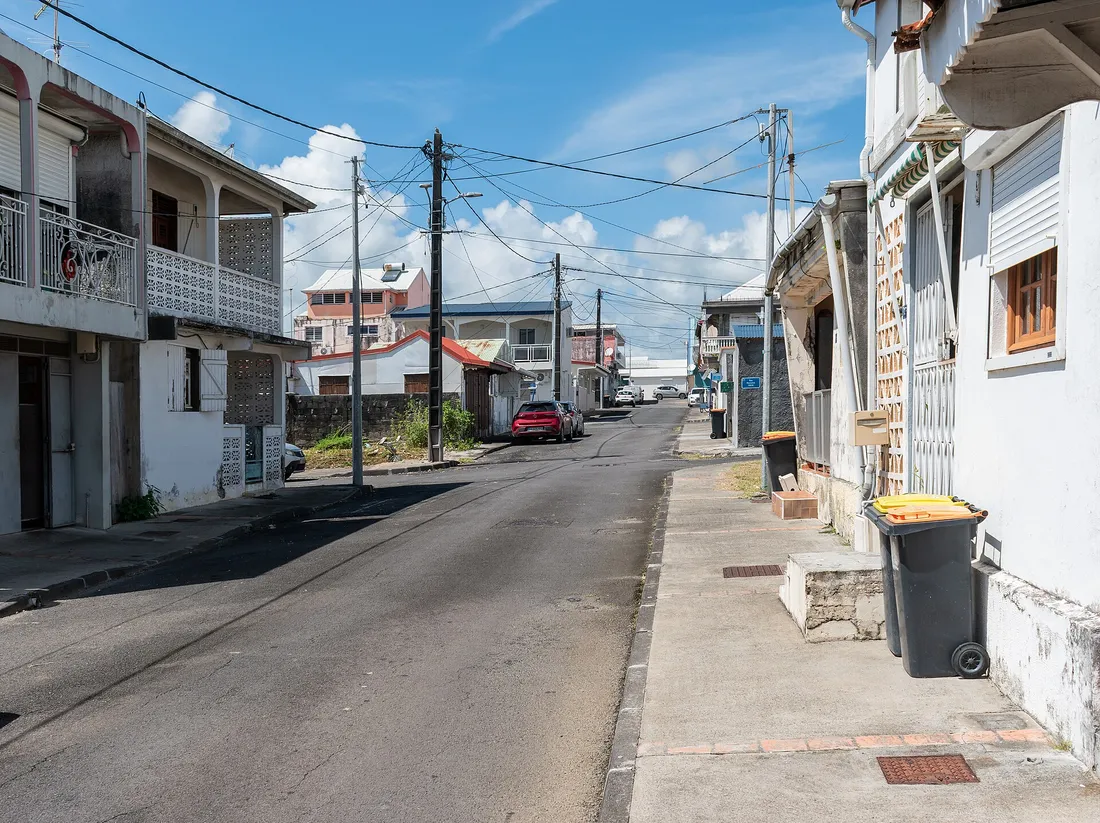
- Le Moule, Morne-à-l’Eau, Petit-Canal, Anse-Bertrand, Port-Louis: quieter towns, more rural and agricultural in character, with often more affordable prices.
Basse-Terre: the green, mountainous and wild side
The western wing, Basse-Terre, is volcanic (with the Soufrière massif), wetter, greener and wilder. There you will find:
- Basse-Terre (the city), the archipelago’s administrative prefecture, in the south-west.
- Baie-Mahault: a major economic hub, home to the vast Jarry business zone, one of the largest in the Caribbean; a great many jobs are concentrated there.
- Petit-Bourg, Lamentin, Sainte-Rose: residential and countryside towns, growing fast, often chosen by families.
- Bouillante, Pointe-Noire, Deshaies: the leeward west coast, prized for its calm, its diving and its beaches; Deshaies is highly sought after but far from the main employment hubs.
The southern islands
The archipelago also includes Marie-Galante, Les Saintes (Terre-de-Haut, Terre-de-Bas) and La Désirade, reachable by ferry. They are magnificent, but their housing market is limited and everyday logistics need planning: they are rarely suitable for a quick first relocation.
Where to live depending on your profile
There is no “best town” in absolute terms: it all depends on where you work, your budget and your lifestyle.
You work in Pointe-à-Pitre, Les Abymes or Jarry
Rush-hour traffic along the Pointe-à-Pitre – Baie-Mahault corridor can be heavy. If your job is in this catchment area (the teaching hospital, government offices, the Jarry zone), it is often wise to aim for Baie-Mahault, Le Gosier, Les Abymes, Petit-Bourg or Lamentin to keep commuting times down. Many working people accept 20 to 40 minutes of driving morning and evening: assess that on the ground before you commit.
You are after peace and quiet in nature
The leeward coast (Bouillante, Pointe-Noire, Deshaies) and the rural towns of Basse-Terre offer lush surroundings and a calmer pace of life. Provided you accept being further from services, longer journeys, and higher rainfall than in Grande-Terre.
You are moving with your family
Residential towns such as Petit-Bourg, Lamentin, Baie-Mahault or Sainte-Anne are often mentioned for their balance of schools, shops, space and access to employment hubs. Look into school catchment areas and nursery availability well in advance.
You are coming for a few months or on assignment
If your horizon is short (an assignment, a trial run before settling permanently), go for furnished, flexible accommodation rather than a long lease that would tie you down. This is exactly where temporary accommodation comes into its own.
Temporary housing: the key to a successful arrival
The classic mistake is signing a long-term lease from a distance, without having seen the property or the neighbourhood. The light, the noise, the neighbours, the real commutes, exposure to bad weather: nothing replaces being there in person.
The least stressful strategy is often to book temporary furnished accommodation for the first few weeks, giving you time to:
- visit in person the neighbourhoods you are interested in;
- test your home-to-work commutes at real-world times;
- meet agencies, landlords and locals;
- put together a solid, reassuring rental application.
At Hostel Toucan, we offer accommodation designed precisely for these transition stays. You can browse our properties to find a comfortable base while you search, without committing long term from day one.
Checklist before booking your arrival accommodation
- Check how close it is to your future workplace or place of study.
- Confirm there is Wi-Fi and a space to work remotely if needed.
- Make sure the property is furnished and equipped (kitchen, linen, air conditioning or ventilation).
- Choose a flexible length of stay that can be extended if your search takes time.
- Plan for easy access to shops and to a means of transport.
- Arrange a car rental for as soon as you arrive (see below).
The Guadeloupe rental market: what to expect
The rental market in Guadeloupe is tight in the most sought-after areas (the tourist coastline, towns close to employment hubs). Demand is strong there and quality properties go fast.
Budget benchmarks (indicative)
Rent levels depend heavily on the town, proximity to the sea, and the condition and equipment of the property. Purely as a guide and depending on the season:
- A studio or small furnished flat in a sought-after area generally sits in a higher bracket than in a rural town.
- Towns in the interior of Basse-Terre or in northern Grande-Terre often show gentler rents than Le Gosier, Sainte-Anne or Saint-François.
- Furnished “move-in ready” properties and homes with a sea view or sea access command higher prices.
Never rely on a single figure found online: compare several recent listings in the town you are targeting and check them against reality once you are on the ground.
Putting together a solid application
As in mainland France, a good application makes the difference. Prepare in advance:
- ID, proof of income, employment contract or employer’s certificate;
- tax assessment and proof of previous address;
- possibly a guarantor.
Landlords and agencies appreciate complete, responsive applications, especially when several candidates are competing for the same property.
Furnished or unfurnished?
Arriving from far away often argues for furnished to begin with: it saves you shipping furniture by container (expensive and slow) while your relocation is not yet confirmed. You can switch to an unfurnished home once you have found your feet.