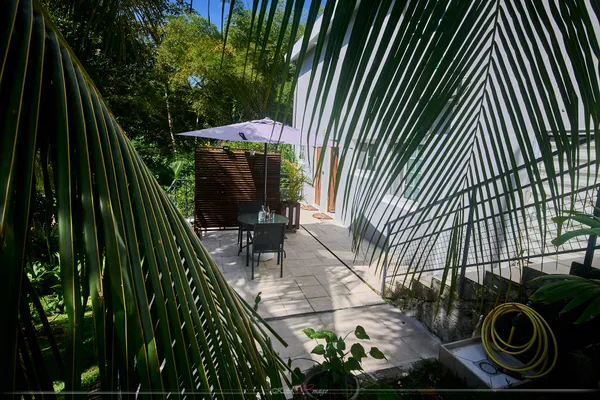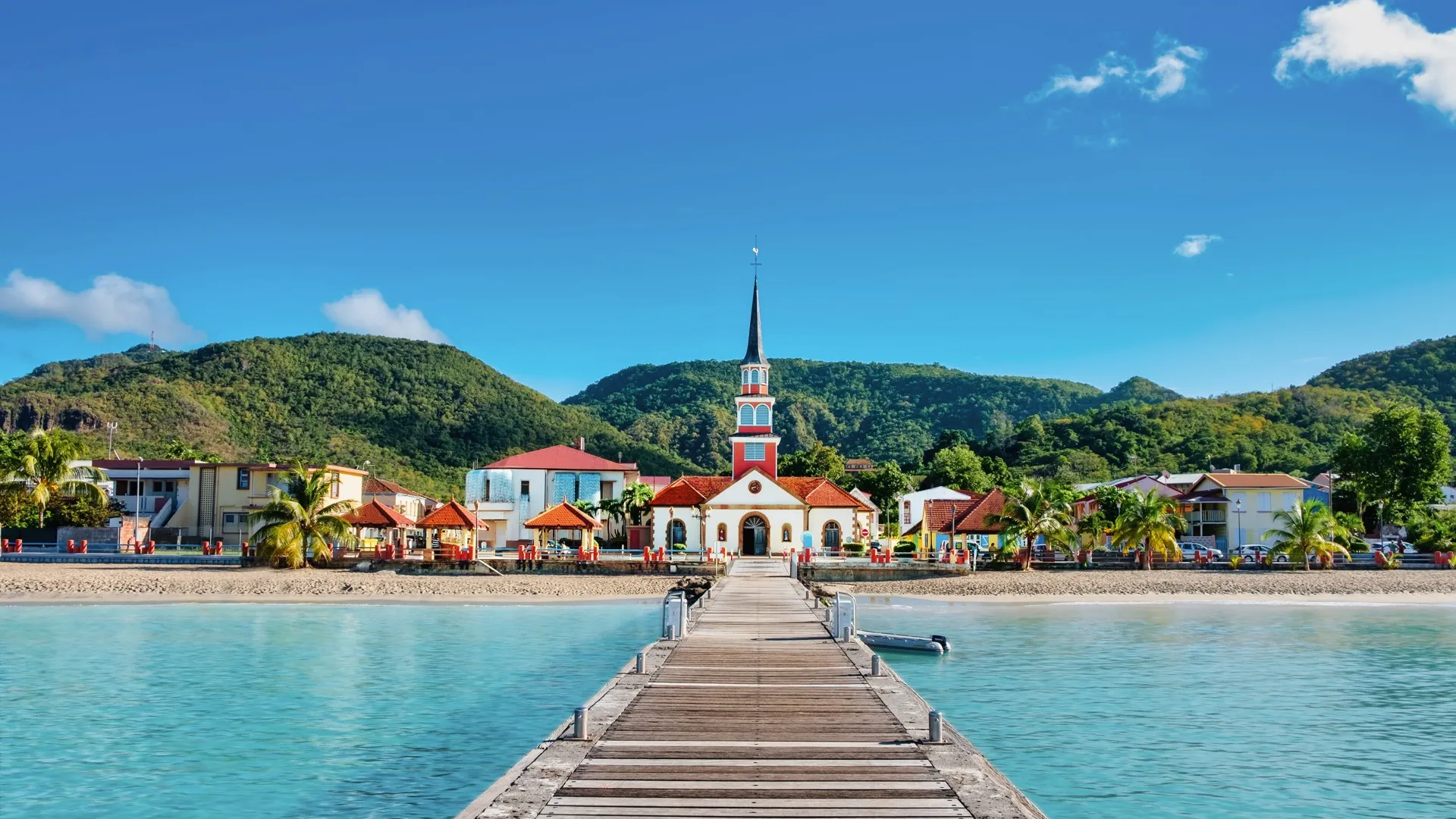

Arriving in Martinique from mainland France is a genuine life change: a tropical climate, island living, a different pace and a housing market with its own rules. Whether you are coming for a public-service transfer, a private-sector contract, a professional project or simply the urge for a change of scene, the first few months are usually the trickiest to organise. You cannot always find your ideal home remotely from mainland France, and it is rarely sensible to sign a long-term lease before you have set foot on the island.
This guide is for anyone preparing a move to Martinique and asking the key question: where do you sleep during the first weeks, while you get to know the towns, understand the real travel times and secure a long-term home? We review the island’s main areas, indicative budget ranges, the value of a temporary furnished rental, and the practical steps to plan ahead.
Understanding Martinique’s geography before you choose
Martinique covers around 1,100 km², a compact territory where, on paper, everything looks close. In practice, the terrain, the traffic jams around Fort-de-France and the condition of some roads stretch journey times considerably. So it is essential to choose your area based on your workplace and lifestyle, rather than on scenery alone.
Broadly speaking, there are three main sectors:
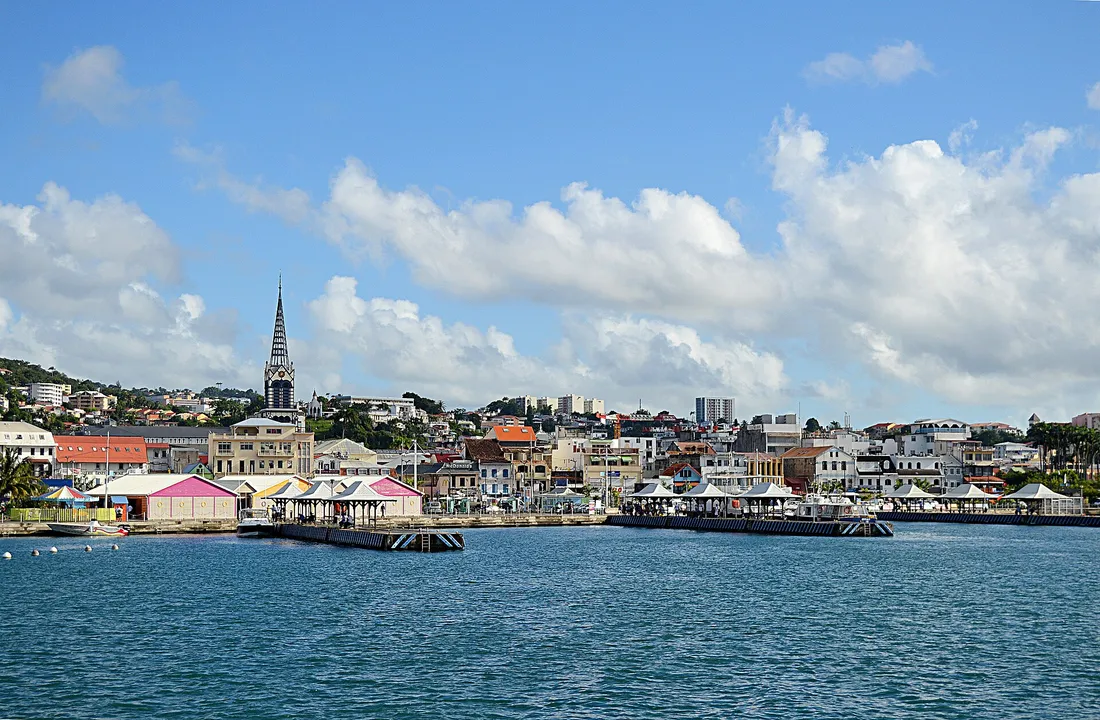
- The centre and the greater urban area around Fort-de-France, Le Lamentin and Schoelcher: the economic and administrative heart, where jobs, hospitals, the airport (in Le Lamentin) and most services are concentrated.
- The south, from Ducos and Rivière-Salée to Les Trois-Îlets, Sainte-Luce, Le Diamant and Sainte-Anne: the most tourist-oriented area, with the iconic beaches and strong seasonal rental demand.
- The north, from Saint-Joseph and Le Robert up to Saint-Pierre, Le Morne-Rouge and the Caravelle peninsula: greener, more authentic, with Mount Pelée and rainforest landscapes, but further from the main employment hubs.
The weight of the daily commute
One thing many newcomers underestimate: traffic. At peak hours, getting to Fort-de-France from the south or the north can take far longer than the distance suggests. If you work in Le Lamentin, Fort-de-France or Schoelcher, settling too far away can turn daily life into an ordeal. Conversely, working remotely or working in the tourist south changes the equation entirely.
Where to live according to your profile
The right neighbourhood depends first and foremost on your work and family situation. Here are some concrete pointers by area.
Fort-de-France, Schoelcher and Le Lamentin: urban and practical living
For anyone working in administration, healthcare or services, the central urban area remains the most rational choice. Schoelcher, home to the university and residential districts such as Anse Madame or Terreville, is popular with professionals and families. Fort-de-France puts everything within reach but suffers in places from difficult parking and sharp contrasts between neighbourhoods. Le Lamentin, more spread out and close to the airport and the large retail zones (La Jambette, Place d’Armes), appeals to those who want space without going too far afield.
The south: seaside living and the outdoors
Les Trois-Îlets, Sainte-Luce, Le Diamant, Rivière-Pilote and Sainte-Anne attract sea lovers. It is a pleasant area to live in, with beautiful beaches and a holiday feel every day. The downside: rental demand is high and driven by tourism, which can make the search for a year-round home more competitive and rents tighter in peak season. Ducos and Rivière-Salée, slightly set back, offer a compromise between the seaside south and access to the centre.
The north: authenticity and nature
Saint-Joseph, Le Robert and Le François on the Atlantic coast, or Saint-Pierre and Le Carbet on the Caribbean coast, appeal to those looking for a quieter pace, sometimes gentler prices and generous nature. It is an excellent choice if your work allows it, provided you accept the relative distance from major services and carefully check your travel times.
Why go through a temporary furnished rental
This is the core of the strategy we recommend to most newcomers: do not sign a long-term lease blindly from mainland France. A temporary furnished home, booked for a few weeks or a few months, gives you several decisive advantages.
- You genuinely get to know the towns before committing, rather than relying on photos or reputation.
- You test your commutes at real-life hours to your workplace.
- You buy yourself time to view empty properties in person, still the best way to avoid nasty surprises and misleading listings.
- You move into a home that is equipped and functional (kitchen, linen, wifi), without having to ship or rebuy an entire set of furniture on day one.
- You secure your move: sea freight for your belongings from mainland France often takes several weeks, and a furnished rental bridges that gap.
At Hostel Toucan, this is exactly the need we cover. Discover our properties — furnished homes in Martinique designed for medium-term stays and relocations. And if you own a property you would like managed while you are away or made profitable year-round, our concierge service can take care of it.
Holiday rental or standard furnished lease?
For a stay of a few weeks to a few months, a seasonal or medium-term furnished rental is usually the most flexible option: no one-year commitment, everything included. If you already know you are staying long-term, a furnished “main residence” lease (generally one year, or nine months for a student) can work out cheaper per month. Many newcomers combine the two: first a temporary rental, then a lease once they have chosen their town.
Housing budget: indicative benchmarks
The figures below are given for guidance only and vary widely depending on the town, the season, the condition of the property, the view and how close it is to the sea. They are in no way a price guarantee, but an order of magnitude to help you plan your budget.
- A furnished studio or one-room flat on a temporary rental often falls in a range from a few hundred to a little over one thousand euros per month, depending on the town and season.
- A two- or three-room flat unfurnished on a yearly lease depends heavily on the area: the centre and sought-after seaside zones push rents up, while the north and the interior generally remain more affordable.
- The peak tourist season (roughly December to April, including carnival) tends to squeeze short-term supply in the south and drive prices up.
Also budget for setting-up costs beyond rent alone: security deposit, possible agency fees, opening electricity and water accounts, home insurance, and the significant cost of living on an island where many goods are imported.
Planning for the high cost of living
Martinique has a noticeably higher cost of living than mainland France across many categories, particularly food and imported goods. This factor weighs on your overall relocation budget and deserves to be built in from the outset, just like rent.