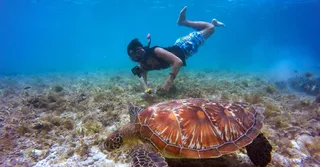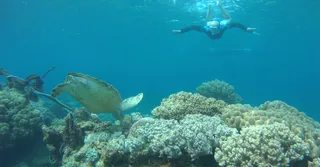
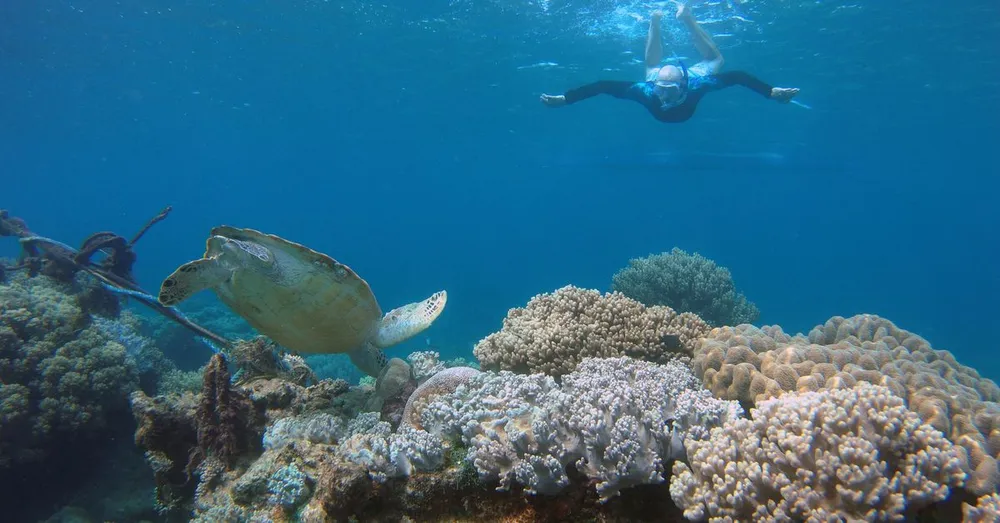
Anse Dufour is one of those rare spots where you need no boat, no dive club and no exceptional luck to come face to face with a green sea turtle. You wade in from the sand, dip your head under the water, and a few fin strokes later you find yourself above a seagrass meadow where these gentle giants graze peacefully. For anyone discovering Martinique from the south, it is often the first unforgettable marine encounter of the trip. Here is everything you need to know to make it a success, without disturbing the animal or its habitat.
Why Anse Dufour is THE turtle spot of southern Martinique
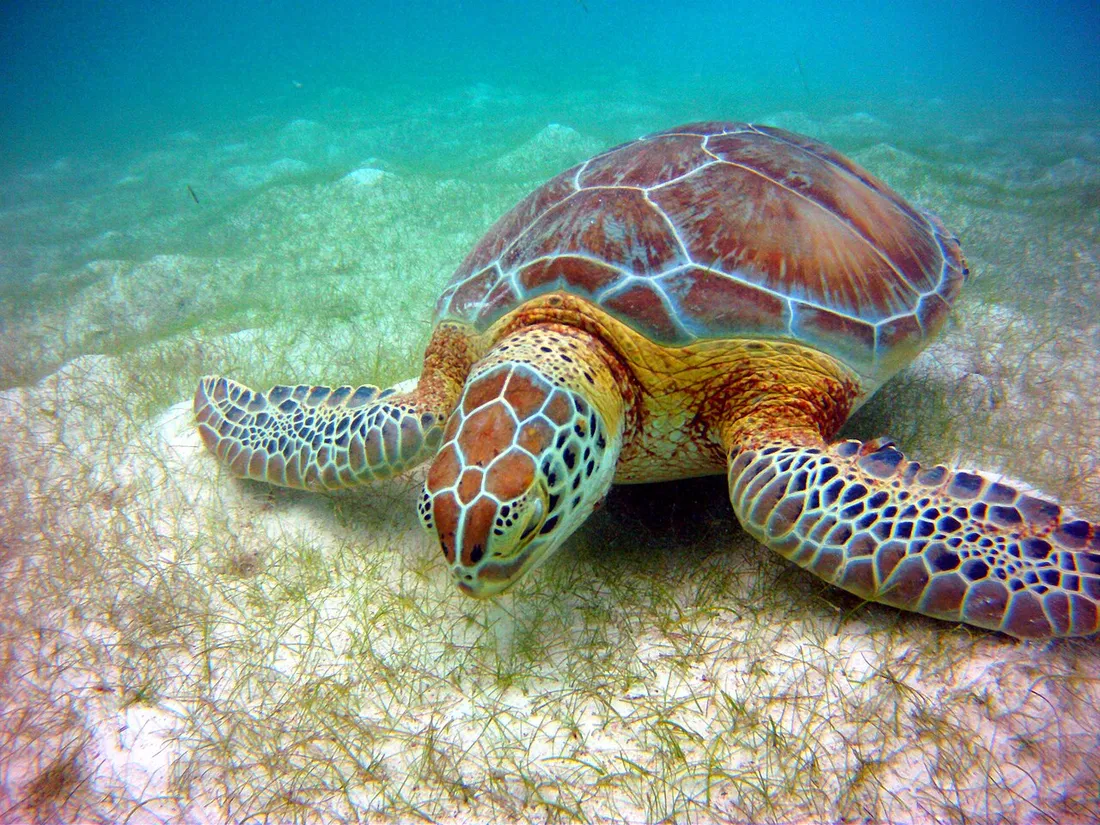
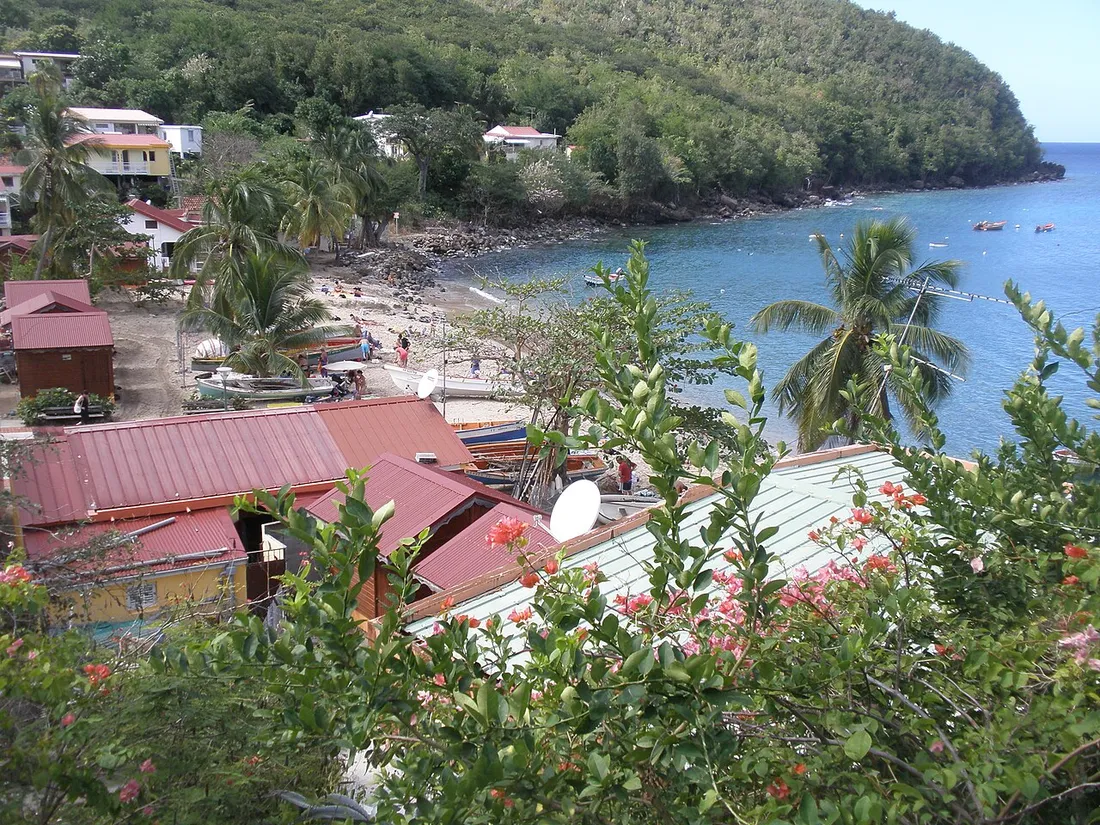
Tucked away in the commune of Anses-d’Arlet, between Les Trois-Îlets and Le Diamant, Anse Dufour is a small fishing-village cove. Its layout explains everything: a shallow bay, sheltered from the swell, with a bottom carpeted in beds of marine seagrass (the famous “turtle grass”). These underwater meadows are the pantry of the green sea turtles (Chelonia mydas), the only local species that is truly herbivorous as an adult. They come here to graze at shallow depths, often between 2 and 6 metres, perfectly visible with fins, mask and snorkel.
Contrary to popular belief, you don’t “search” for turtles in open water: you find them over the seagrass zones, generally to the right of the beach when facing the sea, along the rocky point. The seabed there alternates between pale sand and dark patches of vegetation. It is precisely on those dark patches that you should focus your observation.
A nice bonus: Anse Dufour is also home to generous secondary wildlife. Schools of parrotfish, sergeant majors, sometimes a stingray resting on the sand, and lovely coral drop-offs on the northern point. The turtle is the star, but the scenery alone is worth the detour.
When to go to maximise your chances
Timing makes all the difference between a pretty swim and a guaranteed encounter.
- The season: December to April, the Carême (dry season). The water is clearer, the swell rarer, and visibility frequently exceeds 10–15 metres. During the wet season (June to November), the rains cloud the water and swell episodes stir up sediment.
- The time: early morning, ideally before 9 a.m. This is the double advantage. The low light brings out the seagrass meadows, the water has not yet been stirred by swimmers, and above all the village’s tiny car park is not saturated. By 10–11 a.m. in high season, the cove fills up and the turtles, disturbed, become more elusive.
- Tide and wind: favour a day with light trade winds. A smooth water surface clearly improves visibility from above.
In short, your best window is a February or March morning, around 7:30–8:30 a.m. Allow 1 to 1.5 hours in the water for a full session without getting cold.
Approach rules: observe without disturbing
The green sea turtle is a protected species. Disturbing, touching or feeding it is forbidden and punishable by fine. But beyond the law, a respectful approach paradoxically increases your chances: a calm turtle stays longer, comes up to breathe without fleeing, and offers far more beautiful sightings.
What to do
- Keep your distance: stay at least 3 to 5 metres from the animal. The golden rule: it is the turtle that decides to come closer, never the other way around.
- Leave the surfacing corridor clear. A turtle needs to come up to breathe every few minutes. Never position yourself above it or between it and the surface.
- Stay at the surface, calm, with slow and discreet fin movements. No free-diving directly above the animal.
- Observe from the side, never with an aggressive head-on approach.
What you must NEVER do
- Touch, stroke or try to climb onto a turtle (this removes its protective mucus and stresses it severely).
- Feed it: its seagrass diet is essential to its health.
- Use chemical sunscreen before swimming: prefer a mineral sunscreen or a UV-protective rash guard to protect the seagrass and coral.
- Surround it with several swimmers or chase it when it moves away.
These simple gestures are common sense, but on site, enthusiasm sometimes makes people forget the essentials. Set the example: other swimmers tend to imitate the group’s behaviour.
Anse Dufour or Anse Noire: which to choose?
This is visitors’ big question, because the two coves are neighbours, separated by a simple hill and linked by a staircase of a few hundred metres. You can perfectly well do both in the same morning.
| Criterion | Anse Dufour | Anse Noire |
|---|---|---|
| Sand | Pale gold | Volcanic black |
| Green turtles | Very frequent (seagrass) | Possible, less regular |
| Atmosphere | Lively fishing cove | More secluded, shaded |
| Snorkeling highlight | Turtle seagrass beds | Rocky drop-off, sometimes trumpetfish |
My resident’s advice: start with Anse Dufour early in the morning for the turtles, then cross the hill to Anse Noire for the contrast of the black sand and a bit of shade under the sea-grape trees in mid-morning. Anse Noire also appeals to lovers of pontoons and its cool water from the neighbouring river. The two complement each other beautifully, and doing the duo remains one of the finest half-days in southern Martinique.
Practical information: access, gear and budget
Access. From Fort-de-France, allow about 45 minutes’ drive (≈ 35 km) via Les Trois-Îlets. From Sainte-Anne or Le Diamant, 30 to 40 minutes. The road winds down to the village. The car park is very limited and free: hence the importance of arriving early. A rental car is strongly recommended in Martinique; no convenient public transport serves the cove at the right hours.
Gear. If you don’t have your own, rental shops on site and on the beach offer the full fins-mask-snorkel set for around €8 to €15 a day. Investing in a mask that doesn’t leak radically changes the experience. Remember:
- A UV-protective rash guard (your back heats up fast at the surface)
- Water shoes for the rocky entries on the point side
- A swim buoy or board, reassuring for less confident swimmers
- Water and a snack: few shops, especially off-season
On-site budget. A few fishermen’s snack bars serve accras, grilled fish and local juices; allow €12 to €18 per dish. A snorkeling day at Anse Dufour can therefore stay very affordable: under €30 per person, gear and lunch included.
Safety. The bay is sheltered but stay alert to boats near the point and don’t venture out alone towards the open sea. Watch the children: there is no permanent lifeguard station.
Extending your day in the south
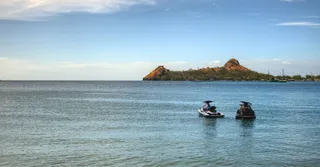
Anse Dufour fits ideally into a “southern beaches” itinerary. Fifteen minutes away, the Diamond Rock and its viewpoints; a little further, the Salines of Sainte-Anne, arguably the most beautiful beach on the island. Inland, Les Trois-Îlets (history of Joséphine de Beauharnais) and the Rum Route with its AOC distilleries (La Mauny, Trois-Rivières in the south) perfectly round out a stay. To build your complete programme, our Martinique guide details seasons, distances and must-sees.
Where to stay to enjoy the turtles at daybreak
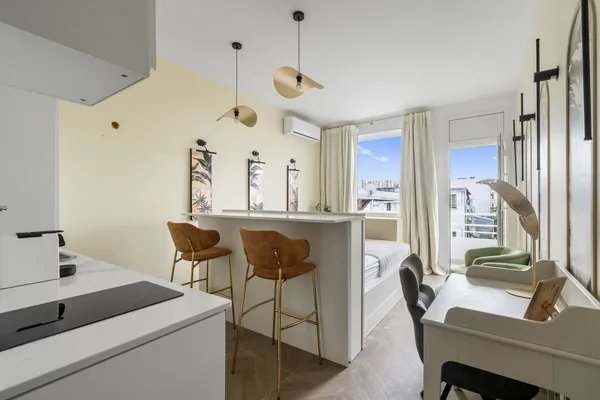
The secret to a successful encounter, as we’ve seen, is to arrive before the crowd. Staying in the south, near the Anses-d’Arlet, Les Trois-Îlets or Le Diamant, spares you the long morning drive from Fort-de-France and gives you the cove almost to yourself. At Hostel Toucan, our holiday rentals in Martinique are selected for their proximity to the finest spots in the south. Direct booking with no platform fees, free cancellation up to 7 days before arrival, and WhatsApp support 7 days a week for your on-the-ground questions (where to rent gear, which morning to choose depending on the swell).
Discover our accommodation in Martinique to wake up your stay just steps from the turtles. And if you own a property in the south, see how our concierge service for owners makes the most of it all year round.
A morning at Anse Dufour is a simple promise: enter turquoise water and leave with the memory of a green turtle met a metre away, with the utmost respect. It’s your turn to play, and to set the example.
FAQ
Are you sure to see turtles at Anse Dufour?
No sighting is ever guaranteed with a wild animal, but Anse Dufour offers one of the highest success rates in Martinique thanks to its seagrass beds. Arriving early in the morning (before 9 a.m.) in the dry season, over the seagrass zones to the right of the beach, your chances of meeting a green turtle are excellent.
Is snorkeling at Anse Dufour paid?
No, access to the beach and the water is entirely free. Only the gear (€8 to €15 a day for on-site rental) and any lunch at a fishermen’s snack bar are at your expense. Parking is free but very limited, hence the value of arriving early.
What is the difference between Anse Dufour and Anse Noire?
The two coves are neighbours, linked by a staircase. Anse Dufour has golden sand and seagrass beds frequented by green turtles. Anse Noire, as its name suggests, has black volcanic sand, more shade and a beautiful rocky drop-off. The ideal is to do both in the same morning.
Can you touch the green turtles?
No, it is strictly forbidden and punishable by fine. The green sea turtle is a protected species. You must stay 3–5 metres away, never touch, feed or surround it, and leave it free access to the surface to breathe. A calm approach actually increases your chances of observation.