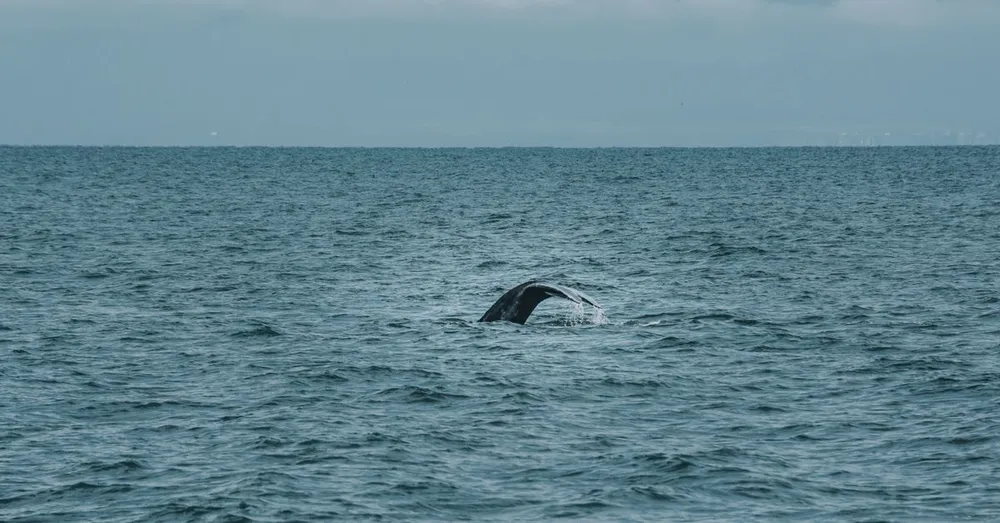
When a concierge client asks me whether they’ll “see a whale,” I always answer with another question: which species, and at what time of year? Because behind the catch-all phrase of whale watching in Martinique lies a reality few guides explain: some cetaceans live here year-round, others are just passing through. Understanding the difference between resident and migratory species changes everything — the season to aim for, the zone to head out to, and even the type of animal you’ll encounter. After about ten years recommending cetacean outings to our travelers along the Caribbean coast, here is the guide I wish I had read before my first trip.
Resident or Migratory: The Distinction That Shapes Your Outing
Martinique sits on the western flank of the Lesser Antilles, bordered by the Agoa sanctuary, a vast marine protected area covering the exclusive economic zone of the French Antilles. Some twenty species of marine mammals live in or pass through this stretch of the Caribbean Sea. They fall into two families, and that is the key to all the planning.
- Resident species live year-round in the Dominica Channel, the deep arm of sea between Martinique and the neighboring island. They have no reason to leave: food and depth are right there.
- Migratory species only make a seasonal stay. The star is the Caribbean humpback whale, which comes down from the North Atlantic to breed in our warm waters in winter, then heads back.
The direct consequence for you: a July outing will never show a humpback whale, but stands every chance of encountering dolphins or sperm whales. Conversely, a March outing can combine both. This logic avoids the most common disappointment — booking “for the whales” in the wrong season.
Resident Species: Visible Year-Round
That’s the good news, and the argument that makes Martinique reliable for cetacean watching: even outside whale season, the sea is permanently inhabited.
Martinique’s Dolphins, Almost Guaranteed
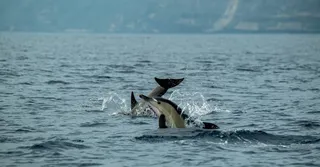
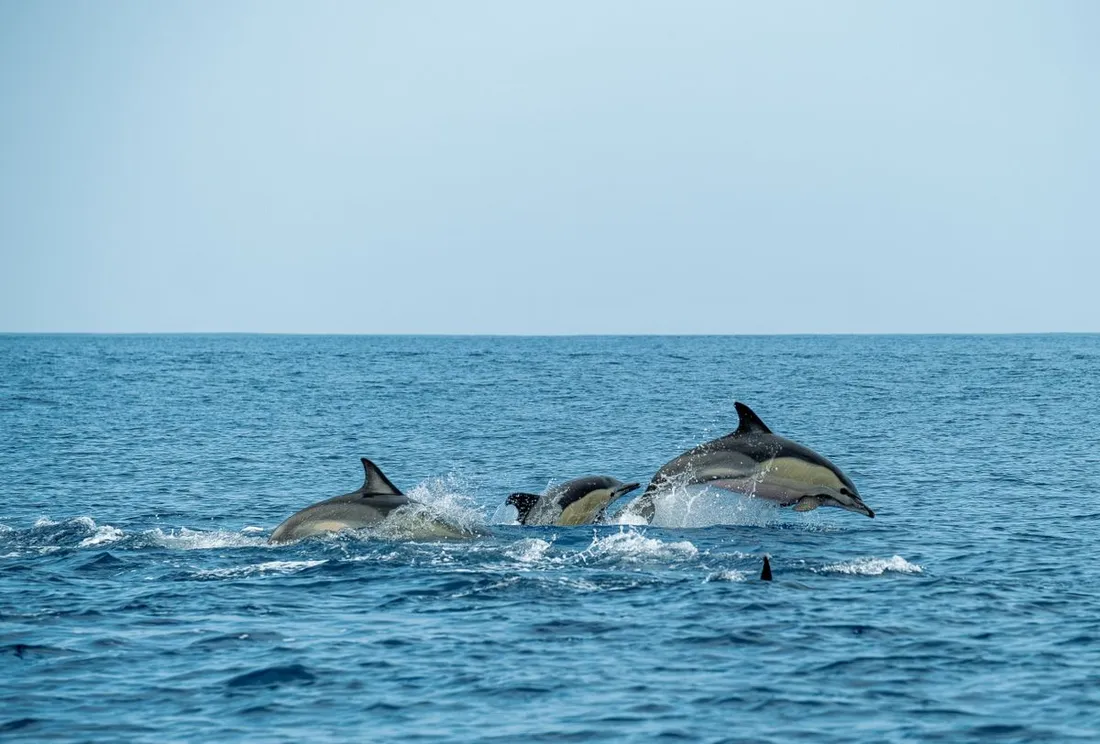
Three dolphin species frequent the Caribbean coast assiduously and make up most of the dolphins in Martinique you’ll come across on an outing:
- The bottlenose dolphin (the best known, playful, riding the bow wave);
- The pantropical spotted dolphin, often in large groups of several dozen individuals;
- The spinner dolphin, lively and acrobatic.
Over the year, serious operators reckon they encounter dolphins on the great majority of their outings. Nothing is ever “guaranteed” with wild animals, but this is the most accessible cetacean, including for a first family outing.
Sperm Whales and Pilot Whales, the Deep-Water Regulars
Less expected but very much present year-round:
- The sperm whale, largest of the toothed cetaceans, dives several hundred meters off the trenches lining the island’s west coast. It is mostly observed at the surface, between two dives, at rest.
- The pilot whale, in tight-knit family pods, frequents the same deep sectors.
- You also sometimes encounter melon-headed whales and small beaked whales, more elusive.
These species explain why a summer “cetacean” outing remains thrilling: it’s not only about dolphins, but truly about large marine mammals.
Migratory Species: The Humpback Whale Window
Now for the seasonal star, the one that justifies the word “whale” in every search.
When to Watch the Humpback Whale in Martinique
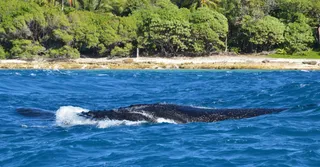
The Caribbean humpback whale comes up from the North Atlantic to calve and breed in the warm waters of the Antilles. In Martinique, the realistic window runs from mid-January to late April, peaking in February and March. This period coincides with the Carême, the local dry season: calm sea in the morning, clear skies, optimal visibility for spotting a blow on the horizon. It is also the high tourist season, so book your outing well in advance.
During these weeks, you may observe:
- mothers accompanied by their calf, staying near the surface;
- singing males, whose song you can sometimes hear thanks to an onboard hydrophone;
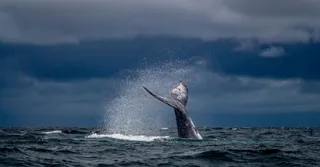
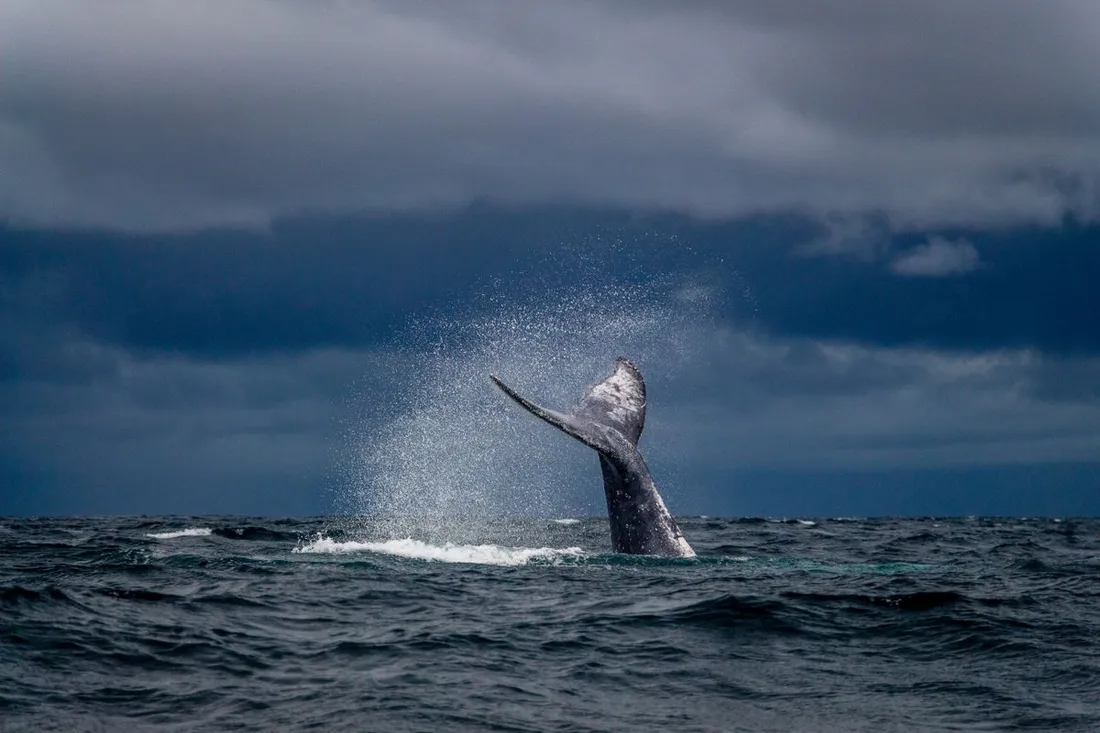
- spectacular behaviors: breaching, fin slaps, and dives with the tail raised.
A Few Figures to Picture the Animal
To gauge what awaits you: an adult humpback whale reaches 12 to 15 meters and weighs up to 30 tonnes. The newborn already measures 4 to 5 meters at birth. The migratory corridor they follow passes precisely through the channel between Martinique and Dominica — the same deep zone where the residents live. Hence the value of heading out on the Caribbean side.
Where to Go: The Crossing Zones on the Caribbean Coast
All the watching is concentrated on the Caribbean side, to the west, because the seabed plunges several hundred meters very close to shore. This underwater relief attracts dolphins, sperm whales and migrating whales. The Atlantic coast, to the east, is not suited to this activity.
- Le Diamant: a very popular departure point, about 35 km south of Fort-de-France. The famous Diamond Rock serves as a landmark and the surrounding waters are rich.
- Les Anses-d’Arlet and Anse Dufour: dolphins frequent at short range, an ideal sector to combine with snorkeling.
- Saint-Pierre, at the foot of Mount Pelée (30 km north of Fort-de-France): the seabed quickly reaches 100 m, a zone renowned for sperm whales.
- The Dominica Channel: the humpback whale corridor in season, the heart of the residents’ habitat the rest of the year.
Most boats set out from the southwestern marinas: Trois-Îlets (Pointe du Bout), Les Anses-d’Arlet, or Saint-Pierre depending on the operator. Allow 20 minutes to an hour of sailing to reach the crossing zones.
Resident’s tip: aim for a morning cetacean outing, between 8 and 11 a.m. The sea is calmer before the trade winds pick up, and the low light makes the blows easier to spot.
Certified Operators and the Approach Charter
This is the point I hammer home with every client: whale tourism is either wonderful or destructive depending on how it’s practiced. Since Martinique lies within the Agoa sanctuary, every responsible outing applies a strict approach charter. Make sure your operator commits to it.
The Essential Rules of the Charter
- Minimum distance: do not approach within 100 m of a whale, and keep 300 m for a mother and her calf.
- Slow, parallel approach: never head-on or from behind, so as not to cut across the animal’s path.
- Limited time: 15 to 20 minutes maximum per group, a single boat at a time near a cetacean.
- No entering the water with whales: swimming with humpback whales is forbidden; you observe from the deck.
- Silence and cleanliness: engine idling or off, music off, no waste or food in the sea.
A good captain lets the animal decide whether to approach. If a whale comes of its own accord to glide alongside the hull, it has chosen: the most beautiful scenario, and the most ethical.
Recognizing a Serious Operator
- They mention the Agoa charter and the sanctuary in their communication, and recall it on board.
- They take on a reasonable number of passengers (RIBs of 8 to 12 people rather than crowded large ferries).
- The guide is a naturalist or trained in eco-volunteering, and a hydrophone lets you listen to the songs.
- They never guarantee seeing whales: a sign of honesty when dealing with wild animals.
Conversely, steer clear of promises to “swim with the whales,” boats that charge toward the blows, and craft clustered around a single group.
Indicative Prices and Durations
- Half-day cetacean outing (3 to 4 h): €60 to €80 per adult, reduced rate for children.
- Private small-group outing: €90 to €150 per person depending on group size.
- Combined watching + snorkeling (Anse Dufour, turtles): around €70 to €90.
Bring reef-safe sunscreen, a hat, a light windbreaker and a waterproof pouch: the Caribbean swell can be choppy.
Fitting the Outing into a Stay in Martinique
Whale watching is ideally arranged during the dry season (December to April), which combines the humpback whale peak with the best weather. A few pointers, Martinique being a French overseas department: currency the euro, languages French and Creole, dialing code +596, a time difference of -5 h in winter and -6 h in summer compared with Paris.
- Arrival: Aimé Césaire airport (Le Lamentin), then renting a car is strongly advised. The island is about 80 km from north to south.
- Where to stay: the southwest (Trois-Îlets, Les Anses-d’Arlet, Le Diamant) puts the marinas 10–20 minutes from your lodging, perfect for early departures.
- What to combine: the Southern beaches (Les Salines at Sainte-Anne, the black-sand Anse Noire, Grande Anse d’Arlet), the Route des Rhums (Clément, La Mauny, Trois-Rivières, AOC agricultural rum) and, to the north, the listed ruins of Saint-Pierre and Mount Pelée.
To build the full itinerary, lean on our guide to Martinique, which details the must-sees region by region.
Booking Your Base with Hostel Toucan
A successful outing starts with good lodging, ideally on the Caribbean coast or in the south, a few minutes from the marinas. At Hostel Toucan, we select well-placed accommodations and, by booking direct, you enjoy several concrete benefits:
- Direct booking with no platform fees: the best rate, with no added commission.
- Free cancellation up to 7 days before arrival, useful if the weather upends your plans at sea.
- WhatsApp assistance 7 days a week: we point you toward cetacean operators certified to the approach charter and help you set your outing times.
Discover our available accommodations in Martinique rentals. And if you own a property on the island and wish to showcase it to travelers seeking nature experiences, our concierge offer is detailed on the owners page.
Watching a humpback whale or a pod of dolphins means stepping for a moment into their world. It is up to us, visitors, to do so with the discretion these giants demand. Fair seas.
FAQ
What is the difference between resident and migratory cetaceans in Martinique?
Residents (dolphins, sperm whales, pilot whales) live year-round in the Dominica Channel, on the Caribbean coast, and are encountered in every season. Migrants, above all the humpback whale, make only a winter stay to breed, from mid-January to late April. That is why a summer outing shows dolphins but never a humpback whale.
What is the best time for whale watching in Martinique?
For humpback whales, aim for mid-January to late April, peaking in February–March, in the heart of the dry season. For dolphins and sperm whales, present year-round, any period works. Always favor a morning outing, when the sea is calmer.
Can you swim with the whales in Martinique?
No. Swimming with humpback whales is forbidden within the Agoa sanctuary: you observe from the boat, at a minimum of 100 m, or even 300 m for a mother and her calf. Some combined outings offer snorkeling with other species (turtles, fish) in authorized zones.
How much does a cetacean-watching outing cost?
Expect €60 to €80 per adult for a half-day (3 to 4 h) in a small group, and €90 to €150 per person for a private outing. A combined watching and snorkeling trip runs around €70 to €90. Serious operators never guarantee seeing whales, since these are wild animals.